
Bank Indonesia Holds Interest Rate at 5.75%, What Is the Impact?
24 July 2026
Bank Indonesia has held its benchmark rate at 5.75 percent, ending speculation of a hike to 6 percent that had circulated in recent weeks.


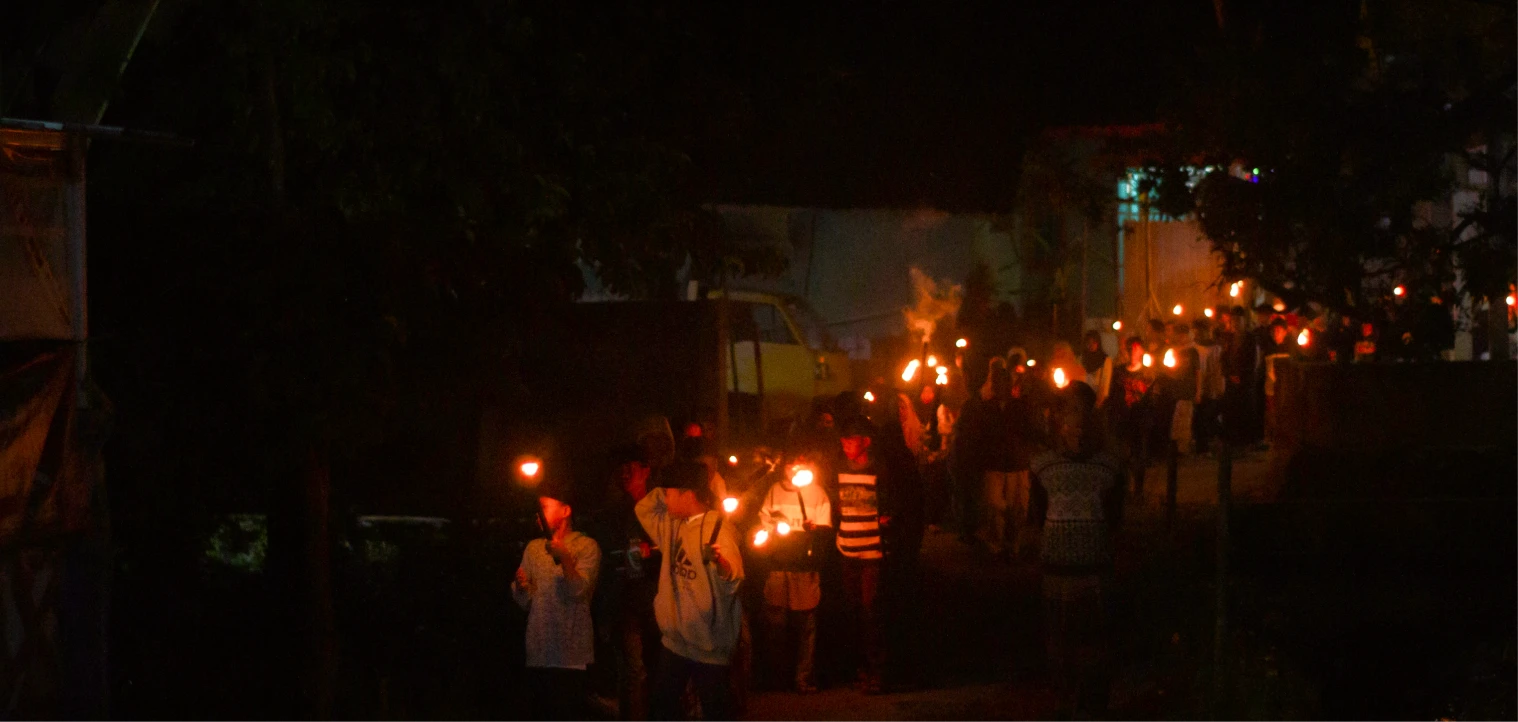
Takbiran parades are one of the traditions that make Eid celebrations more festive. Communities gather to chant takbir and hold parades around mosques or within their neighborhoods.
Takbiran refers to the practice of Muslims proclaiming the phrase "Allahu Akbar" to glorify Allah SWT. It is usually performed on the night before Eid al-Fitr and Eid al-Adha as a way to welcome the celebration and express gratitude.
The takbiran commonly recited by Indonesian Muslims goes as follows:
اللهُ أَكْبَرُ اللهُ أَكْبَرُ اللهُ أَكْبَرُ لَا إلٰهَ إِلَّا اللهُ وَاللهُ أَكْبَرُ، اللهُ أَكْبَرُ وَلِلّٰهِ الْحَمْدُ
Meaning: “Allah is the Greatest, Allah is the Greatest, Allah is the Greatest. There is no god but Allah. Allah is the Greatest. All praise belongs to Him.”
Dartim, S.Pd., M.Pd., a lecturer in Islamic Education at Universitas Muhammadiyah Surakarta (UMS), explained that takbiran means glorifying and magnifying Allah through His names.
"Takbiran is about magnifying Allah through His names, through His words, and also by reflecting on all of His magnificent creations," Dartim said when interviewed on Wednesday (11/03/2026).
So how does Islam view takbiran?
Dartim explained that linguistically, the word takbiran originates from the Arabic word kabaro, which means to glorify or magnify.
"This is related to one of the names of Allah, Al-Akbar, meaning The Greatest. It is also closely associated with the phrase we often recite: Allahu Akbar," he said.
The command to proclaim takbir is mentioned in Surah Al-Baqarah, verse 185:
شَهْرُ رَمَضَانَ الَّذِيْٓ اُنْزِلَ فِيْهِ الْقُرْاٰنُ هُدًى لِّلنَّاسِ وَبَيِّنٰتٍ مِّنَ الْهُدٰى وَالْفُرْقَانِۚ فَمَنْ شَهِدَ مِنْكُمُ الشَّهْرَ فَلْيَصُمْهُۗ وَمَنْ كَانَ مَرِيْضًا اَوْ عَلٰى سَفَرٍ فَعِدَّةٌ مِّنْ اَيَّامٍ اُخَرَۗ يُرِيْدُ اللّٰهُ بِكُمُ الْيُسْرَ وَلَا يُرِيْدُ بِكُمُ الْعُسْرَۖ وَلِتُكْمِلُوا الْعِدَّةَ وَلِتُكَبِّرُوا اللّٰهَ عَلٰى مَا هَدٰىكُمْ وَلَعَلَّكُمْ تَشْكُرُوْنَ ١٨٥
Meaning: "The month of Ramadan is that in which the Qur'an was revealed as guidance for mankind and clear proofs of guidance and criterion. So whoever sights the month should fast it. And whoever is ill or on a journey should make up the same number of days later. Allah intends ease for you and does not intend hardship for you. And so that you may complete the number of days and glorify Allah for what He has guided you to, and that you may be grateful."
According to Dartim, this verse forms the basis for the Muhammadiyah Tarjih Council in carrying out the practice of takbiran before Eid al-Fitr.
"So after completing the days of Ramadan fasting, the following day Muslims begin to proclaim the takbir," Dartim added.
During the time of the Rasulullah SAW, Muslims also proclaimed takbir before performing the Eid al-Fitr prayer. This practice is recorded in a hadith narrated by Imam al-Shafi'i:
It was narrated from ibn Umar that when he went to the open field on the morning of Eid, he would recite the takbir loudly. In another narration, it is said that when he went to the place of prayer on the morning of Eid al-Fitr after sunrise, he continued reciting the takbir until he reached the prayer ground. He would keep reciting the takbir there until the imam sat down, at which point he would stop. (Reported by al-Shafi'i in al-Musnad, I:153, hadith no. 444 and 445)
The tradition of takbiran later developed in Indonesia along with the arrival of Islam in the archipelago in the 13th century through Middle Eastern scholars and traders. During the era of the Demak Sultanate, takbiran was performed in mosques and town squares.
Over time, the takbiran tradition continued to evolve in Indonesia. It is now often accompanied by decorated vehicle parades, torch processions, and even the use of electronic and digital media.
Takbiran signifies glorifying Allah, while also reminding humans not to be arrogant, because only Allah deserves to be exalted.
"Human beings are inherently small, so it is not appropriate for them to feel great, because it is Allah who should be glorified."
Takbiran is also a form of taqarrub, a way for believers to draw closer to Allah SWT. It expresses gratitude for the blessings that have been granted.
The chanting of takbir during Eid al-Fitr also symbolizes joy in welcoming the day of victory. The takbir signifies that Muslims have successfully completed the trials of the holy month of Ramadan. This victory is reflected through increased piety toward Allah, greater devotion in worship, and spiritual triumph.
One hadith narrated by Ahmad mentions that reciting takbir can erase past sins:
"Increase your recitation of takbir on the nights of Eid (al-Fitr and al-Adha), because it can erase sins." (Narrated by Ahmad)
"By proclaiming takbir and glorifying the name of Allah, we witness the greatness of Allah's signs so that we may become grateful people. Our gratitude is expressed through remembrance (dhikr), and one form of it is takbiran," said Dartim.
The tradition of takbiran in Indonesia is practiced in various ways. Some people choose to chant takbir through mosque loudspeakers, while others organize parades around their neighborhoods while beating beduk drums and carrying torches.
So how does Muhammadiyah view the takbiran tradition practiced by Indonesian?
Dartim explained that the essence of takbiran is a form of Islamic religious proclamation (syiar). This proclamation aims to inspire the spirit of Islam as a religion that brings mercy to all creation (rahmatan lil ‘alamin).
When takbiran contains elements that cause harm, such as excessive use of loudspeakers, sound horeg systems, or dangerous parade attractions, the essence of rahmatan lil 'alamin within the takbiran tradition can potentially be lost.
"It is not the takbiran itself that is problematic, but rather how we carry it out, whether it aligns with the spirit of rahmatan lil 'alamin. The real key is to spread the message of Islam," he explained.
According to Muhammadiyah, takbiran should not involve practices that cause harm. Today, takbiran celebrations often emphasize euphoria rather than reflecting on the philosophy behind the practice. For instance, some people parade around playing songs that do not reflect the spirit of takbiran.
Dartim encouraged Muslims to return to the true meaning of takbiran as a moment of religious proclamation and a way to draw closer to Allah. Celebrations that deviate from this purpose, he said, should be reconsidered in order to restore the true essence of takbiran.
"I think this is something that needs attention, because the essence of takbiran is remembering Allah. But when it is packaged in the name of culture that is irrelevant to the spirit of takbiran itself, then it becomes inappropriate," he emphasized.
Writer: Gede Arga Adrian
Translator: Farizal Luqman Majid
Editor: Al Habiib Josy Asheva
Bank Indonesia has held its benchmark rate at 5.75 percent, ending speculation of a hike to 6 percent that had circulated in recent weeks.
Nothing’s more special than reading curated news just for you.
Subscribe to the UMS Newsletter for free today.