Nano Liquid for Healing Diabetic Ulcers
21 July 2026
UMS students have formulated a treatment for diabetic wounds from moringa and neem leaves, and carried home gold at WYIE 2026 in Malaysia.



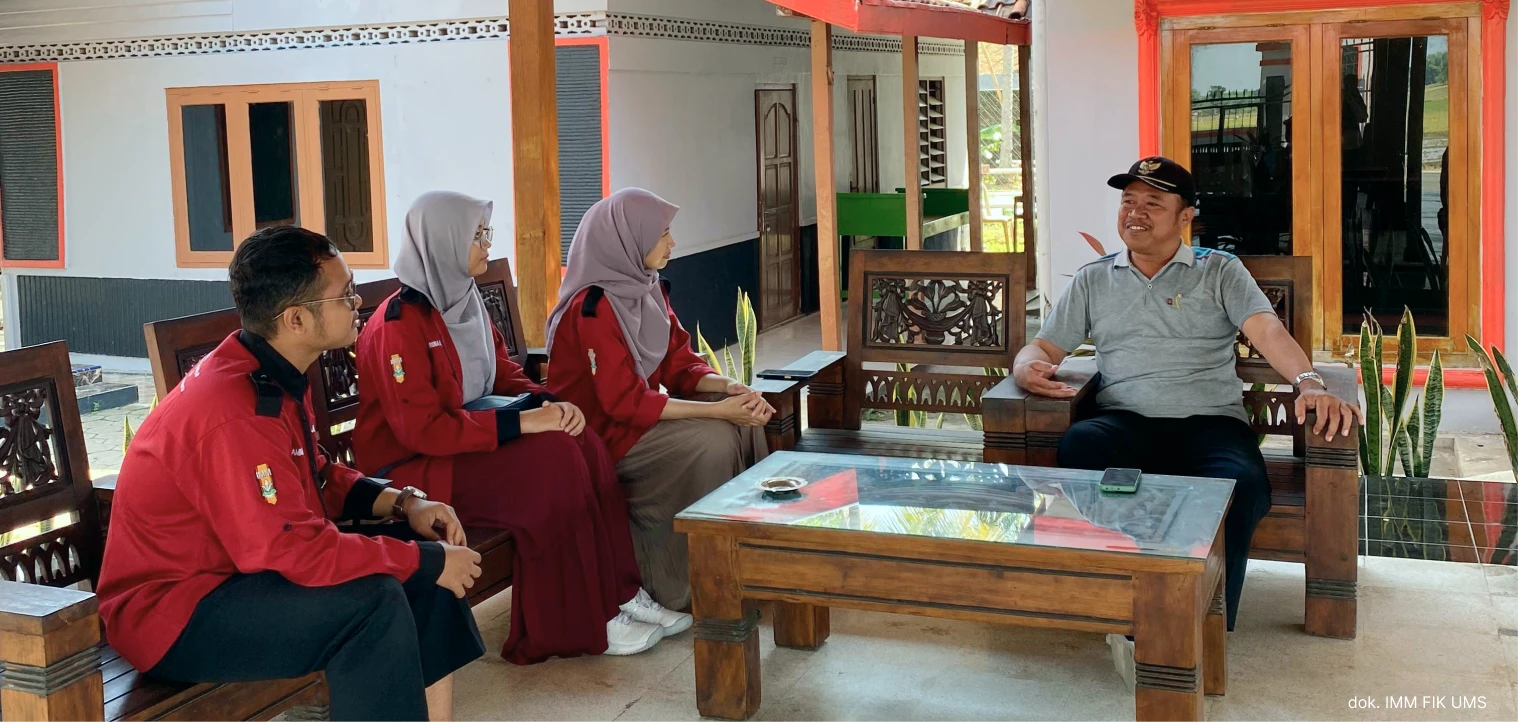
Throughout July 2024, the Student Organization Capacity Strengthening Program Team (PPK Ormawa) of the Muhammadiyah Student Association (IMM) Faculty of Health Sciences (FIK), Universitas Muhammadiyah Surakarta (UMS) worked to build a Family Medicinal Plant (TOGA) garden in Catur Village, Boyolali, Central Java.
Isna Alfiyani, the head of the PPK Ormawa IMM FIK UMS team, outlined the following goals for the TOGA land development project:
“While the community has previously planted Toga in conjunction with Germas (Healthy Living Community Movement), these efforts haven’t been sustainable, and the plants were only grown for personal use,” explained Isna.
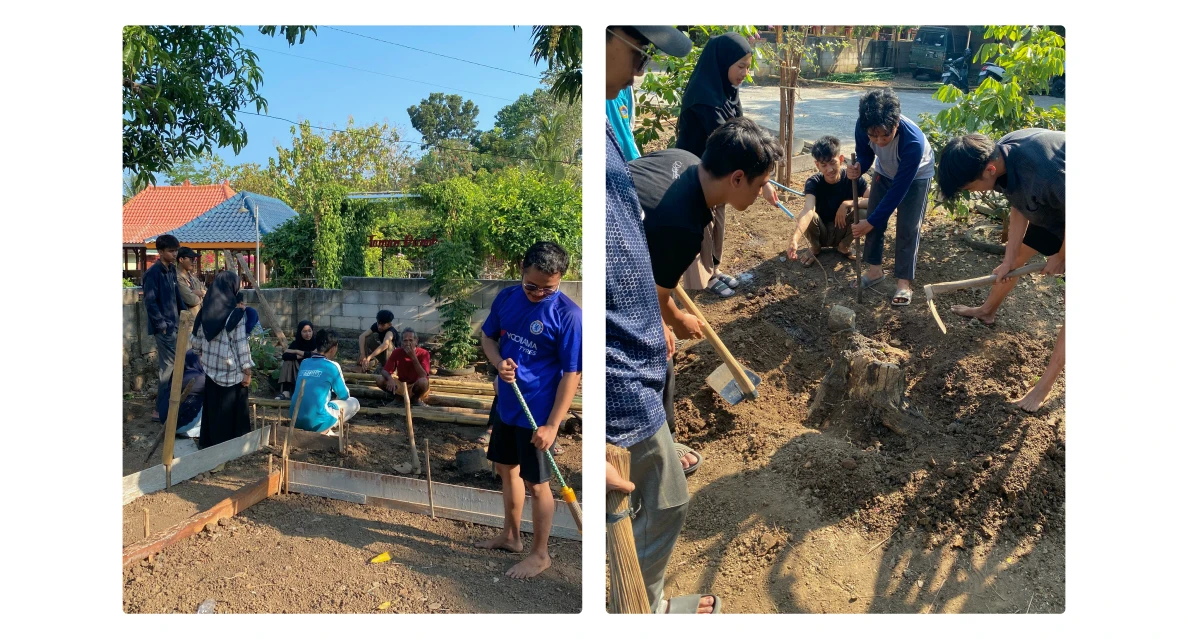
PPK Ormawa participants and residents work together to prepare the TOGA land. Photo: IMM FIK UMS
The land cultivation process started on July 1, 2024, with community service activities. The PPK Ormawa IMM FIK team and villagers worked hand-in-hand to clear the land, preparing it for planting seedlings and building TOGA shelters. This involved cleaning garbage, removing weeds, and tidying the area.
Next, the team gathered materials by cutting bamboo from the surrounding forest. The harvested bamboo was then cut into various sizes for construction purposes. Following this, the team leveled the land, removing weeds, unnecessary plants, and small trees to create a flat surface ready for planting.
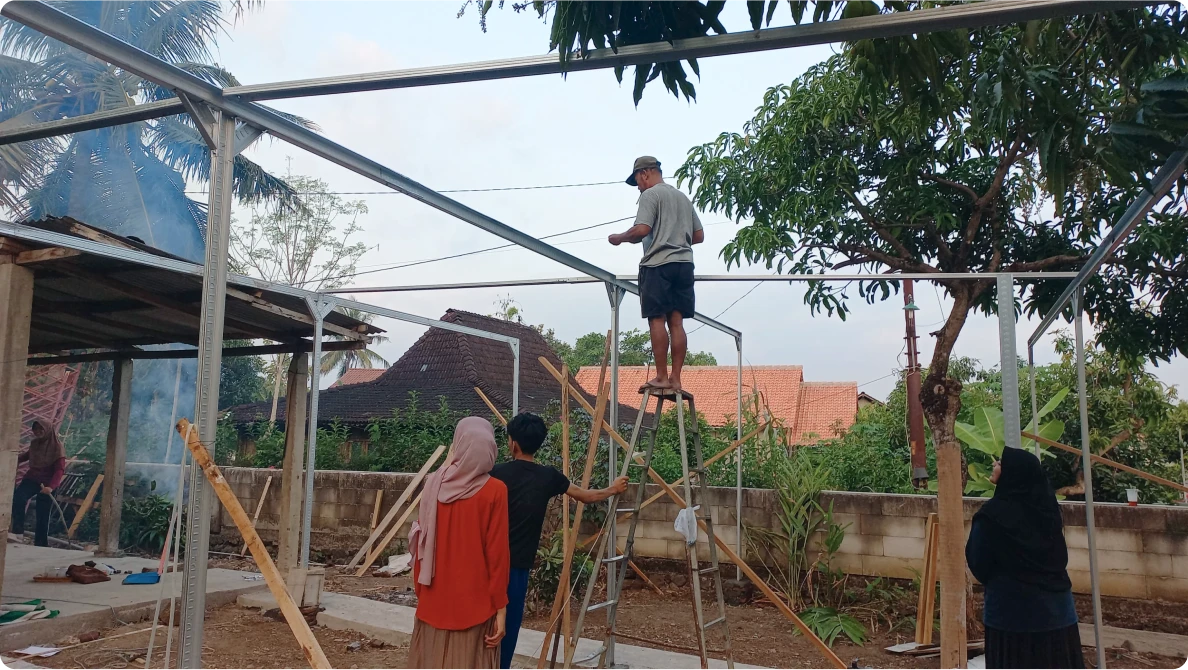
The process of building a foundation to provide shade for the TOGA land. Photo: IMM FIK UMS
Once the land was prepared, the construction of the seedling area commenced with the laying of the foundation. The team also built a road leading to the TOGA land for easier access. Additionally, they constructed a shelter and conducted a final mapping of the area to ensure every plant had a designated planting spot.
Isna mentioned encountering a few challenges during the construction process. “Building the foundation took longer than expected,” she explained, “and selecting suitable plants was also difficult, as some don’t thrive in the dry season.”
The PPK Ormawa team, in collaboration with community leaders, then procured TOGA seeds. Isna explained that the types of seeds were chosen based on the needs of the residents and included ginger, temulawak, daun dewa (Gynura divaricata), telang flower, cinnamon, lempuyang, rosella, turmeric, lemongrass, betel, aloe vera.
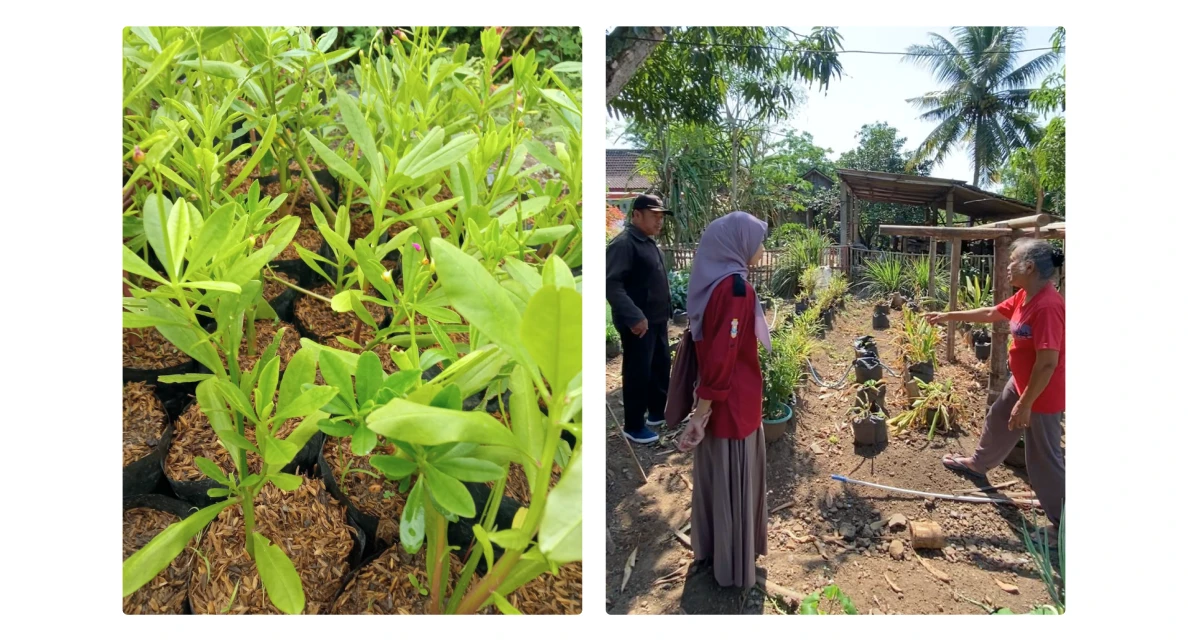
LEFT: One of the medicinal plants growing in the garden. RIGHT: A student and a resident admire the nearly completed TOGA land. Photo: IMM FIK UMS
“Considering the prevalence of diseases like hypertension and diabetes mellitus in Catur Village, plants such as turmeric, ginger, and aloe vera can serve as natural remedies,” said the UMS Nursing student. “These plants can be consumed directly or processed into herbal drinks.”
Once the planting was finished, the team conducted training on TOGA maintenance and education for TOGA Cadres (KAGACA). Isna expressed her hope that this program will benefit the village, stating, “It can provide an additional source of income for residents and support the village’s efforts to showcase the positive aspects of Catur Village.”
Writer: Khoiruna Malihah, Hafidz Dinulloh (Journalist PPKO IMM FIK UMS)
Editor: Gede Arga Adrian
Translator: Farizal Luqman Majid
UMS students have formulated a treatment for diabetic wounds from moringa and neem leaves, and carried home gold at WYIE 2026 in Malaysia.
Nothing’s more special than reading curated news just for you.
Subscribe to the UMS Newsletter for free today.