Officials' Lackluster Public Communication
17 July 2026
The public officials’ statements continue to draw scrutiny, ending in blunders and stirring public disappointment.
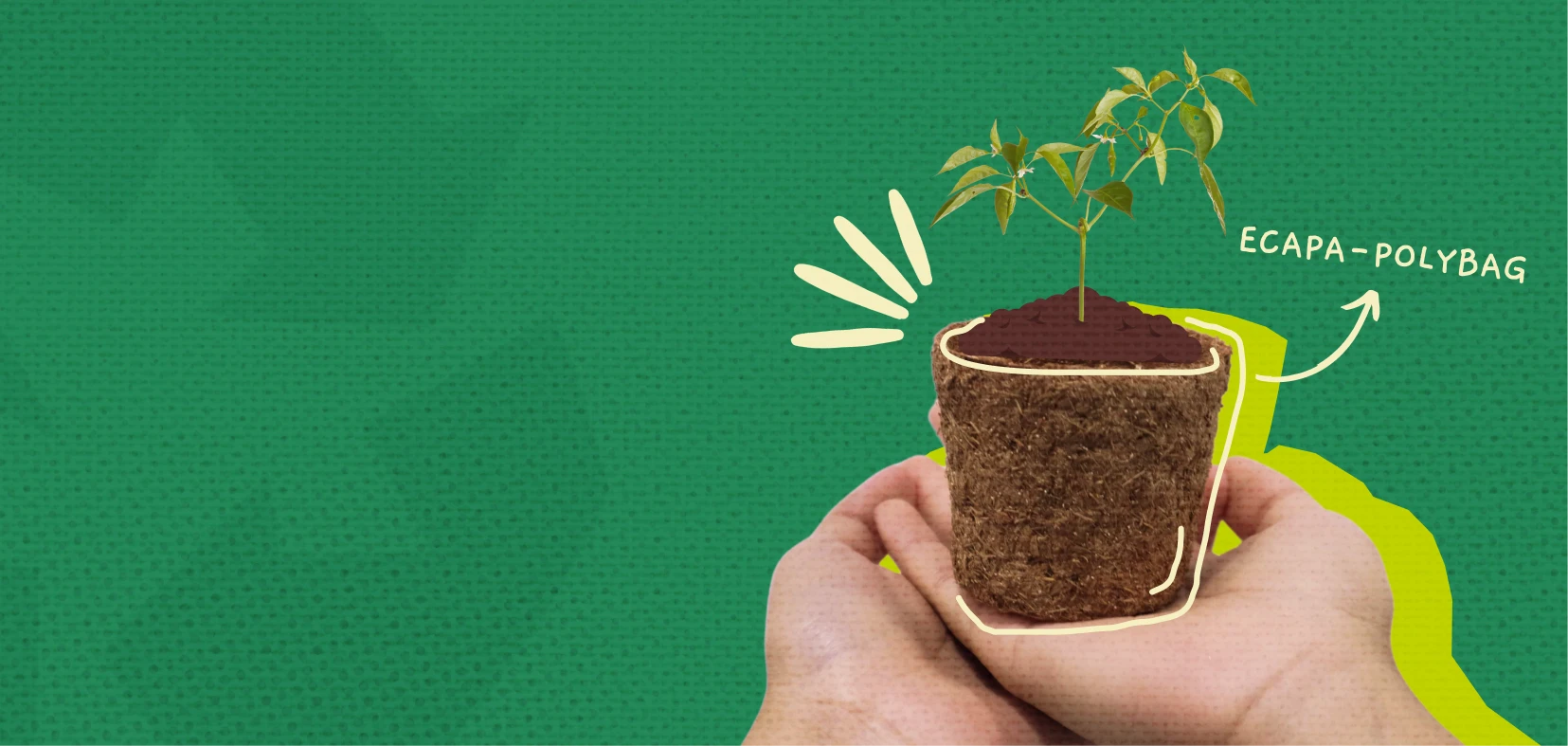
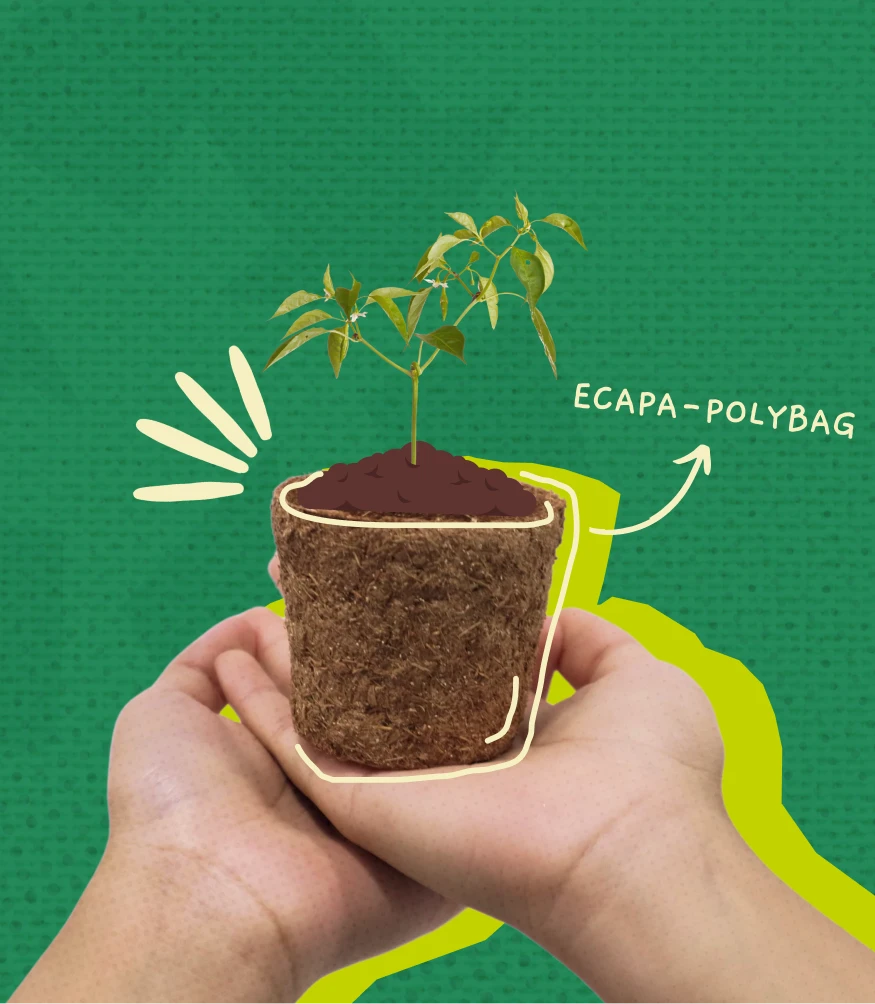
Making their first appearance at the 2024 Perlis International Engineering Invention & Innovation Exhibition (Pi-ENVEX) in Malaysia, students from the Public Health Study Program, Faculty of Health Sciences, Universitas Muhammadiyah Surakarta (UMS) won a silver medal with their innovative project titled “ECAPA-POLYBAG: A Natural Polybag Innovation Biodegradable and Nourish Plants.” The team members include Alya Tsurrayya, Sa’adah Luthfia, Aisyah Nur Afifah, Aulya Rahma, and Ilma Khairunissa.
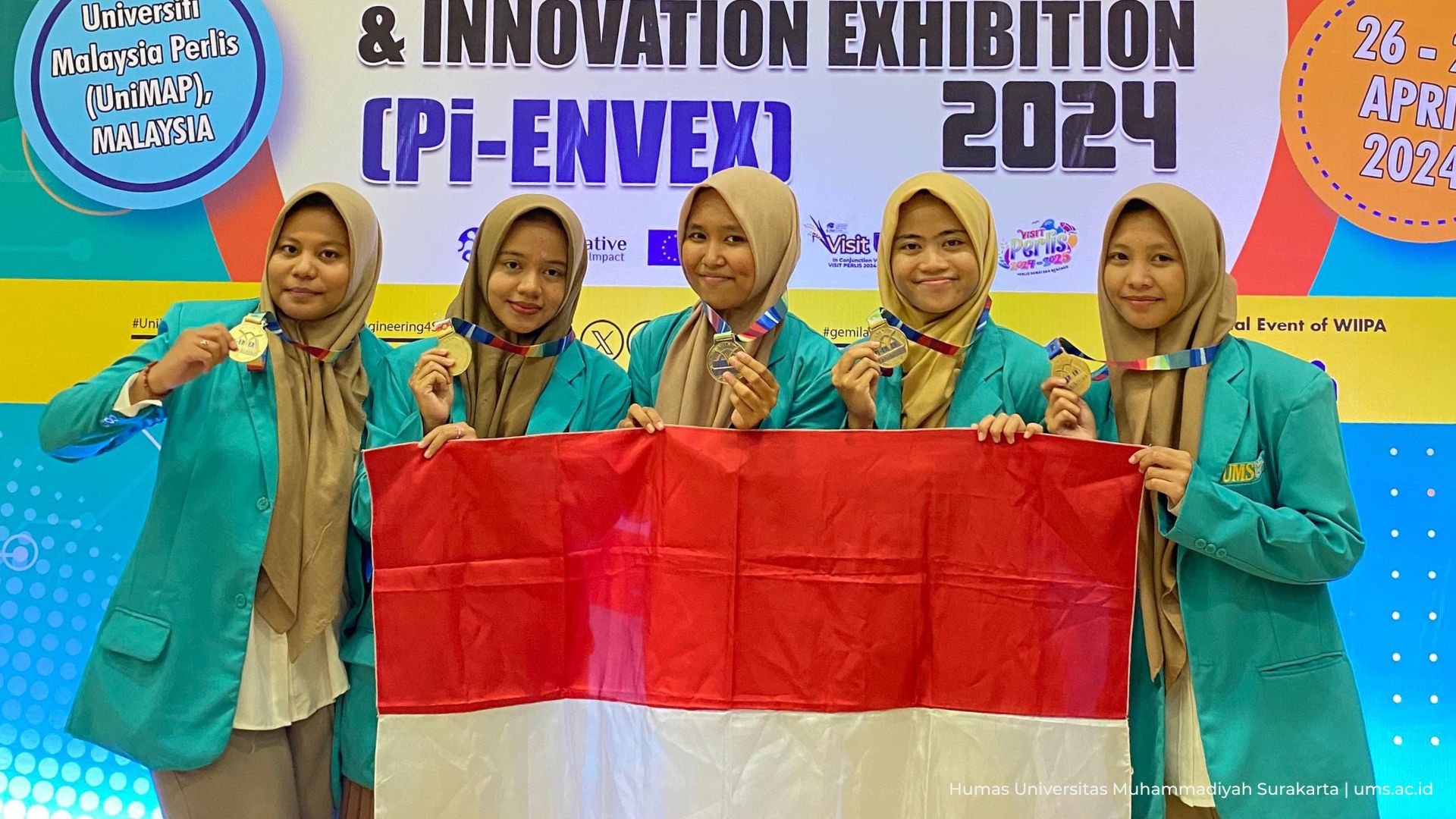
Pi-ENVEX is an international event organized by the ENVEX Young Researcher Club (EYReC) at Universiti Malaysia Perlis (UniMAP). The competition allows young innovators or scientists to share creative ideas, inventions, and technological advancements across various sectors.
According to Alya, her team’s inspiration for eco-friendly poly bags came from their concern about traditional plant poly bags, commonly made from plastic and sold massively in the market. The excessive use of plastic poly bags can accumulate waste, contributing to soil pollution due to their particles, which have a non-degradable nature.
“Usually, when we want to plant, we have to tear the polybag first when the plants start to grow and get bigger, but such actions often leave non-degradable waste,” Alya explained during our Zoom Meeting on Tuesday (30/4).
Alya and her team have set their sight on developing environmentally friendly poly bags just right in their first year in university. They realized that organic waste, a valuable resource, is often ignored and not optimally utilized despite being easily obtained and readily available.
Moreover, they realized the paradox that the healthy vegetables we consume are often grown through agricultural practices that harm the environment. These multifaceted reasons ultimately motivated them to seek more sustainable solutions in crop cultivation.
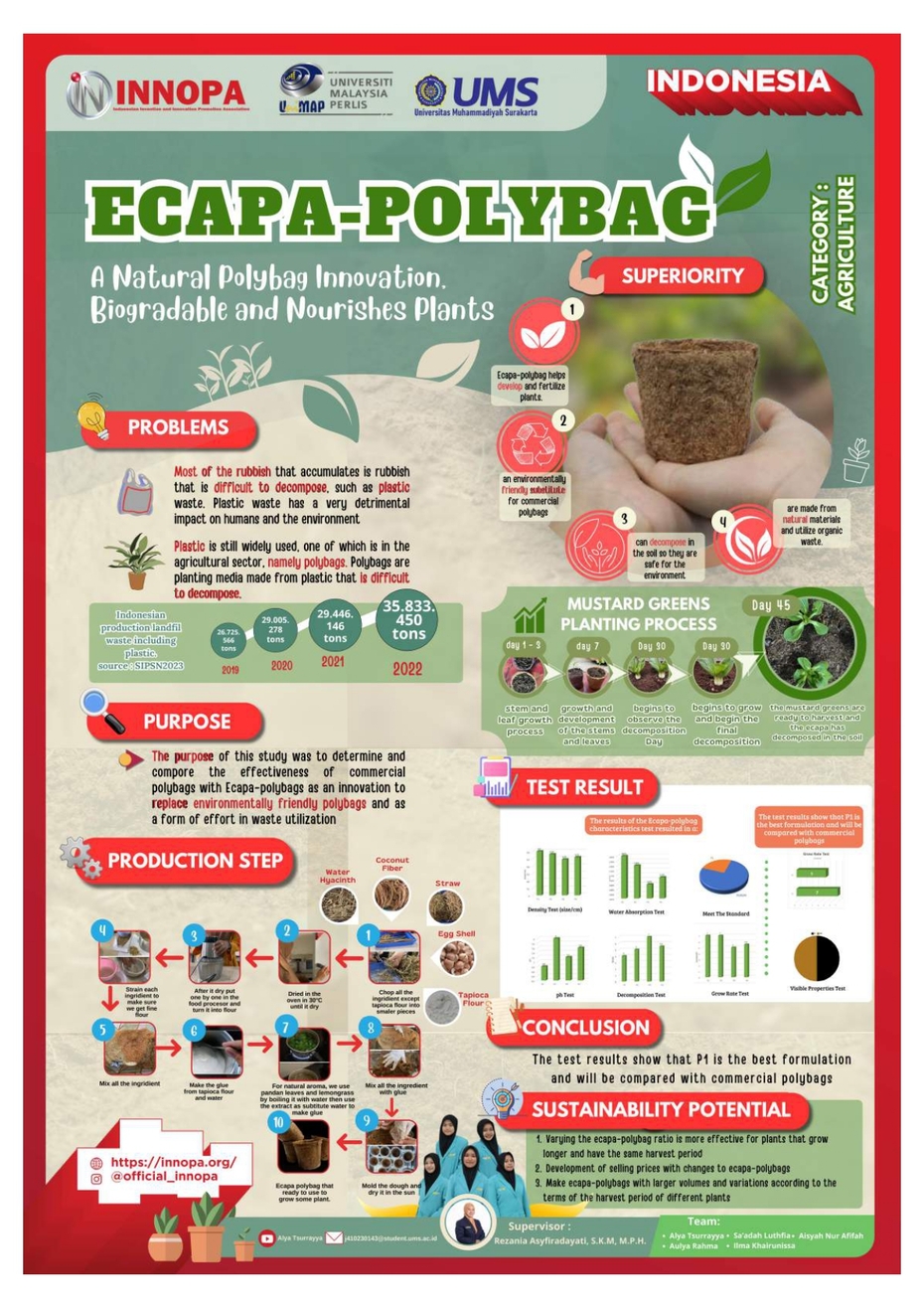
“ECAPA-POLYBAG is the result of utilizing organic waste such as coconut husks, eggshells, straw, and water hyacinth with tapioca flour. The five of us investigated the benefits of each material. We discovered that coconut fiber helps maintain plant resistance to fungi, enhances soil aeration, and exhibits high absorption capacity. Eggshells aid in improving soil drainage. Straw facilitates increased nitrogen uptake depending on availability in the soil. Water hyacinth contributes to enhanced soil fertility, and its cellulose content accelerates decomposition by bacteria. Lastly, tapioca starch promotes growth in young or budding plants,” she explained.
Before reaching the stage of actual product development, the Public Health students underwent a series of rigorous university-level selection and research processes that took about 3-4 months. The stages included in-depth literature studies to understand existing conditions and problems, analysis of potential raw materials, as well as trials and experiments to identify the performance and benefits of each ingredient, which included:
Visible properties test is conducted to check whether ECAPA-POLYBAG has a good appearance and consistency.
“Due to time constraints, we chose mustard seeds for the grow rate test. Mustard is a vegetable that is easy to grow in polybags, and its growth and development are relatively fast. During the research process, Rezania Asyfiradayati, SKM, M.P.H., guided and monitored us. She was very active in providing direction and support to the team,” said Alya.
During the extensive testing process, the Public Health students were not merely engaged in numbers and data but also challenged to think creatively and critically. For example, during the decomposition test, they had to consider various factors affecting the material degradation process, including the environmental conditions when the poly bags were placed and the organic matter in the soil.
With their first international championship under their belts, Alya and her team are preparing for a similar competition in Bali in August. They are committed to identifying and improving the shortcomings of the ECAPA-POLYBAG product.
“An in-depth evaluation is necessary to understand the potential for success in the next event. As part of the follow-up plan, we will split into two teams. The first team will be responsible for developing new products, while the second team will focus on improving the existing ECAPA-POLYBAG.”
Of course, the gold medal is the team’s primary target. However, for them, the ultimate victory is not measured only by the piece of metal on the podium. What matters most is their courage to step up, give the best of themselves, and realize the vision.
“Hopefully, our achievements can inspire other students. Considering we started from the university-level competition, the key is to try to remain focused on the goal. Furthermore, we can collaborate with competent lecturers at UMS because the best innovations are those that have passed guidance and evaluation from experts,” Alya concluded.
Writer: Genis Dwi Gustati
Editor: Al Habiib Josy Asheva
Translator: Farizal Luqman Majid
The public officials’ statements continue to draw scrutiny, ending in blunders and stirring public disappointment.
Nothing’s more special than reading curated news just for you.
Subscribe to the UMS Newsletter for free today.