For stroke survivors, post-hospital care is crucial. Without structured and intensive continued therapy, their condition can deteriorate and even lead to disability, which disrupts daily activities.
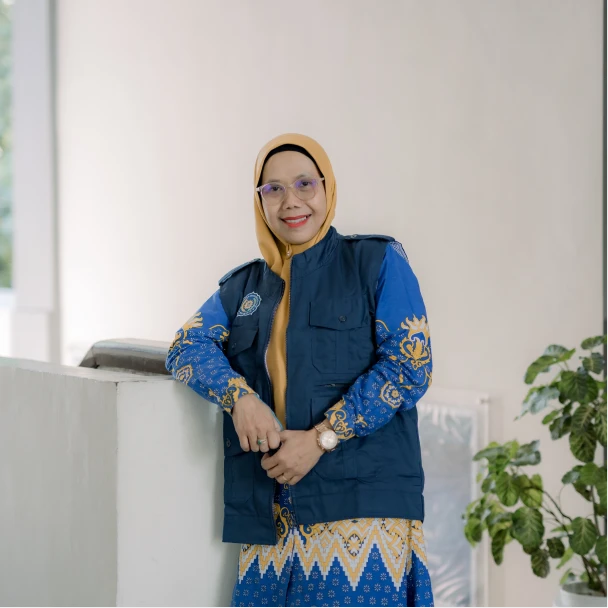
Concerned with how to care for post-stroke patients, Samiyem, a Physiotherapy student at UMS, came up with a brilliant idea to help them regain mobility from home. Samiyem believed her idea will greatly benefit both patients and their caregivers.
“Usually, when someone has a stroke, it not only becomes difficult for the patient themselves but also burdens others. And if a stroke patient becomes disabled, they will continue to rely on others,” said Samiyem.
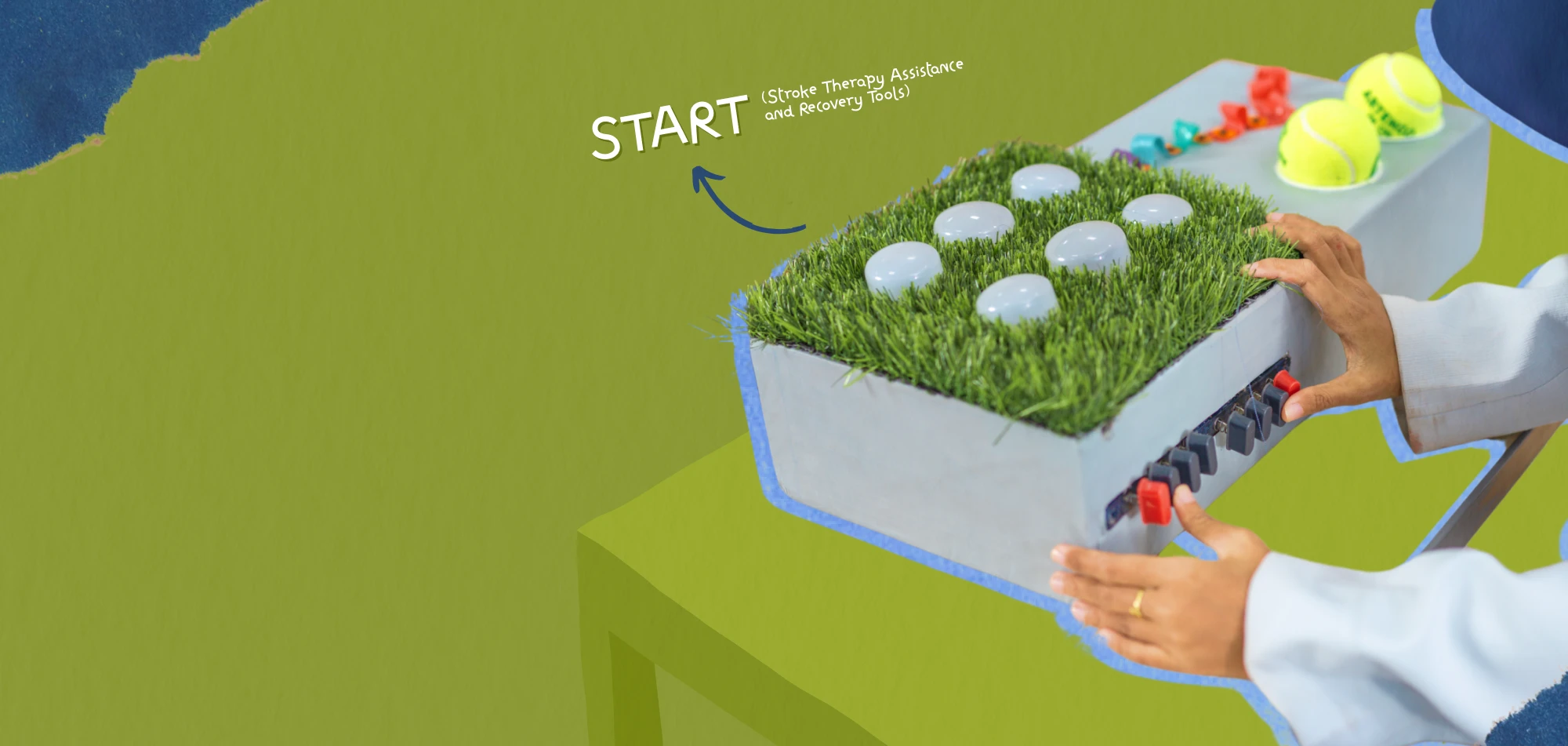
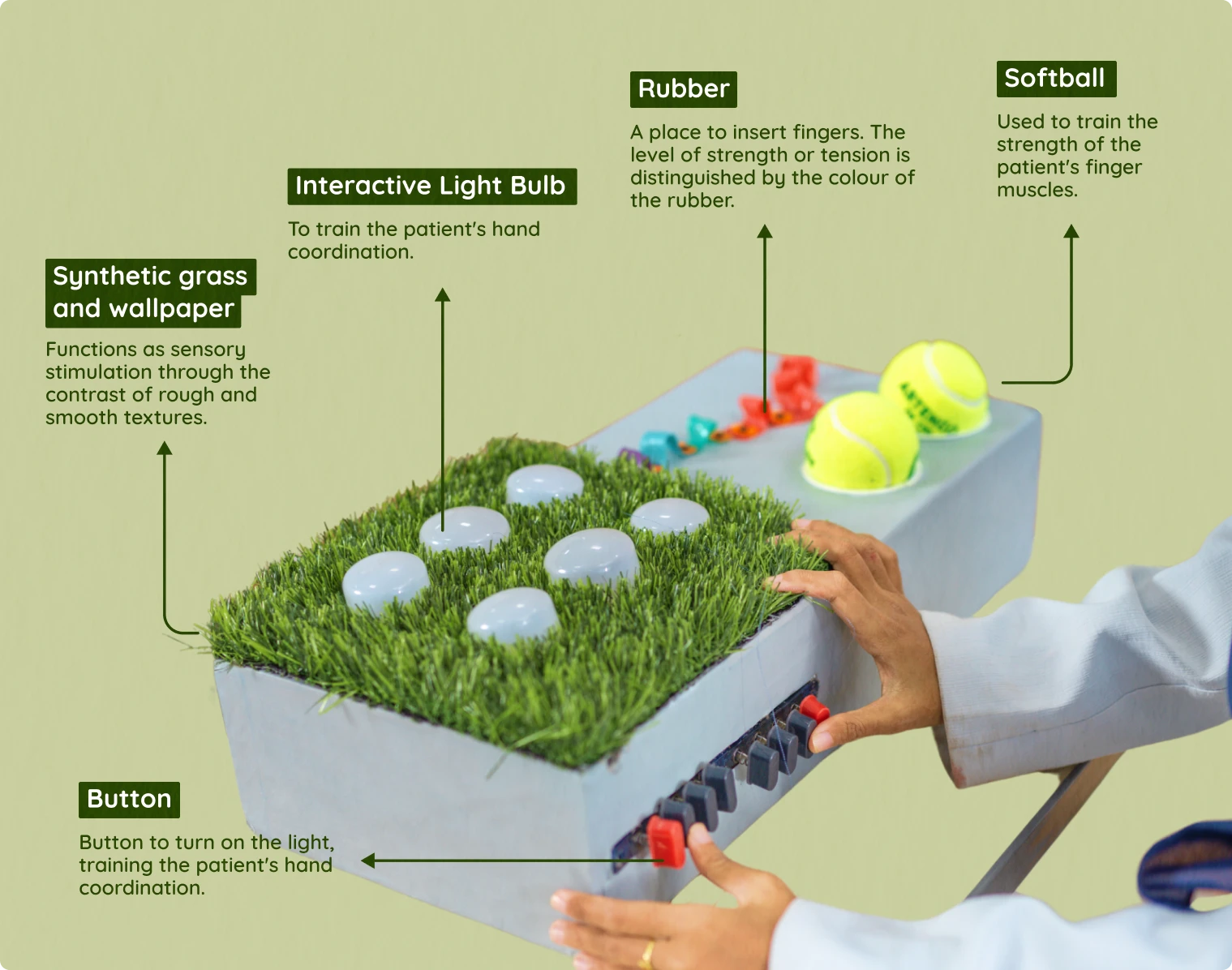
Samiyem’s idea was to design a simple therapy tool called START (Stroke Therapy Assistance and Recovery Tools). This tool is designed to help post-stroke patients perform sensory, motor, and coordination exercises independently at home.
Along with four fellow Physiotherapy students from UMS, Muhammad Azka Niam, Taqiyyah Nurul ‘Azzah, Nadya Umami Komalasari, and Syazana Zahra Umardi, Samiyem began to bring her innovation to life. She shared the idea with their supervising lecturer, Arif Pristianto, SSt.FT., M.Fis., who then helped move forward with designing the tool.
During the holiday break, Samiyem was busy working on the START design with her parents. The idea is quite simple. However, its implementation holds significant potential benefits, especially for communities in remote areas.
"Coincidentally, during the semester break last year in the fifth semester, I went home and immediately started making it with my parents using leftover wooden boards we had at home," Samiyem shared last week.
Samiyem’s brilliant innovation didn’t emerge from the comfort of a classroom. It was there from a deep sense of awareness after participating in several community service programs in rural areas.
Before finally designing the therapy tool, Samiyem and her team had developed a stroke patient monitoring app. The application was implemented in Kwaren, Klaten, Central Java.
However, the monitoring app alone wasn’t enough to solve the problem. Samiyem thought that the real answer was a tool that enabled patients to do exercises independently.
“In reality, many stroke survivors in villages need full attention and genuinely want to undergo treatment, but they’re held back by financial constraints and other barriers. They also don’t know what kind of tools could help them, especially after being discharged from the hospital,” Samiyem explained.
More than just a therapy tool, START also carries an important educational mission. Samiyem hoped the presence of this tool can serve as a gateway to introduce the physiotherapy profession to the public, especially to those who still rely on shamans or non-medical treatments for healing.
In several villages she has visited, alternative treatments from shamans remain the primary choice. Yet, she said, conditions like stroke require scientific treatment from competent healthcare professionals.
“There’s still a public stigma where illness is often attributed to supernatural causes and treated by shamans or similar means. With this tool, we hope to help shift that mindset and eliminate elements of TBC, Tahayul (superstition), Bid’ah (religious innovation), and Churofat (heresy), from society," Samiyem explained.