Addressing Environmental Issues
In the Pharmacy laboratory at Universitas Muhammadiyah Surakarta (UMS), Muhammad Arhab Ath-Tariq carefully examined the color indicators on the Eco Frost Box prototype during its fifth round of testing. Collaborating with four peers, Marko Refianto and Muhammad Aditya Rivalta from Mechanical Engineering, Jihan Nabila from Physiotherapy, and Mira Shofiah from Pharmacy, they overcame numerous challenges to refine their innovation, which is set to be showcased at the 2024 World Youth Invention and Innovation Award.
“Our idea stemmed from something simple. I’m from Lampung, and when I travel home, I often take the ferry. Observing the areas around the harbor, I noticed an overwhelming amount of waste, particularly discarded styrofoam used by fishermen to store seafood (like fresh fish and others). The volume was quite large and undoubtedly polluted the sea,” Tariq shared, reflecting on the hard work he and his team put in during extensive laboratory testing on campus.
This concern motivated Tariq to develop an innovative solution aimed at helping fishermen preserve the quality of their seafood while simultaneously addressing the environmental issues caused by the widespread use of styrofoam. Together with his four teammates and under the guidance of their supervisor, Muhammad Al Fatih Hendrawan, S.T., M.T., they brought the idea to life.
At the prestigious event organized by the Indonesian Young Scientists Association, Tariq and his team introduced their innovation named Eco Frost Box: Smart Packaging Based on Sugarcane Molasses Waste and Phenolic Extracts from Tomato Waste for Sustainable Indonesian Marine Environment. This innovative seafood storage box incorporates environmentally friendly materials such as sugarcane molasses waste and phenolic extracts derived from tomatoes.

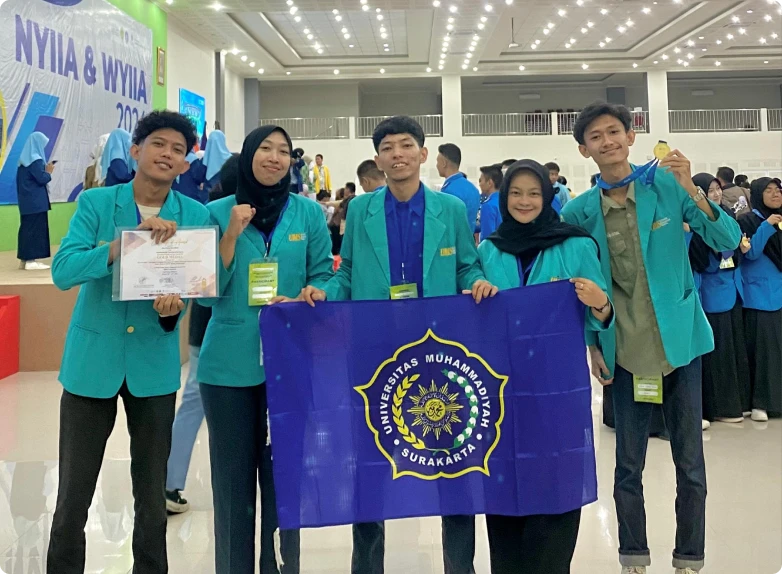
Adit, Jihan, Marko, Mira, and Tariq (left to right) bagging gold at the World Youth Invention and Innovation Award, Sunday (13/10/2024).
“Unexpectedly, our innovation caught the attention of the judges and won us the gold medal,” said the fifth-semester student. “The competition involved participants from 16 countries with hundreds of exceptional teams. We are incredibly grateful.”
Indonesia is renowned as a maritime nation with an abundance of seafood resources. According to a press release from the Ministry of Marine Affairs and Fisheries, the trade surplus for fisheries commodities from January to September 2024 reached USD 3.87 billion, reflecting a 7.2% increase compared to the same period in the previous year. Key contributors to this growth include high-demand seafood products such as shrimp, tuna, skipjack, mackerel, squid, cuttlefish, and octopus.
Unfortunately, despite the impressive figures, the fisheries industry faces several challenges, one of which is the issue of waste polluting marine ecosystems.
“Based on the literature I’ve read, including research by scientists at the Oceanography Research Center of the Indonesian Institute of Sciences (LIPI), approximately 0.27 million to 0.59 million tons of waste enter Indonesian seas annually. Styrofoam is one of the dominant types of waste in the plastic category,” explained Tariq.
The Chemical Engineering student from UMS explained that styrofoam, although lightweight, is difficult to decompose and contains harmful substances such as benzene and styrene, which are carcinogenic. Moreover, fishermen often use styrofoam as containers for storing seafood that we eventually consume. “Styrofoam is extremely hard to break down, it takes hundreds to millions of years,” he added, showing immense concern.
Pros of Eco Frost Box
The Eco Frost Box, Tariq explained, serves as an alternative to Styrofoam, made from polylactic acid (PLA) derived from sugarcane molasses and tomato phenolic extracts. This innovation, according to claim, is able to extend the shelf life of seafood by up to 15 days.
“The shelf life of fish in regular styrofoam is only up to 10 days. Our product extends this by an additional 5 days. We've also tested it in the Pharmacy Lab for antimicrobial properties on the Eco Frost Box,” Tariq explained.
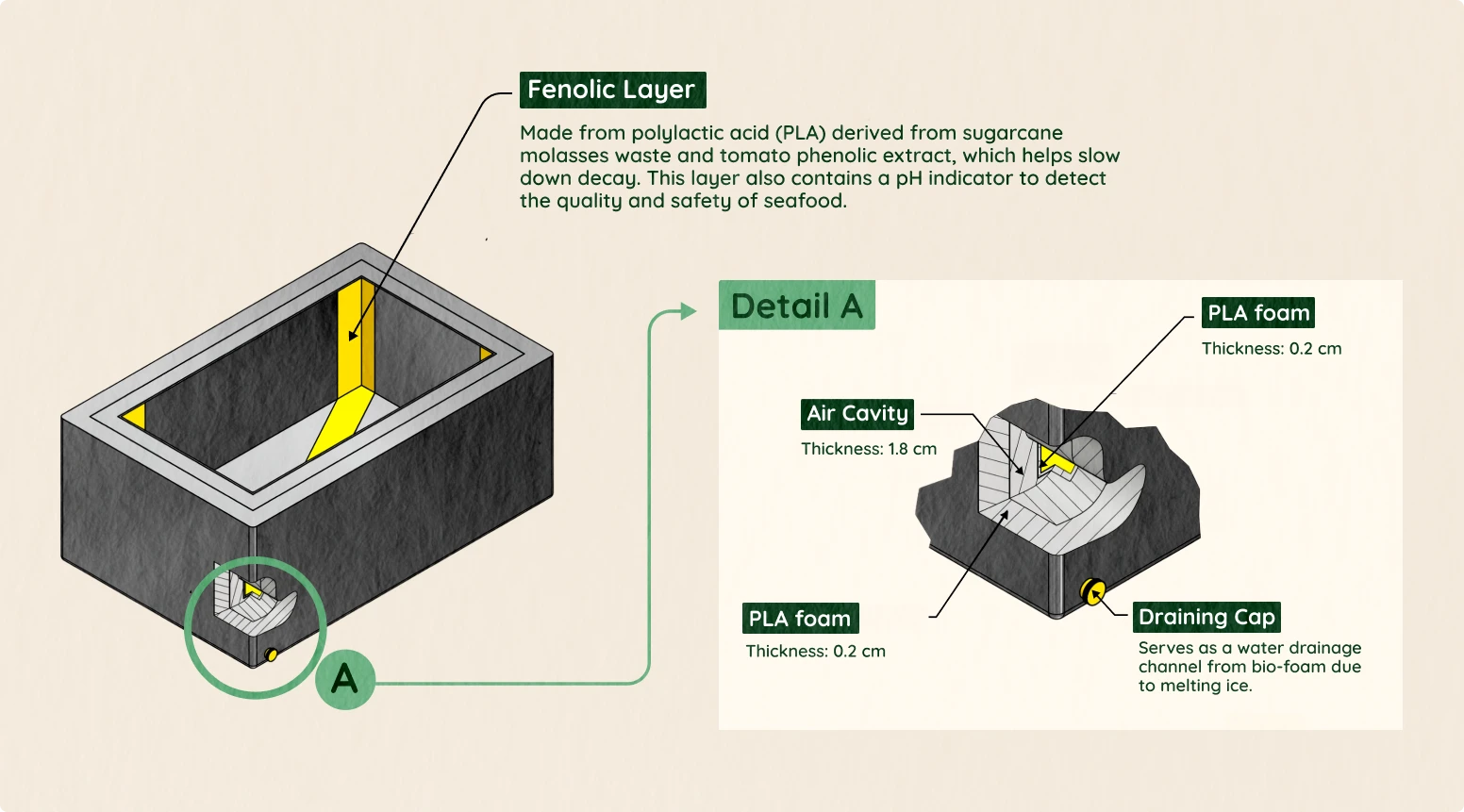
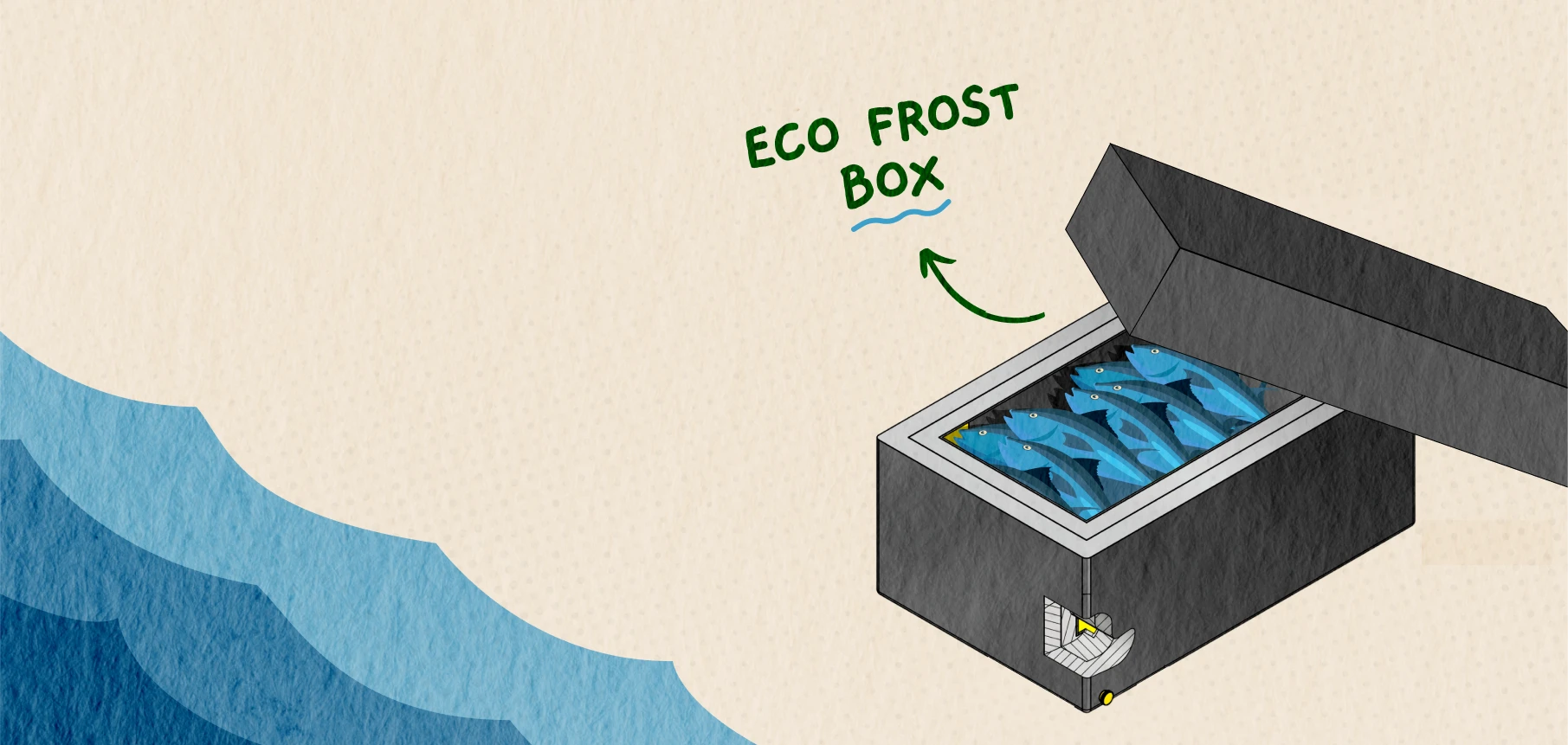
Design of Eco Frost Box. Salsabila/UMS PR
The team began their intensive research in September 2024. Over the course of one month, they designed the prototype, tested raw materials and coatings in the UMS Pharmacy laboratory, and refined the product design in the UMS Mechanical Engineering laboratory.
The process of creating PLA involves fermenting molasses using Lactobacillus delbrueckii subsp. bulgaricus bacteria, which produces lactic acid that is then polymerized into PLA. Once the PLA is produced, it is converted into bio-foam via molding, with the final step shaping the material according to product specifications.
“The key advantage lies in the PLA's biodegradable nature. Our product can decompose within 12 months, much faster than styrofoam,” he concluded enthusiastically.
The outer layer of the Eco Frost Box is crafted from phenolic extracts derived from tomato waste, which act as antimicrobial and antioxidant agents. This layer slows down the spoilage process, preserving the freshness of its contents.
“Our product is also equipped with a lycopene-based indicator. If the fish is no longer fresh or safe to eat, the indicator changes color, showing the fish or seafood’s acidity levels increase,” Tariq explained.
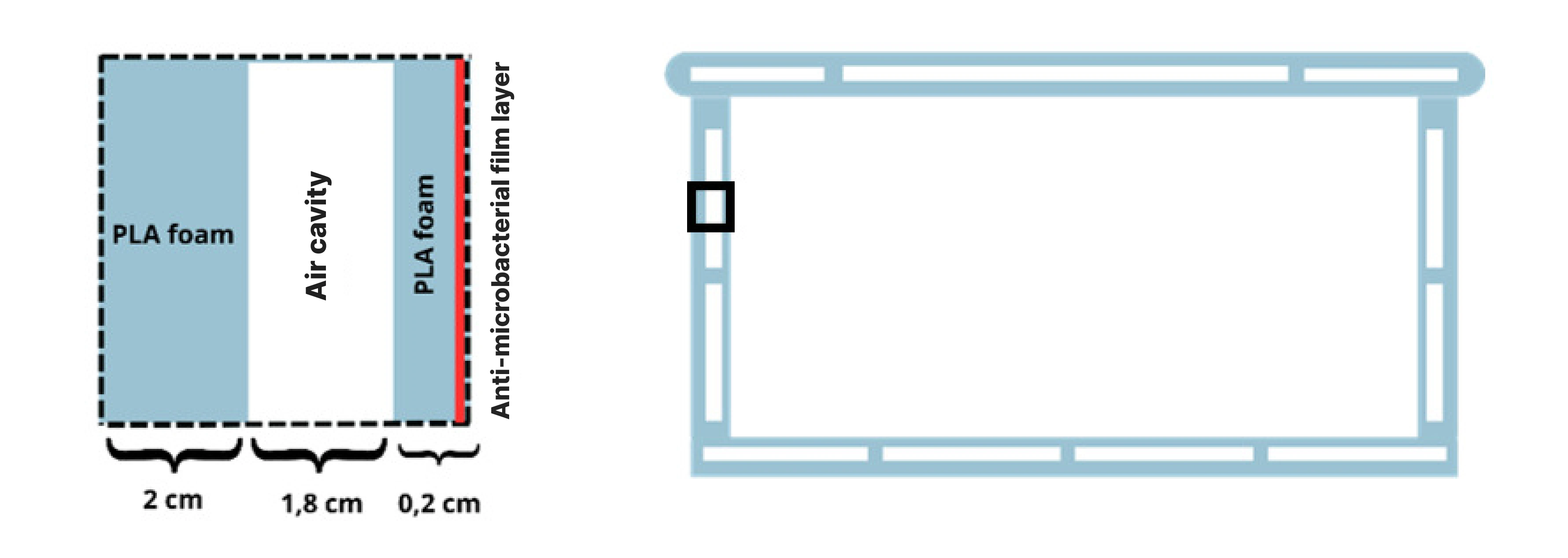
Illustration of the structure of the PLA foam layer, air cavity, and lycopene-based antimicrobial layer.
The Eco Frost Box is designed with dimensions of 39 cm x 25 cm x 16 cm, capable of holding up to 10 kg of seafood. Its wall structure consists of three layers: PLA foam, an air cavity, and a lycopene-based antimicrobial layer.
“The air cavity helps minimize heat transfer from the outside to the inside, making the ice last longer. In our tests, the ice inside the box lasted up to 57 hours, which is 2.5 times longer than regular styrofoam,” he added.
As an added feature, Tariq and his team included a draining cap to remove melted ice water, ensuring the seafood remains fresh without being submerged in water. “This ensures the quality of the seafood is maintained,” said Tariq.
Tariq and his team are refining their plans to enhance the Eco Frost Box, with a primary focus on developing a reusable pH indicator layer.
“Currently, the indicator we use is single-use. We’re exploring solutions, either by regenerating the indicator using specific technologies or creating a layered design where the top layer can be removed after use,” he explained about the concept under development.
Moving forward, the team also intends to collaborate with government agencies to implement cross-subsidies for fishermen using the Eco Frost Box. Additionally, they plan to actively participate in environmental community campaigns to raise public awareness about the sustainability of marine ecosystems.
Perhaps, they will apply this innovation to replace the role of food styrofoam. “Styrofoam used for food packaging poses the same environmental and health challenges. We hope to develop food packaging that is not only environmentally friendly but also safe for consumers’ health. We aim to be part of the solution, not the pollution,” Tariq concluded.
Writer: Genis Dwi Gustati
Translator: Farizal Luqman Majid
Editor: Al Habiib Josy Asheva
Student Work
UMS Newsletter
Nothing’s more special than reading curated news just for you.
Subscribe to the UMS Newsletter for free today.