
Bank Indonesia Holds Interest Rate at 5.75%, What Is the Impact?
24 July 2026
Bank Indonesia has held its benchmark rate at 5.75 percent, ending speculation of a hike to 6 percent that had circulated in recent weeks.


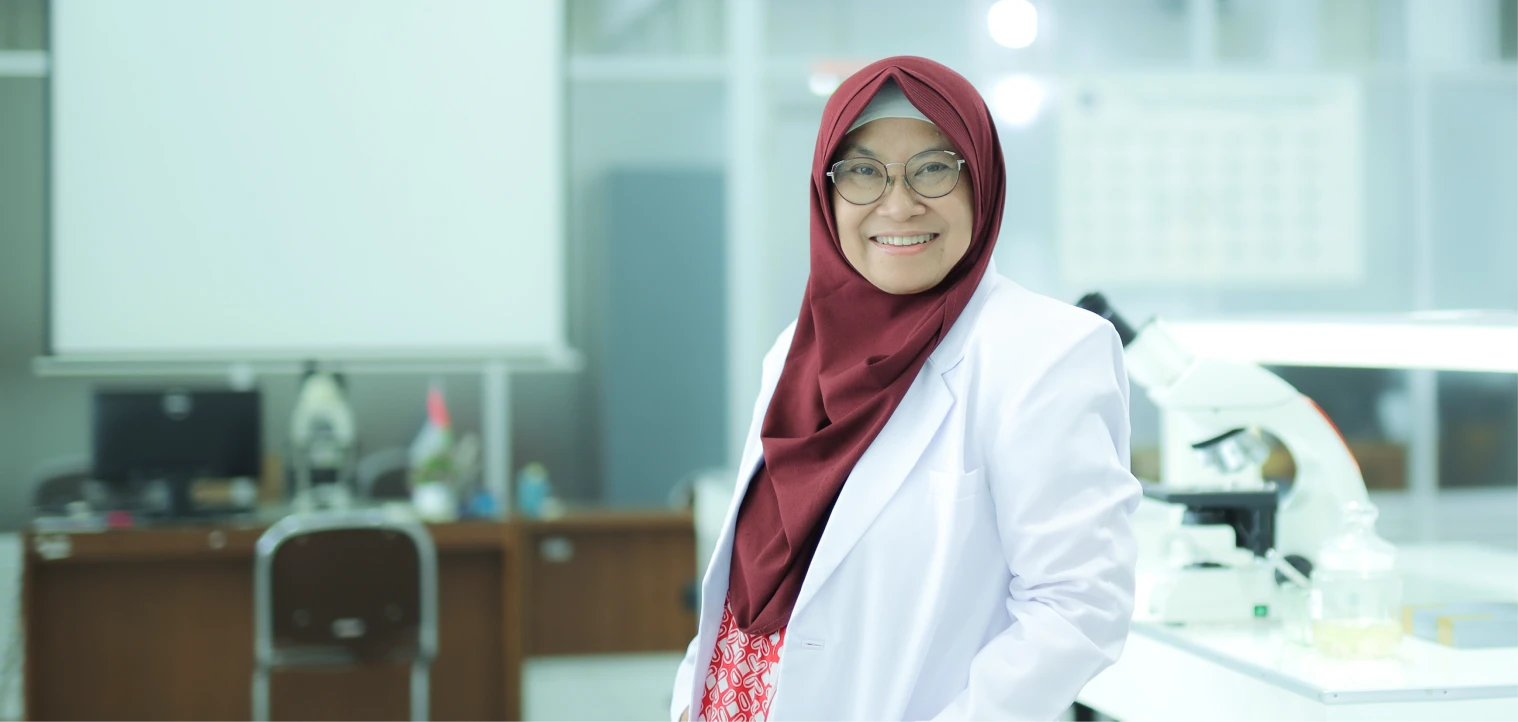
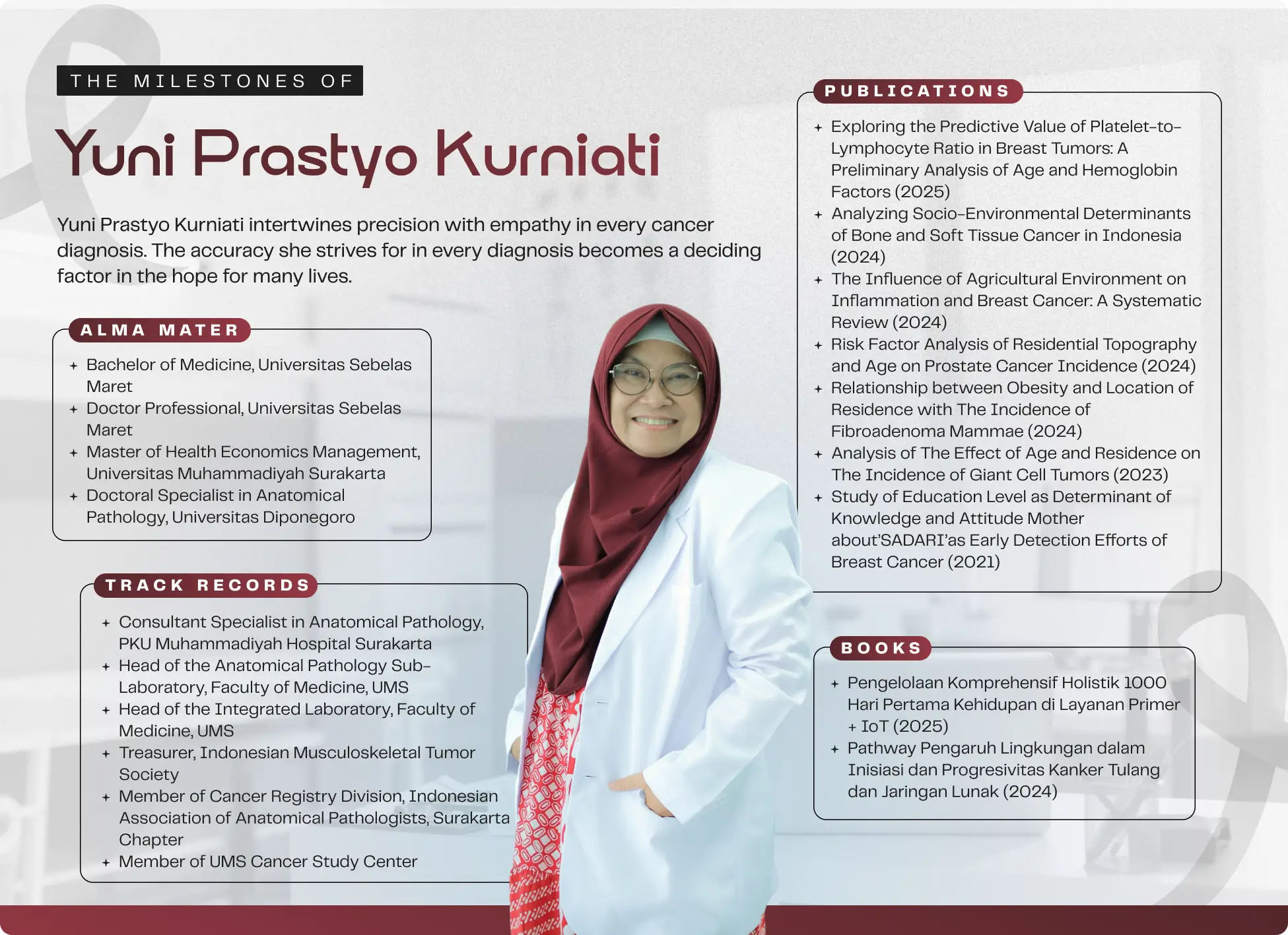
Who would have thought that a woman who once feared the sight of blood would become an anatomical pathology specialist? dr. Yuni Prastyo Kurniati, Sp.PA., M.M., never imagined her journey would take her this far.
“I never pictured myself studying medicine,” Yuni said with a laugh when met at the Anatomical Pathology Laboratory, Faculty of Medicine, Universitas Muhammadiyah Surakarta (UMS), last week. Among her eight siblings, she is the only one who pursued a career in medicine.
At first, Yuni had no interest in becoming a doctor. She actually wanted to study International Relations at Universitas Gadjah Mada (UGM). “I have been active in organizations since junior and senior high school. But my mother wouldn’t let me choose social sciences. She said I had to take natural sciences so at least one of her children could become a doctor,” she recalled.
She followed her mother’s wishes, unaware that the decision would open the door to a completely new world. Yuni was eventually accepted into the Faculty of Medicine at Universitas Sebelas Maret (UNS) in 1992.
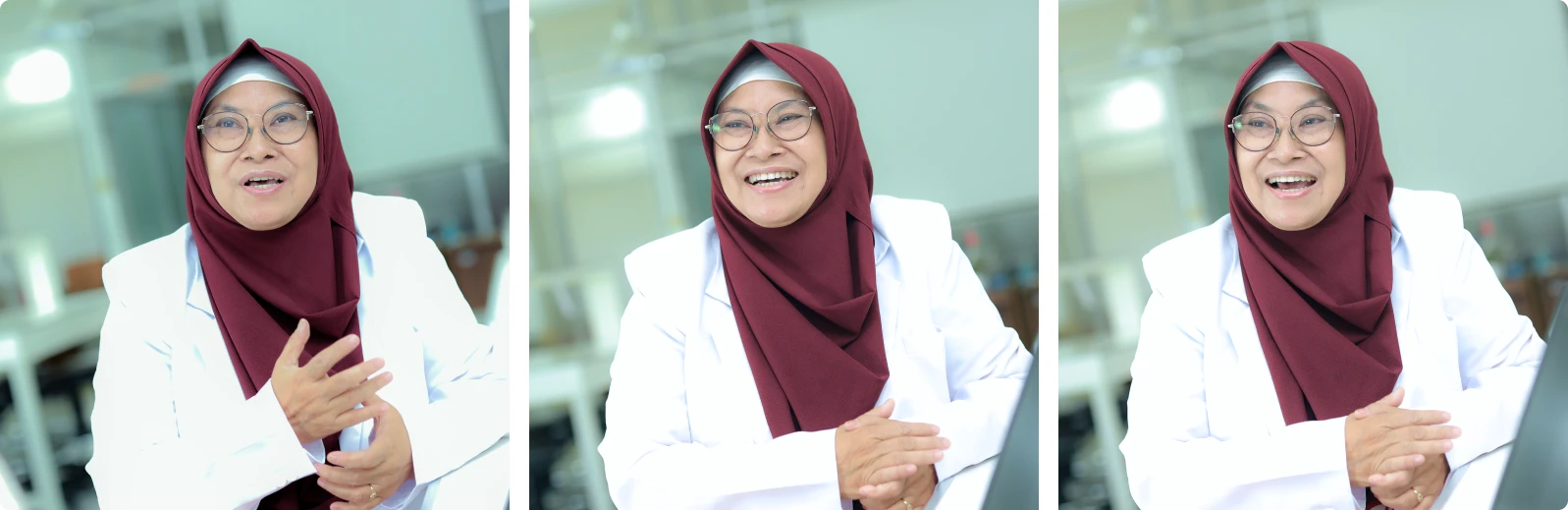
“Once I started studying, it turned out not as scary as I thought, even though I was genuinely terrified of blood,” said the Klaten-born doctor. At university, Yuni adapted quickly. She joined the Student Senate, participated in the National Scientific Meeting, and even represented the faculty in a traditional dance competition, all while balancing the intense schedule of exams and lab work typical of medical students.
After graduating and obtaining her medical registration, Yuni served as a contract doctor at Puskesmas Baki I in Sukoharjo from 2001 to 2004. The following year, she found herself drawn to education and joined the Faculty of Medicine at UMS as a lecturer.
The world of education, it turned out, reignited a spirit that Yuni inherited from her father, a former lecturer at the Faculty of Engineering, UMS. For Yuni, teaching was never just about delivering lectures, she was among the pioneering lecturers who helped establish the UMS Faculty of Medicine.
“We really started from scratch, back then, the Faculty of Medicine building was still the old one in Penumping, Laweyan, which is now the Faculty of Dentistry,” she recalled fondly.
After several years of teaching at UMS, Yuni felt the need to keep growing and learning. She went on to pursue a master’s degree in management at UMS while continuing to teach at the Faculty of Medicine.
In 2013, at the age of 37, Yuni decided to take another leap, she wanted to become a medical specialist.
Her decision to pursue anatomical pathology was driven by a strong conviction. She thought the field could make a real difference in how diseases are diagnosed, especially cancer. “Cancer remains an ongoing challenge for the medical world. That’s what inspired me to study it more deeply,” she said firmly.
After completing her specialist training, Yuni began practicing as a Consultant in Anatomical Pathology at Muhammadiyah Hospital Surakarta in 2016, a role she continues to hold to this day. “What I do now is truly a blessing from Allah. I’m deeply grateful to be able to survive in both worlds, academia and clinical service, combining them as a complete form of devotion in my life as a servant of Allah,” Yuni said sincerely.
Yuni described her specialist training years as a “bloody battle.” She had to move to Semarang for her hospital-based specialist program and could rarely return home. She could only go home twice a week after completing the hospital-based phase.
“My husband was also pursuing his Ph.D. at that time,” Yuni recalled. “So, both of us were studying, and it really took a lot of endurance. Many nights, I came home late, just long enough to see the kids for a moment, before heading back to Semarang before dawn.”
One of Yuni’s most unforgettable clinical experiences happened when she treated a 38-year-old woman with a lump in her breast. “I took the tissue sample following the standard procedure,” she said softly. “But just as I was about to begin, the patient looked at me and asked, ‘Doctor, am I going to die? How much time do I have left?’” Yuni paused, her voice trembling as her eyes welled up.
 She recalled holding her breath for a long moment, staring at the patient under the bright surgical light. “My feelings were all mixed up,” Yuni said quietly. “Because at that moment, I was the one responsible for determining someone’s life.”
When the results came back positive for cancer, her heart sank, she wasn’t ready to tell the truth. Leaving the pathology lab of the hospital, she found the patient waiting outside with her four young children. “One was about two years old in her arms, and the others were clinging to her skirt, I just stood there in silence. You’re not supposed to let emotions get in the way, but I’m human, and above all, I’m a mother.” Yuni said.
Not all the patient stories she handled ended in sorrow. Another story that deeply moved Yuni was that of a woman with breast cancer who now lives a healthy life after ten years of fighting the disease.
Initially, the patient came in with fragile mental health after being diagnosed with cancer, mostly because she also had to care for a child with a developmental disorder and a husband who suffered a stroke. Thanks to early diagnosis and proper treatment, her condition gradually improved. The patient underwent tumor removal surgery, completed a series of chemotherapy sessions, and continued routine check-ups every five years for follow-up evaluations.
The latest examination results showed everything was clear, with no signs of recurrence.“Every check-up, alhamdulillah, the results have always been good. Now, this patient can continue her life and even care for her child and her husband again,” Yuni said.
This case, she added, proves that early detection and accurate therapy can give new hope to cancer patients. “Saving one person can mean saving an entire family,” she said.
Yuni also once treated a woman in her fifties, the wife of an HIV-positive husband who had passed away earlier.
The patient’s husband was known to have engaged in promiscuous sex before marriage. Though the wife was aware of that painful truth, she chose not to make an issue of it for the sake of her marriage and the future of their children. Years later, she was diagnosed with cervical cancer caused by an HPV (human papillomavirus) infection.
For Yuni, every patient carries a life message of their own. Some stories move her to tears, others stir anger and deep empathy, all of which she turns into reflections for herself.
Now, amid her busy life as both a lecturer and a doctor, Yuni never stops learning. She is deeply involved in collaborative research with her husband, Dr. dr. Yusuf Alam Romadhon, M.Kes., Sp.KLLP., FISQua., FISPH., FISCM., who also studies the bio-psycho-socio-cultural-economic aspects that influence patient health.
They are part of the UMS Cancer Study Center as well. In May 2025, the couple were selected to represent the center at the International Cancer Research Symposium organized by the University of Nottingham, UK, held in Kuching, Sarawak, Malaysia.
Recently, in recognition of her contributions and expertise in medical science, Yuni was nominated as a candidate for The 2025 UNESCO–Russia Mendeleev International Prize in Basic Sciences. “It’s not about ambition,” Yuni concluded. “We (Yuni, her husband) simply want to understand life through science and clinical experience. You could say this is the very breath of our devotion.”
Writer: Genis Dwi Gustati
Translator: Farizal Luqman Majid
Editor: Al Habiib Josy Asheva
Bank Indonesia has held its benchmark rate at 5.75 percent, ending speculation of a hike to 6 percent that had circulated in recent weeks.
Nothing’s more special than reading curated news just for you.
Subscribe to the UMS Newsletter for free today.