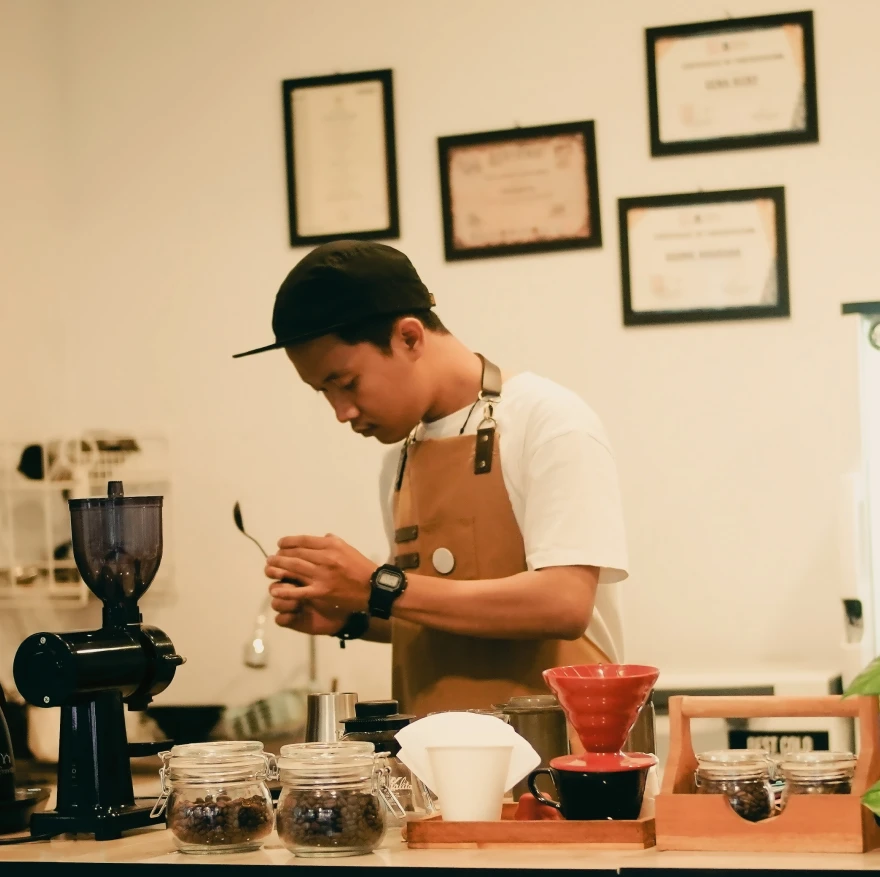
The Coffee Shop Boom
1 August 2026
Indonesia is one of the world's largest coffee-consuming nations, a thirst that keeps spawning new coffee shops. Sharpening the competition among them.




In the quiet corners of Tapen, Nusukan, Surakarta, a young Anton spent his afternoons anchored to the floor of a modest living room. Before him lay a small mountain of newspapers.
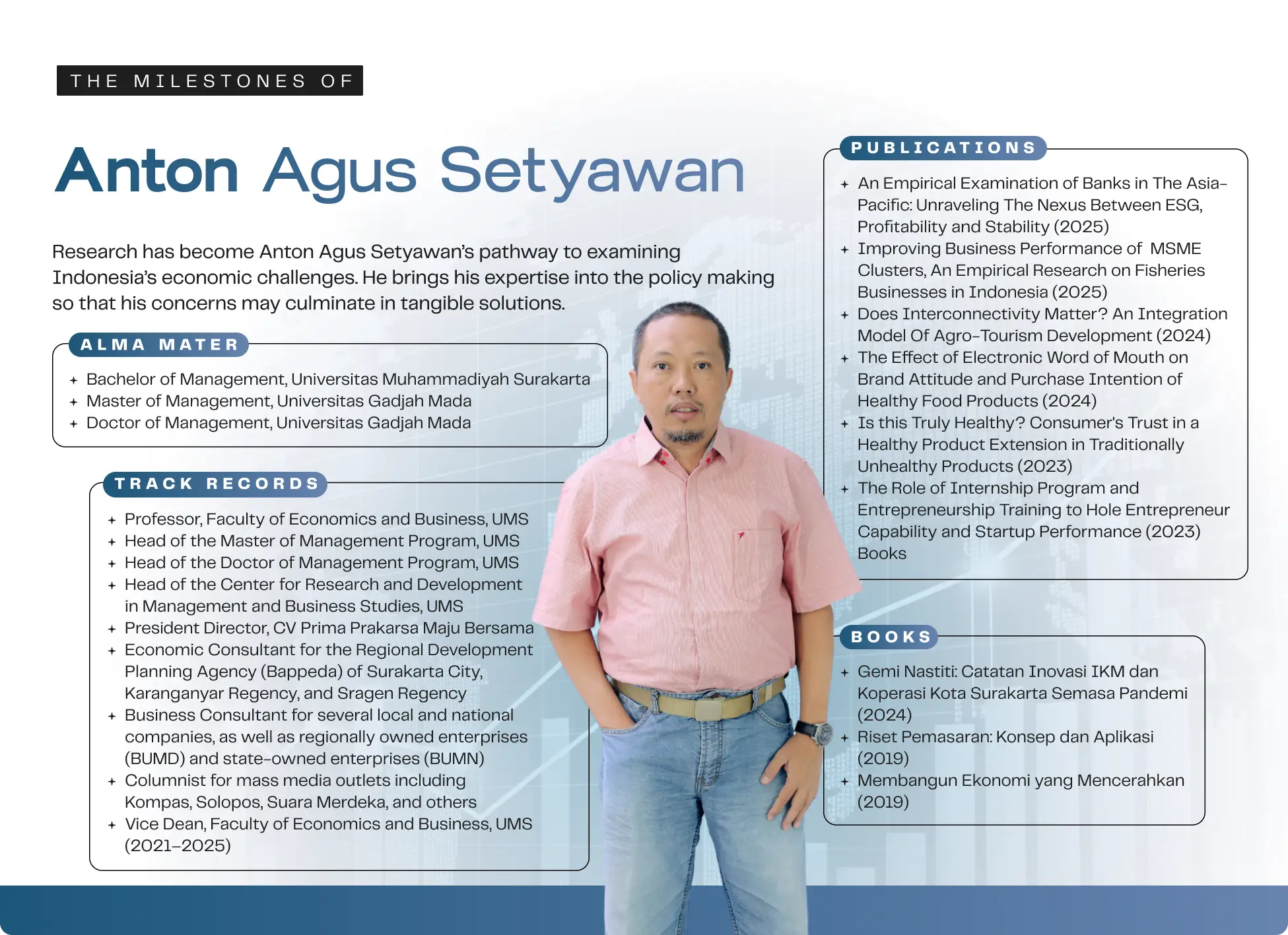
He would pick one up and begin reading the columns that caught his attention. “At home, we always had several newspapers because my father subscribed to them. From a young age, I was accustomed to reading,” recalled Prof. Dr. Anton Agus Setyawan, S.E., M.Si. in mid-January.
Known today as a Professor at the Faculty of Economics and Business (FEB), Universitas Muhammadiyah Surakarta (UMS), Anton once found himself entangled in teenage delinquency. He nearly faced expulsion from senior high school due to negative peer influences.
Music became his salvation. He learned to play the guitar, formed a band, sang Western songs, and through music, his English skills were honed as well.
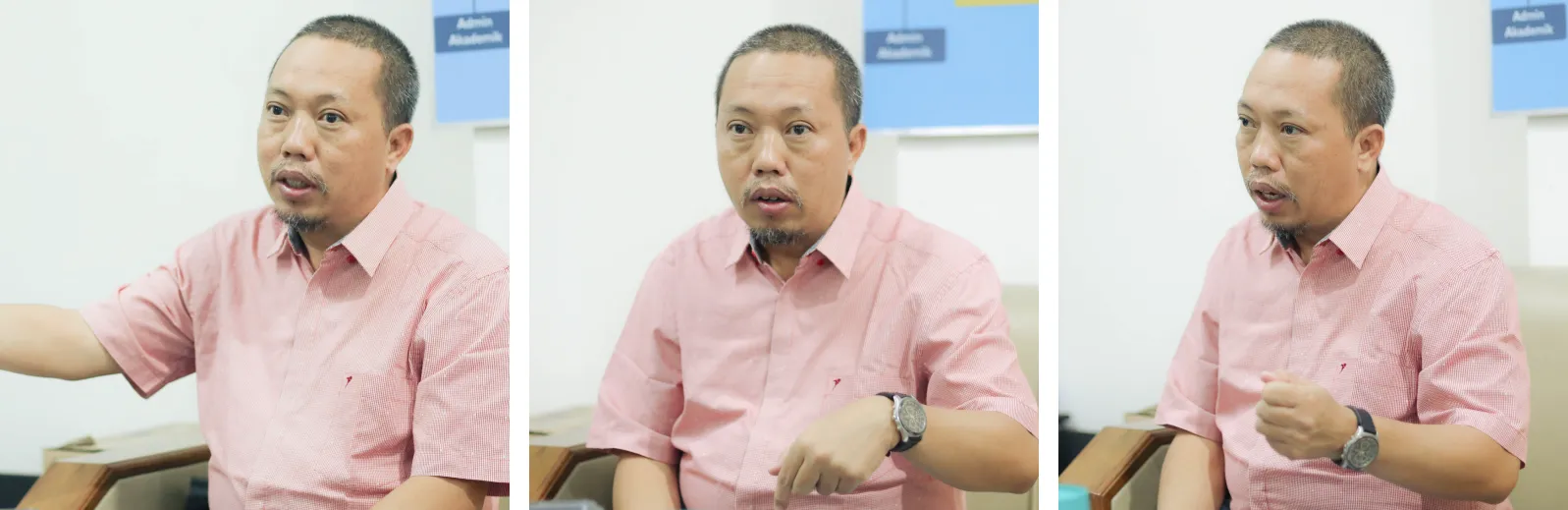
“If there hadn’t been music, perhaps my life would remain in chaos,” he said with a small chuckle.
Music was not merely a hobby. Born in Nusukan, Surakarta in 1974, Anton performed music on small stages during his years as a Management student at UMS.
He was quite productive in writing songs, recording demos, and even saw his musical compositions included in independent compilation albums in the late 1990s. At that time, his dream was simple: he wanted to become a musician.
However, the 1998 crisis changed everything. “The recording studio where I planned to develop my work was burned down during the riots,” Anton recalled.
From that point on, Anton navigated life in a way far removed from the romance of art. He even spent time selling coconut ice, fried rice, and working as a sales representative for cigarettes and instant noodles.
A year later, he tried his luck by applying for a lecturer at UMS. Out of nearly 200 applicants, he was selected.
Although he had become a lecturer, Anton did not entirely leave the world of music behind. He continued performing on small stages, until a master’s scholarship at Universitas Gadjah Mada (UGM), Yogyakarta, in 2002 gradually shifted his focus.
The fifth of six siblings completed his master’s degree in 2004 and went on to pursue his doctoral studies at UGM, which he finished in 2014. His academic career continued to rise. He also served as a Research Staff member at the Center for Management Development (PPM), Faculty of Economics and Business, UGM from 2007 to 2010, and as a guest lecturer at FEB UGM for nearly a decade.
His doctoral years were far from easy. Financial constraints forced him to survive by actively writing.
Since the early 2000s, his writings have regularly appeared in Solopos and national media outlets such as Kompas and Bisnis Indonesia, offering commentary on public policy, regional economic issues, and social dynamics.
For Anton, the university is not the only arena of struggle. The economic knowledge he pursues is not meant to remain confined to classrooms and academic journals.
Since 2007, he has been directly involved as an economic consultant for several local governments, including the City of Surakarta, Sragen Regency, and Karanganyar Regency.
His name became widely recognized through his writings in the mass media. “Back then, I was like a part-time employee at Solopos,” he joked.
Those articles eventually reached the desks of government officials. One by one, they began contacting him. “Mr. Anton, please help us here,” was roughly the kind of message he often received.
His first formal involvement in policy making came through Bank Indonesia (BI). Around 2010, BI opened an open research grant scheme for lecturers and universities.
Anton submitted a research proposal together with several colleagues and was selected as one of the grant recipients. In fact, his proposal secured funding for two consecutive years.
That experience with Bank Indonesia further strengthened his role at the level of local government. He subsequently became involved in drafting various strategic documents, ranging from the Surakarta Competitiveness Index and the creative economy development roadmap to the Regional Medium-Term Development Plan (RPJMD) of Karanganyar Regency. Anton combined academic approaches with the realities of business and bureaucracy.
One policy formulation that left a deep impression on Anton was his involvement in drafting the Creative Economy Masterplan of Surakarta. He considered the document to be a foundational guide for the direction of the city’s creative economic development.
“The masterplan later became the basis for the formulation of all creative economy programs in Surakarta City over the five-year period of 2021–2025,” he said. It required nearly all government agencies, ranging from tourism, industry, labor, to MSMEs, to align their programs with the creative economy vision, even down to the sub-district and village levels.
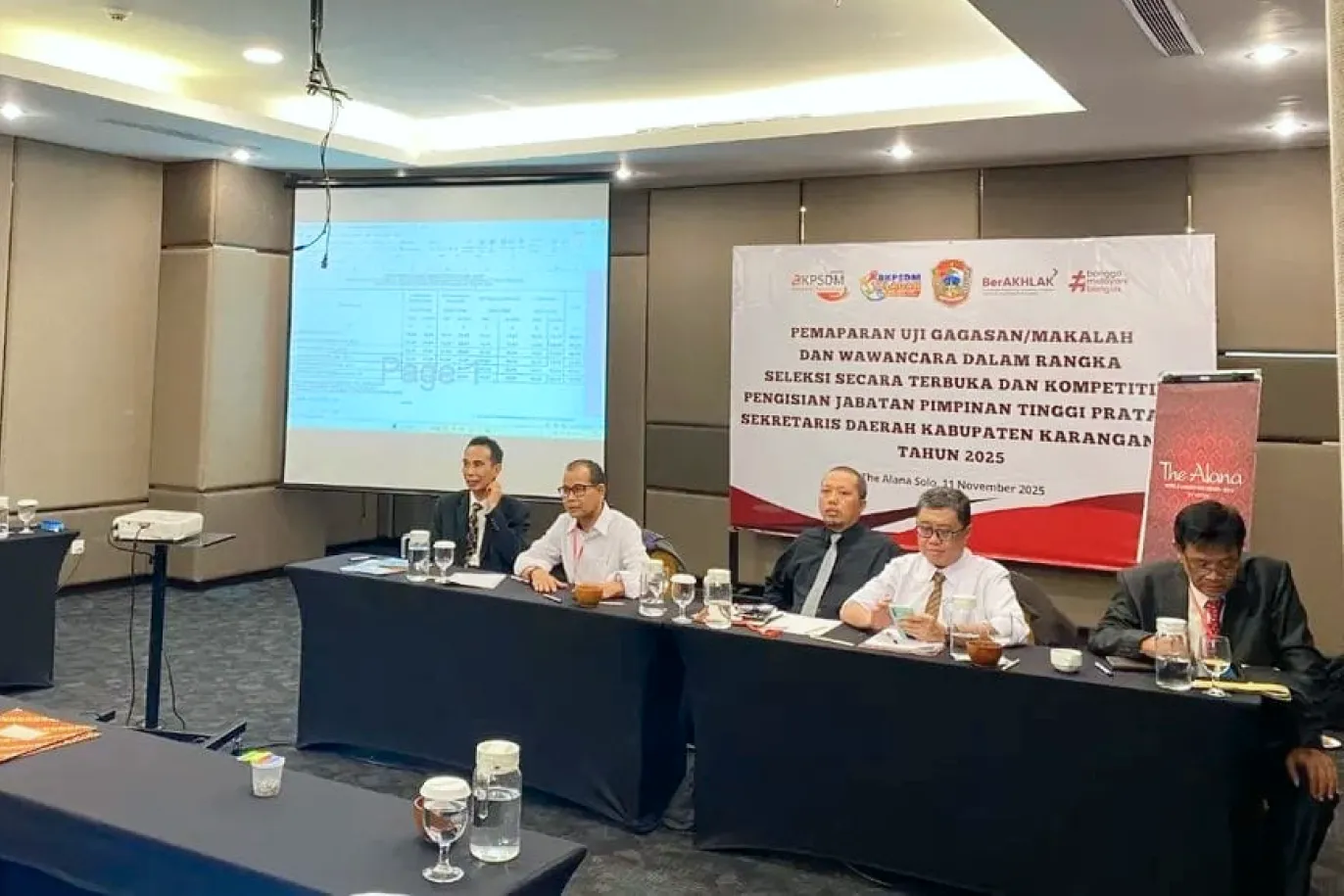
Anton was also involved in formulating Key Performance Indicators (KPIs) as well as annual audit mechanisms for budget utilization. Every rupiah allocated in the Regional Revenue and Expenditure Budget (APBD) was linked to the development of the creative economy, ensuring that policies did not become just a slogan.
“Because the creative economy is indeed considered the main source of Surakarta’s economic development,” he said.
His interest in writing and studying economics began to take shape when Anton started working on his thesis. Around 2004, he conducted research using an econometric approach to measure the relationship between economic growth and labor absorption, known as employment elasticity.
From that research, he discovered a troubling fact. In the 1990s, every 1 percent of economic growth was able to create around 500,000 to 750,000 new jobs.
“That means when growth reaches 8 percent, Indonesia could create up to 4 million formal jobs every year. At that time, almost the entire workforce could enter the formal sector,” he explained.
However, that graph continues to decline. Based on the latest data simulations he processed through 2024, every 1 percent of economic growth is now only able to absorb approximately 250,000 workers. This figure is significantly lower than it was three decades ago.
“This isn’t just about the number of jobs decreasing; it’s about the declining quality of our economic growth,” Anton criticized.
The root of the problem, according to Anton, lies in labor-intensive industries, specifically the textile sector, which was once the backbone of national employment. From the 1980s to the early 2000s, textiles were the primary engine for job creation. Today, however, companies in that sector are collapsing one by one.
“We are even losing to Bangladesh, a country we often perceive as being poorer than us,” he remarked. On the global textile map, Indonesia ranks only around 16th, lagging far behind India and China.
Anton noted that before PT Sri Rejeki Isman Tbk (Sritex) went bankrupt, the company had purchased a single textile machine from Germany for nearly one trillion rupiah. According to Anton, such an investment is simply out of reach for most domestic industrial players.
“How can our industry possibly close the gap if a single machine costs trillions?” he asked.
Based on those facts, Anton concluded that waiting for the resurgence of large-scale industry is not the most realistic path in the near future. Consequently, his research focus and contributions have shifted from industrial giants to small and medium-scale manufacturing, specifically Small and Medium Industries (IKM) and Manufacturing MSMEs.
To him, building a manufacturing sector doesn’t always require giant factories. Instead, quality jobs can be created more quickly and inclusively through medium-sized industrial networks, efficient supply chains, and the modernization of MSMEs.
“That is what I believe I need to examine further. As an academic, my tool is research,” he continued. Even as he approaches retirement at age 70, God willing Anton envisions himself still faithfully dedicated to research on industry, labor, and development.
Writer: Genis Dwi Gustati
Translator: Farizal Luqman Majid
Editor: Al Habiib Josy Asheva
Indonesia is one of the world's largest coffee-consuming nations, a thirst that keeps spawning new coffee shops. Sharpening the competition among them.
Nothing’s more special than reading curated news just for you.
Subscribe to the UMS Newsletter for free today.