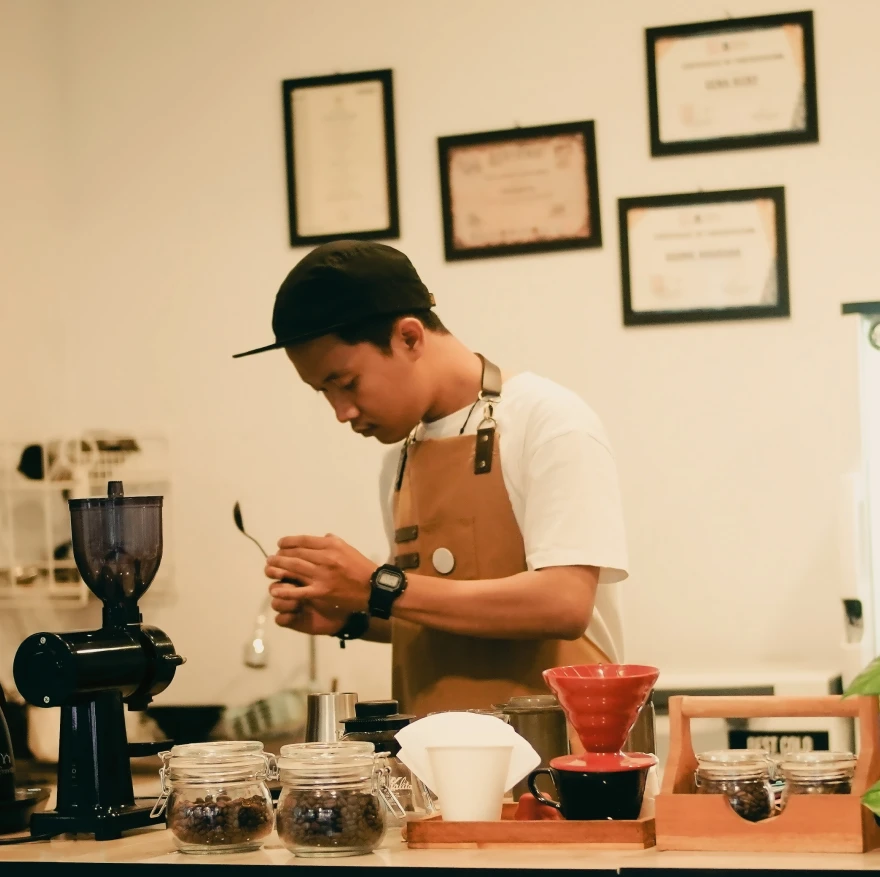
The Coffee Shop Boom
31 July 2026
Indonesia is one of the world's largest coffee-consuming nations, a thirst that keeps spawning new coffee shops. Sharpening the competition among them.





That night in Sukoharjo, Salsabila Khoirun Nisa was not resting in the comfort of her boarding room. Instead, she stayed awake from 6 p.m. to 6 a.m., willingly offering her arm as bait for mosquitoes. Working with the Regional Center for Environmental Health Laboratory in Salatiga, the Public Health student at Universitas Muhammadiyah Surakarta (UMS) had to capture every mosquito that landed on her body using an aspirator.
"Every mosquito that landed was immediately caught to identify whether it belonged to the Anopheles species or not," recalled Salsa, as she is commonly known, in mid-March.
Each captured mosquito was placed into a special container for identification. The collected data were then analyzed and mapped using a geographic information system (GIS) to determine risk areas. From this mapping, health interventions could be designed more precisely and effectively.
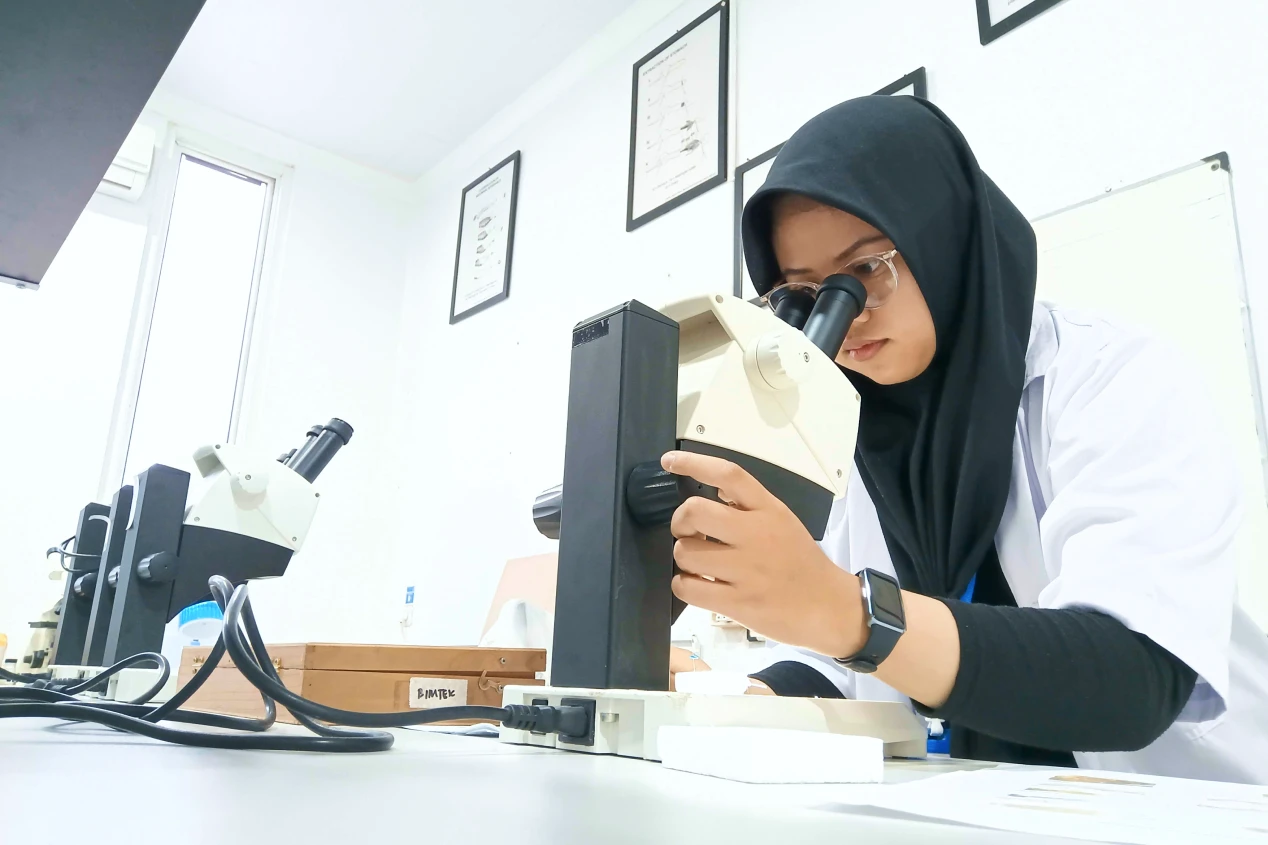
In another study, Salsa served as an enumerator, collecting data directly from pregnant women at several community health centers. Together with a teammate, she conducted interviews, recorded health conditions, and ensured the accuracy of the data collected.
The experience broadened her perspectives to various public health challenges. "It turns out there are still teenage pregnancies in Surakarta. Some of them even experience high levels of stress due to economic factors and their young age," said Ngawi born student.
In a separate research project with her lecturer, Salsa encountered cases of sexually transmitted infections (STIs) among young pregnant women. The experience further strengthened her awareness of the importance of early detection and health education.
Apart from research activities, Salsa has contributed to food waste's innovation by transforming food waste into a nutritional supplement flour called Nutriflor. The idea led to a win at the World Invention Competition and Exhibition 2025, with the goal of reducing food waste while addressing stunting through improved complementary feeding (MPASI).
Her community service work extended to another initiative in Colomadu, where she helped educate residents on producing fish feed pellets from organic waste.
"There, together with the team, we educated the community on how to make fish pellets from organic waste, starting with collecting materials from households and food stalls in the area," she explained.
The pellet production process was carried out systematically, starting with sorting waste into eight categories, such as fish bones, rice, tempeh, and beef, which were then dried and ground into a flour-like consistency.
Salsa emphasized the importance of precise formulation in mixing the ingredients: 20 percent tempeh, 18 percent fish bones and rice flour each, 12 percent bread, 10 percent beef and fruit each, 8 percent leaves, and 4 percent chicken bones.
"After the mixture is molded into pellets and dried again, the feed is stored in an airtight container to ensure durability and safe long-term use," Salsa added. She and her team patiently taught local residents each step of the fish pellet production process, as it was simple enough for them to continue independently.
"I used to feel disappointed because I didn't get into my first-choice major, pharmacy. At the beginning of college, I didn't really understand what public health was. But since it was still related to health, I decided to go with it. Turns out, I really enjoy it," Salsa recalled.
She then began exploring various academic activities, ranging from student organizations and research to innovation competitions. She was actively involved in PRISMA (Student Achievement and Research Development), a student activity unit, and participated in a working group under the Indonesian Public Health Student Senate Association.
No doubt that her journey in competitions has been quite smooth. Salsa has loved biology and chemistry since high school and actively participated in science olympiads at national and international levels.
She won a silver medal at the International Science Qualification Olympiad 2022 in the science category during high school.
In college, her first innovation competition was ASEAN Health Talent 2024. In that event, she and her team developed a fetal doppler calibrator to improve the accuracy of detecting fetal heart rates.
The innovation won third place. "It was my first health innovation competition. Alhamdulillah, I made it to the podium even though it wasn't first place," she said gratefully.
Since then, Salsa has become increasingly active in digital health innovation competitions. She has achieved numerous accolades, including gold medals in several international competitions such as the Global Youth Innovators Competition (GYIC), World Youth Invention and Innovation Award (WYIIA), and the Bangkok International Intellectual Property, Invention, Innovation and Technology Exposition (IPITEx) throughout 2024–2026.
The synergy between her academic achievements and field-based empirical studies became a turning point for Salsa in discovering her calling in public health.
She admitted that she has developed a strong interest in epidemiological surveillance, a field that combines fieldwork with scientific analysis. Her passion now lies in this area, which integrates real-world challenges with analytical precision to design targeted disease prevention interventions.
"There's a unique sense of satisfaction when the data we collect can be mapped, analyzed, and then translated into policy recommendations," she explained. Salsa smiled brightly as she imagined herself in the future, working at the forefront of disease data collection, identifying risks early, and making a meaningful contribution to public health through the power of data.
Although she has completed her undergraduate thesis and is now awaiting graduation, Salsa is still entrusted to represent UMS at the World Young Inventors Exhibition 2026. She and her team will compete from May 18–20, 2026, at the Kuala Lumpur Convention Centre, Malaysia.
Writer: Genis Dwi Gustati
Translator: Farizal Luqman Majid
Editor: Al Habiib Josy Asheva
Indonesia is one of the world's largest coffee-consuming nations, a thirst that keeps spawning new coffee shops. Sharpening the competition among them.
Nothing’s more special than reading curated news just for you.
Subscribe to the UMS Newsletter for free today.