
Bank Indonesia Holds Interest Rate at 5.75%, What Is the Impact?
24 July 2026
Bank Indonesia has held its benchmark rate at 5.75 percent, ending speculation of a hike to 6 percent that had circulated in recent weeks.


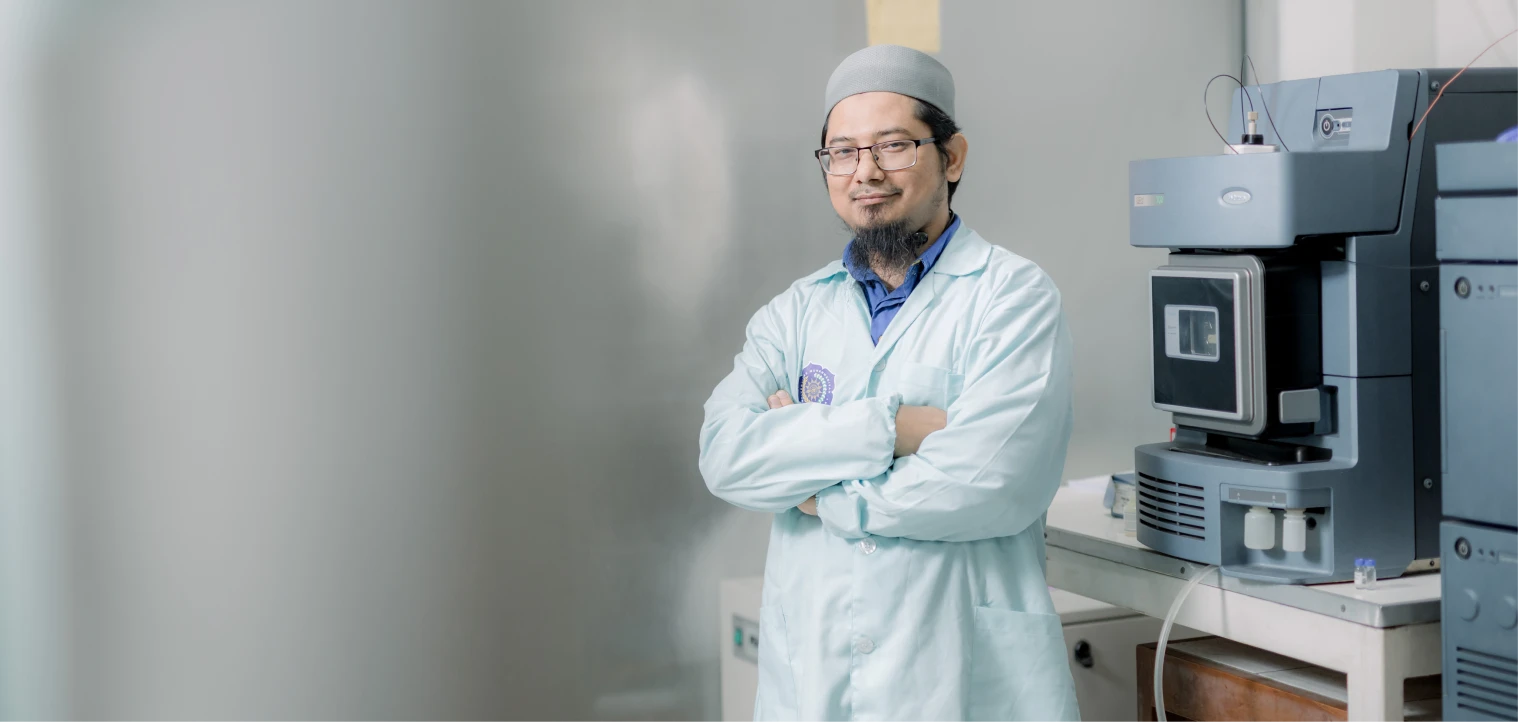
In a modest office at the Faculty of Pharmacy, Universitas Muhammadiyah Surakarta (UMS), Andi Suhendi appeared sharp when speaking about traditional medicine, herbal extracts, and the challenges of standardizing traditional remedies in Indonesia. His voice carried enthusiasm, and his eyes occasionally sparkled as he talked about the four herbal products successfully developed by the UMS Pharmaceutical Extract Standardization Research Center (SEFA) under his leadership.
These products are named SEFA-Fit, SEFA-Max, SEFA-Diab, and SEFA BodyFit. “These are not just traditional remedies, but the result of our long-term research backed by strong scientific data,” said Andi, as he is familiarly called, when met in mid-August.
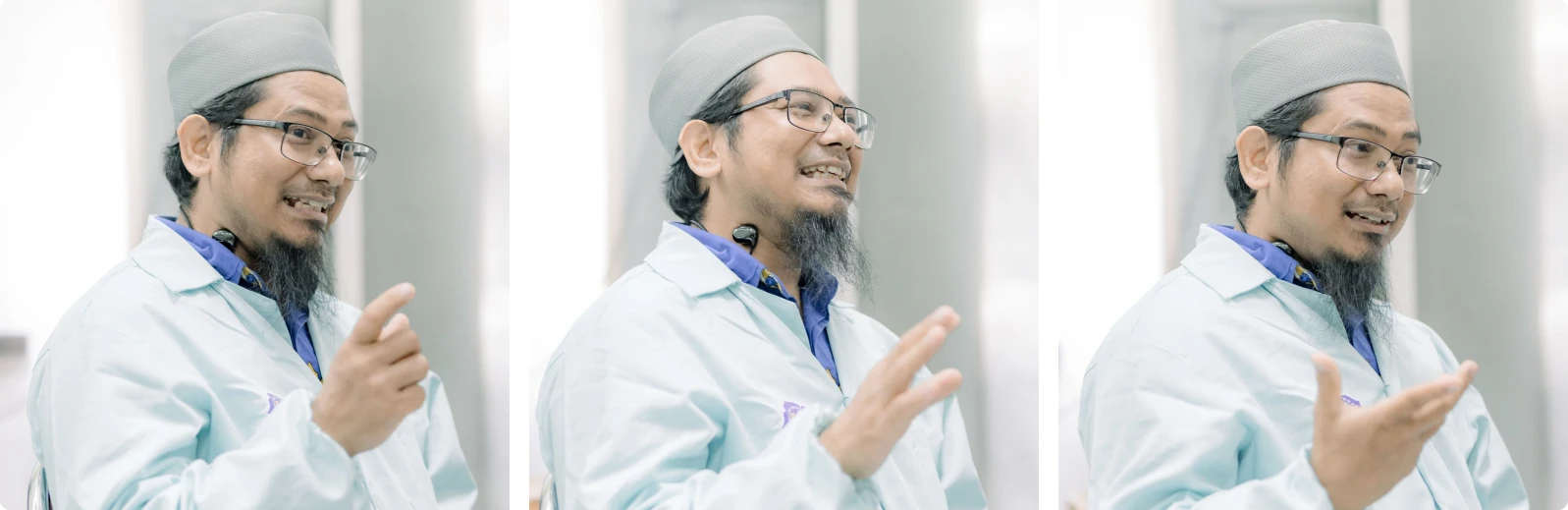
Dr. apt. Andi Suhendi, M.Sc. UMS PR/Imam Safii
Andi was born in Kuningan, West Java, as the third of five siblings. His father was a farmer, while his mother was a homemaker. The family’s modest life changed when his father passed away while Andi was still in third grade of elementary school.
“Because of that situation, when I was about to enter 6th grade, I had to move to Bandung and live with my uncle until high school,” said Andi.
Andi’s teenage years were closely tied to the school mosque, as he also served as a caretaker. “The mosque came alive because my friends and I loved studying there. Even when preparing for the UMPTN (now known as SNBT or Seleksi Nasional Berdasarkan Tes), we often studied together all night long,” he recalled with a laugh.
Choosing pharmacy as a major was not something Andi had planned ever since. He admitted that he did not like physics and preferred biology and chemistry.
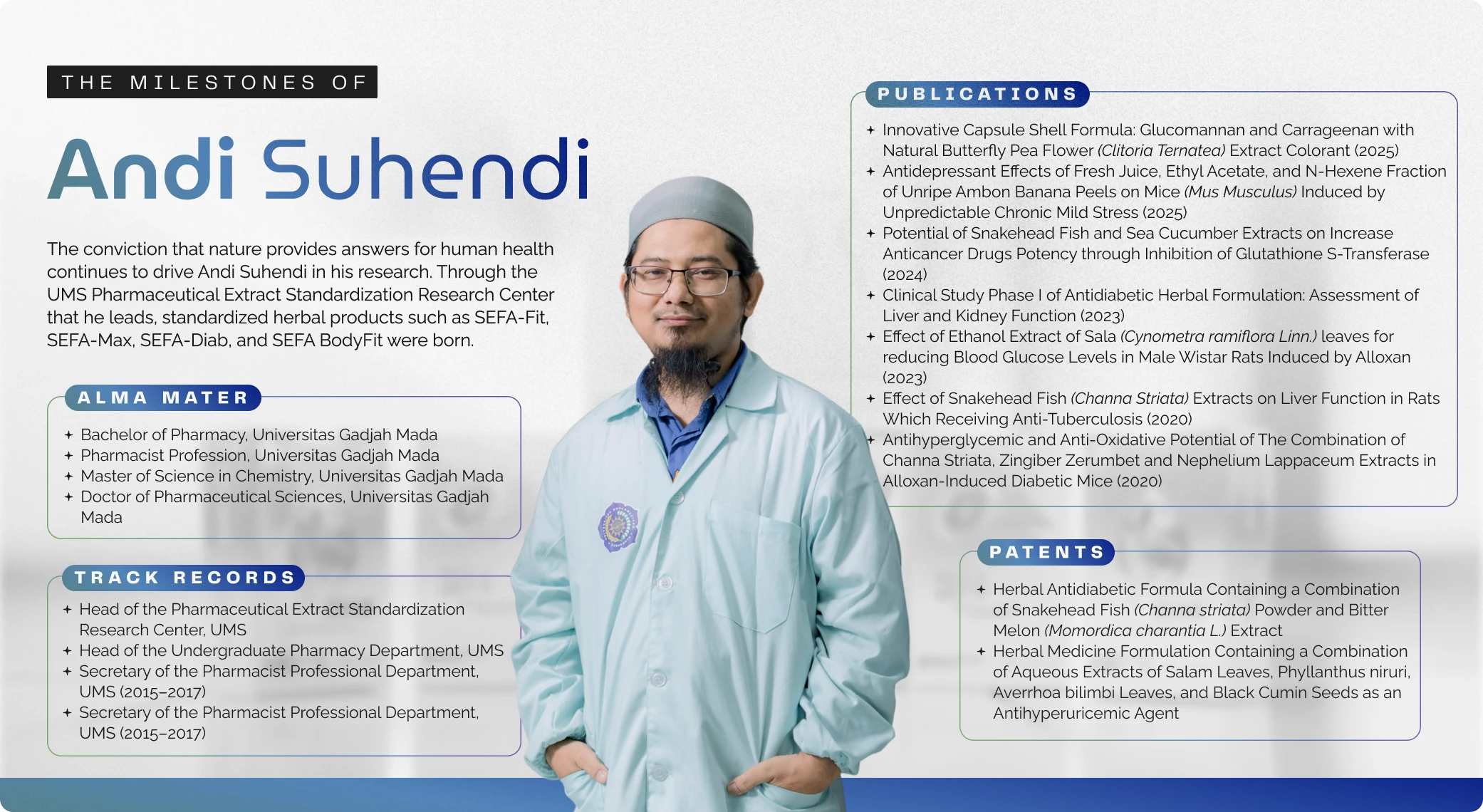
When the opportunity for the Talent Scouting Program (PMDK) program came, Andi tried his luck by applying to the Faculty of Pharmacy at Universitas Gadjah Mada (UGM). In 1999, he officially became a student at the “blue campus.”
The Head of UMS Undergraduate Pharmacy Program admitted that his interest in herbal medicine stem from his pharmacist professional training. While attending religious activities at a mosque near his boarding house in Yogyakarta, he became acquainted with a congregant who owned a herbal business.
His professional career in the herbal field began when Andi became the responsible pharmacist at Almanar Herbafit, a contract manufacturer of traditional herbal products owned by the congregant. Andi then integrated Standard Operating Procedures (SOP) and standardized approaches in product processing, which helped Almanar grow further.
In addition, Andi once spent a year in Kebumen managing a colleague’s herbal garden. “I gained a bit of knowledge about medicinal plants from that experience as well,” he added.
In 2007, Andi officially signed a contract as a lecturer at UMS. Two years later, he continued his master’s studies in Chemistry at the Faculty of Mathematics and Natural Sciences, Universitas Gadjah Mada (UGM), focusing on analytical chemistry.
Completing his master’s program strengthened Andi’s conviction that herbal medicine holds great potential if managed properly. Another opportunity came when he joined Prof. Dr. Muhtadi, M.Si. in a research program funded by the Ministry of Education, focusing on the development of herbal products up to the patent stage.
“Although it didn’t reach the stage of mass production, that research was one of the things that paved my way,” Andi said.
Now, Andi is entrusted with leading the SEFA Research Center at UMS. The roots of SEFA UMS emerged from a standardization project on herbal extracts carried out by the Faculty of Pharmacy UMS in 2008.
At that time, UMS was entrusted by the National Agency of Drug and Food Control (BPOM) to work on pharmacognosy data and herbal plant extracts. “With Prof. Apt. Azis Saifudin, Ph.D. as the project leader, we carried it out successfully. Afterwards, we began providing testing services for many other universities as well,” he recounted enthusiastically.
The SEFA Research Center at UMS later grew into a research hub with a mandate for research, standardization, and herbal product innovation. Under Andi’s leadership, SEFA UMS produced four flagship products:
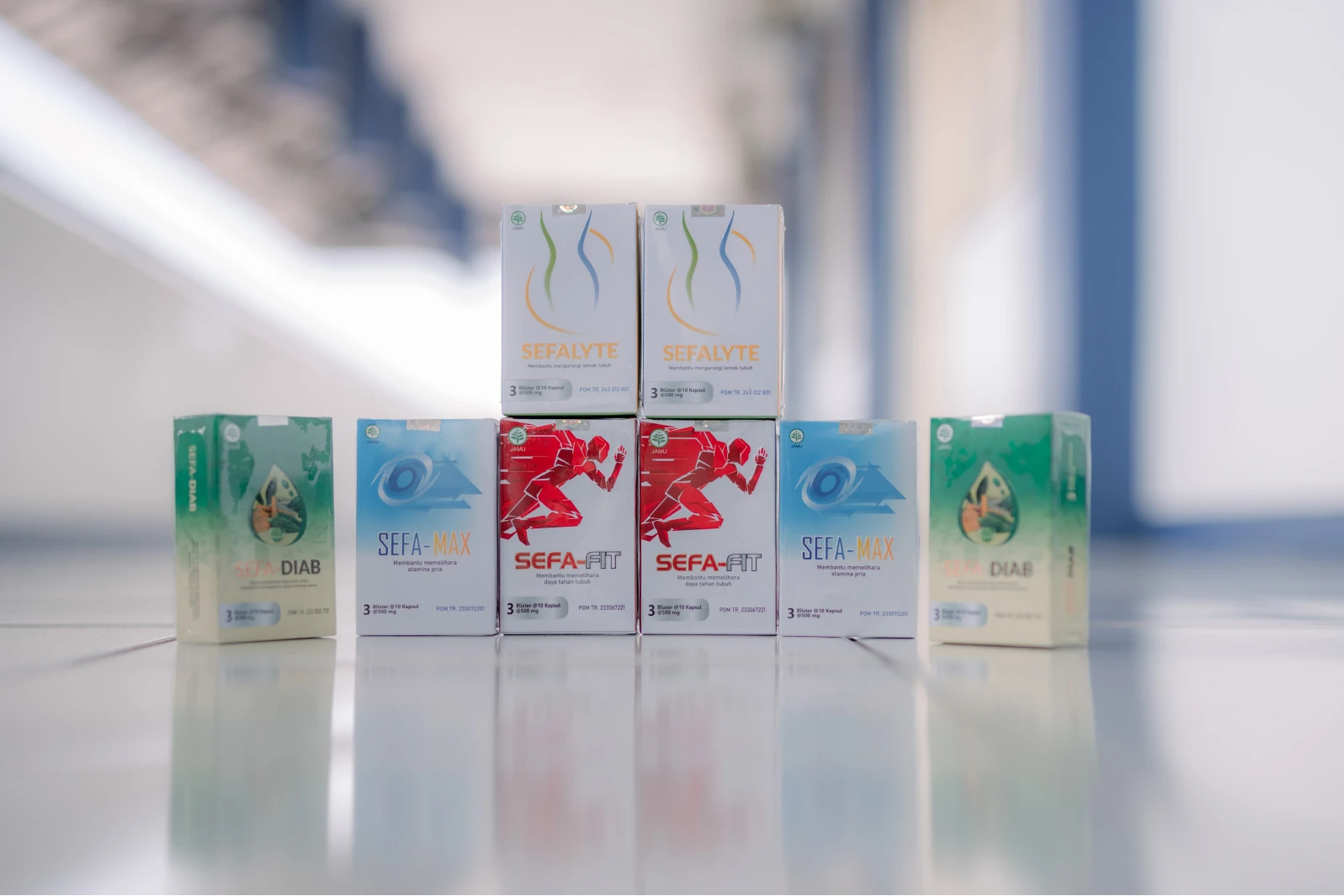
Standardized herbal products produced by the SEFA. UMS PR/Imam Safii
All four products have obtained distribution permits from the National Agency of Drug and Food Control (BPOM). However, Andi admitted that there are major challenges in the area of marketing. “Academics are strong in research but weak in the market. That remains our obstacle. The prices we set for these products are still less competitive in the market,” he lamented.Even so, Andi assured that products embody a strong scientific database. SEFA-Diab, for example, has been proven to increase insulin levels in diabetic test animals and repair damaged pancreatic cells.
These data were once submitted to the Green Mind Indonesia-Malaysia program, although they did not pass the selection. “But that confirmed that our product has competitiveness,” he emphasized.
Andi believes the greatest challenge for herbal medicine lies in the standardization of active compound markers. For example, one tablet of paracetamol contains 500 mg of active substance. However, in herbal medicine, the content of active compounds can vary depending on soil type, season, and processing techniques.
He gave the example of acetoxychavicol acetate (ACA), a marker (a specific chemical compound in medicinal plants used for quality control, identification, and product standardization) found in galangal rhizomes. Its price is expensive and it must be imported from the United States. “Without clear markers, it is difficult to guarantee the quality of herbal products,” he said
Another challenge comes from regulations. Standardized herbal medicines can only be produced by industries holding a full-aspect CPOTB (Good Traditional Medicine Manufacturing Practices) certificate. Yet micro, small, and medium enterprises (MSMEs), which are the backbone of Indonesia’s traditional herbal medicine industry, often struggle to meet this standard due to limited capital.
According to him, without government support, MSMEs will find it difficult to advance. “The investment for a full-aspect CPOTB is enormous. Without strong support, MSMEs could sink,” he said regretfully.
Andi strongly hopes that MSMEs will soon gain attention from the government and other supporting sectors. He also hopes SEFA UMS will once again receive research grants to develop other herbal medicines. “With standardization, society can have certainty, and that is what we are striving for,” he affirmed.
Writer: Genis Dwi Gustati
Translator: Farizal Luqman Majid
Editor: Al Habiib Josy Asheva
Bank Indonesia has held its benchmark rate at 5.75 percent, ending speculation of a hike to 6 percent that had circulated in recent weeks.
Nothing’s more special than reading curated news just for you.
Subscribe to the UMS Newsletter for free today.