Officials' Lackluster Public Communication
17 July 2026
The public officials’ statements continue to draw scrutiny, ending in blunders and stirring public disappointment.
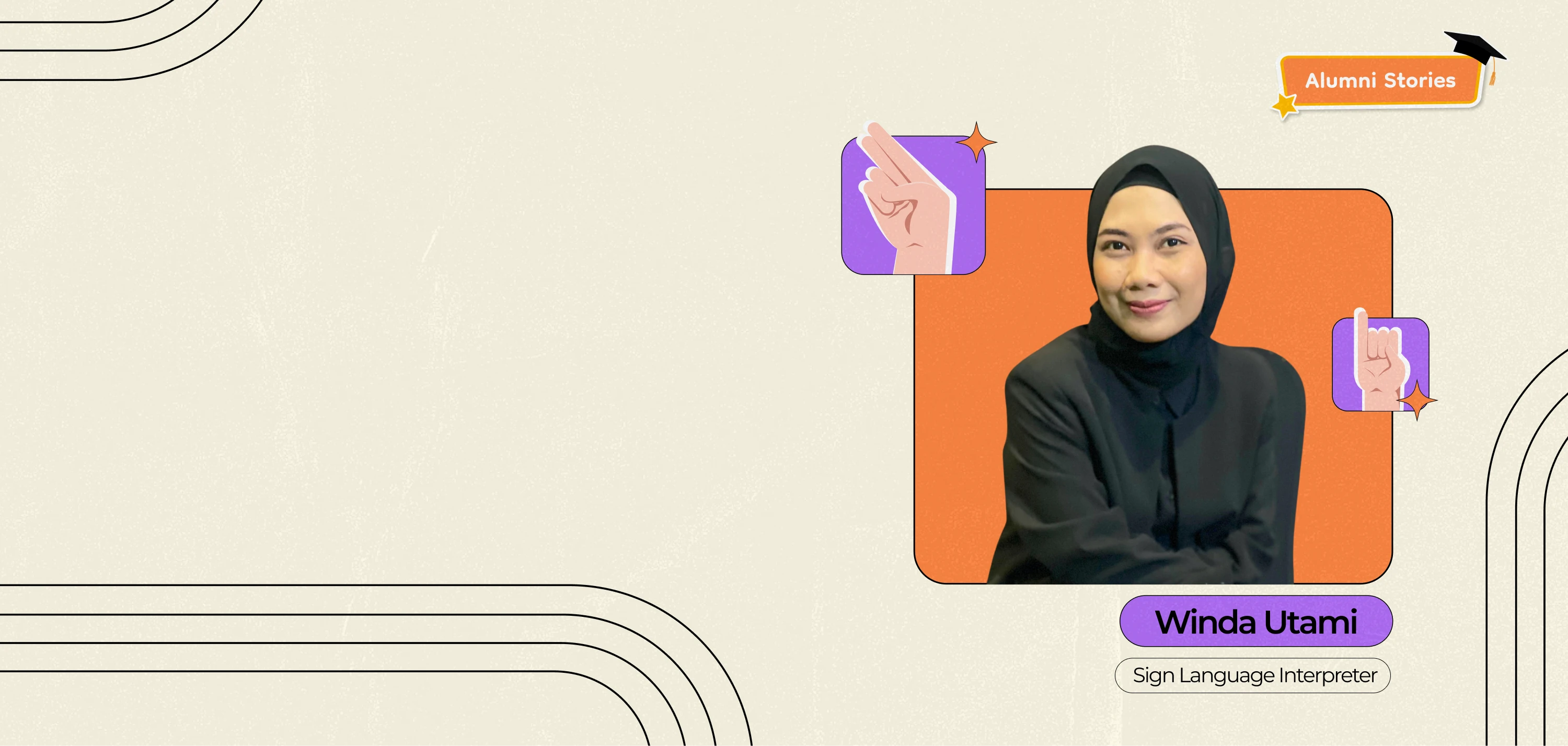
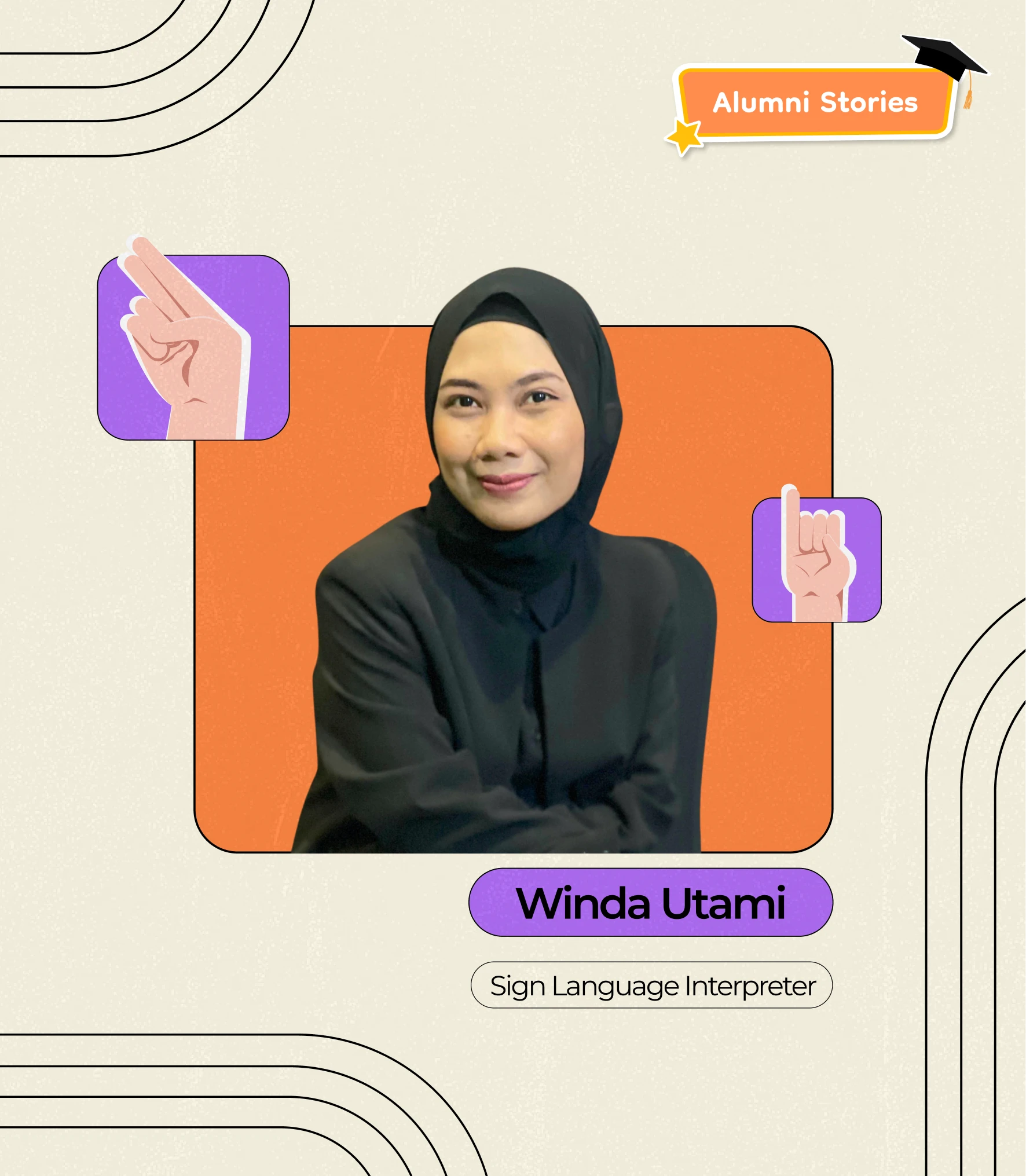
The Independence Day ceremony at the State Palace always holds special moments for millions of Indonesians, and so did the 77th-anniversary celebration two years ago.
Despite the catchy chorus of the dangdut koplo song 'Ojo Dibandingke,' performed by young singer Farel Prayoga, all eyes turned to Winda Utami, the sign language interpreter (JBI) who appeared in the bottom right corner of television screens.
With agile hand movements, expressive facial expressions, and a few small dance moves, Winda brought the lyrics to life in sign language, making each word resonate with those who cannot hear
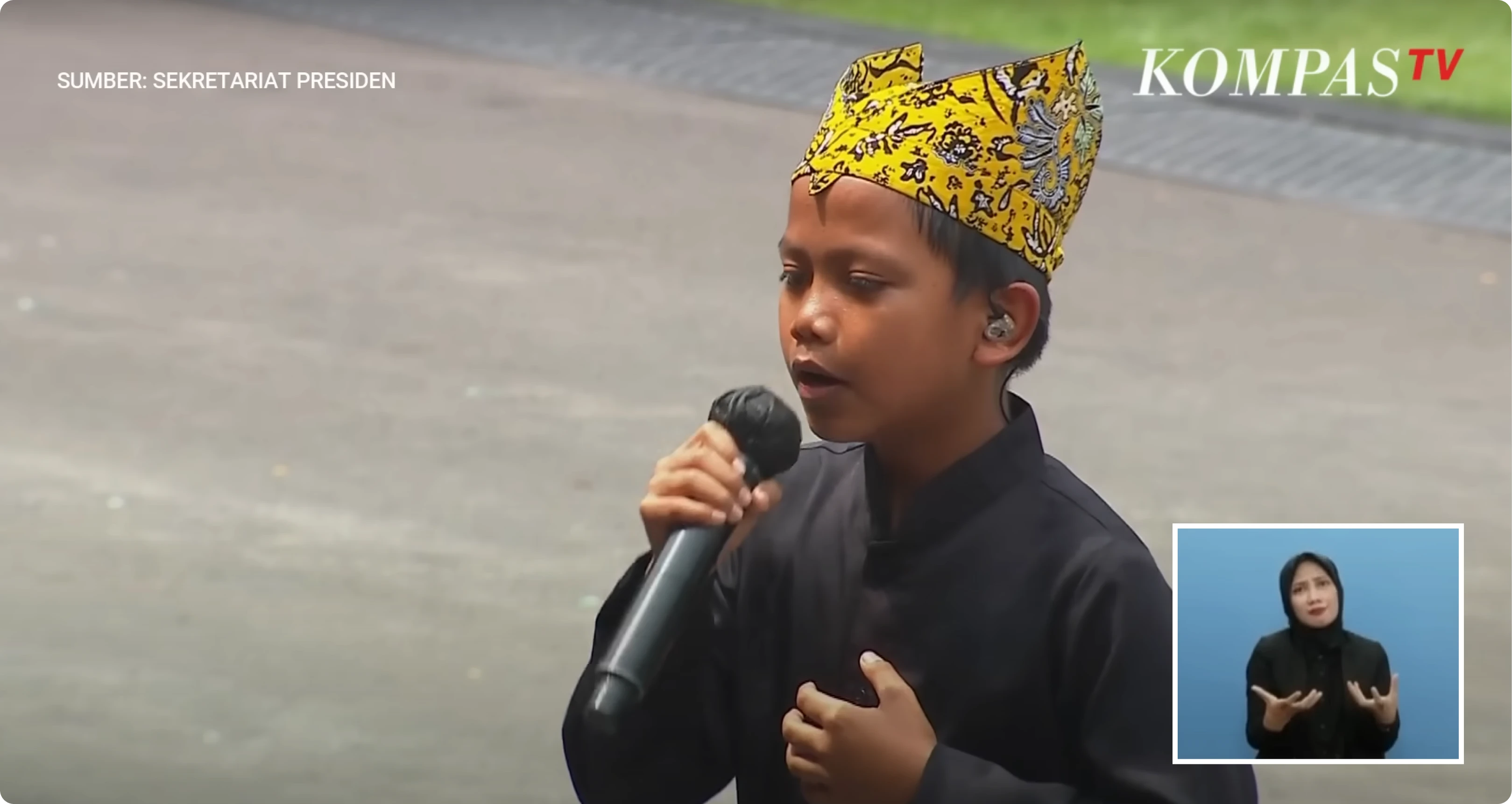
Winda was interpreting the song "Ojo Dibandingke" with an expressive delivery during the 77th Indonesian Independence Day celebration. youtube.com/kompastv
Winda, an alumna of the Psychology program at Universitas Muhammadiyah Surakarta (UMS), explained that her performance at the State Palace on the 77th Independence Day was entirely spontaneous.
"I never imagined I would be interpreting that song because it wasn’t in the original rundown. It was almost being cut, but I volunteered, saying I understood Javanese because I had lived in Solo," said the Jakarta-born woman, who was born in 1989.
She was surprised to see that her dancing while interpreting in sign language went viral and received much praise.
"I wasn’t really dancing; I was just reflecting the atmosphere of the music. I mean, when the president, ministers, and their entourage were dancing, it wouldn’t make sense for me as the interpreter to stay stiff and only sign the words," Winda explained.
Winda has been working as a sign language interpreter for a long time. Through this work, she has often appeared at various official government events and on national televisions.
Winda's interest in social activity began during her high school years. As the saying goes, “birds of a feather flock together," she found her match with a social community in Solo when she moved from Jakarta to pursue her studies in Psychology at Universitas Muhammadiyah Surakarta (UMS).
"I came across the GERKATIN (Movement for the Welfare of the Deaf in Indonesia) Solo community during a car-free night in Ngarsopuro. I noticed their communication was different, so I decided to approach their booth. It clicked, and I ended up joining the community in 2011,” she recalled.
Winda then began to delve into and learn Indonesian Sign Language with deaf friends in and around Solo. She started by learning the alphabet and gradually progressed to spelling basic words used in everyday conversations.
In learning Indonesian sign langauge, Winda explained that there are three important aspects: signs, expressions, and verbal communication. According to her, a sign language interpreter must be able to convey and express a condition with detailed and expressive body movements.
"At GERKATIN Solo, I interacted with my deaf friends almost every day. The more we met and communicated, the more fluent I became in performing sign language," added Winda, who has been immersed in such a field for over a decade.
Winda's expertise as a sign language interpreter has gained increasing recognition over time, especially as she has been entrusted with the role at the State Palace's Independence Day ceremonies, for three consecutive yearsIt's an honor that not many people experience.
“Being a sign language interpreter at the State Palace owns me a huge responsibility and honor. Every movement has to be precise and expressive because I understand that what I'm conveying is not just a translation but a voice for those who cannot hear," she said.
When asked about her feelings the first time she was chosen as the sign language interpreter for the 77th Independence Day ceremony, Winda admitted she was initially nervous.
"Every time I stand in front of the camera, I remind myself that there are thousands, maybe more, deaf viewers across Indonesia relying on what I sign. That motivation drives me to deliver my best,” Winda revealed sincerely.
Before settling in the capital city, she had already worked there (Jakarta) since just before graduating from UMS. Specifically, she worked for a contracting company in collaboration with a Non-Governmental Organization (NGO) to build schools for underprivileged children, all while finishing her thesis.
Winda often traveled back and forth between Jakarta and Solo due to her responsibilities in both places. In addition to her job with the contractor, she and a few students founded the Deaf Volunteering Organization (DVO) Solo in 2012, aiming to bridge communication between the deaf community in Solo and the wider society.
DVO Solo was frequently called upon by regional offices and various local institutions to assist in communication for the deaf during official matters. Winda handled a range of regional events, including initiating Indonesia's first deaf theater performance, attended by around 400 people at the Central Java Cultural Park.
"Growing up in Jakarta, where everything is expensive, I found Solo more affordable when I went to college there. But because of the tiring commute between Jakarta and Solo, I decided to work in Solo until 2018, before accepting a job offer in Jakarta with better pay," she explained.
During her 11 years in Solo, Winda was often independently sought out to be a sign language interpreter at prominent events. At that time, institutions supporting occupation were not as widespread, so her skills were highly valued by those in need.
Winda's career skyrocketed in Jakarta, especially after joining INASLI (Indonesia Sign Language Interpreter), an organization that oversees professional sign language interpreters in Indonesia. As part of INASLI, Winda had the opportunity to work as a sign language interpreter on national television programs.
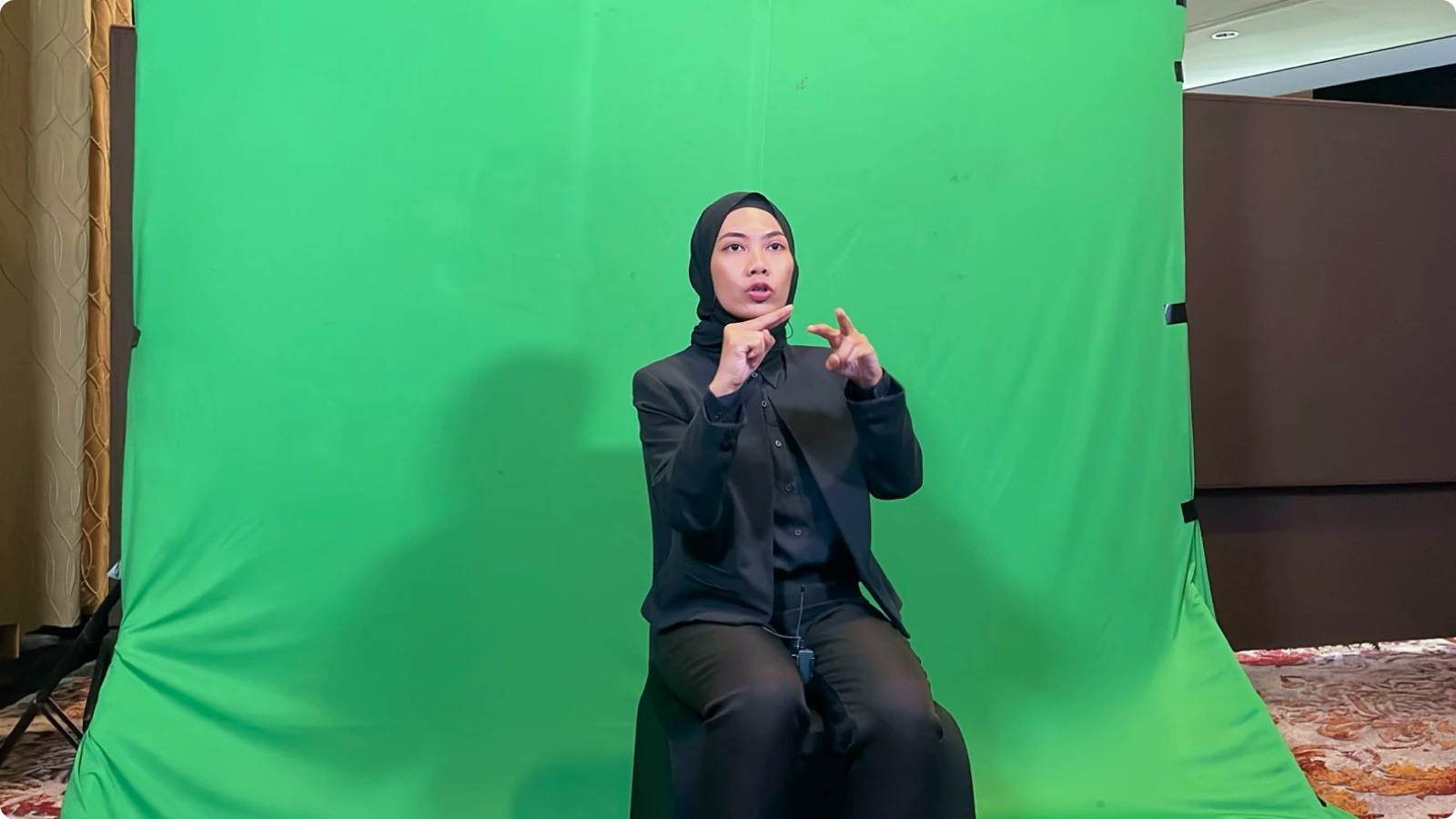
Winda ws performing her duties as a sign language interpreter during the General Meeting of Shareholders for Blibli and tiket.com in June (6/13/2024). Photo credit: personal documentation.
Winda's role as an interpreter has made her a regular on television channels such as Indosiar, CNN Indonesia, Metro TV, TVRI, and tvOne, where she serves as an essential bridge for the deaf community to access the latest news.
Winda explained that interpreting on television is incredibly difficult. She is often required to be quick and precise in delivering messages.
"Usually, we have to keep up with the news anchor's speaking pace, like a race, we can't lag too far behind," Winda said.
Recalling some memorable moments on the job, Winda shared one from the 2014 Presidential Debate, where the topic was "Food, Energy, and Environment."
During the debate, she encountered terms unfamiliar to her, such as “reklamasi” (reclamation). As a professional, she had to quickly figure out how to sign these terms to ensure the deaf audience understood the message.
“When we're unfamiliar with certain words and are unsure how to sign them, we often spell out the letters quickly. But if the word is long, we can abbreviate it to keep up with the speaker's pace. For example, I abbreviated reklamasi to 'r-k-l-a-m-a-s-i,' which is allowed,” she explained.
Winda also shared her experiences interpreting at music concerts for famous artists like Yura Yunita and Maliq & D'Essentials. Deep down, she hopes that Indonesia's entertainment industry will expand access for the deaf community.
In her view, the presence of an interpreter on entertainment stages is a testament to the inclusivity of diverse audiences, something that Indonesia has not fully embraced.
“We already provide subtitles for Indonesian films, so perhaps every concert could have a JBI like concerts abroad" the independent JBI suggested.
Art and entertainment, she continued, should be inclusive spaces where everyone can enjoy the same experience without being marginalized due to physical limitations.
Despite her extensive experience in prestigious state events and on our favorite television screens, Winda continues to refine her Indonesian sign language skills.
"I still learn directly from deaf teachers, and I've earned several professional certifications from official institutions," Winda explained.
As a professional sign language interpreter, Winda eagerly anticipates the emergence of more people like herself who are interested in learning and practicing Indonesian sign language. She believes that the more people who can use sign language, the more accessible information will become for the deaf community. This, in her view, will lead to positive changes in society.
"Sign language isn't just for our deaf friends, it's for all of us. The more people who can use sign language, the more inclusive our society will be," she concluded.
Writer: Genis Dwi Gustati
Editor: Al Habiib Josy Asheva
Translator: Farizal Luqman Majid
Designer: Salsabila Kamila Wardah
The public officials’ statements continue to draw scrutiny, ending in blunders and stirring public disappointment.
Nothing’s more special than reading curated news just for you.
Subscribe to the UMS Newsletter for free today.