
Far From Home, Closer to the Dream
6 July 2026
Sili built a good life as a government engineer in Fiji. To answer his father's promise, he had to leave all of it behind




That afternoon in a house in Colomadu, Karanganyar, the mood was warm. Returning from her busy schedule, Maharani, known as Rani, welcomed us with a bright smile. She invited us to sit and relax in the backyard, serving light snacks and coffee.
Rani vividly recalled how her mother trained her to be independent from an early age. School holidays didn’t mean free time to play. “Since childhood, I was taught to be independent,” she said at the end of September.
Her mother’s strict and disciplined upbringing trained Rani to work even while she was still in school. While other children spent their holidays playing, she had to dedicate part of her time for business.
“If I wanted pocket money, I had to work first,” recalled the Boyolali-born woman. From there, she learned that hard work and courage to take risks were the keys to survival.
Her university years in Law at Universitas Muhammadiyah Surakarta (UMS) were like any other student’s, focused mainly on studying. After completing her studies, she sharpened her business skills again.
As a young woman, Rani wasn’t shy about selling bed sheets to her lecturers and classmates. After graduating in 1992, she tried various business ventures, ranging from textiles to opening a metal shop in 2005.
It was through that business that Rani became acquainted with the real estate world. She reinvested her profits into buying plots of land, though at first she could only afford the down payments.
For Maharani, now 54, the year 2011 marked a turning point in her life. Rani took the leap to join Real Estat Indonesia (REI) Solo Raya and was immediately entrusted as secretary. Her career steadily climbed, appointed treasurer, project coordinator, and eventually elected Chairperson of REI Solo Raya for the 2021–2024 term.
Rani can be described as resilient and unafraid of taking risks. She handled project after project, often carrying the burden of bank loans worth billions of rupiah.
Though now thriving, Rani has not been immune to storms in her business journey. The greatest test came during the Covid-19 pandemic, the darkest period of her life.
Projects stalled, sales plummeted, and debts piled up to hundreds of billions of rupiah. “The company didn’t just go down, it shattered into pieces,” she recalled softly, as if reliving the bitter memory.
She admitted that at one point, she had to sell assets just to pay employees’ salaries and bank installments. “I’m not ashamed to admit I had debts that high. In fact, that’s where I learned the meaning of survival,” she said. Maharani held firmly to her principles: maintaining a good reputation, communicating honestly with banks, and leveraging her professional network.
Her honesty, transparency, and reputation in real estate helped her retain the trust of financial institutions, allowing her to secure relief in payment schemes. Loan tenors were extended, partial interest payments were deferred, and installments were adjusted more flexibly to match the company’s condition.
Meanwhile, whenever revenue came in from smaller projects that were still running, she immediately redirected part of it to pay her debt. These steps gradually allowed Rani to climb out of the debt trap without losing the entire foundation of the business she had worked so hard to build.
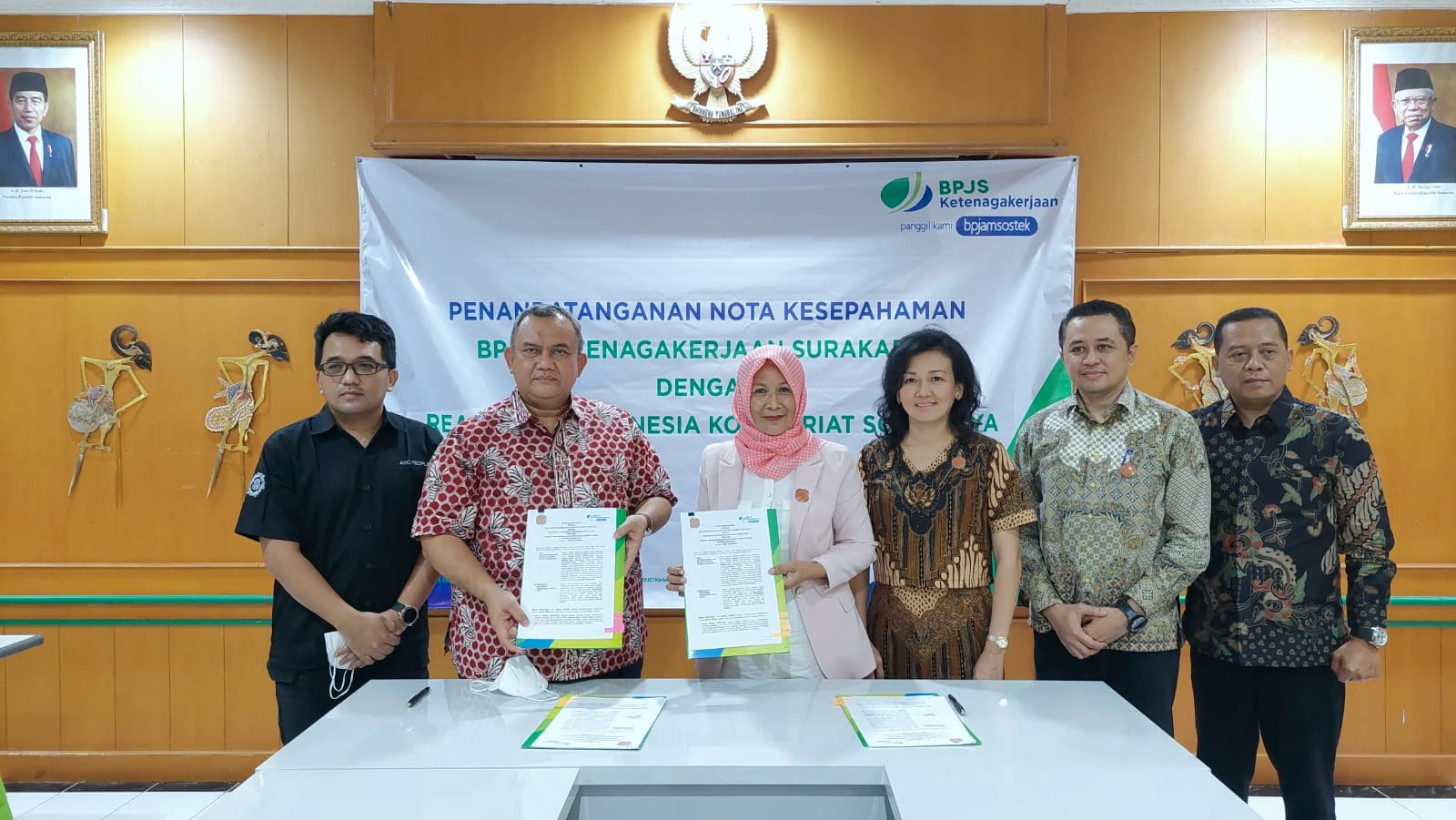
During her tenure as Chair of REI Solo Raya, the mother of three initiated several strategic collaborations. She partnered with BPJS Ketenagakerjaan to provide protection for workers, worked with PLN to simplify electricity installation in her housing projects, and built synergy with local governments to streamline permits and support property sector development.
“With real estate, regional income also increases. Taxes, BPHTB, PPN, all of it goes back to the state,” she emphasized. Rani often reminded people that property is not merely a business matter but also a pillar of the regional economy. Taxes, levies, and other contributions to the state are concrete proof of the sector’s important role.
When it comes to the market, Rani observed that subsidized housing remains the primary demand in Central Java. Meanwhile, the middle segment, especially homes priced under IDR 1 billion, continues to attract buyers.
For densely populated urban areas like Solo, she advocated for the development of vertical housing due to limited land availability. “Land is becoming scarce, the solution is apartments,” she remarked.
Beyond business, Rani also expanded her footprint in the corporate world. She has held positions as Director of PT Dua Putra Bengawan, Director of PT Rava, and Commissioner of PT Lima Sejahtera Jaya. Her influence grew further when she was entrusted as Deputy Chair for Housing and Industrial Areas at Kadin Karanganyar, Chair of the Sukoharjo PKP Forum, and member of the Provincial Board of Muhammadiyah Central Java Economic and Business Council.
This series of roles demonstrates that Rani is not only a key player in the real estate sector but also an influential figure in shaping strategic decisions in business and associations. Yet, what touches her the most is her role as Chairwoman of Kartini Entrepreneur Indonesia, an organization dedicated to empowering women, especially widows.
As a single parent herself, Rani deeply understands the struggle of surviving after losing a partner. This community was born out of her concern for many women left financially unprepared when their husbands passed away.
“I want windows to be independent. Don’t despair, don’t be dependent. Be proud to live on your own. That’s why I want to make them empowered, to give them survival skills,” Rani stressed.
Rani is also working to build partnerships with the government to provide soft loan access for members of her community. “We’re not asking for handouts. Just lend us the money so we can start businesses. Many of these women struggle just to put food on the table,” she said with concern.
She didn’t hesitate to share business secrets with the younger generation. One of her key lessons is not to use all borrowed capital for projects. Instead, set aside a portion to purchase assets that will appreciate in value. She gave an example of land she once bought at IDR 500,000 per square meter that skyrocketed to IDR 2.2 million within just a year. For her, the courage to make quick decisions is essential.
“If there’s an opportunity, don’t hesitate. Entrepreneurs must dare to take risks,” she emphasized. Through these lessons, she wanted young people to understand that life is never easy, but there is always a path for those who are willing to take bold steps.
Despite her bitter experiences, Maharani looks to the future with optimism. She believed the property sector will rebound stronger than ever, especially starting in 2026 as Indonesia’s national economy stabilizes.
Writer: Genis Dwi Gustati
Translator: Farizal Luqman Majid
Editor: Al Habiib Josy Asheva
Sili built a good life as a government engineer in Fiji. To answer his father's promise, he had to leave all of it behind
Nothing’s more special than reading curated news just for you.
Subscribe to the UMS Newsletter for free today.