
Bank Indonesia Holds Interest Rate at 5.75%, What Is the Impact?
24 July 2026
Bank Indonesia has held its benchmark rate at 5.75 percent, ending speculation of a hike to 6 percent that had circulated in recent weeks.


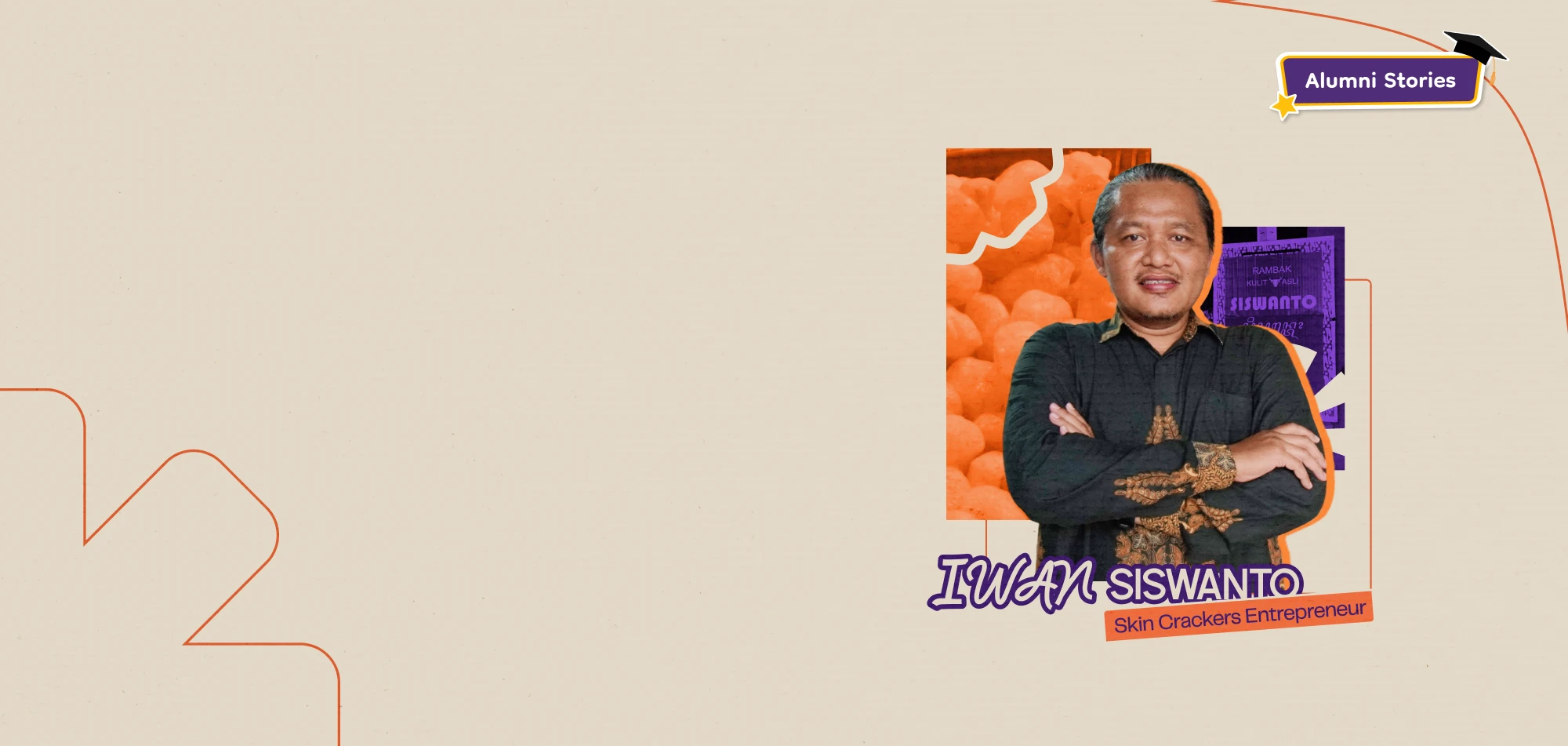
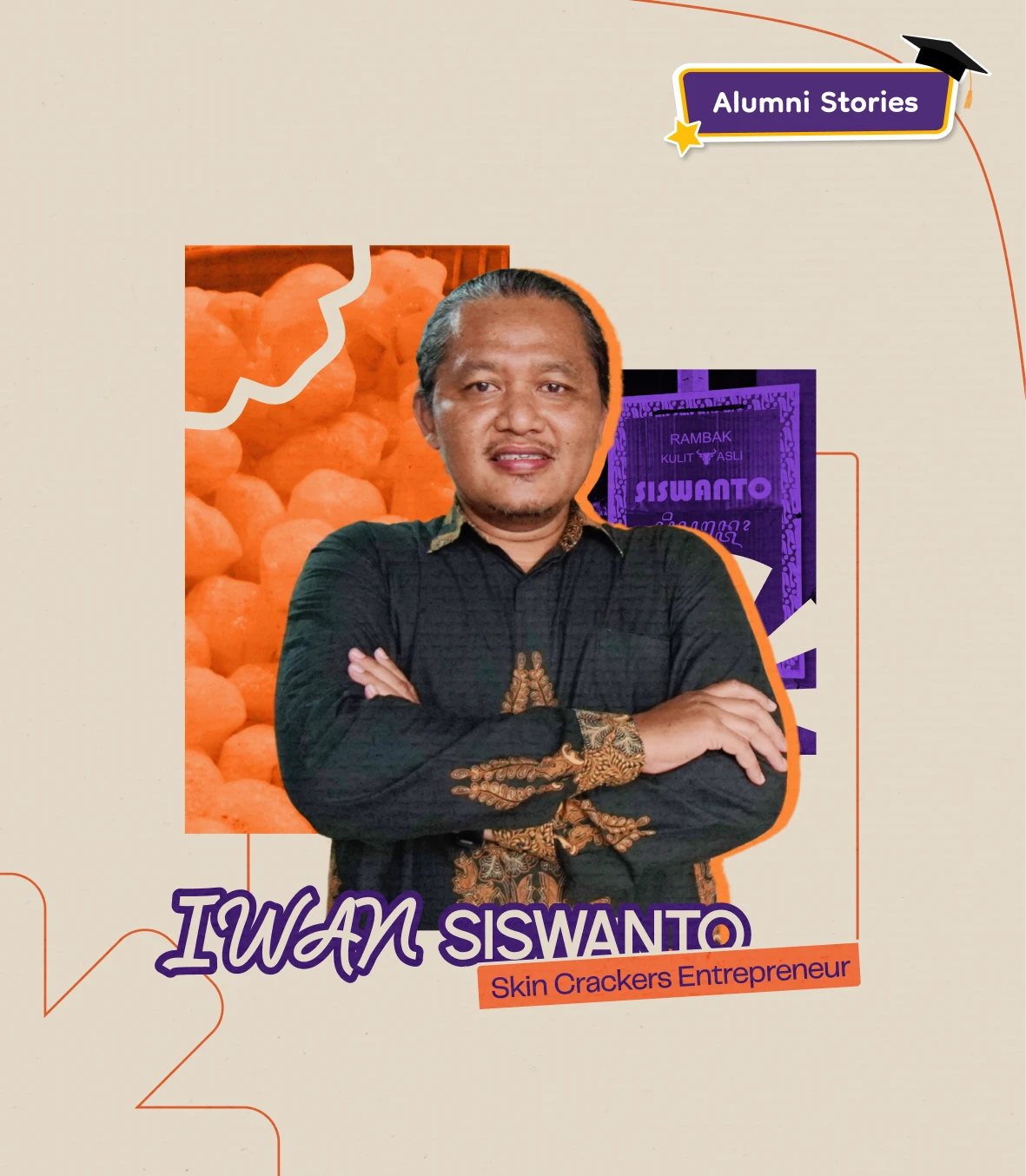
The distinct aroma of fried cow skin wafts from a large pan in a small production house in Gumpang Village, Kartasura, tempting anyone passing by.
The owner of the home-based production is Iwan Siswanto, an alumni of Universitas Muhammadiyah Surakarta (UMS), majoring in Management class of 1994. His signature look, casual outfit and ponytail hair, made him instantly recognizable.
“Back in college, I never imagined I’d be an entrepreneur,” said Iwan when we met at his house, which now doubles as his rambak production site, on Monday (21/4/2025).
His college days at UMS were laid-back, filled with activities in the student music organization of the Faculty of Economics and Business, Wahana Musik Mahasiswa Ekonomi, or WAMSINOMI. Young Iwan was more interested in composing music than drafting business plans.
After graduation, he still wasn’t drawn to manufacturing. It wasn’t until 2003 that he began trading raw cow skin. He sourced it from regions such as Papua, Makassar, and Merauke, and supplied it to leather processing hubs like Garut and Magetan. For more than a decade, the trade sustained him well, though it heavily relied on mutual trust between business partners.
In reality, running a business built on trust embodied significant risks. The year 2014 marked a dark chapter for Iwan.
It became the darkest year of his career. unpaid invoices, buyers who vanished, and a collapsing enterprise pushed him to the edge. “I lost around 1.5 billion rupiah. I fell ill and couldn’t work. Eventually, everything came to a halt,” he recalled.
To pay off his debts, Iwan even had to sell the warehouse he used to store cow skin. At that point, he believed he could no longer continue buying and selling. He had to start all over again, from scratch.
But from the ruins of that downfall, Iwan began a new chapter. He quit trading and chose instead to become a rambak (cow skin) cracker artisan.
It wasn’t an easy decision, but it wasn’t completely unfamiliar territory either, he had previously worked with rambak producers as a skin supplier. This time, though, he decided to jump into production himself.
With limited capital, Iwan began his business from the back kitchen of his home. In that same year, he started his enterprise for Rambak Kulit Asli Siswanto, a small and medium enterprise (SME) that transforms semi-processed cow skin into ready-to-sell rambak.
One of the core principles held firmly by the Jayapura-born entrepreneur is product freshness. “What’s fried today has to be shipped immediately. Oil has a shelf life, if it sits too long, the taste changes,” he explained.
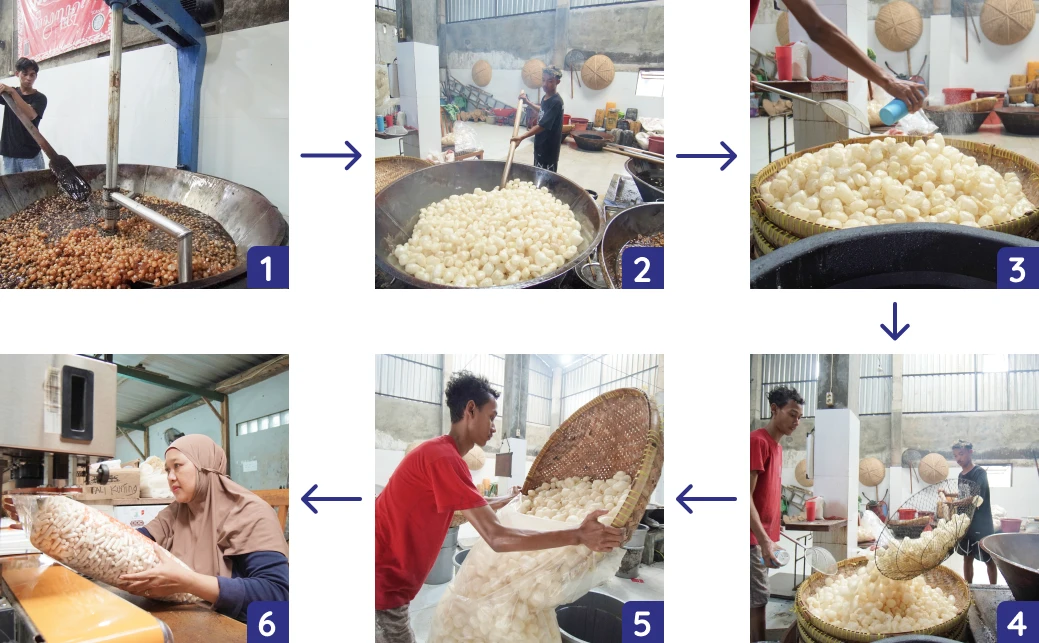
The rambak production process goes through six stages: (1)The semi-finished cow skin is fried over low heat using moderately warm oil until it begins to puff. (2) It’s fried again with high heat and hot oil until fully expanded. (3) It’s seasoned. (4) The rambak are drained and transferred into large plastic bags. (5) They're then packaged and weighed according to the desired portions. (UMS Public Relations/Gede Arga Adrian)
Iwan is meticulous about maintaining product circulation. Raw materials are fried in the morning and delivered to customers as quickly as possible, even if it means shipping out of town.
The price of his rambak varies depending on the packaging size, ranging from Rp10,000 to 75,000 per pack. He also offers bundled rambak sets that contain 5 to 10 pieces.
Before the COVID-19 pandemic, Rambak Kulit Sapi Asli Siswanto could produce up to 100–150 kilograms of rambak daily. However, after the pandemic, the production system was shifted to a weekly schedule to improve efficiency and adapt to changes in market behavior.
Currently, Iwan processes around 300–400 kilograms of raw material per week, which results in approximately 500–600 kilograms of ready-to-sell rambak.
Initially, the business handled the entire process, from raw cow skin to finished rambak. But in the past five years, they’ve stopped processing raw skin from scratch. Instead, they now use semi-processed materials supplied by Iwan’s former employees, who previously worked in the early processing stages.
“They returned to their hometowns and now send us the raw materials. So, we help each other,” he said.
The production house Iwan built from the ground up now employs around 11 production workers and 4 sales staff. During peak seasons like Ramadan, Christmas, and New Year, he increased his workforce by hiring neighbors from the surrounding area.
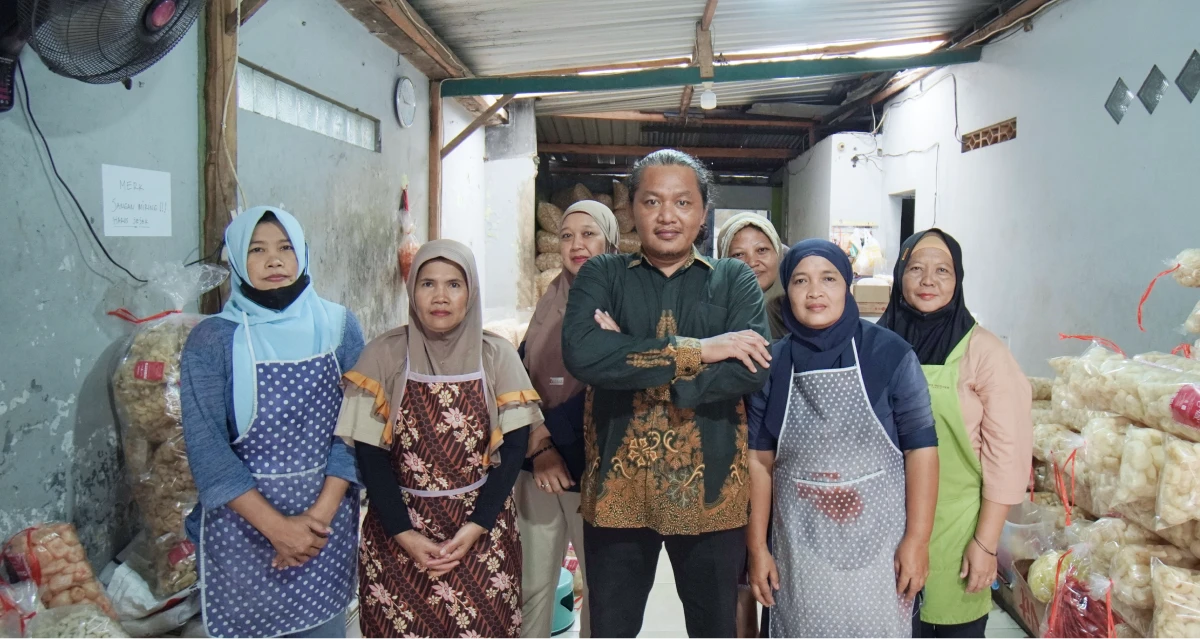
Iwan and his production team. (UMS Public Relations/Gede Arga Adrian)
During one Lebaran (Eid) season, Iwan can sell up to 12 tons of rambak. Roughly calculated, that amounted to a gross revenue of around Rp1.2 billion in just about a month and a half. “On average, the monthly revenue ranges from Rp50–300 million, with a net margin of around 10–15 percent,” Iwan explained.
The distribution network of Rambak Kulit Sapi Asli Siswanto now spans across cities in the Surakarta Residency area, and even reaches Semarang and Salatiga. In Salatiga, Iwan has partnered with the business group Niki Mantep.
Meanwhile, in Boyolali, his rambak is a local favorite due to the strong cultural tradition of serving it at various ceremonies. In Klaten, Solo, and major markets like Pasar Gede, his products are well-established and dominate the rambak scene.
Years of experience made Iwan well-versed in market trends. When demand began to decline, he took the initiative and diversified his product, producing other flour based snacks such as fish crackers, tofu crackers and other light snacks.
“To make sure my employees still have work. If there's nothing to do, they’d only come in two days a week, and that’s not fair to them,” Iwan clarified. This diversification, Iwan said, isn’t about chasing higher profits, it’s about a moral responsibility to the people who have sincerely worked alongside me.
The lessons Iwan learned during his time studying at Universitas Muhammadiyah Surakarta such as branding, market research, consumer behavior, and business development, proved instrumental in growing his business. “I still remember those lessons, especially about branding. For me, branding is a promise,” he said.
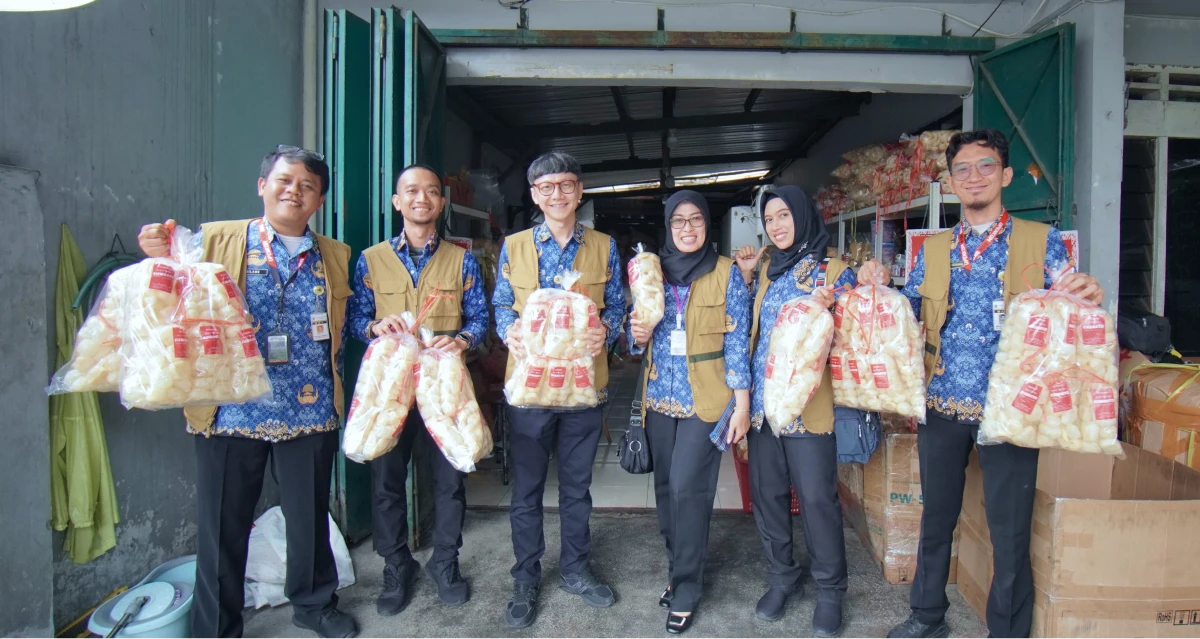
Customers from the Regional Civil Service Agency (BKD) of Semarang Regency came to buy Rambak Kulit Sapi Asli Siswanto in bulk on Thursday, April 17, 2025. (UMS Public Relations/Gede Arga Adrian)
To Iwan, branding is a promise that must be kept, such as consistently delivering on time. He also sticks to a firm principle when it comes to pricing. Despite many customers coming directly to his production factory, he refuses to sell at a lower price.
“If I sell cheaper at the factory, my agents would suffer. We aim to always maintain the ecosystem,” Iwan asserted.
Nowadays, Iwan seems more relaxed in running his business. “Now, I go beyond profit, it’s about spreading kindness. If Allah is pleased, everything becomes easier,” he said.
As someone who migrated and had to leave his family behind, Iwan knew deeply what it means to build a business from the ground up. In Java, he relied on genuine friendships. For him, friendships and social networks are some of the most valuable assets in entrepreneurship.
He added, “At some point, we’ll all face things that don’t match our plans. So besides being strong, we need to have many friends, but also be smart in choosing them. You never know, one small connection could become a big door of opportunity later on.”
Iwan used to meet people in the leather industry through his network. Today, many of his former employees have become his business partners. It all comes down to good communication, he said, to nurture both friendships and the business.
Writer: Genis Dwi Gustati
Translator: Farizal Luqman Majid
Editor: Al Habiib Josy Asheva
Bank Indonesia has held its benchmark rate at 5.75 percent, ending speculation of a hike to 6 percent that had circulated in recent weeks.
Nothing’s more special than reading curated news just for you.
Subscribe to the UMS Newsletter for free today.