
How Sheep Manure Turns into Nutrient Rich Fertilizer
16 July 2026
Sheep dunged nutrient-rich organic fertilizer for plants, made with the help of maggots. Built on community empowerment and a zero-waste principle.



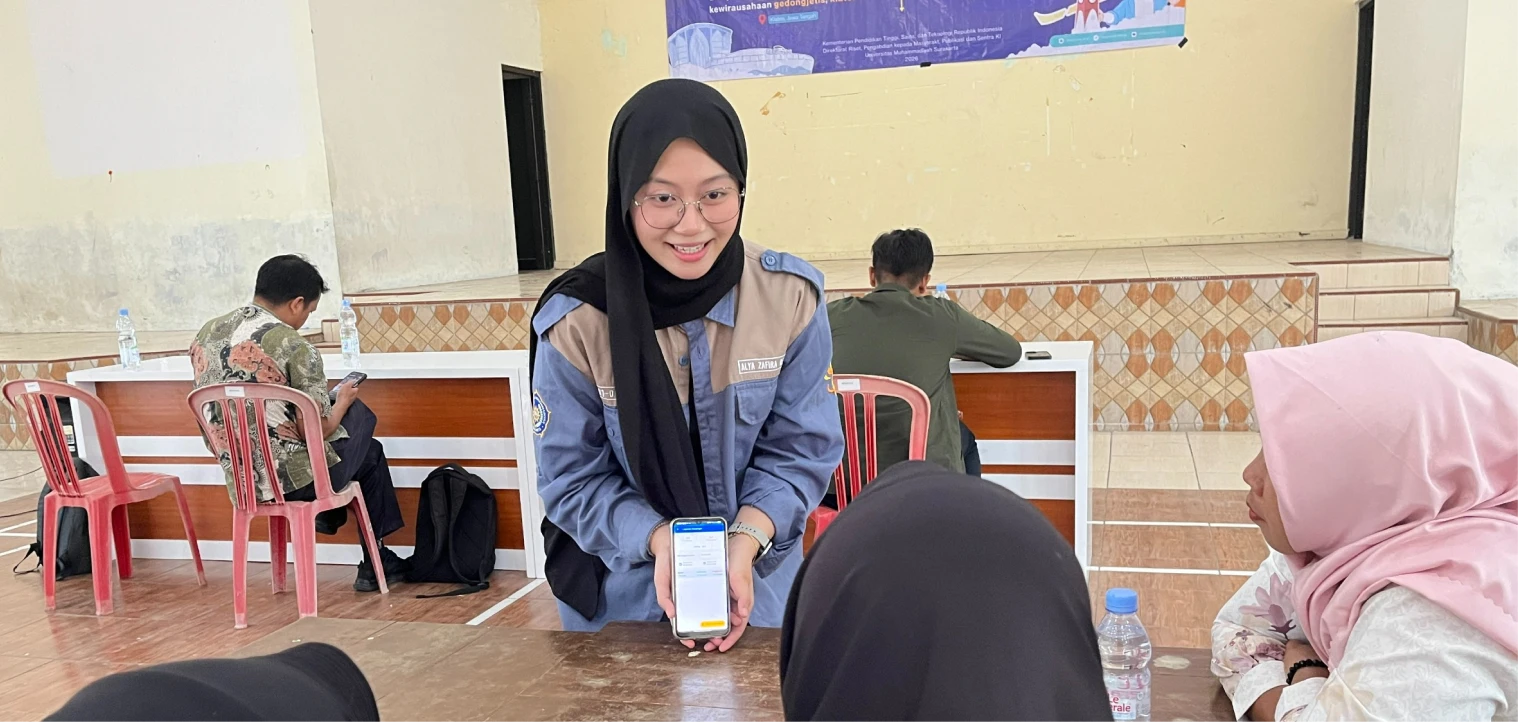
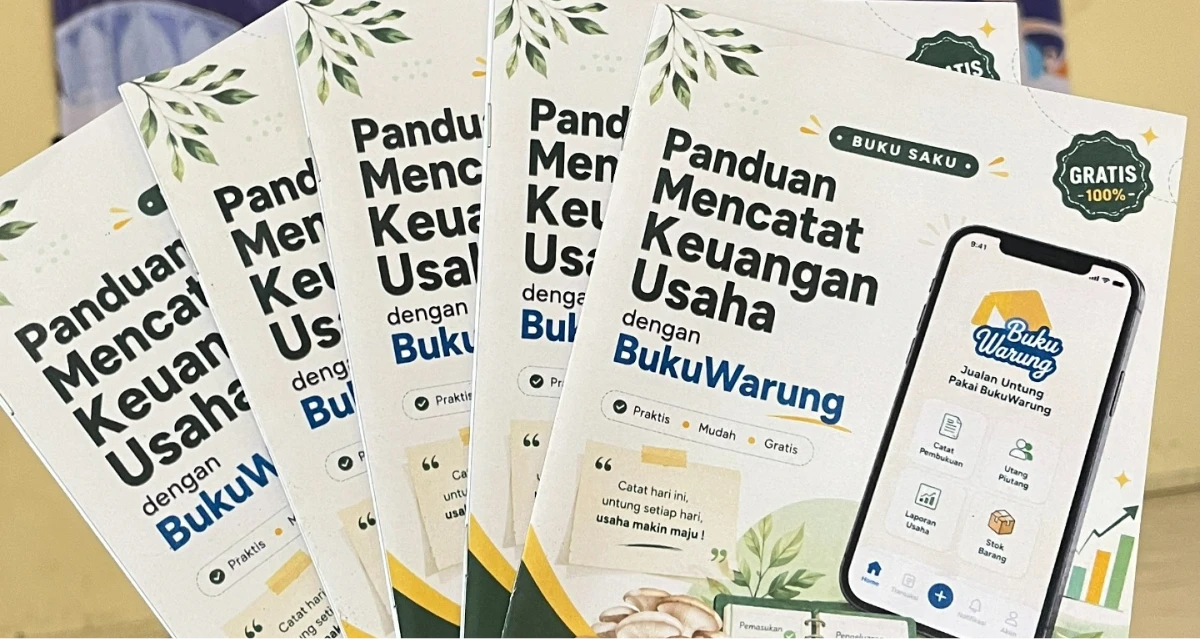
Efforts to improve the community's digital financial literacy continue to be carried out by the Digital Business Program at Universitas Muhammadiyah Surakarta (UMS). One such effort involved community service activities on the use of the BukuWarung application for residents of Gedongjetis Village, Klaten Regency, Central Java.
A member of the community service team who is also a student in the UMS Digital Business Program, Rizal Habibi, said BukuWarung is a digital business financial record-keeping application. The app was chosen to make it easier for residents of Gedongjetis Village, particularly owners of small grocery shops and food stalls, to digitize their transaction record-keeping.
"This program is designed to help the community, especially business owners, improve their ability to manage business finances through the use of digital technology," he said when contacted on Tuesday (18/8/2026).
Rizal explained that 10 residents of Gedongjetis Village enthusiastically took part in the program. All participants were operators of home-based, small-scale businesses.
He explained that Gedongjetis Village has a wide range of economic potential, including oyster mushroom cultivation, livestock farming, fisheries, wood processing, and home-based industries. However, business financial record-keeping there was still being done manually.
"Recording of sales transactions, raw material purchases, and operational expenses was still done manually. As a result, financial reports ended up inconsistent. Some business owners were even still relying on memory alone," he explained.
This condition, he continued, often made it difficult for business owners to know their exact profits and losses, to separate personal finances from business finances, and to determine production costs and selling prices.
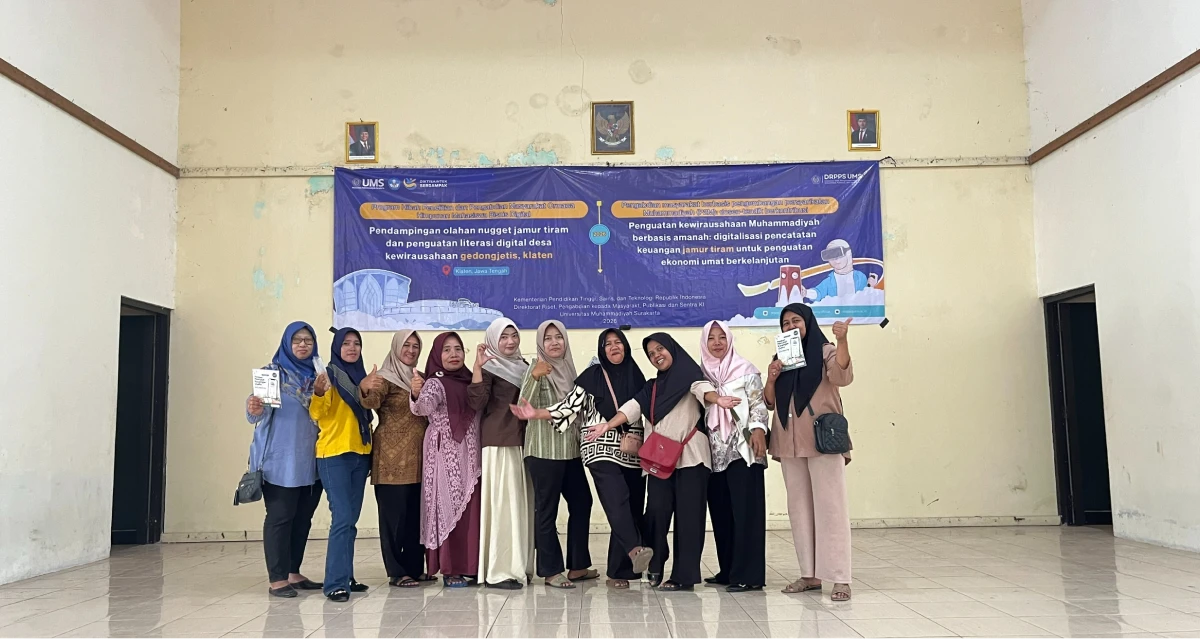
The community service team then provided guidance on the use of digital technology to manage business cash flow. Beyond learning how to use the application, participants also practiced using BukuWarung hands-on. This step was taken so that the community would not only understand the concept, but would also be able to apply it in their everyday business activities.
"That application was chosen because it has features relevant to business owners' needs, such as recording cash inflows and outflows, recording debts and receivables, managing stock, generating profit-and-loss reports, and creating digital invoices or receipts," he added.
This community service activity is part of the "One Lecturer, One Education Staff, One AUM" Muhammadiyah Organizational Development (P2M) program, involving lecturers and students from UMS's Digital Business Program, held on 4 August 2026. Conducted at the Gedongjetis Village Hall, the activity carried the title "Strengthening Trustworthy Muhammadiyah Entrepreneurship: Digitalizing Financial Record-Keeping for Oyster Mushroom Farming to Strengthen Sustainable Community Economic Resilience."
The members of this community service team were Liana Mangifera, S.E., M.M.; Agus Wahyudi, S.H.I., M.H.; Dedy Triwijaya, S.Kom.; along with two Digital Business students, Alya Zafira Destiany and Rizal Habibi.
Secretary of the Digital Business Program, Liana Mangifera, S.E., M.M., explained that this community service activity has an important goal of improving digital financial literacy among village communities. According to her, digital financial literacy is very important to master, since today's economic ecosystem has shifted toward using digital devices.
For village communities, particularly those who run small shops, the urgency of digital financial literacy is especially great, since their businesses typically involve many small transactions each day. If everything is only recorded manually, Liana said, the likelihood of errors becomes much greater.
"Digital financial literacy is not just about being able to use an app, but about being able to use technology to make business management more orderly, transparent, and data-driven," Liana explained.
The involvement of students from the Digital Business Program was an important part of the activity. According to Liana, students served as field companions during the application training process, while lecturers were responsible for the academic content and preparation of the financial literacy materials. Student involvement was also part of their community service experience and community-based learning.
Through this activity, Liana hopes the community will increasingly understand that financial record-keeping is an important part of managing and growing a business. With more orderly record-keeping, business owners can track cash flow, monitor transactions, see how their business is developing, and get a clear picture of profit and loss.
"This is expected to help the community make business decisions based on data, rather than mere guesswork," Liana continued.
The activity at the Gedongjetis Village Hall is not meant to stop at the outreach stage. The program is designed to continue through ongoing mentoring and coaching, so that the community can consistently apply digital financial record-keeping in their business activities.
Through synergy between the university, students, the village government, and the community, Liana is optimistic that this community service program can become a concrete step toward improving digital financial literacy, while also strengthening business governance among the people of Gedongjetis Village.
Writer: Gede Arga Adrian
Editor: Maysali Sudarwati
Translator: Farizal Luqman Majid
Sheep dunged nutrient-rich organic fertilizer for plants, made with the help of maggots. Built on community empowerment and a zero-waste principle.
Nothing’s more special than reading curated news just for you.
Subscribe to the UMS Newsletter for free today.