
Bank Indonesia Holds Interest Rate at 5.75%, What Is the Impact?
24 July 2026
Bank Indonesia has held its benchmark rate at 5.75 percent, ending speculation of a hike to 6 percent that had circulated in recent weeks.


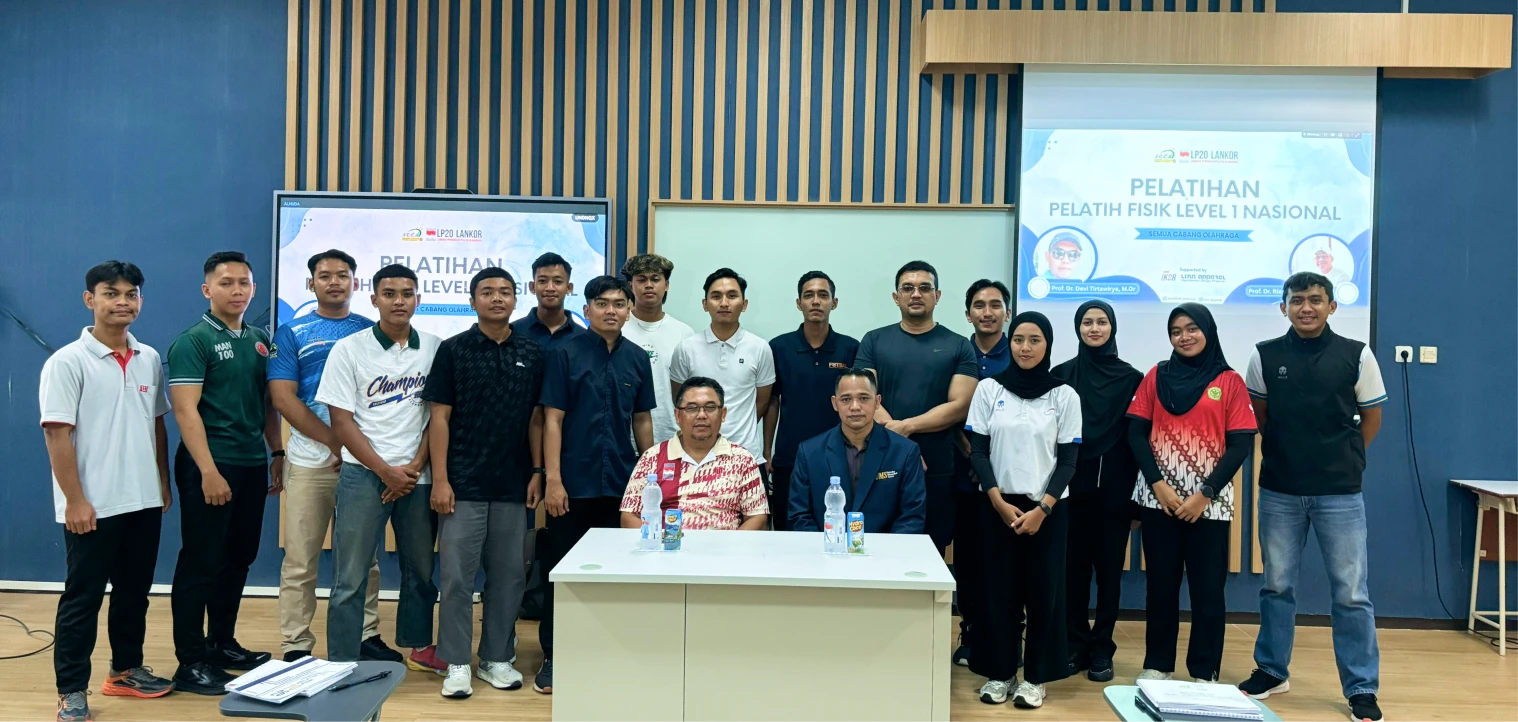
The Physical Education program (Penjas), Faculty of Teacher Training and Education (FKIP), Universitas Muhammadiyah Surakarta (UMS), held a National Level 1 Physical Trainer Training program. This prestigious activity was conducted on 17–20 January 2026.
The Head of the Physical Education program, Dr. Eko Sudarmanto, M.Or., stated that the activity reflects Penjas UMS’s commitment to improving the competence of national sports human resources. The training was attended by 20 participants from various sports disciplines, including athletics, football, badminton, volleyball, archery, and martial arts.
“The Physical Education program at UMS plays an active role in preparing concepts, materials, and nationally standardized training instructors. The main objective of this program is to produce professional physical trainers who understand scientific principles in the training process and are capable of supporting sustainable sports performance development in Indonesia,” said Eko when contacted on Wednesday (21/1/2026)
Eko explained that physical trainers play a vital role in supporting athlete performance in modern sports. Optimal physical readiness is not determined solely by talent and technique, but also by scientifically based training planning. Participants are expected to master the fundamentals of sports physiology, strength and endurance training methods, recovery techniques, and training load management.
“Physical trainers are a key element behind athlete performance. Through this training, we aim to build a professional, science-based, and sustainable coaching ecosystem. FKIP, through the Physical Education Study Program, is committed to becoming a center for the development of superior and competitive sports human resources,” he added.
Eko noted that this training program is part of the long-term strategy of the Penjas UMS to comprehensively integrate academic aspects with field practice. According to him, such training is essential not only to enhance participants’ technical skills, but also to strengthen the scientific understanding that serves as the main foundation in the world of modern sports coaching.
“We want to ensure that physical trainers in Indonesia have strong scientific analytical skills for every training program. They must understand how training affects an athlete’s body systems, how to regulate training loads to prevent injuries, and how to carry out proper recovery. That is why this program is designed with a balanced combination of theory and practice,” he added.
Over the four-day program, the training was conducted intensively with a structured division of sessions. The first day began with an official opening and an introductory session covering basic material on sports physiology and the principles of modern physical training. Participants were introduced to concepts of the body’s energy systems, physiological adaptations to exercise, and factors influencing athletic performance.
On the second day, activities focused on workshops for designing training programs and measuring physical fitness. Instructors from academic and professional sports backgrounds provided guidance on how to develop effective periodized training programs, evaluate training loads, and use fitness assessment tools such as the VO₂ max test, vertical jump test, and agility test.
The third day was devoted to field practice. Each participant took on the role of a coach in simulated strength, speed, and endurance training sessions. They learned how to give instructions, correct techniques, and evaluate training responses using a scientific approach. These practical activities were centered in the fitness laboratory and sports fields of FKIP, which serve as the main learning laboratories of the Physical Education program.
The final session on the fourth day was devoted to evaluation and certification examinations. Participants were assessed in two aspects: theory and practice. The theoretical exam measured participants’ understanding of physical training concepts, while the practical exam evaluated their ability to implement training programs tailored to the needs of specific sports disciplines. Participants who passed the assessments will receive a National Level 1 Physical Trainer Certificate, which is nationally recognized and serves as a requirement for career advancement in the field of sports coaching.
Eko explained that this activity represents a strategic step for Penjas UMS in building both academic and professional reputation. He emphasized that the training program will become a sustainable annual agenda with the long-term goal of establishing a National Physical Training and Certification Center under FKIP.
“We do not want this training to stop as a routine activity. In the future, FKIP through the Physical Education program will expand it to Level 2 and to specialized training programs for physical education teachers and school coaches. We aim to produce physical trainers who not only work at the competitive level, but also play a role in early-age athlete development,” he said.
Eko also highlighted the importance of collaboration among universities and national sports institutions in strengthening the academic capacity of physical trainers. He hopes this training can serve as a model of synergy between the education sector and the sports industry.
“We are opening opportunities for cooperation with the Indonesian National Olympic Committee, the Ministry of Youth and Sports, and national sports federations. The goal is to ensure that the training we conduct is standardized, impactful, and relevant to the needs of modern sports,” he asserted.
Writer: Imron Nugroho Saputro, Gede Arga Adrian
Editor: Fika Annisa' Sholihah
Translator: Farizal Luqman Majid
Bank Indonesia has held its benchmark rate at 5.75 percent, ending speculation of a hike to 6 percent that had circulated in recent weeks.
Nothing’s more special than reading curated news just for you.
Subscribe to the UMS Newsletter for free today.