
Bank Indonesia Holds Interest Rate at 5.75%, What Is the Impact?
24 July 2026
Bank Indonesia has held its benchmark rate at 5.75 percent, ending speculation of a hike to 6 percent that had circulated in recent weeks.

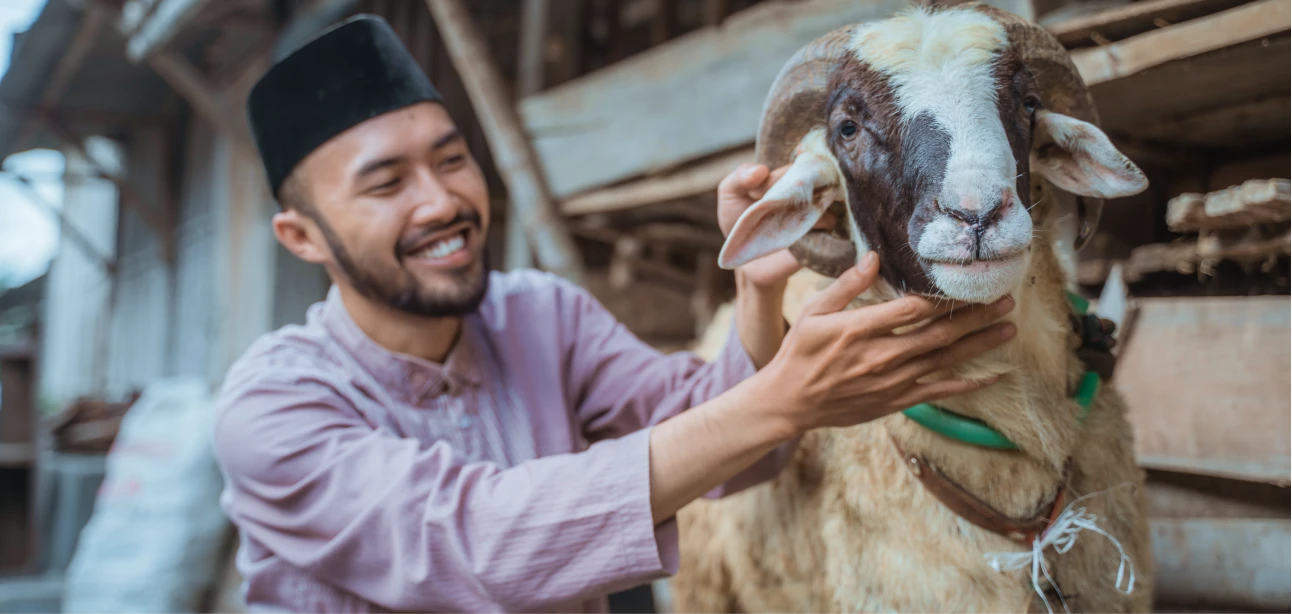
Eid al-Adha is a Muslim holiday on the 10th of Zulhijah, one of the most important dates in the Islamic calendar. It coincides with the culmination of the Hajj pilgrimage to Mecca. Eid al-Adha is closely associated with qurban (slaughter of livestock that meets specific requirements).
Muhamad Subhi Apriantoro Lc., M.H., a lecturer at the Faculty of Islamic Studies at Universitas Muhammadiyah Surakarta (UMS), explained that qurban is an act of worship ordained for Muslims with sufficient wealth. Etymologically, the word “qurban” comes from the Arabic qariba - yaqrabu - qurban wa qurbanan wa qirbanan, which means “close.” In this context, “close” refers to getting closer to Allah by fulfilling some of His commands.
“The practice of qurban has existed for a long time, not only in the time of the Prophet Muhammad (Sallallahu `Alaihi Wa Sallam) but also in previous generations. The tradition of sacrifice is rooted in the story of the sons of Prophet Adam ‘Alaihissalam, as mentioned by Allah SWT in the Qur’an, Chapter Al-Mai’dah, verses 27-31,” explained Subhi, an expert in Islamic theology at UMS.
Subhi explained that Habil (the son of Adam) offered a goat, while Qabil (another son of Adam) offered his harvest. Habil’s sacrifice was accepted, signified by fire coming down from heaven and consuming it. This acceptance made Qabil jealous of Habil, ultimately leading to the first murder in human history.
“Next is the story of Prophet Ibrahim ‘Alaihissalam, who Allah commanded to sacrifice his son, Prophet Ismail ‘Alaihissalam,” he added.
The story mentioned by Subhi is known as “The Test of Ibrahim” or “The Story of the Sacrifice.” When Ibrahim was commanded to sacrifice his son, he did not immediately fulfill the order. Instead, he first consulted his son, Ismail, saying, “O my son, indeed I have seen in a dream that I must sacrifice you, so see what you think.” (QS. As-Saffat [37]: 102).
Ismail, full of piety and sincerity, accepted the command. His reply is clearly stated in the same verse, “O my father, do as you are commanded.” (QS. As-Saffat [37]: 102).
The pious dialogue between Ibrahim and Ismail proves that their love and devotion for Allah is immeasurable and surpasses all worldly attachments, including the attachment to his child. Their steadfast faith teaches us the true meaning of sacrifice and sincerity in carrying out the commands of Allah, The Owner of the Dominion.
“When Prophet Ibrahim was about to sacrifice his son, Prophet Ismail, Allah replaced Ismail with a goat that had long, thick, curly fur. This event became the foundation of our tradition of qurban,” Subhi explained.
The law on qurban is sunnah muakkad (ordained) for those who are affluent. Therefore, qurban on Eid al-Adha is strongly encouraged for Muslims to gain the blessings of The Provider.
“However, qurban can become obligatory if a person makes a nazar (vow). If someone vowed to do qurban, then the vow must be fulfilled and carried out, as a nazar is a binding vow that requires a person to fulfill the commitment made to Allah,” explained Subhi.
Subhi explained that the requirements for animals for qurban include livestock such as camels, cows, goats, or sheep. For qurban to be valid according to sharia (Islamic law), the person who wants to do qurban must ensure that the animal meets specific criteria.
“One of the key provisions for qurban is the criteria for the animals,” said Subhi. “The type and age of the animal must be in accordance with sharia, and it is not valid if the animal is deformed, thin, or lean.”
Meanwhile, the criteria for the types and ages of animals that are allowed or valid according to sharia include:
According to Sharia, qurban is performed on the 10th, 11th, 12th, and 13th of Zulhijah, starting after mid-morning or after the Eid al-Adha prayer (10th of Zulhijah) until sunset on the 13th of Zulhijah.
“Then, the distribution of the meat is divided into three categories. The most important is for the poor. Second, it is given to neighbors and others. Third, for yourself and your family in moderation. The meaning of moderation here is that the portion of meat for self-consumption should not be more than one-third of the meat slaughtered,” explained Subhi, a lecturer in the UMS Islamic Economic Law Study Program.
Qurban is a practice rich with wisdom and virtues, as the Prophet Muhammad SAW said:
“There is no deed that the son of Adam [man] does on the day of Eid al-Adha that is more beloved by Allah than slaughtering an animal for qurban. For it will come on the Day of Judgment with its horns, feathers, and hooves. Its blood will reach Allah before it drips to the ground. Therefore, exalt your soul to do it” (H.R. Tirmidhi and Ibn Majah).
“Many scholars agree that qurban has two dimensions: a spiritual dimension for individuals and a social dimension. However, they argue that the spiritual dimension is stronger in qurban than the social dimension,” said Subhi.
In Subhi’s explanation, to reach the full spiritual dimension of qurban, a servant must rid themselves of selfishness and love for the material world. They must be willing to give up some of the wealth given by Allah to be donated in His way, just like Prophet Ibrahim and his beloved son, Prophet Ismail.
“So, Prophet Ibrahim’s attachment to his son must be relinquished. Allah intended to erase this worldly feeling, as ultimately, Ismail belonged to Allah. We must instill this understanding in our minds and hearts that in performing qurban, we must sever the sense of ownership over the sacrificial animal or let go of the sense of ownership of the property Allah has entrusted to us in this world. We must believe that true ownership belongs to Allah, not us,” he continued.
The social dimension of qurban involves purifying one’s wealth and spreading kindness and happiness to others. This practice teaches us to be more sensitive to the conditions of our brothers and sisters in need.
“Qurban strengthens our humanity, proving the profound social impact of this practice. This can be observed in the distribution of qurban meat, especially to those in need. Qurban also teaches us about fairness, ensuring we act justly. If something is misplaced, it is considered injustice. Put the knife of your life on the right neck,” said Subhi
Subhi hoped that the qurban we will soon perform in June will help us become believers with strong spiritual qualities and heightened social sensitivity.
“If Allah has not invited us to His house for Hajj, then we invite Allah to our house by performing qurban,” he concluded.
Writer: Genis Dwi Gustati
Editor: Al Habiib Josy Asheva
Translator: Farizal Luqman Majid
Bank Indonesia has held its benchmark rate at 5.75 percent, ending speculation of a hike to 6 percent that had circulated in recent weeks.
Nothing’s more special than reading curated news just for you.
Subscribe to the UMS Newsletter for free today.