The Scholar Behind UMS's Master's Program in IQT
27 July 2026
Prof. Andri Nirwana, S.TH., M.Ag., Ph.D., pioneered the Master of Al-Quran and Tafsir Studies as a first step in strengthening Quranic studies within Muhammadiyah.


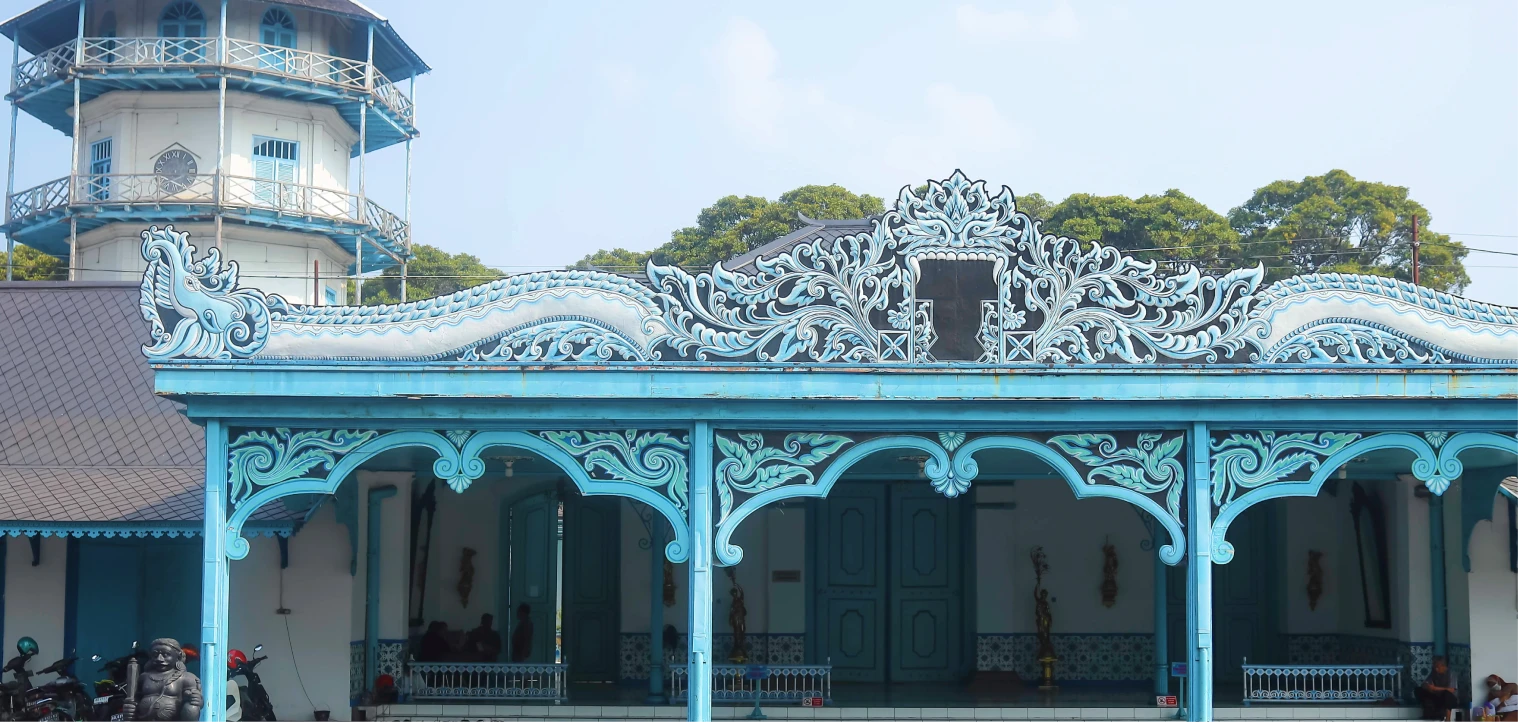
The proposal for the establishment of new autonomous regions (DOB) has resurfaced in Parliament. The idea of DOB includes the expansion of provinces, cities, districts, special regions, and even new special autonomous regions. This discourse emerged alongside the discussions about lifting the moratorium on DOB, which has been in effect since 2014.
However, Minister of Home Affairs Tito Karnavian denied that lifting the DOB moratorium meant opening opportunities for the creation of special regions. “The moratorium is for DOB, new autonomous regions. So, there is no creation of new provinces, districts, or cities. However, if it concerns special regions, proposals can be submitted,” said Tito, quoted by Antara on Monday (5/5/2025).
According to Tito, the designation of special regions is not solely under the authority of the Ministry of Home Affairs (Kemendagri), but requires synergy with the DPR (House of Representatives) regarding the legislative process to draft regulations. The creation of special regions must have a strong legal framework.
The plan for expansion has been received by the Kemendagri since 2014. Deputy Minister of Home Affairs (Wamendagri) Bima Arya Sugiarto, in a meeting with Commission II of the DPRrevealed that the Ministry had received 337 requests for the creation of new autonomous regions (DOB), including the Special Region of Surakarta (DIS).
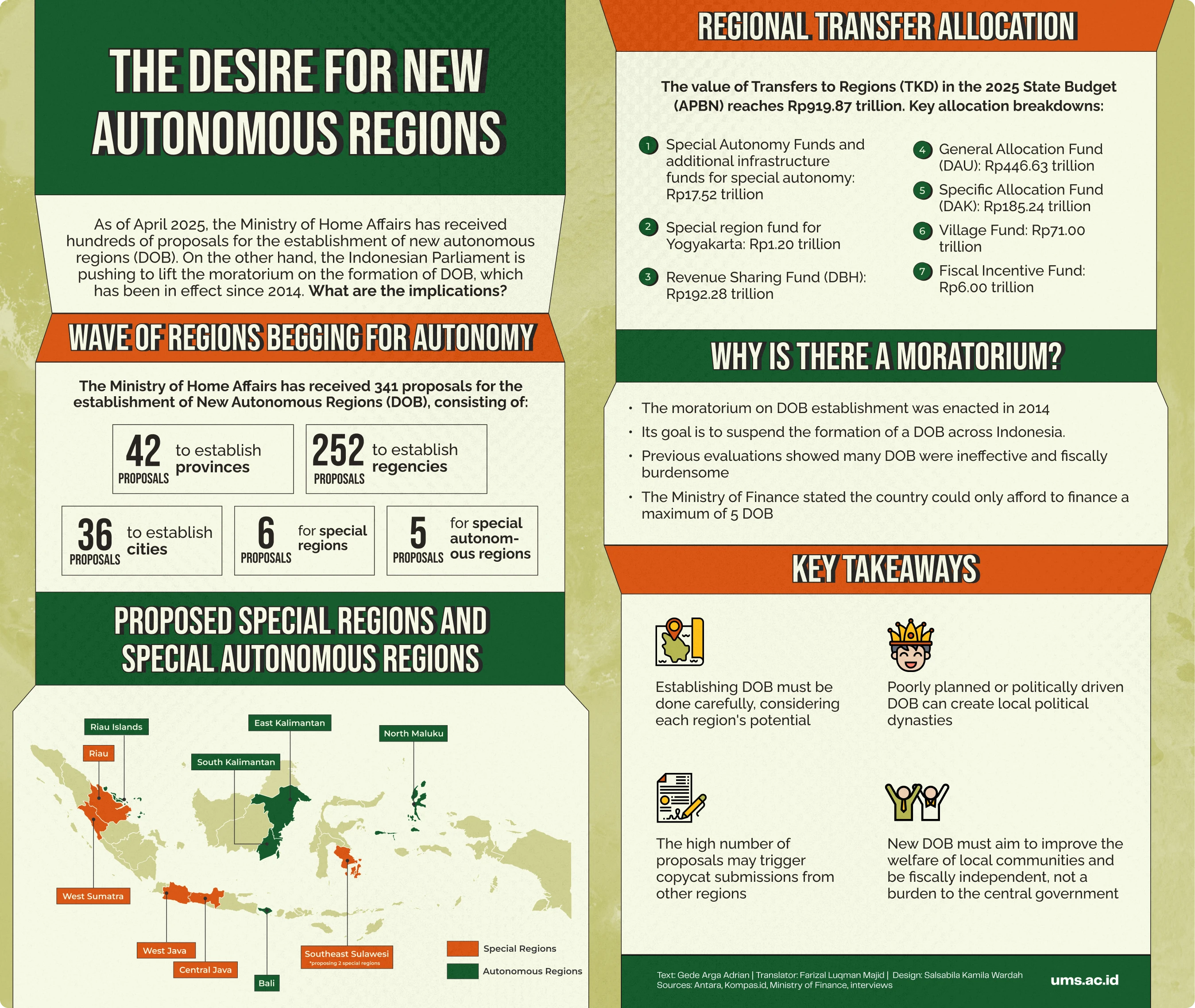
In contrast, the Director-General (Dirjen) of Regional Autonomy (Otda) at Kemendagri, Akmal Malik, stated that the Ministry had received 341 requests for DOB formation as of April 2025. Akmal detailed these requests, which include 42 proposals for new provinces, 252 proposals for new districts, 36 proposals for new cities, 6 proposals for special regions, and 5 proposals for special autonomous regions.
Proposals for new special regions have been submitted by the provinces of West Sumatra, Central Java, Riau, and West Java, each requesting one new special region. Meanwhile, Southeast Sulawesi Province has proposed two new special regions. Proposals for special autonomous regions have come from the Riau Islands, Bali, South Kalimantan, East Kalimantan, and North Maluku.
Currently, there are two special regions in Indonesia: the Special Region of Yogyakarta (DIY) and Aceh Province. Both have different historical backgrounds. DIY received its status as a special region due to its contribution to Indonesia's independence struggle.
Meanwhile, Aceh received its special region status following the 2005 Helsinki Agreement. The agreement paved the way for peace between the government and the Free Aceh Movement. As a result, Aceh became a special region allowed to implement Islamic sharia law.
Constitutional law expert from Faculty of Law, Universitas Muhammadiyah Surakarta (UMS), Dr. Nuria Siswi Enggarani, S.H., M.Hum., believed that the plan for regional expansion must be carefully considered. She emphasized that regional expansion should not burden the national budget.
The reason is that the creation of a new DOB will involve the transfer of funds from the central government to the new regions through regional transfers (TKD). “The new regions cannot stand alone. There will certainly be fund transfers from the central government,” Nuria stated on Monday (5/5/2025).
The value of TKD in the 2025 State Budget (APBN) amounts to IDR 919.87 trillion. This fund is allocated across various categories, including special autonomy (otsus) and additional infrastructure funds for otsus, which total IDR 17.52 trillion, as well as special funds for DI Yogyakarta, amounting to Rp1.20 trillion.
According to the lecturer of Regional Government Law at UMS, the expansion of regions in Indonesia does not automatically grant regions the freedom to independently generate revenue. Most regions in Indonesia still rely heavily on TKD as the capital for their development.
The creation of new provinces, districts, cities, special regions, or special autonomy areas must undergo a strict selection process. The government needs to carefully assess the potential of each proposed region. Nuria emphasized that regional expansions should not become a catalyst for the creation of new political dynasties at the local level.
She agreed that the large TKD funds can entice regional heads. The government must anticipate the emergence of "new kings" in the regions to ensure that special autonomy or special region funds are used to benefit the community.
“Cases like corruption are rampant at the local government level. This is what the central government needs to anticipate,” she explained.
If the expansion plan is to go ahead, the government must ensure that the proposed regions meet the capacity paramater, as outlined in Law Number 23 of 2014 on Regional Government.
These parameters include geography, demography, security, socio-political aspects, customs, traditions, economic potential, regional finances, and administrative capacity.
“Pursuing regional expansion is fine, but have these requirements truly been met? Or will the formation of a new DOB only add to the burden on the central government? There’s still dependence on the center,” she explained.
Nuria emphasized that the moratorium, or temporary suspension, on the creation of new DOBs acts as a safeguard to prevent the emergence of regions that lack potential. The moratorium enables the government to focus on allocating budgets toward other more urgent sectors.
It also encourages the central government to evaluate the performance of already established regional governments. “The formation of a DOB must be accompanied by a commitment to improve public welfare. Ideally, new regions should grow wealthier, but if they become poorer, that calls for an evaluation,” Nuria asserted.
The government previously enacted a moratorium on the creation of a new DOB, which has been in effect since 2014. At that time, the administration of Joko Widodo and Jusuf Kalla prioritized state budgets for flagship national projects.
Kemendagri assessed that the previously established DOB did not perform optimally because many were formed based on political interests. Kalla, then serving as Chairman of the Regional Autonomy Council, decided to halt further regional expansion.
The Ministry of Finance stated that the country could only afford to fund a maximum of five new autonomous regions. However, Kemendagri has received dozens of regional expansion proposals every year. The moratorium was thus considered a way to prevent regional envy and competition.
Lately, the idea of forming a new DOB has resurfaced, driven by pressure from Commission II of the DPR to the central government via Kemendagri. The aim is to lift the moratorium, but with stricter, clearer, and more objective requirements, criteria, and indicators.
During a meeting at the DPR building in Senayan on Thursday (24/4/2025), Commission II viewed the lifting of the moratorium as part of broader efforts to reorganize and improve regional governance.
Wamendagri Bima Arya Sugiarto stated that the idea of lifting the regional autonomy moratorium is a key responsibility of the Ministry of Home Affairs. He emphasized that revoking the moratorium must be done earnestly and with strict oversight. “This is because many regions have been pressing for it,” said Bima, as quoted by Antara, Friday (2/5/2025).
In addition to awaiting the legislative process in Parliament, Commission II of the DPR is also waiting for the political will of President Prabowo Subianto. “The moratorium is a policy-level decision by the President, so both the DPR and relevant ministries or agencies are waiting for the President’s political will,” said Chairman of Commission II of the DPR RI, Muhammad Rifqinizamy Karsayuda.
Writer: Gede Arga Adrian
Translator: Farizal Luqman Majid
Editor: Al Habiib Josy Asheva
Prof. Andri Nirwana, S.TH., M.Ag., Ph.D., pioneered the Master of Al-Quran and Tafsir Studies as a first step in strengthening Quranic studies within Muhammadiyah.
Nothing’s more special than reading curated news just for you.
Subscribe to the UMS Newsletter for free today.