How Sheep Manure Turns into Nutrient Rich Fertilizer
16 July 2026
Sheep dunged nutrient-rich organic fertilizer for plants, made with the help of maggots. Built on community empowerment and a zero-waste principle.



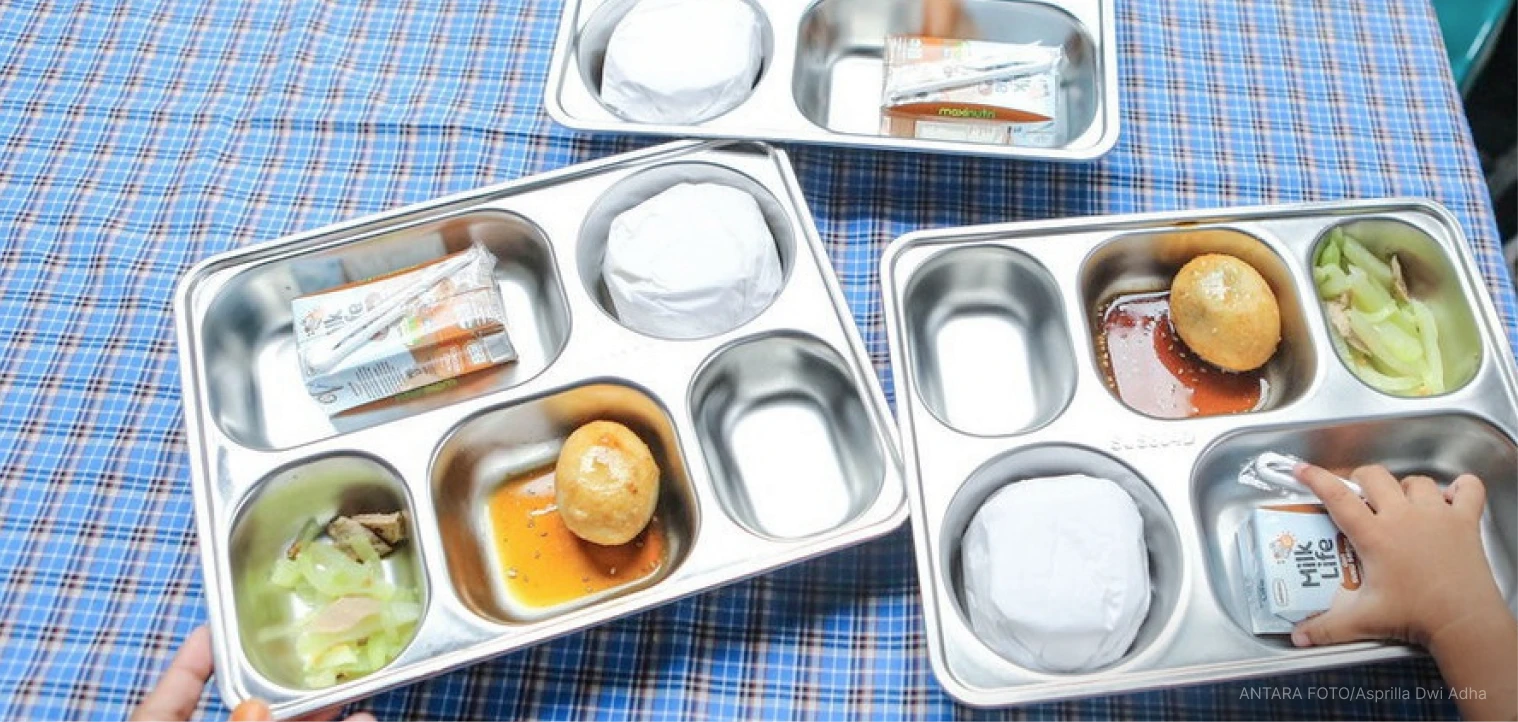
The government has begun implementing the free nutritious meals program at 190 Nutritional Fulfillment Service Units (SPPG) across 26 provinces. The program is a realization of the Prabowo-Gibran campaign promise made last year.
Under the leadership of the National Nutrition Agency, the free meals program is being rolled out in stages. The first phase commenced on Monday (6/1/2025) targeting 600,000 students. This figure is significantly lower than the target of 3 million students for the January-April period. Additionally, the budget allocation per meal has been reduced to Rp10,000 per portion.
Quoting Indonesia.go.id, the free nutritious meals program requires a budget of Rp71 trillion for 2025, while the total program budget needs are estimated to reach Rp450 trillion.
The government aims to benefit 83 million citizens through this program by 2029. The target recipients include students from early childhood education to high school, children under five years old (toddlers), pregnant women, and breastfeeding mothers.
The first day of implementation was marked by delays in food distribution. According to a report by Tempo on Tuesday (7/1/2025) SDN 06 Pulogebang, located in Pulogebang Village, Cakung District, East Jakarta, had to postpone its free nutritious meal session. The program was initially scheduled for 9:00 AM but was delayed until the caterer arrived at 9:30 AM.
Nutrition expert from Universitas Muhammadiyah Surakarta (UMS), Dr. Dwi Sarbini, SST., M.Kes., expressed disappointment over the delay. “The students are already not bringing their own meals, waiting for the food, and then ultimately not eating," he said on Monday (13/1/2025).
Images circulating on social media also brought attention to the portions of the free meals. The X account @barengwarga criticized the composition of the meals, quoting a follower’s complaint: "The mushrooms in the noodles smell bad, and the shrimp portions are tiny," @barengwarga tweeted on Monday (13/1/2025).
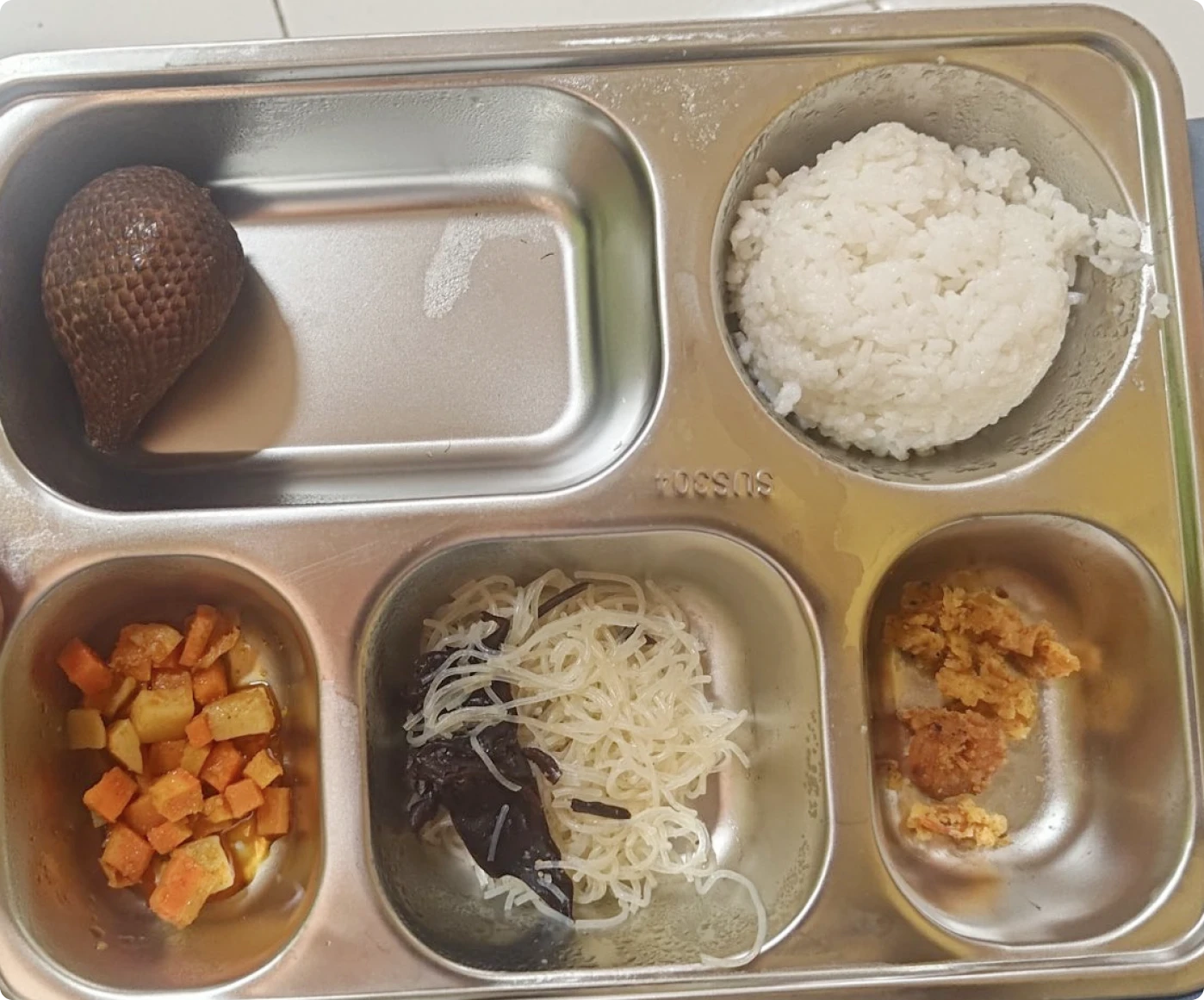
A portion of free lunch at a school in East Java, shared by the X account @barengwarga, has drawn criticism over food proportions, taste, and presentation during the program's first two weeks.
The budget is suspected to be a major factor behind the limited composition of side dishes in the free nutritious meals. “Perhaps because the budget is limited,” added the UMS nutrition expert.
Initially, the government allocated Rp15,000 per meal portion for the program. However, due to budget constraints, President Prabowo Subianto decided to reduce the allocation to Rp10,000 per portion on Friday, November 29, 2024.
On December 3, 2024, CNN Indonesia visited several food stalls to evaluate the options available for Rp10,000. They found that this amount could cover a portion of rice, one type of vegetable, and one protein-based side dish other than meat, such as tempeh or tofu.
To include a meat-based side dish, there were two options: either include only one type of animal-based protein or reduce the portion size of other components to accommodate the meat.
Another issue highlighted is the tendency of Indonesian children to dislike vegetables. This habit increases the risk of food waste, as uneaten vegetables often end up being discarded.
To address this, Dwi Sarbini suggested modifying the way vegetables are prepared. For example, incorporating them into omelets, nuggets, or vegetable-based noodles. “Choosing brightly colored or multicolored vegetables can make them more appealing,” she added.
Dwi also emphasized the importance of widespread and intensive training across all schools in Indonesia. “Strengthening communication and providing more intensive training will help ensure the program runs more smoothly and effectively,” she asserted
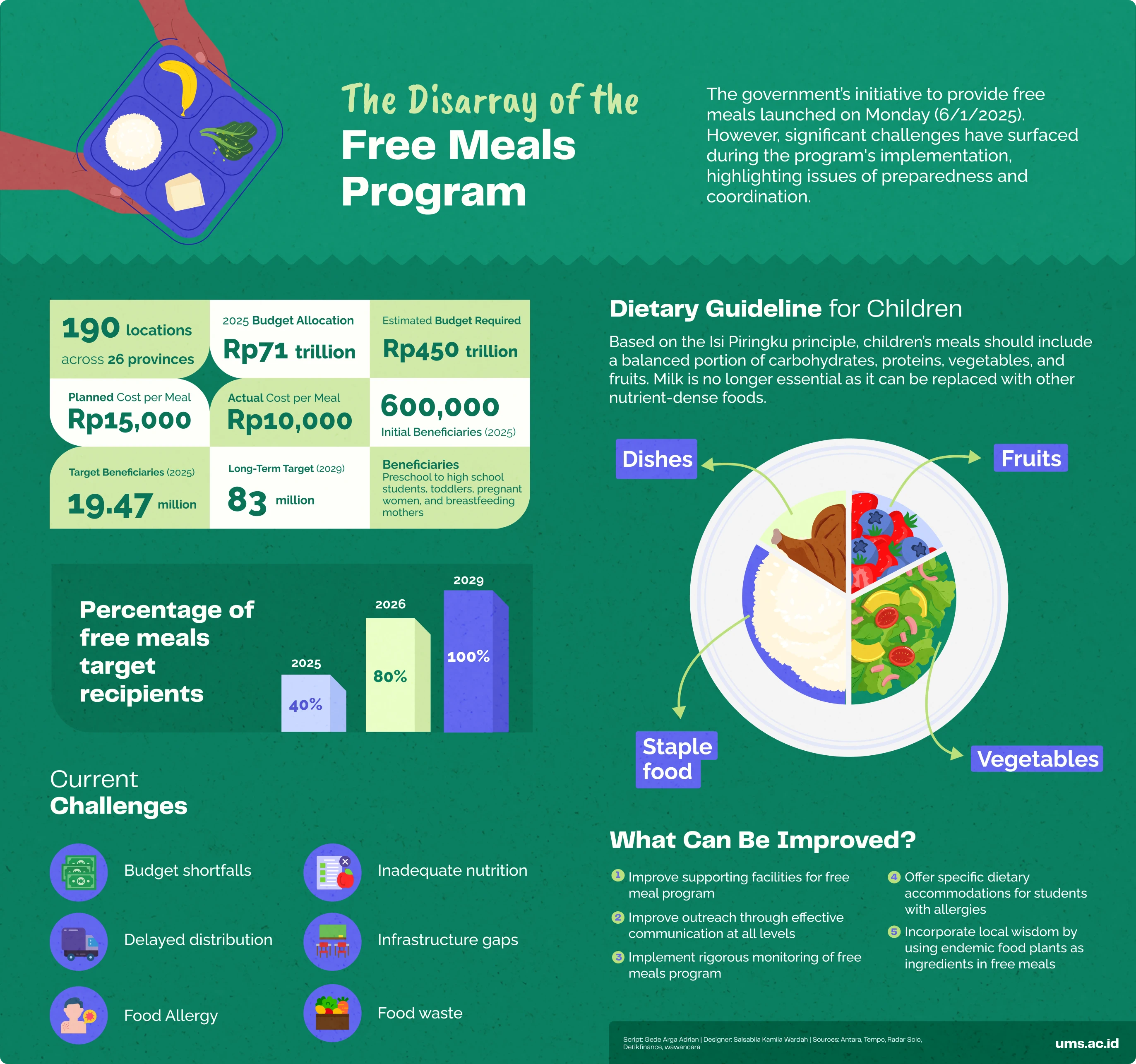
The "Isi Piringku" guidelines serve as an essential reference for creating school meal menus. According to these guidelines, issued by the Ministry of Health, a plate should consist of one-third vegetables, one-third staple foods, one-sixth fruit, and one-sixth protein.
“However, in practice, the free meal menu often does not fully align with these recommendations. This discrepancy can be attributed to challenges such as logistics or budget constraints,” explained Dwi.
Based on the Recommended Dietary Allowance (RDA), children's nutritional needs vary depending on age, gender, weight, height, and physical activity. Elementary school children aged 6–12 years require 1,400–2,000 calories per day, middle school students aged 13–15 years need 2,050–2,400 calories per day, and high school students aged 16–18 years need 2,100–2,650 calories per day.
Dwi emphasized that lunch should account for about 30% of a child's daily caloric needs. “This equates to approximately 400 to 800 calories,” she stated.
The inclusion of milk in the free meal program has also been a point of contention. In the balanced nutrition concept of “Isi Piringku”, milk is no longer considered an essential component of children's diets, breaking away from the traditional 4 Healthy 5 Perfect mindset that viewed milk as a critical nutritional complement.
Observations on social media have revealed that some schools still provide milk as part of the program. Often, the milk contains added sweeteners.
Several factors contribute to this issue, including the high cost of production and the logistical challenges of milk distribution. Milk is particularly sensitive to temperature changes compared to other nutritional sources. Additionally, lactose in milk can act as an allergen, causing stomach discomfort for those with lactose intolerance.
Dwi Sarbini explained that milk is no longer considered essential if its nutritional components can be obtained from other food sources. “There are plenty of calcium sources. For example, broccoli. Even without milk, there are many calcium-rich options,” said the Head of the Dietitian Program at UMS.
As a high-value national project, it is crucial for the government to incorporate local wisdom into the free meals program. Dwi Sarbini encouraged the use of local food sources as part of the program’s menu.
“Rice can be replaced with other carbohydrate sources, such as potatoes, millet, sweet potatoes, cassava, or gembili. We need to focus on what’s available locally and make use of those resources,” she explained.
To prepare for the free meals program, Dwi highlighted that Muhammadiyah has established a dedicated team to develop the initiative in Muhammadiyah-owned schools. She revealed her involvement as a member of the nutrition and menu team in the Muhammadiyah Special Nutrition Coordination in Sukoharjo Regency, Central Java.
According to Dwi, the team was created to manage and improve the program's ecosystem. One of its strategies involves utilizing Muhammadiyah’s waqf land for food crop cultivation and kitchens. The long-term goal is to stimulate collective economic growth through the free meals program.
Muhammadiyah also aims to integrate character education alongside the free meal initiative. Examples include teaching children to pray before meals, washing hands before and after eating, and cleaning up their plates afterward. “It’s not just about feeding children, but also shaping their character,” she added
Dwi acknowledged several challenges during the initial stages of the free meals program. She urged the government to promptly evaluate its implementation.
Areas for improvement include strengthening infrastructure, training personnel, and managing logistics more effectively. “This ensures that the benefits of the program can be fully realized by children,” she concluded.
Writer: Gede Arga Adrian
Translator: Farizal Luqman Majid
Editor: Al Habiib Josy Asheva
Sheep dunged nutrient-rich organic fertilizer for plants, made with the help of maggots. Built on community empowerment and a zero-waste principle.
Nothing’s more special than reading curated news just for you.
Subscribe to the UMS Newsletter for free today.