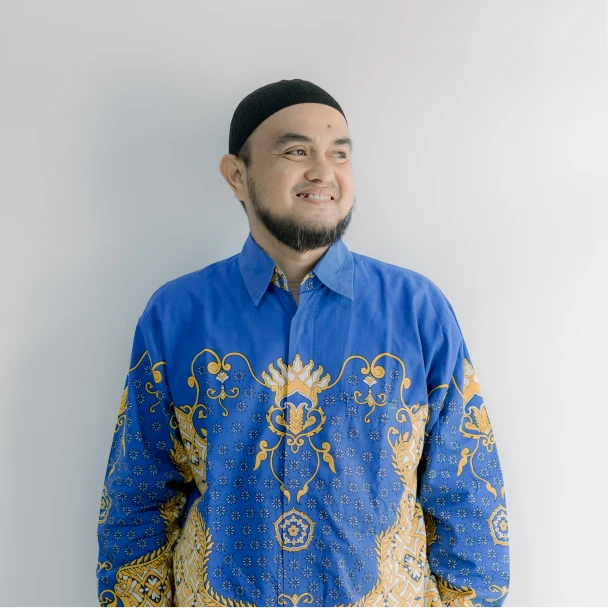
The Scholar Behind UMS's Master's Program in IQT
27 July 2026
Prof. Andri Nirwana, S.TH., M.Ag., Ph.D., pioneered the Master of Al-Quran and Tafsir Studies as a first step in strengthening Quranic studies within Muhammadiyah.


In Indonesia, those who bear the ink of truth often face the sharp point of a knife. Journalists, crucial watchdogs of democracy, are no strangers to intimidation and suppression. Those who dare shine light on the shadows become targets for silencing.
In 2023, the Alliance of Independent Journalists (AJI) documented 85 cases of violence against journalists in the country. These incidents included threats, acts of terror or intimidation, coverage bans, confiscation of equipment, and cyber-based digital attacks.
Reflecting on 2022, there was a case of WhatsApp hacking involving Narasi journalists. The incident occurred while they were actively reporting on a high-profile police officer's trial. Subsequently, it was revealed that Narasi Senior Producer M. Akbar Wijaya, also known as Jay Akbar, and 37 other journalists had their WhatsApp accounts hacked.
Quoting Narasi Newsroom on Monday (16/10/2023), journalists and activists constitute vulnerable groups of frequently targeted cybercrimes (hacking). Nevertheless, only a small number of victims pursue legal action, often due to various concerns, with security being a prominent factor.
Additionally, Narasi Newsroom highlighted that the hacking incident underscored weaknesses in consumer protection. Narasi journalists therefore decided to take legal action and bring the case to court to seek redress for the challenges they endured.
Nevertheless, the judge, in a verdict delivered on the 21st hearing, Wednesday (10/01/2024), dismissed the entire lawsuit filed by Narasi. Narasi Newsroom reported that Lawyer M. Al Ayyubi Harahap expressed regret over the decision, stating that it further highlights the lack of impartiality towards journalists.
Ayyubi commented on the decision, stating, “This decision perpetuates hacking actions that threaten digital security and pose a threat to critical journalists who dare to present facts to the public,” on Wednesday (10/1/2024) evening.
The widespread intimidation of journalists is disheartening for Muhammad Iqbal (20), a member of the Pabelan Student Press (LPM Pabelan) at Universitas Muhammadiyah Surakarta (UMS). This is particularly distressing as freedom of speech and reporting the truth are protected by the Press Law.
“If the news is deemed defamatory, it should be reported through the Press Council's mechanisms,” stated Iqbal.
The Al-Quran and Tafsir Studies student acknowledges that physical violence is currently used to intimidate journalists who produce news disliked by certain individuals. Although he has not experienced direct intimidation, he admitted to receiving insults for his writings.
“It's just a mockery from certain parties who disagree with the reporting we conduct at LPM,” added Iqbal.
In light of this situation, we reached out to Dr. Budi Santoso, S.Sos., M.Si., a lecturer in Journalism within the Communication Sciences Study Program at the Faculty of Communication and Informatics (FKI), UMS, to delve into additional perspectives on this matter.
Budi, as he is affectionately known, agrees that journalists face significant risks. “When journalists do their job, they expose wrongdoing. This exposure can lead to various consequences, naturally putting journalists at risk,” Budi said in a phone interview on Tuesday (09/01/2024).
Budi mentioned that the risk of such threats has been present for a long time. For instance, in the late 90s, journalist Udin from Bernas Daily died because of his reporting on the Parangtritis project in Bantul.
“Every profession comes with its risks. That's why journalists are protected by Press Law No. 40 of 1999,” Budi added. The law aimed at safeguarding the journalist was only enacted 54 years after Indonesia gained independence.
Budi mentioned that the threats to journalists and the media have evolved. Physical and life-threatening threats are not as widespread as they once were. According to him, the current threats range from attempts to take down news portals to hacking digital media, similar to the incidents experienced by Narasi journalists.
“Nowadays, the threats come in the digital realm, like attempts to take down news portals,” he explained.
He strongly condemns the hacking incidents involving the Narasi media team. Budi believes that such hacking attempts aim to hinder critical media from reporting on sensitive issues that can unveil the truth in the public eye.
“These critical media outlets have the potential to disrupt certain interests, thereby posing a threat to those who dislike critical news. People seek the truth. Hence, for those averse to the news, they attempt to ensure that media outlets like Narasi are unable to publish,” Budi explained.
In addition to revealing the truth, Budi highlighted the press’ vital role in the pillars of democracy. The media and journalists serve as the fourth pillar of democracy, standing alongside the executive, legislative, and judiciary.
“Journalists are the fourth pillar of democracy. They oversee democracy, openness, and the country's democratic direction. The media plays a crucial role in this,” Budi explained.
Budi continued, journalists and the media have a role as watchdogs or guard dogs. Like a dog guarding its master’s house, they will bark if there is something suspicious. So, this is where the role of the press comes in, to criticize if there is something unusual.
This role requires journalists to publish what is being communicated by the state. One of the indicators of whether a country is democratic or not can be seen from the freedom of the press in that country.
“In a democratic country, there should be no lease on the press if they carry out their job professionally. Because they are the fourth pillar of democracy, if the work of journalists is disrupted then the democracy of a country is disrupted,” Budi emphasized.
The existence of the Press Law doesn't automatically ensure protection for all members of the press. This is the sentiment felt by Iqbal as a member of the student press. He mentioned that the student press lacks a legal umbrella, making it highly vulnerable to intimidation from certain parties.
“As a student journalist, I see the law protecting journalists, but for us, it's not enough. Without a specific law for student press, we get discriminated against during coverage, sometimes we get physical or verbal abuse,” Iqbal shared.
Unfortunately, this recent crackdown on press freedoms is particularly concerning given the long tradition of student press organizations on Indonesian campuses. Universities like UMS have fostered robust student press cultures for years, with outlets like LPM Campus, LPM Ar Rasail, and LPM Pabelan providing diverse perspectives and critical commentary.
Budi echoed a similar sentiment, emphasizing the crucial need to provide legal protection for press personnel in Indonesia in accordance with existing laws and regulations. He pointed out that the demise or weakness of the media signals a compromised state of democracy in a country.
“Protecting journalists is a fundamental duty of the state, not an optional favor. Obstructing their work is not just wrong, it's punishable. A free press is the cornerstone of a healthy democracy, and we must ensure its voice is never silenced.” He said.
He added that If journalists feel threatened, they should reach out for help such as legal aid groups and their own company legal teams.
Writer: Gede Arga Adrian
Editor: Al Habiib Josy Asheva
Translator: Farizal Luqman Majid
Prof. Andri Nirwana, S.TH., M.Ag., Ph.D., pioneered the Master of Al-Quran and Tafsir Studies as a first step in strengthening Quranic studies within Muhammadiyah.

A UMS pencak silat athlete successfully claimed gold at the 10th Asian Pencak Silat Championship 2026.

The Klanceng Edufarm startup is planning international expansion after being named national champion at the 2026 Studentpreneur Bootcamp organized by the Muhammadiyah Center for Entrepreneurship and Business Incubator.

Nothing’s more special than reading curated news just for you.
Subscribe to the UMS Newsletter for free today.