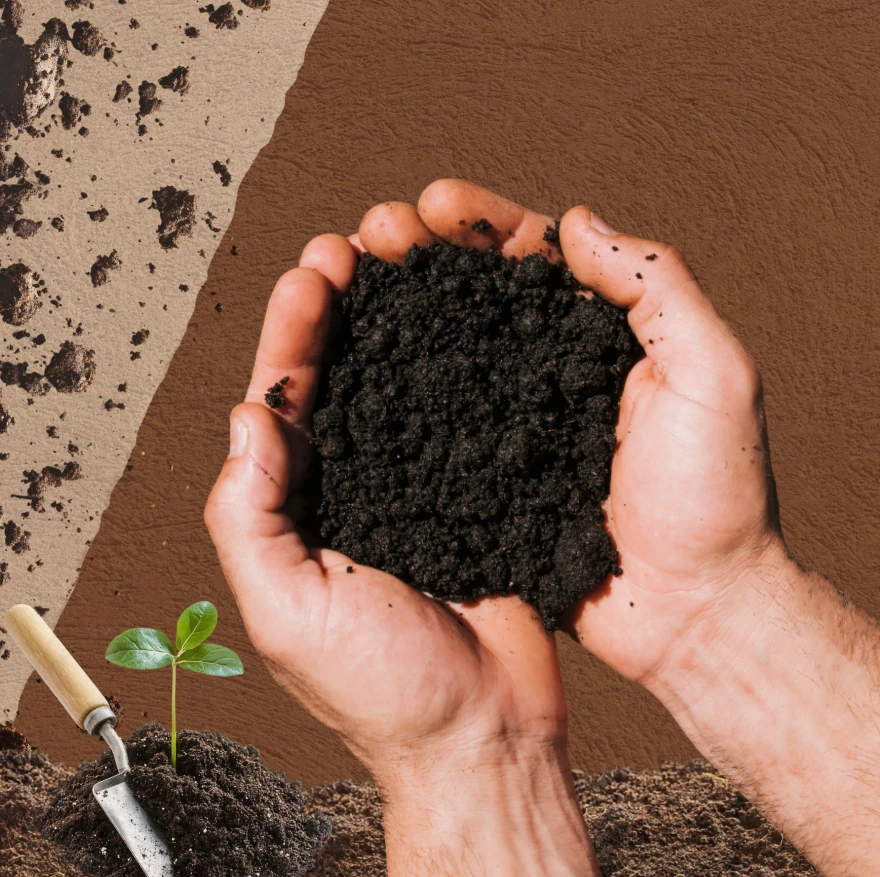
How Sheep Manure Turns into Nutrient Rich Fertilizer
16 July 2026
Sheep dunged nutrient-rich organic fertilizer for plants, made with the help of maggots. Built on community empowerment and a zero-waste principle.




In less than a month, Indonesia will commemorate National Father’s Day, which falls on November 12. Yet the issue of fathers’ presence and involvement in the family remains a major concern. It is no surprise, then, that the topic of the fatherless generation continues to surface in public discussions.
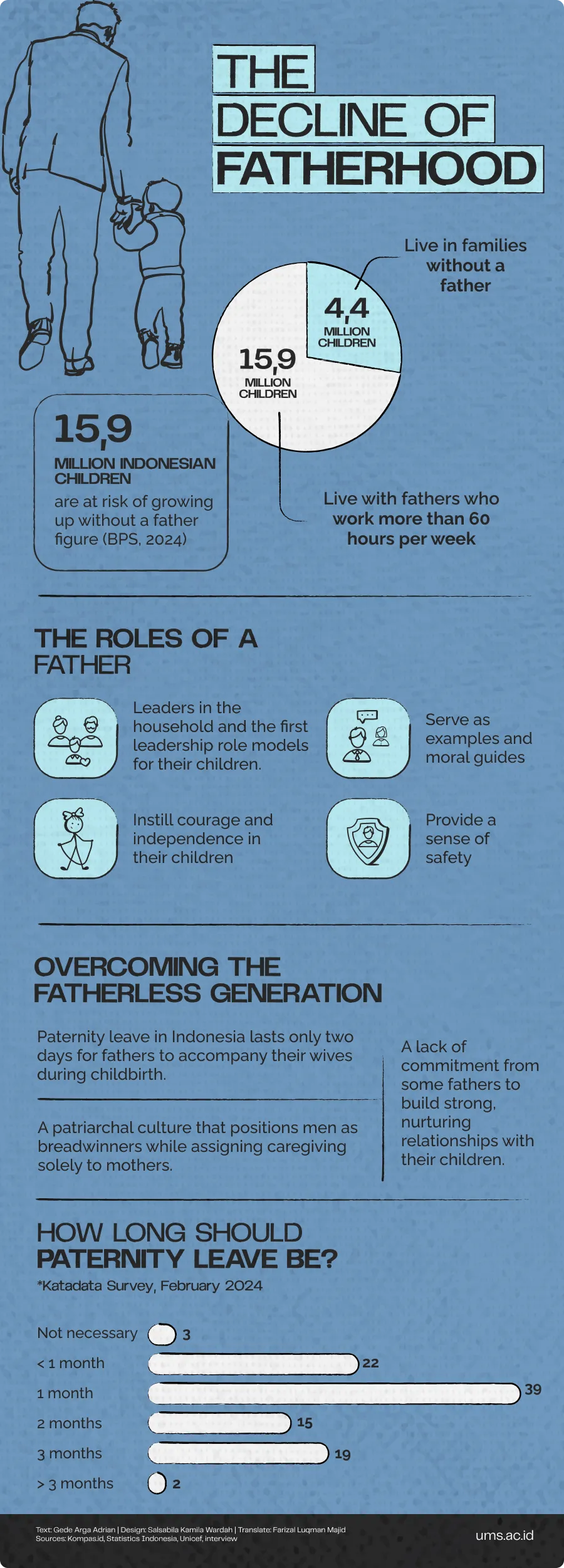
The fatherless generation refers to children who grow up without a father figure in their lives. Several organizations even state that Indonesia has one of the highest numbers of fatherless children in the world.
According to a 2021 UNICEF report, 20.9% of Indonesian children lack a father’s role in the household. Meanwhile, Harian Kompas noted that 15.9 million, or about one in five Indonesian children, are at risk of growing up without a father figure. This figure represents 20.1% of the 79.8 million children under the age of 18 in Indonesia.
Of those 15.9 million children, 4.4 million children live in families without a father, while 11.5 million others live with fathers who work more than 60 hours per week, or over 12 hours a day.
Prof. Dr. Sri Lestari, M.Si., Professor of General Psychology at Universitas Muhammadiyah Surakarta (UMS), explained that fatherlessness causes children to lose a role model capable of meeting their physical, psychological, social, and spiritual needs.
The causes vary, from long working hours and parental divorce to the death of a father.
The lecturer, affectionately known as Tari, said that the issue of fatherlessness is inseparable from the patriarchal culture that positions fathers solely as the family breadwinners. “In our society, child-rearing is considered a mother’s responsibility, while a father’s duty is to earn money,” she said during an interview on Thursday (16/10/2025).
As humanity progresses, children today are increasingly exposed to information technology and rapid social change, making the challenges they face even more complex. According to Tari, child-rearing should not rely solely on mothers.
She explained that mothers and fathers have distinct characteristics in nurturing their children. Mothers tend to develop a child’s empathy and emotional awareness.
Fathers play a more dominant role in building self-confidence, leadership, and independence. “A father’s role is more about preparing the child to face the outside world,” said the family psychology expert.
For instance, Tari illustrated, when a young boy climbs a tree, a mother’s natural instinct is often to be protective, warning him to be careful or stop. A father, on the other hand, is more likely to let him continue, showing trust in the child’s abilities and confidence that he can handle challenges.
For daughters, a father provides a sense of security and emotional stability. The attention and affection a father gives his daughter makes her feel safe and loved within the family.
“This prevents what we call affection hunger, a craving for attention from the boys which often leads to premature romantic involvement,” explained the Head of UMS Master of Psychology Department.
The influence, she continued, is significant in shaping a daughter’s mindset. When choosing a life partner, daughters often use their fathers’ character as a benchmark for what they seek in a future spouse.
But what happens when a child loses their father permanently? Tari noted that a father’s role can, in many cases, be replaced by other trusted male figures in the family, such as an uncle or older brother who can guide and nurture the child. The absence of a biological father does not necessarily mean the absence of fatherly values.
However, she emphasized that mothers must be selective when introducing these substitute figures. The right person should embody the positive values of fatherhood, ensuring that the child grows up emotionally grounded and prepared to face the world.
Support for strengthening the father’s role in families has been implemented in several countries through paternity leave policies. Such policies allow fathers to take time off to fulfill their family roles for example, accompanying their wives during childbirth or simply spending quality time with the family.
Tari said that implementing paternity leave in Indonesia would be a very positive step. However, she emphasized that granting leave alone is not enough, because building closeness with a child requires a father’s strong personal commitment.
A father must understand the importance of his presence in preparing his child to face the challenges of modern times, whether as a playmate, learning companion, or discussion partner.
Tari expressed regret that many fathers use busyness as an excuse to abandon their role in raising their children. In fact, she noted, today’s technological advancements should make it easier for fathers to stay connected with their children.
One of the simplest things a father can do, she explained, is to maintain regular communication, such as calling or sending messages. “For instance, before going to work, a father can call his child to let them know he’s heading out. That small gesture helps nurture a sense of connection and belonging between father and child,” said Tari.
On the other hand, she warned, technology can also distance those who are physically close. It’s now common to see family members gathered together, yet each is absorbed in their own gadget, leaving little room for genuine interaction.
According to Tari, family time is a crucial moment to strengthen the bond between fathers and children. She encouraged fathers to set aside time on weekends to talk and spend time with their kids.
“Family time doesn’t have to mean going on a trip. What matters is having a routine that brings the family together,” she explained.
Tari also emphasized that it’s never too late to start building a close relationship between a father and his child. She acknowledged that things might feel awkward at first, but this is where the mother can act as a mediator, helping both sides connect. Over time, the relationship will naturally grow warmer, leading to a mutual sense of belonging between father and child.
Writer: Gede Arga Adrian
Translator: Farizal Luqman Majid
Editor: Al Habiib Josy Asheva
Sheep dunged nutrient-rich organic fertilizer for plants, made with the help of maggots. Built on community empowerment and a zero-waste principle.
Nothing’s more special than reading curated news just for you.
Subscribe to the UMS Newsletter for free today.