
How Sheep Manure Turns into Nutrient Rich Fertilizer
16 July 2026
Sheep dunged nutrient-rich organic fertilizer for plants, made with the help of maggots. Built on community empowerment and a zero-waste principle.



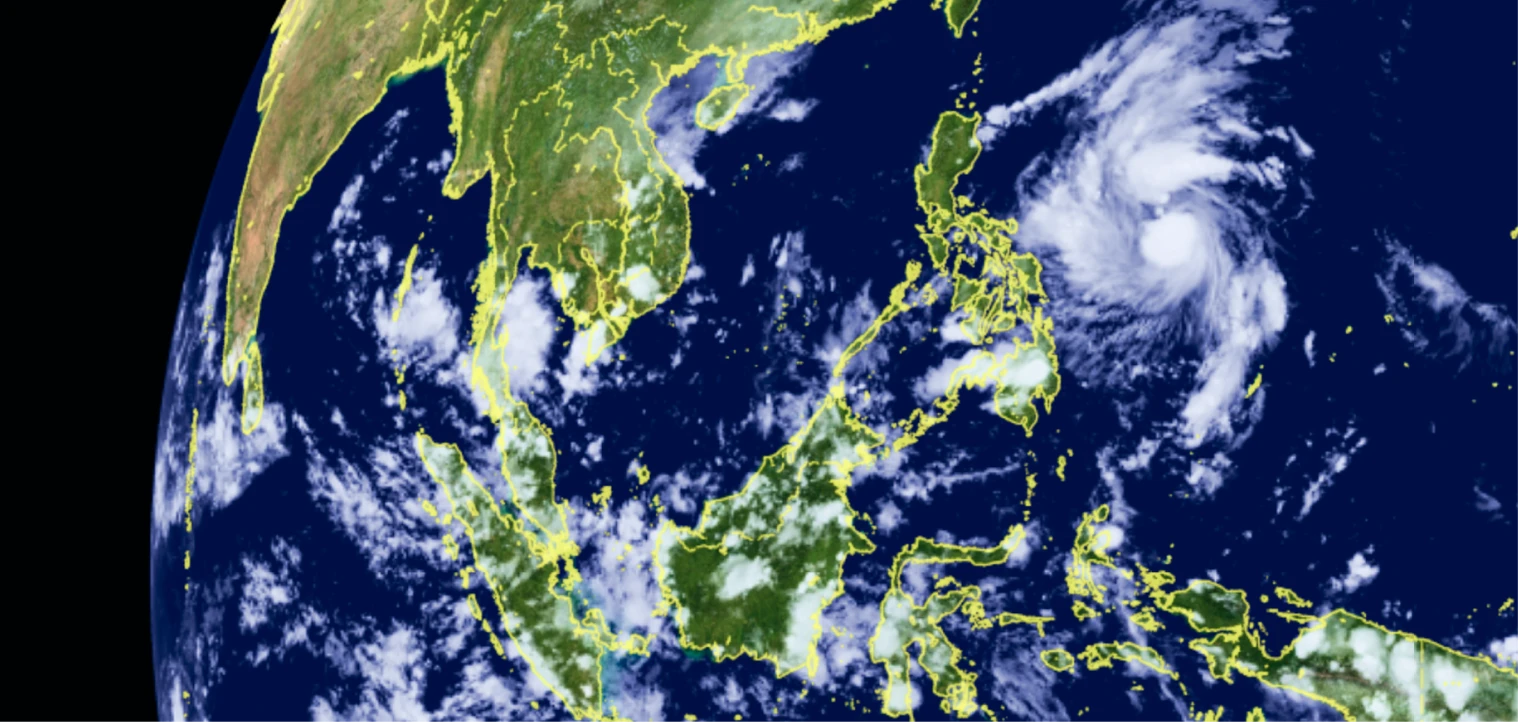
This rainy season may be wetter than in previous years. The Indonesian Meteorology, Climatology, and Geophysics Agency (BMKG) recently reported a potential La Nina this season. According to BMKG's official website, the potential for La Niña in 2024 is indicated by the El Niño-Southern Oscillation (ENSO) index.
Based on BMKG's latest analysis, the Nino 3.4 index stands at -0.64, which indicates a neutral ENSO status. However, the index has shown signs of transitioning to a weak La Nina phase since October 2024. According to BMKG calculations, La Nina is expected to impact Indonesia from November 2024 through March 2025.
ENSO, as described by reefresilience.org, is a periodic shift in the ocean-atmosphere system in the tropical Pacific, impacting global weather. ENSO reflects surface temperature anomalies in the Pacific Ocean along the western coasts of Ecuador and Peru. ENSO Has three phases: neutral, El Nino, and La Nina.
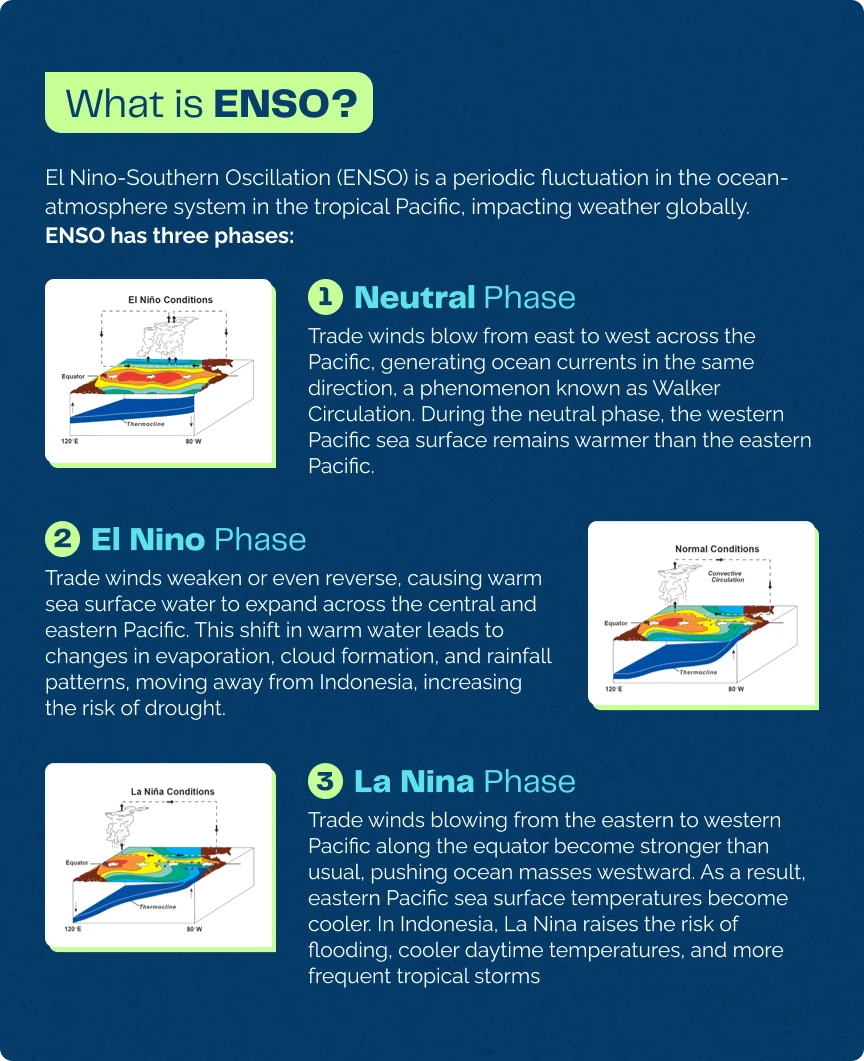
La Nina is a phenomenon marked by a drop in sea surface temperatures in the central and eastern tropical Pacific Ocean, resulting in cooler-than-usual waters. This temperature decrease is caused by cold water from deep within the ocean rising to the surface.
The phenomenon is also characterized by the strengthening of the trade winds. During La Nina , these trade winds blow more forcefully from the eastern to the western Pacific along the equator, carrying a larger amount of moisture with them. This increase in moisture typically makes Indonesia's rainy season wetter than in previous years.
Hydrology expert from Universitas Muhammadiyah Surakarta (UMS), Basyar Ihsan Arijuddin, S.Si., M.Sc., stated that the potential La Nina this year is predicted to be weak, so its impact may not be as severe as previous occurrences. However, Basyar emphasized that the public should still remain vigilant about the increased likelihood of strong winds and thunderstorms that may appear more frequently during the seasonal transition.
Basyar explained that La Nina is a natural phenomenon that typically occurs in specific cycles. “La Nina has different levels. Some are weak, and some are strong. Based on BMKG's prediction, this year's La Nina is not expected to be strong,” said Basyar on Friday (31/10/2024).
Basyar further explained that this climatic phenomenon is a natural process for balancing energy on Earth, occurring as part of a cycle that repeats approximately every three to seven years.
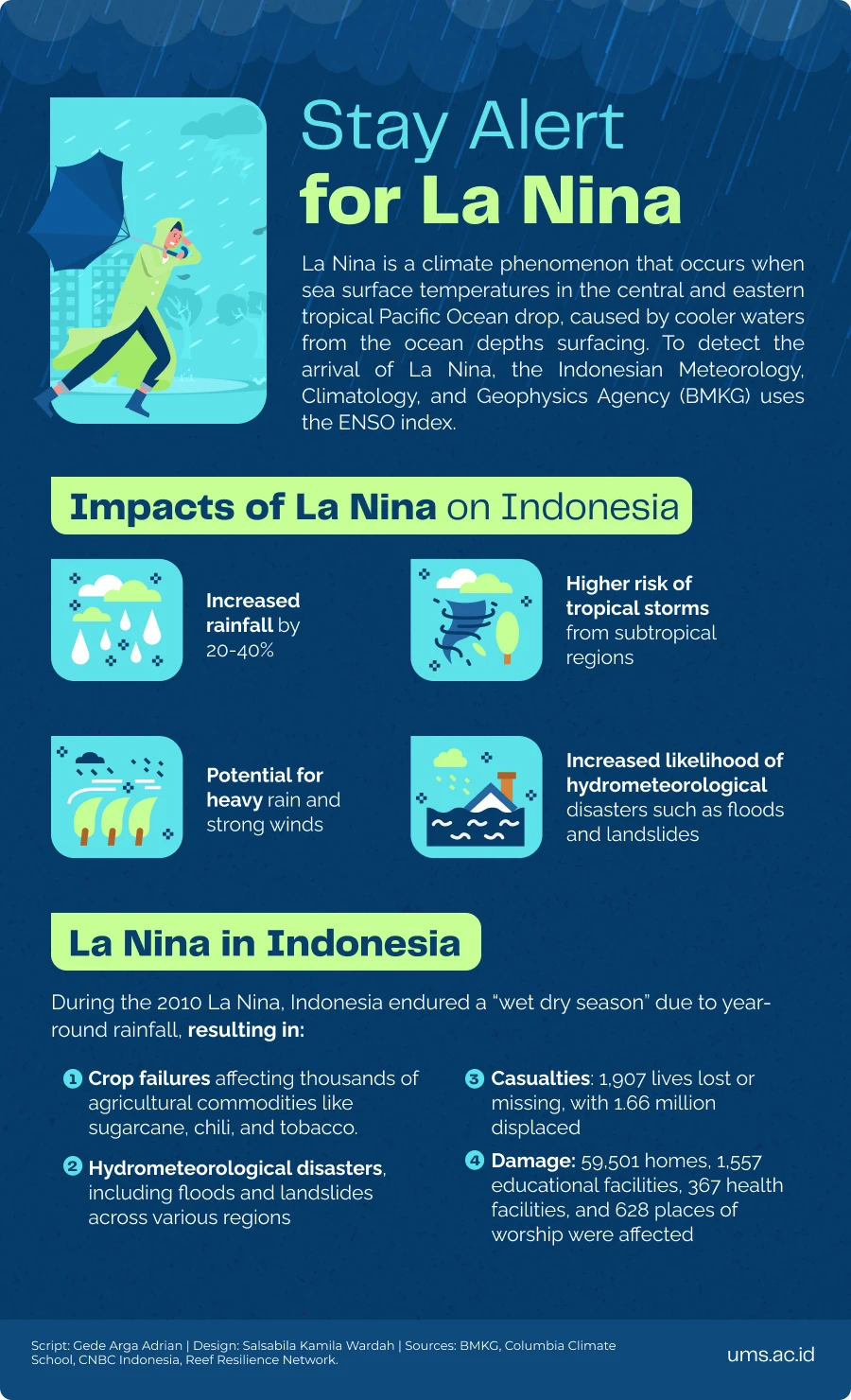
The impact of La Nina will be evident in increased rainfall. According to the BMKG website, La Nina could potentially raise rainfall in Indonesia by 20 to 40 percent.
Basyar confirmed that this increase could significantly affect communities, leading to floods and landslides. Flood risks are especially concerning due to the numerous densely populated settlements along riverbanks and deforestation in upstream areas.
“When La Nina occurs, water levels rise, especially with deforestation in upstream areas, increasing the likelihood of floods and landslides during La Nina,” he said.
The lecturer from the Faculty of Geography at UMS added that a strong La Nina could potentially trigger storms, such as tropical cyclones. However, the chance of tropical cyclones happening near the equatorial region is low.
“Tropical cyclones frequently occur in subtropical regions like the Philippines and Taiwan. However, the tail-end effects of a tropical cyclone may still be felt in some parts of Indonesia,” Basyar continued. He explained that the global air movement pattern in tropical regions directs air upwards, making tropical cyclones unlikely near the equator.
As reported by CNBC Indonesia, BMKG claimed that the 2010 dry season in Indonesia was a “Wet Dry Season”, referring to adverse weather conditions that continued into early 2011.
The 2010 La Nina phenomenon caused significant losses in the agricultural sector. Crop failures affected various regions, impacting key commodities such as sugarcane, tobacco, and chili peppers, which led to a surge in agricultural commodity prices.
In addition, La Nina 2010 triggered numerous hydrometeorological disasters, including floods and landslides across many parts of Indonesia.
According to the National Disaster Management Agency (BNPB), 1,907 people were reported dead or missing, and 1.66 million were displaced. The disasters also resulted in extensive damage, with at least 59,501 homes, 1,557 educational facilities, 367 health facilities, and 628 worship places affected.
Basyar urged that both the community and the government should put efforts to reduce the potential losses caused by the La Nina. For example, simple actions like avoiding littering in drainage systems can make a difference. The government should also anticipate flooding due to extreme rainfall by ensuring that drainage networks are not clogged.
Additionally, Basyar highlighted the importance of environmental conservation through tree planting to prevent potential landslides. Trees that typically thrive in forested and hillside areas are often cut down for economic purposes. While in fact tree roots play a crucial role in maintaining soil structure.
He advised that the government and community should focus on planting tree species suited to the specific land use. “It would be wiser if the plants are chosen according to their function. For example, if it’s conservation land, then it shouldn’t be used for planting commercial crops,” he remarked.
Writer: Gede Arga Adrian
Editor: Al Habiib Josy Asheva
Translator: Farizal Luqman Majid
Sheep dunged nutrient-rich organic fertilizer for plants, made with the help of maggots. Built on community empowerment and a zero-waste principle.
Nothing’s more special than reading curated news just for you.
Subscribe to the UMS Newsletter for free today.