Lab work is a crucial learning activity for students, providing hands-on experience that deepens their understanding. Likewise, research activities rely on high-quality laboratory equipment. Without well-equipped campus facilities, such as laboratories, learning in fields that require experiments and direct observation cannot reach its full potential.
In this case, the Architecture Program at the Faculty of Engineering, Universitas Muhammadiyah Surakarta (UMS) has established a laboratory facility known as the Building Physics Laboratory. Operating since the early 2000s, this laboratory has a long history and has undergone various updates to keep pace with the advancements in science and knowledge over the years.
The Building Physics Laboratory at UMS is designed to cater to various student practicum needs, particularly those focused on analyzing the physical phenomena that impact buildings.

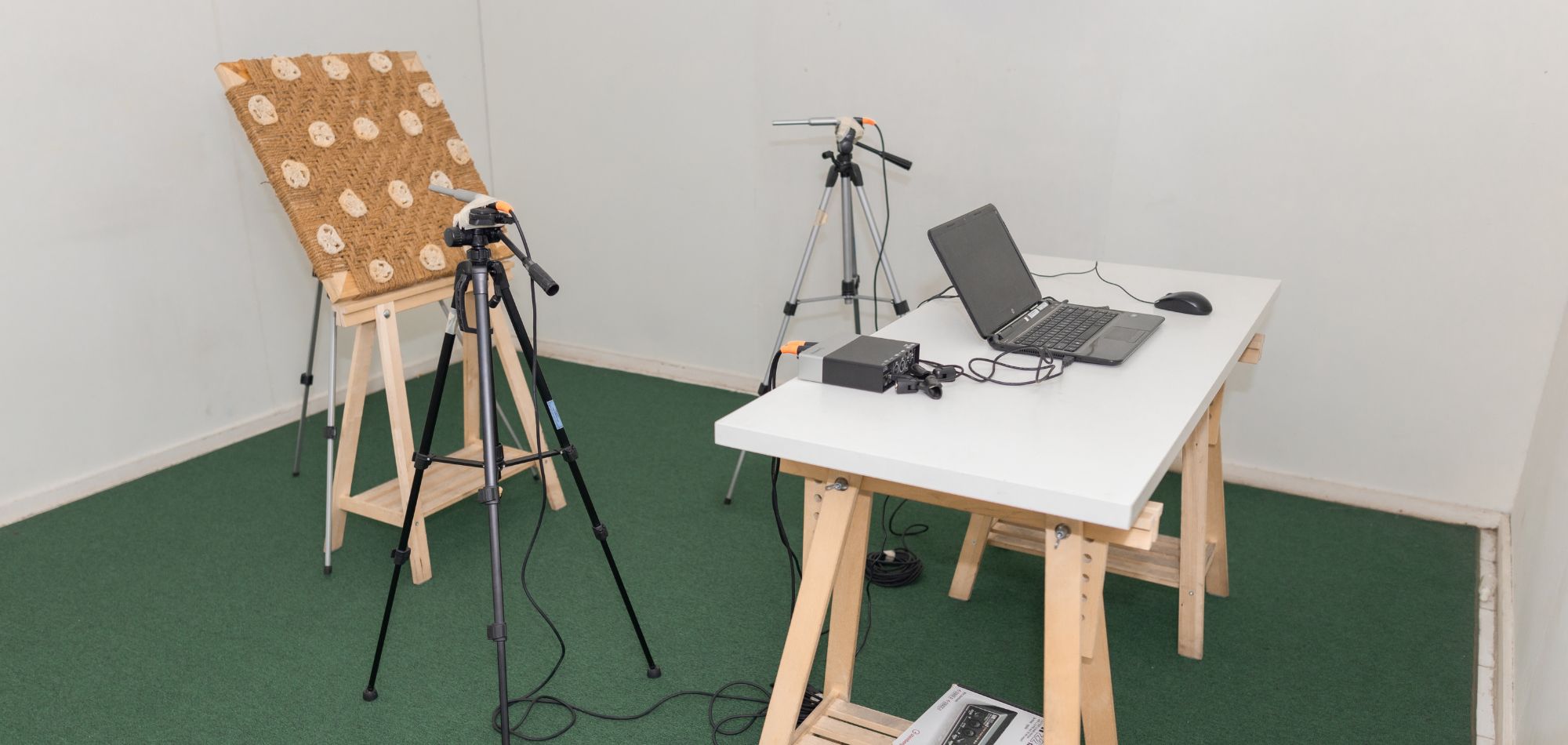
Real-Time Analyzer server (left) used to analyze material fibers and the simulation of sunlight direction (right). Imam Safi'i/UMS Public Relations
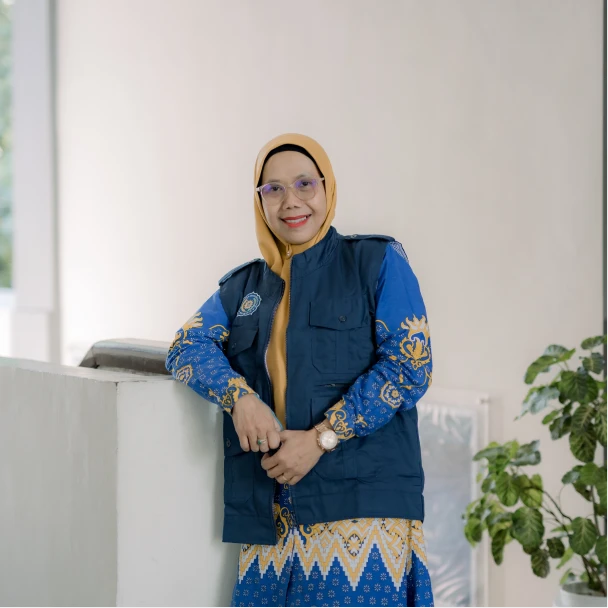
Dr. Ir. Dhani Mutiari, M.T., the Head of the UMS Building Physics Laboratory, highlighted the lab's strategic role in enhancing both the teaching-learning process and student research. The laboratory is equipped with various measuring and simulation tools that support building physics testing.
“In this laboratory, we aim to provide tools that meet academic needs, such as those used for lab work and student research. Students who typically use this lab come from courses like Building Physics, Tropical Green Architecture, Material Technology, and Research Seminar,” Dhani said.
In response to the growing needs, Dhani emphasized the faculty's commitment to continuously enhancing the laboratory's facilities and equipment. This includes updating tools to keep up with the latest technological advancements in the field of architecture.
In addition to supporting various lab work, this laboratory also serves as a space for lecturers to conduct research with students. This research is used for final assignments and collaborative projects, focusing on topics such as indoor environmental quality and the use of environmentally friendly materials.
Read also: Bricks from the Bin
“We recently received four new tools through a grant from the 2024 Kompetisi Kampus Merdeka Program,” added Suharyani, the person in charge of the Building Physics Laboratory, during an interview on Thursday (26/9/2024).
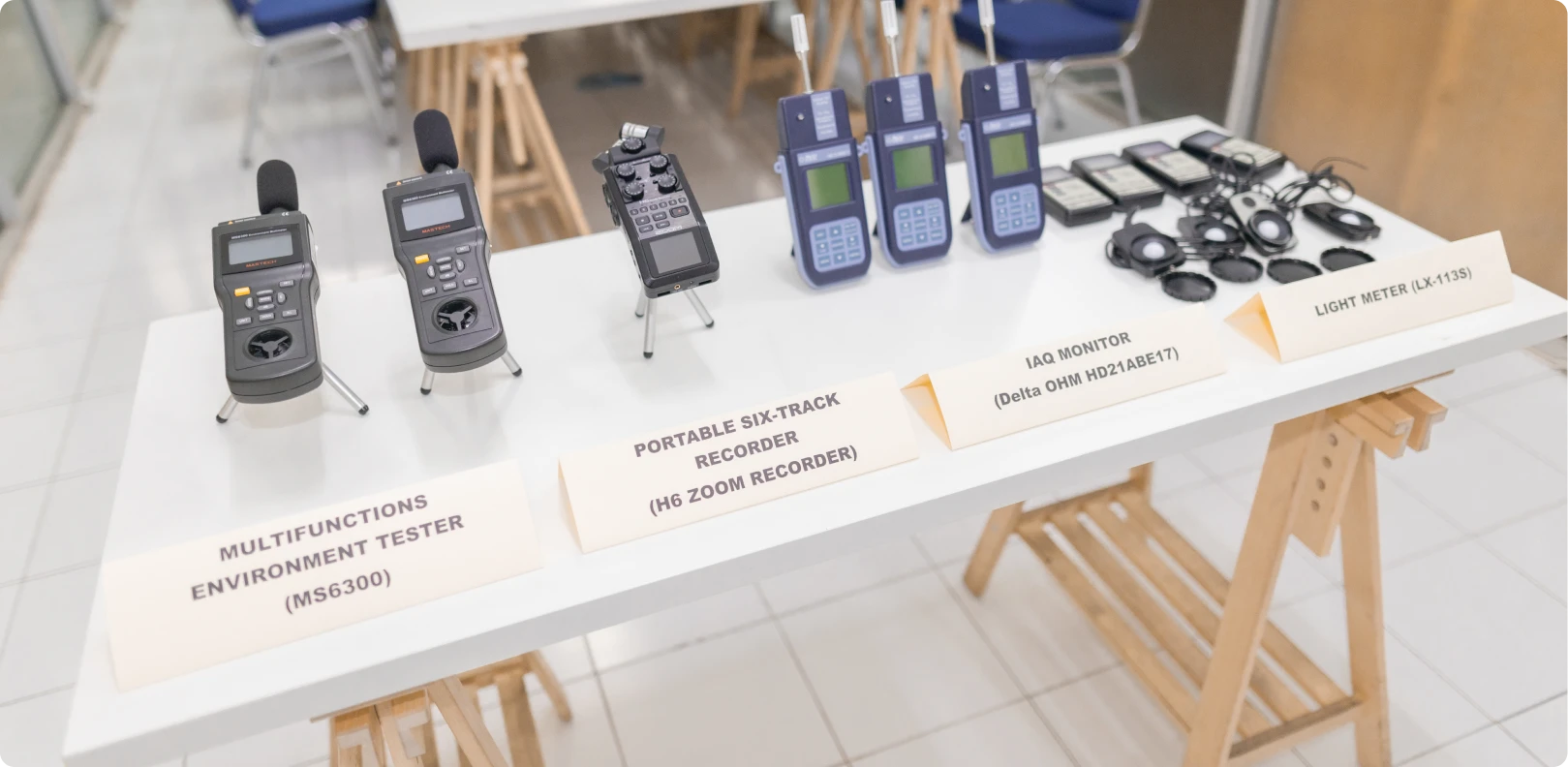
Several measuring instruments that serve as supporting facilities in the building physics laboratory at UMS. Imam Safi'i/UMS Public Relations
Suharyani explained that the building physics laboratory is well-equipped with a variety of tools, including hygrometers, thermometers, anemometers, delta ohmmeters, multifunction meters, lux meters, and sound level meters. These instruments are essential for measuring temperature, noise, and lighting. Additionally, the laboratory features a Real-Time Analyzer (RTA) server, which is used to analyze material fibers, a crucial tool for research in building material technology.
“If students want to borrow tools, they are usually charged a small fee of around Rp7,000. The aim isn’t to generate revenue but to encourage students to be creative in developing research or innovations that offer practical usability and benefits,” mentioned Suharyani.
Herdiwan Bernaldi, commonly known as Aldi, an Architecture student and frequent user of the Building Physics lab, shared his appreciation for the lab's support in enhancing his learning process and that of his fellow students. Aldi noted that the laboratory's equipment is very comprehensive, making it a valuable resource for their studies.
“My friends and I usually conduct lab work and research, such as measuring thermal comfort or noise levels,” said Aldi, a final year student. “The availability of tools in the lab is crucial for us, as it significantly helps in creating good and livable building designs”

Several brick products created by UMS Architecture students from rice husk and colored plastic waste. Imam Safi'i/UMS Public Relations
Aldi, who is now at the final phase of his study, highlights the important role of the laboratory in developing students’ practical skills.
“The building physics lab really helps us explore the technical aspects of buildings that we might not learn through theoretical studies alone,” Aldi concluded.
Writer: Genis Dwi Gustati
Editor: Al Habiib Josy Asheva