The Scholar Behind UMS's Master's Program in IQT
27 July 2026
Prof. Andri Nirwana, S.TH., M.Ag., Ph.D., pioneered the Master of Al-Quran and Tafsir Studies as a first step in strengthening Quranic studies within Muhammadiyah.


Studying natural sciences at university feels incomplete without hands-on practice. At Universitas Muhammadiyah Surakarta (UMS), one of the departments that regularly conducts practical activities outside the classroom is Biology Education.
The department is equipped with various supporting facilities, including laboratories. One of them is the Greenhouse Laboratory.
This laboratory is located next to Building C on UMS Campus 1 and serves as a practical site for courses related to botany, such as Plant Cultivation, Plant Physiology, Tissue Culture, and Phanerogamae Systematics.
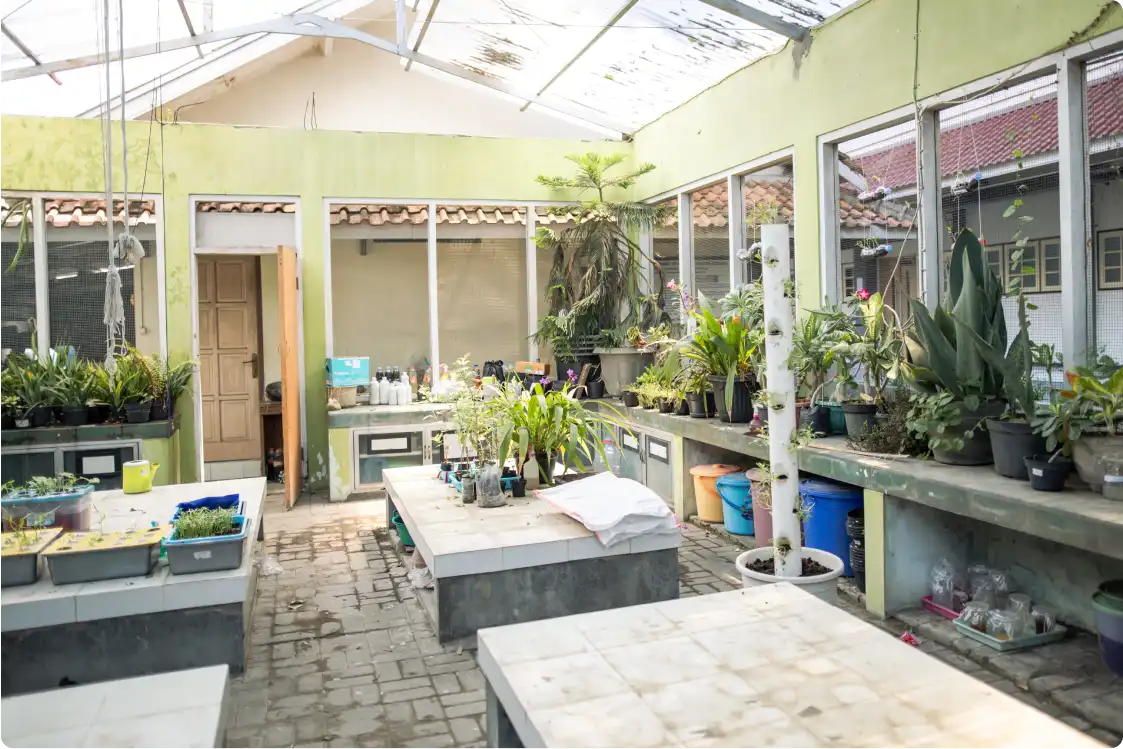
The ambience inside the Greenhouse. Natural light enters the building through the transparent fiber roof. UMS Public Relations/Imam Safii
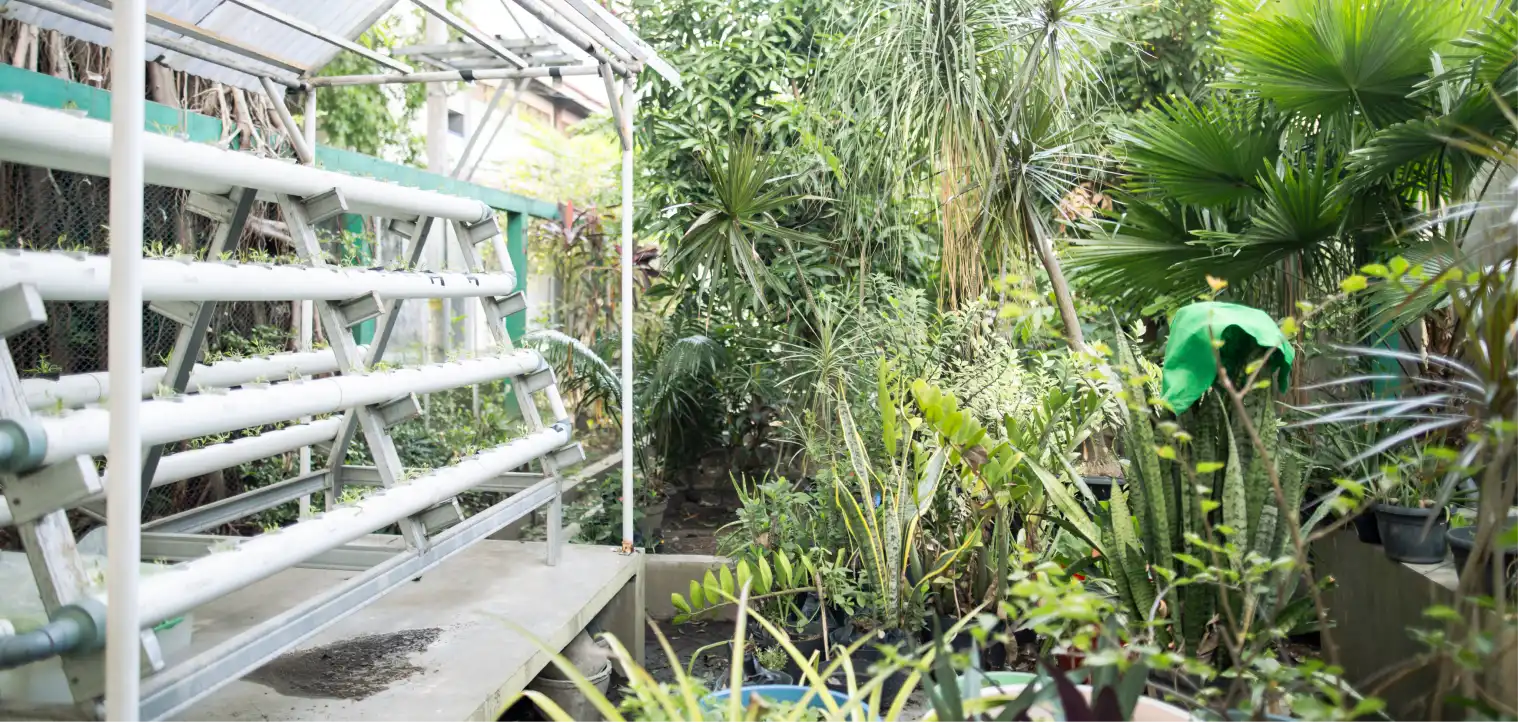
The UMS greenhouse is divided into two parts: the main greenhouse building and the outdoor garden. Lina Agustina, S.Pd., M.Pd., Head of the Biology Education Laboratory, explains that these two areas serve different functions.
The main greenhouse is often used for student and faculty research, such as studies on the effectiveness of fertilizers or the use of eco-enzymes.
Inside the greenhouse, several types of plants are housed, mainly those that do not require intense sunlight or are used specifically for research. Plants inside include Sansevieria sp., Aloe Vera, Anthurium (Elephant Ear Plant), and Zamia curcas.
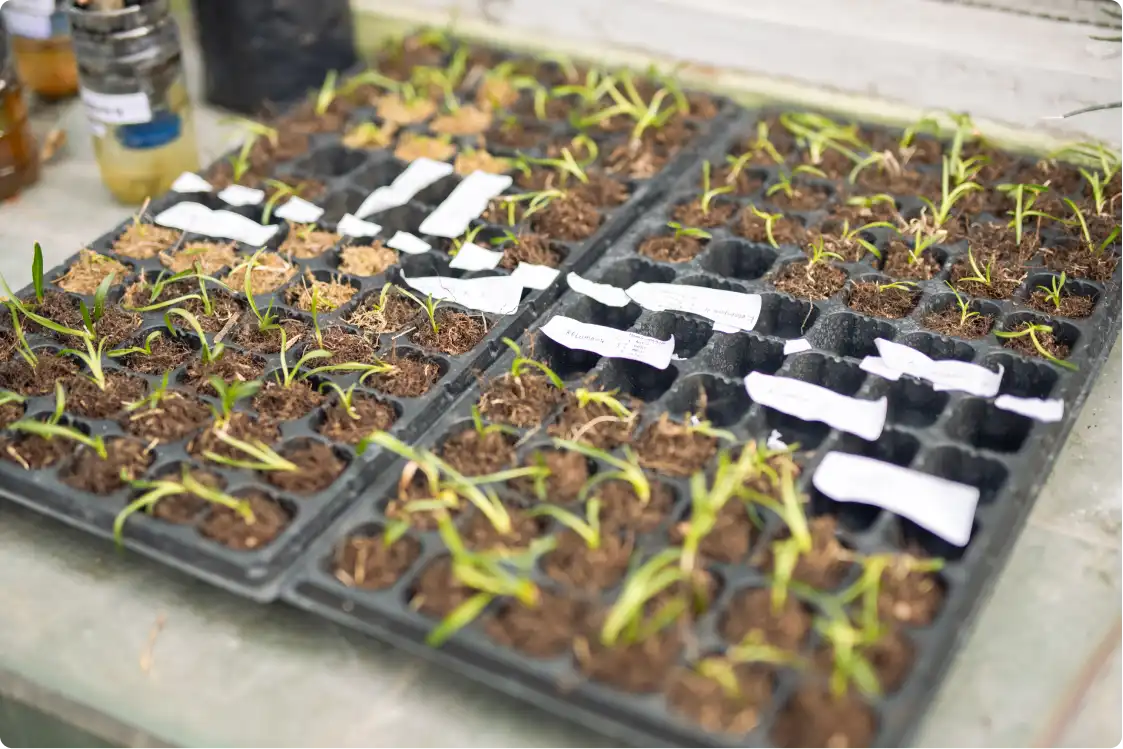
Seedling trays at the UMS Greenhouse. UMS Public Relations/Imam Safii
The outdoor garden area is used to plant various crops, primarily using soil as the planting medium. The garden includes various types of plants, such as water guava, mango, belimbing wuluh, starfruit, and turmeric. These plants are also used for plant morphology medium.
Lina added, “There’s no need to look for plants elsewhere, we already have them here.”
The greenhouse is equipped with facilities such as hydroponic and vertiponic systems, seed trays, and planting media that mix soil with compost.
The 80-square-meter building has a transparent fiber roof, allowing sunlight to enter but with a lower intensity than the outdoor garden area.
“The covered space is mainly to protect plants from pests or to house plants that do not need a lot of sunlight,” Lina explained.
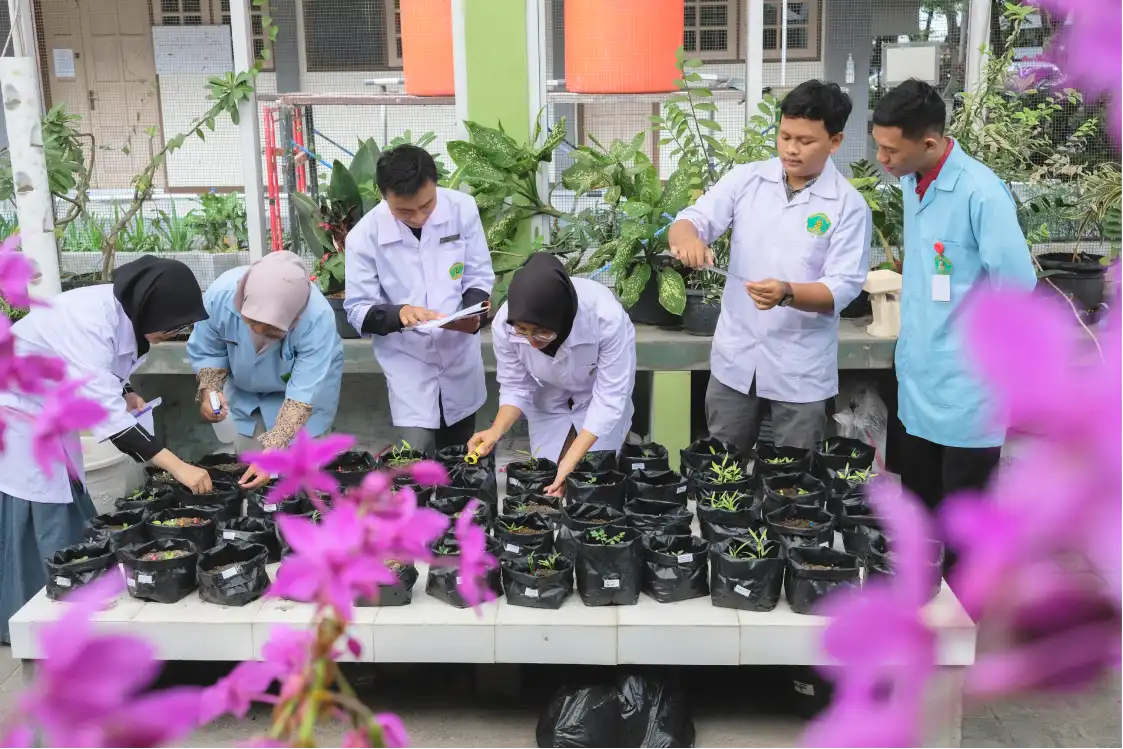
Students engaged in lab work at the UMS Greenhouse. UMS Public Relations/Imam Safii
Daniar, a 21-year-old seventh-semester Biology Education student at UMS, expressed that the Greenhouse has been helpful in conducting various practical assignments. These include experiments on the allelopathic effects on green bean seed germination, the impact of light on plant growth, and orchid seed pollination.
“The Greenhouse also serves as an educational facility with positive environmental impacts, such as being a space for cultivating plants that produce oxygen and contribute to the greening of the campus,” Daniar explained.
Writer: Gede Arga Adrian
Editor: Al Habiib Josy Asheva
Translator: Farizal Luqman Majid
Prof. Andri Nirwana, S.TH., M.Ag., Ph.D., pioneered the Master of Al-Quran and Tafsir Studies as a first step in strengthening Quranic studies within Muhammadiyah.
Nothing’s more special than reading curated news just for you.
Subscribe to the UMS Newsletter for free today.