
The Scholar Behind UMS's Master's Program in IQT
27 July 2026
Prof. Andri Nirwana, S.TH., M.Ag., Ph.D., pioneered the Master of Al-Quran and Tafsir Studies as a first step in strengthening Quranic studies within Muhammadiyah.


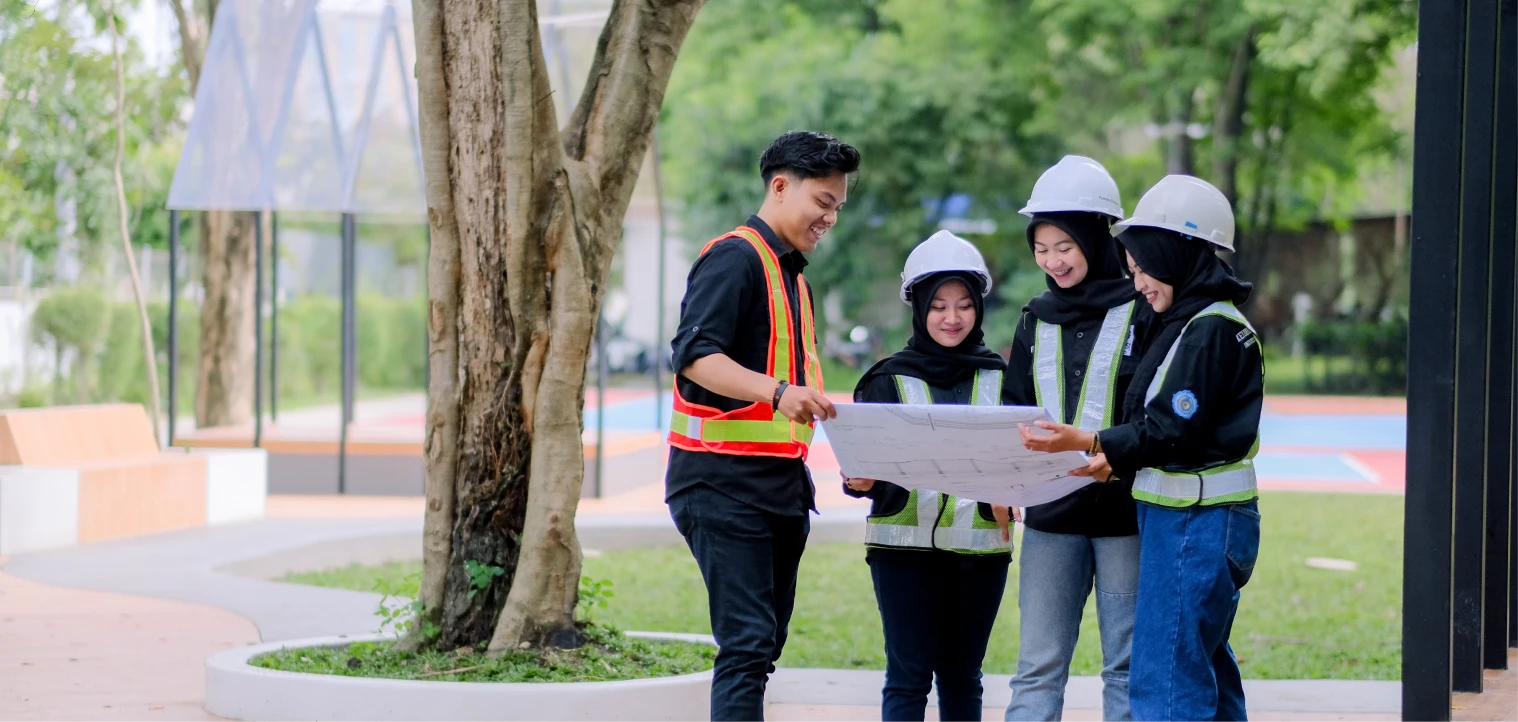
Some of us might be familiar with Civil Engineering, and it’s widely offered in universities across Indonesia, including Universitas Muhammadiyah Surakarta (UMS).
Civil Engineering is a branch of engineering that focuses on planning, executing, and supervising various infrastructure projects. Think of stuff like buildings, bridges, roads, railways, dams, and other facilities.
If you really enjoyed Physics and Math in high school, jumping into a Civil Engineering program could be a fantastic next step. Anto Budi Listyawan, the Head of the Civil Engineering study program at UMS, agrees with this idea!
“Fundamental sciences like Physics and Mathematics are essential subjects to master during high school, as they form the basis for further studies in Civil Engineering. These two fields will be core courses,” explained Mr. Anto.
Are you thinking about joining the Civil Engineering program? Let’s take a closer look at one of the excellent study programs offered at UMS.
In the Civil Engineering program in UMS, you will delve into five main areas of study. Anto explained, “These areas include structural building planning, transportation, hydrology, geotechnics, and construction implementation.”
Anto also mentioned that the Civil Engineering study program at UMS is designed to span eight semesters, roughly equivalent to four years of study. During this time, you’ll dive into engineering theory and get hands-on experience applying your knowledge in real-world situations.
“Students in this program will acquire a balanced education in theory and practice, preparing them for successful careers. Graduates in Civil Engineering can pursue roles in the construction industry, serving as planners, implementers, and supervisors of construction projects,” explains Anto.
At UMS, Civil Engineering students are also encouraged to participate in internships. These hands-on experiences boost your practical skills, letting you apply all the theories you’ve learned in real-world experiences. Once you graduate and earn your Civil Engineering degree, known as S.T. (Bachelor of Engineering), you’ll be all set to jump into the professional industry.
“So, what exactly do Civil Engineering students learn?” Anto has provided an overview of the courses offered in UMS Civil Engineering, including:
“In addition to these courses, students will be guided to choose majors or specializations during the seventh and eighth semesters. UMS offers five specializations for Civil Engineering students,” explained the Civil Engineering lecturer.
In the Civil Engineering program at UMS, students have the chance to specialize in different areas of study, called specializations. Picking the right one is important because it helps you dive deeper into a particular field, getting you all set for your future career. At UMS, there are five specializations to choose from:
Suppose you’re still unsure about the career paths available to Civil Engineering graduates. In that case, see this explanation from the Head of the UMS Civil Engineering study program. There are plenty of job opportunities for the future. Don’t miss out on exploring these exciting possibilities!
“Job prospects for Civil Engineering graduates are abundant, especially with the government actively investing in infrastructure development across various regions in Indonesia,” stated Anto. According to him, the most common sector for Civil Engineering graduates is employment in state-owned and private construction companies. Some of the Civil Engineering job opportunities recommended by Anto include:
“Beyond working in construction companies, graduates of this study program are also in demand within various government and private companies where they can assume roles such as estimators, programmers, and inspectors,” he continued.
Anto emphasizes four crucial skills that Civil Engineering students must excel in before stepping into the workforce. These include:
Many people think that Civil Engineering and Architecture programs are quite similar. However, Anto emphasized that they are actually distinct disciplines with different focuses.
The Architecture study program focuses on creating architectural plans for construction projects. This program involves designing structures and buildings.
In contrast, the Civil Engineering program is tasked with translating the design drawings created by architects into structural design activities, estimating costs, and managing project implementation in the field.
“The academic degree is also different. Architecture graduates will receive a Bachelor of Architecture (S.Ars.) degree,” concluded Anto.
Writer: Gede Arga Adrian
Editor: Al Habiib Josy Asheva
Translator: Farizal Luqman Majid
Prof. Andri Nirwana, S.TH., M.Ag., Ph.D., pioneered the Master of Al-Quran and Tafsir Studies as a first step in strengthening Quranic studies within Muhammadiyah.

A UMS pencak silat athlete successfully claimed gold at the 10th Asian Pencak Silat Championship 2026.

The Klanceng Edufarm startup is planning international expansion after being named national champion at the 2026 Studentpreneur Bootcamp organized by the Muhammadiyah Center for Entrepreneurship and Business Incubator.

Nothing’s more special than reading curated news just for you.
Subscribe to the UMS Newsletter for free today.