
How Sheep Manure Turns into Nutrient Rich Fertilizer
16 July 2026
Sheep dunged nutrient-rich organic fertilizer for plants, made with the help of maggots. Built on community empowerment and a zero-waste principle.



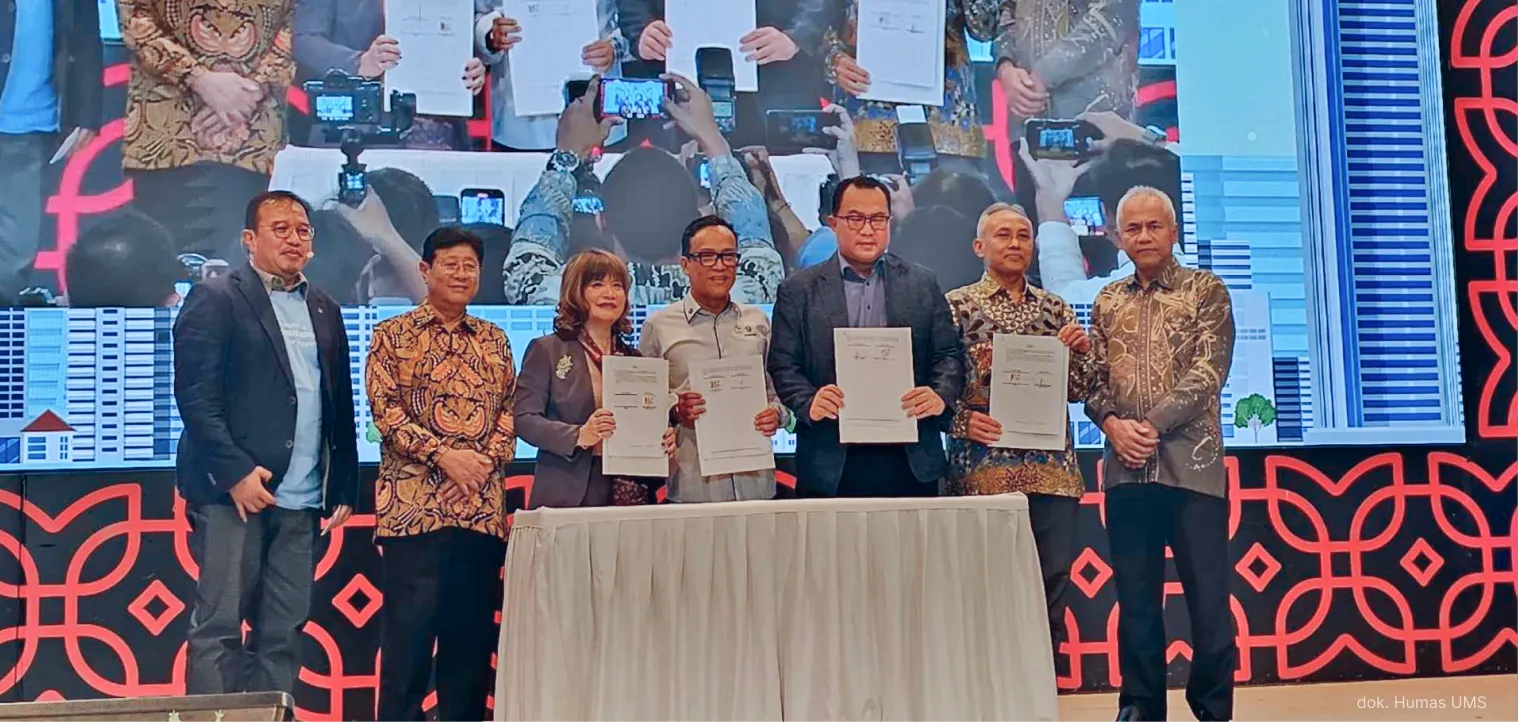
Universitas Muhammadiyah Surakarta (UMS) continues to strengthen strategic measures to prepare adaptive and globally competitive human resources (HR). This effort was marked by the signing of a memorandum of understanding between UMS, Institut Pertanian Bogor (IPB), the Asosiasi Pengusaha Indonesia (APINDO), and the Social Security Agency for Employment (BPJS Ketenagakerjaan).
The collaboration is part of efforts to address the challenges of industrial disruption and the global economic crisis that affect the labor market. UMS Rector Prof. Dr. Harun Joko Prayitno, S.E., M.Hum., explained that this initiative is a concrete step toward preparing certified HR with internationally recognized competencies.
“UMS, together with IPB, is ready to enhance the competence of APINDO members so they have global skills and can adapt to the ever-changing work landscape,” he said.
The Rector’s statement aligns with that of BRIN Deputy Head Amarulla Octavian in a national forum titled Indonesia Incorporated Quo Vadis, held at the BJ Habibie Building, Jakarta, on Monday (28/7/2025).
Quoted from brin.go.id, Amarulla highlighted the importance of cross-sector collaboration in building a workforce ecosystem that can withstand crises. He emphasized that the global economic crisis has driven massive digital transformation, which has resulted in the permanent loss of many manual jobs
“We must recognize the importance of reskilling and upskilling. Investment should not only be in infrastructure, but also in excellent human resources, research, and innovation,” Amarulla stressed. BRIN supports collaboration with BPJS, the business sector, and academia to create technology that absorbs, rather than replaces, workers.
The UMS Rector sees BRIN’s perspective as aligned with UMS’s vision, which is committed to developing excellent human resources who are not only academically strong but also adaptive to global challenges. “We believe this collaboration is not only a form of higher education’s commitment to the industrial sector but also part of the solution to face the post-pandemic era and the global recession,” he added.
This collaboration also opens major opportunities to create vocational training programs, develop industry-based curricula, and provide access to globally recognized competency certifications, particularly for business actors within APINDO.
By partnering with BPJS Ketenagakerjaan, the initiative also strengthens the social protection system through the integration of education, training, and employment insurance that is adaptive to industrial dynamics.
“This is a concrete response to the labor conditions increasingly affected by technological transformation and automation,” Harun said.
UMS hopes this collaboration can become a model of synergy between academia and the industrial sector to address the challenges of mass layoffs driven by automation, while creating a sustainable and highly competitive labor system at both national and global levels.
This step further affirms UMS’s role as a proactive university in facing the challenges of the times and as a catalyst for producing a generation of professionals who can compete globally while upholding humanitarian and sustainability values.
Writer: Alvian Rizki Prasetya
Editor: Fika Annisa Solihah
Translator: Farizal Luqman Majid
Sheep dunged nutrient-rich organic fertilizer for plants, made with the help of maggots. Built on community empowerment and a zero-waste principle.
Nothing’s more special than reading curated news just for you.
Subscribe to the UMS Newsletter for free today.