Bank Indonesia Holds Interest Rate at 5.75%, What Is the Impact?
24 July 2026
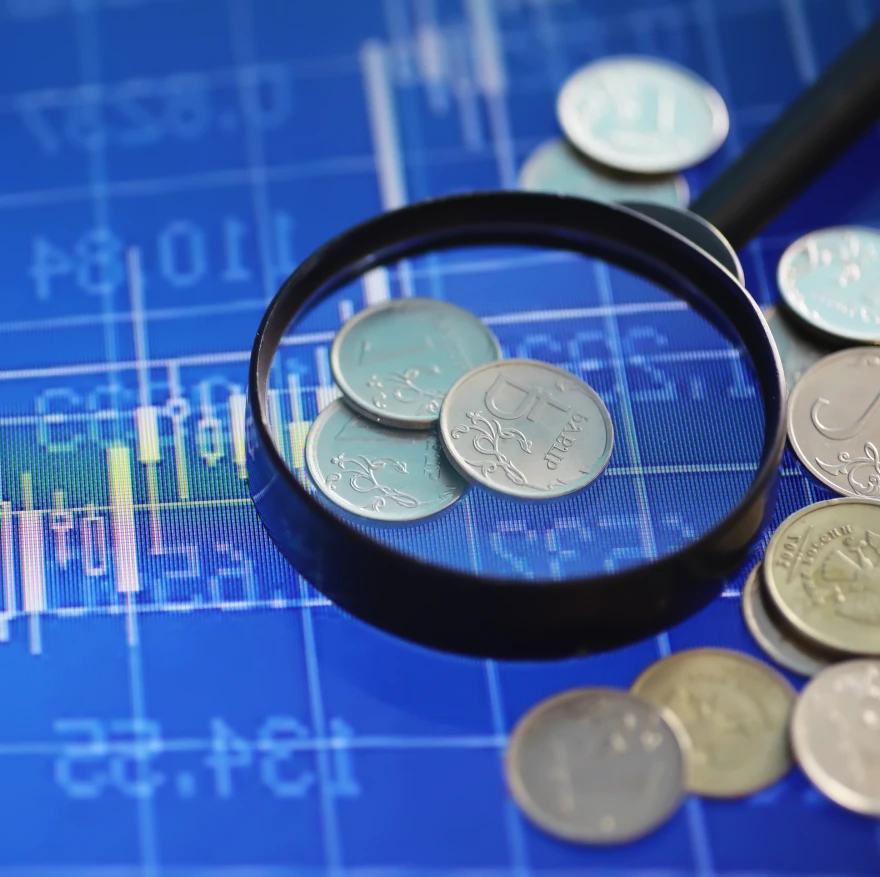
Bank Indonesia has held its benchmark rate at 5.75 percent, ending speculation of a hike to 6 percent that had circulated in recent weeks.


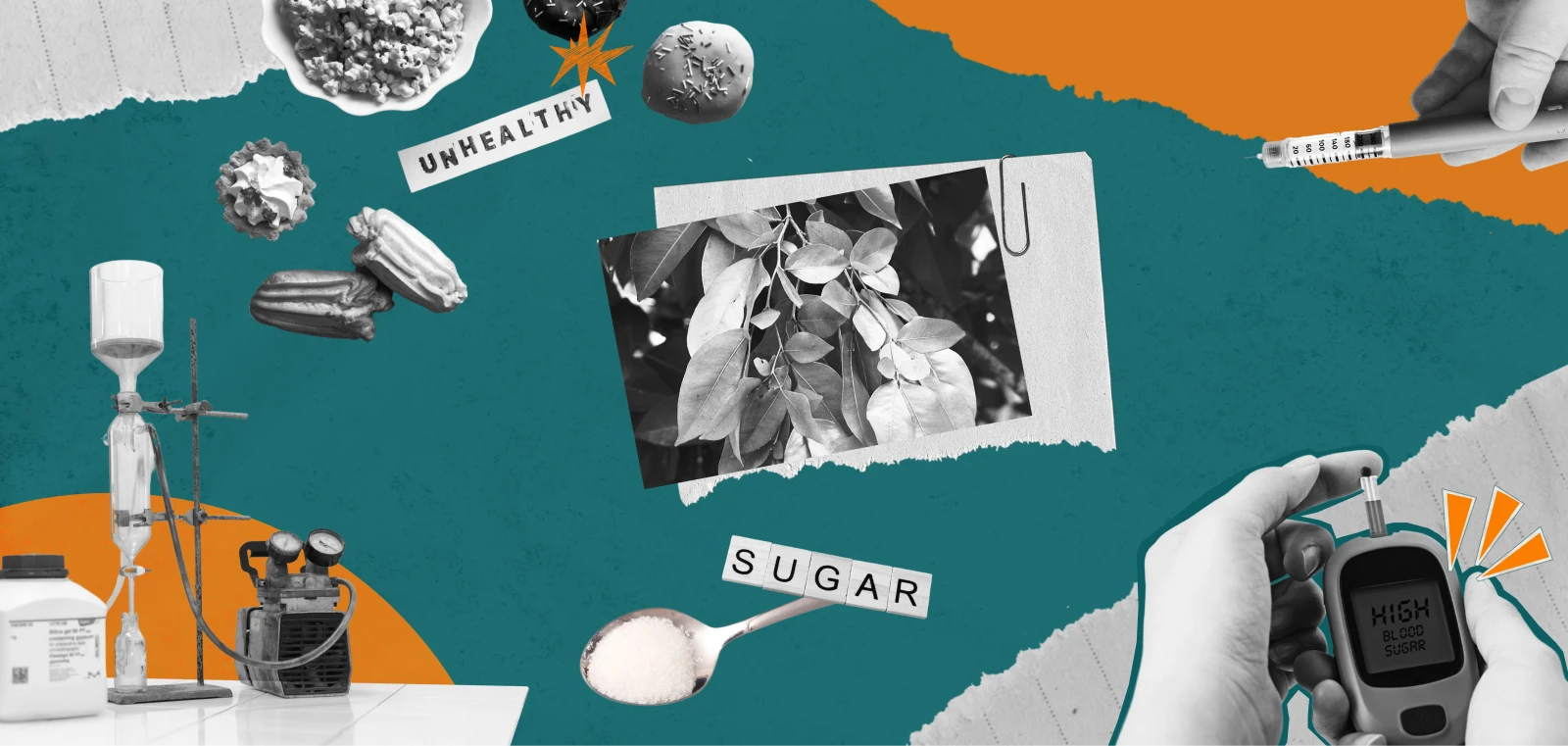
As of 2021, the International Diabetes Federation (IDF) recorded that 19.5 million Indonesians aged 20-79 suffer from diabetes. This figure places Indonesia as the country with the fifth highest number of diabetics in the world.
Diabetes is a condition caused by high blood glucose levels. According to Alodokter, blood glucose levels are controled by the hormone insulin produced by the pancreas. However, diabetic's pancreas failed to produce sufficient insulin to meet the body’s needs.
The rise in diabetes cases in Indonesia has prompted pharmaceutical experts to research drugs to help control blood glucose levels. He is Dr. Haryoto, M.Sc., a herbal medicine researcher from Universitas Muhammadiyah Surakarta (UMS).
Haryoto’s research, titled “Effect of Ethanol Extract of Sala (Cynometra ramiflora Linn.) Leaves for Reducing Blood Glucose Levels in Male Wistar Rats Induced by Alloxan,” was published in the November 2023 edition of the Research Journal of Pharmacy and Technology, indexed in Scopus Q2. This study examined the effect of ethanol extract from sala tree (Cynometra ramiflora Linn.) leaves on reducing blood glucose levels in the body.
In the past, the north and south squares in the Surakarta Hadiningrat Palace were abundant with sala plants around the 16th century. “Sala plants are classified as mangroves that grow in swamps,” said Haryoto at the UMS Faculty of Pharmacy on Saturday (7/27/2024).
The name “Sala” became the origin of Sala Village, which gradually evolved into Solo City. Today, sala trees can be found at various locations in Solo, such as the Sheikh Zayed Grand Mosque, the Surakarta Mayor’s Office, and the Siti Hinggil complex of the Surakarta Kasunanan Palace.
Haryoto noted that the sala plant has primarily been used as an herbal medicine until now. The fruit of the sala tree is boiled, and the water is consumed. Haryoto mentioned that sala fruit drinks are available in small, ready-to-drink containers. “They are sold in the palace neighborhood for around IDR 3,000 if I’m not mistaken,” explained the Doctor of Natural Materials Chemistry from Institut Teknologi Bandung
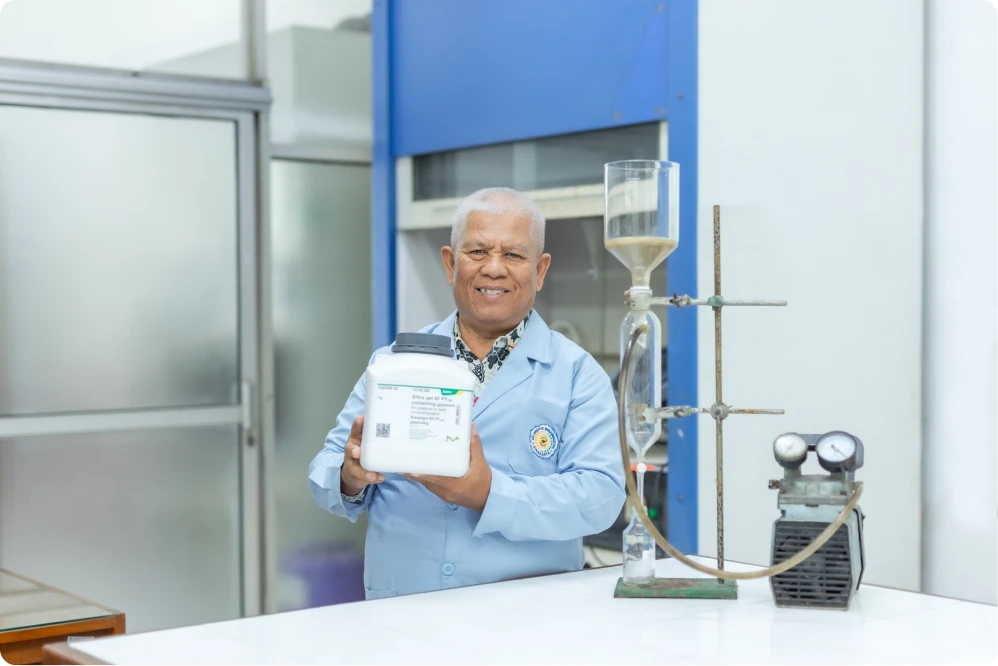
Dr. Haryoto, M.Sc. at the UMS Pharmacy Laboratory, Saturday (7/27/2024). Public Relations/Imam Safii
The sala plant used by Haryoto in his research comes from a tree that grows in the Siti Hinggil yard of the Surakarta Kasunanan Palace. The sacredness of this centuries-old tree made it difficult for Haryoto to obtain permission to get samples. “Thanks to the help of my colleague, who mediated with Gusti Puger, I was finally able to take samples for testing,” said Haryoto, a member of the Indonesian Muslim Scholars Association. “The important thing is not to destroy the tree.”
After successfully obtaining the test material, Haryoto took the samples to the Pharmacology and Clinical Pharmacy Laboratory at the Faculty of Pharmacy, UMS. He dried the leaves in an oven at 40 degrees Celsius, then pulverized them into powder using a blender.
The powder is soaked in an ethanol solution for 24 hours to dissolve the compounds from the sala leaves. “Ethanol was chosen because it's affordable, widely used, and safe for consumption,” explained the pharmacy program lecturer. The mixture of sala leaf powder and ethanol is then filtered, and the process is repeated for three times. The liquid is dried using an evaporator until it becomes a concentrated extract, which is then ready for testing on wistar rats.
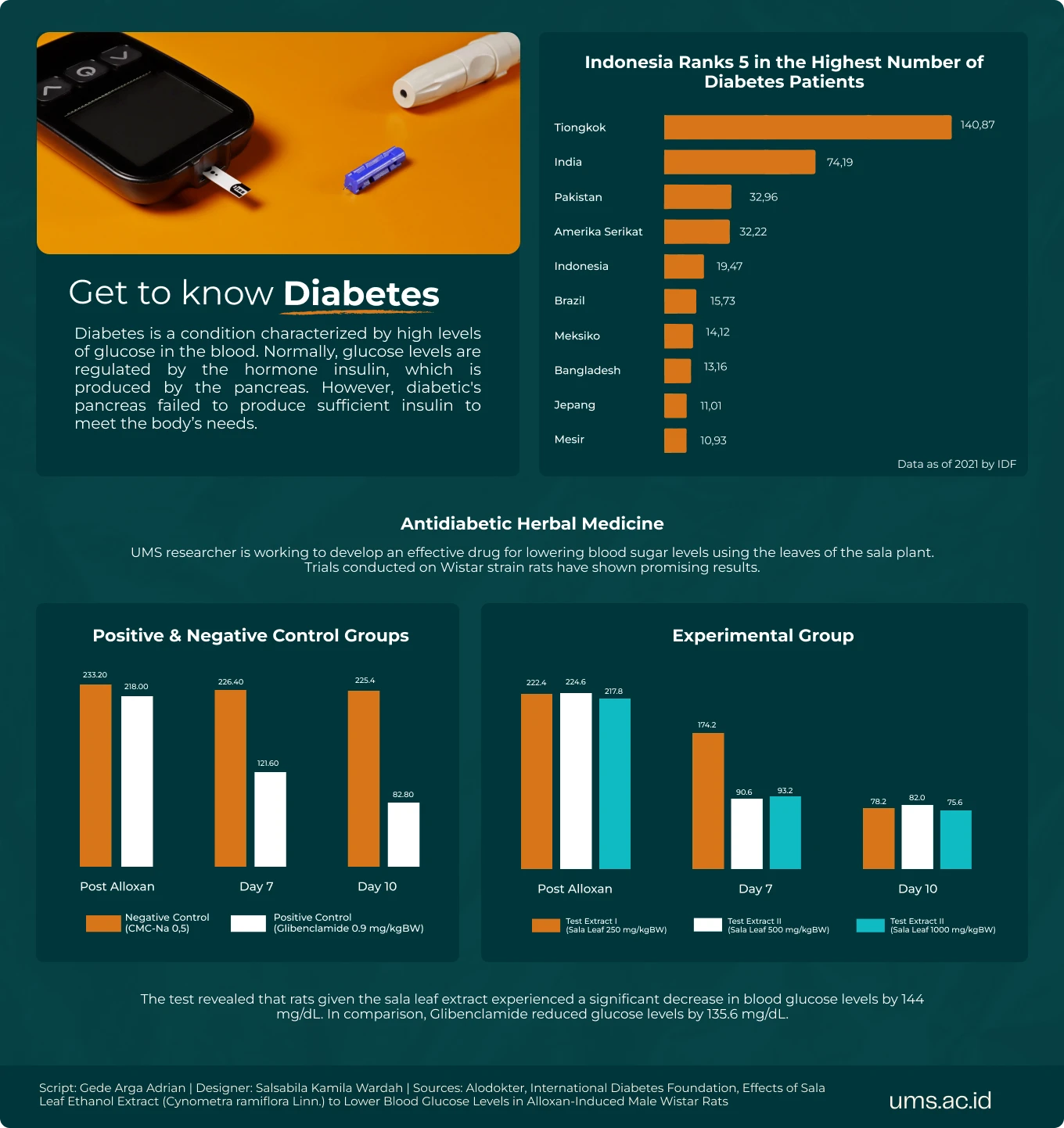
Haryoto divided the liquid into three sample sizes: 250 milligrams, 500 milligrams, and 1,000 milligrams. He also administered alloxan to Wistar rats to raise their blood sugar levels to between 217.8 mg/dL and 222.4 mg/dL.
The liquid ethanol extract of sala leaves was then injected into the rats in the experimental group and observed for seven to ten days. For comparison, Haryoto also prepared a control group that was not given the extract.
The negative control group was injected with Sodium Carboxymethylcellulose to test the analgesic power of the rats. Meanwhile, the positive control group was given Glibenclamide, a type II anti-diabetic drug that reduces blood sugar levels by increasing intracellular calcium in pancreatic beta cells, thereby stimulating insulin production.
On the tenth day, rats treated with the liquid ethanol extract of sala leaves showed decreases in blood glucose levels. The first rat, which received 250 milligrams of the extract, had its glucose levels drop from 222.4 mg/dL to 78.2 mg/dL.
The second rat, given 500 milligrams, experienced a reduction from 224.6 mg/dL to 82 mg/dL. The third rat, treated with 1,000 milligrams, saw its glucose levels fall from 217.8 mg/dL to 75.6 mg/dL.
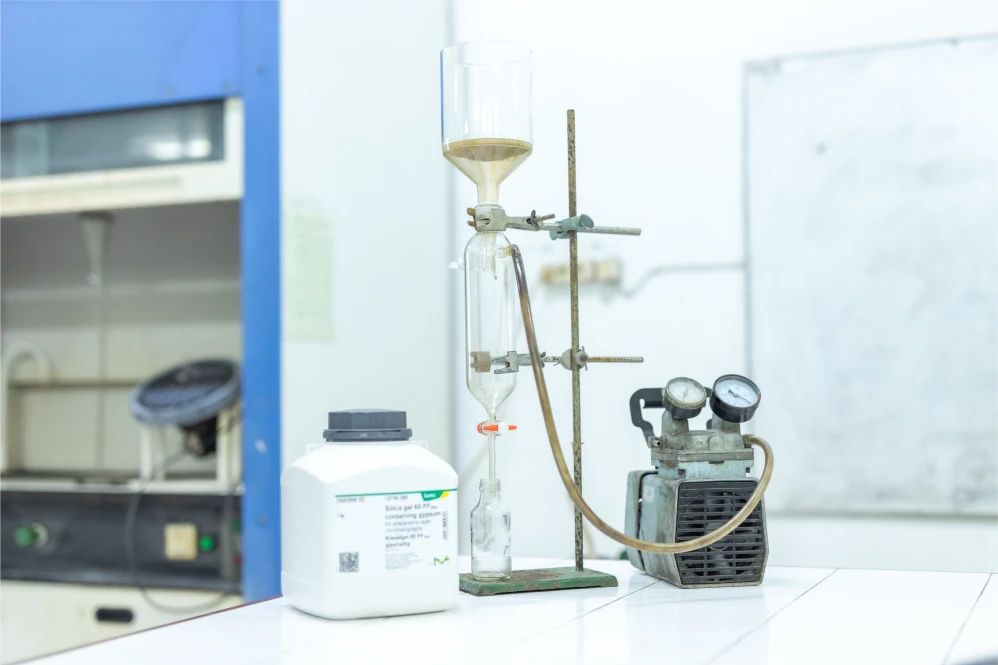
Equipment used by Haryoto in the laboratory to test the ethanol extract of sala leaves. Public Relations/Imam Safii
The group of rats given Natrium Carboxymethylcellulose experienced a slight decrease in glucose levels, from 233.2 mg/dL to 225.4 mg/dL. In contrast, the group treated with Glibenclamide showed a reduction, with glucose levels dropping from 218 mg/dL to 82.8 mg/dL.
“The sala leaf extract was administered daily. The results showed on the tenth day,” explained the Science Education graduate from Hokkaido University, Japan.
The test revealed that rats given the sala leaf extract experienced a significant decrease in blood glucose levels by 144 mg/dL. In comparison, Glibenclamide reduced glucose levels by 135.6 mg/dL.
In addition to investigating how sala plant leaves might lower blood glucose levels, Haryoto also explored the compounds in these leaves and their potential benefits. His research found that sala plant leaves have antioxidant and antibacterial properties. “I’ve also tested the effect of sala leaves on cancer cells, but the results were less significant,” he noted.
This research has opened promising possibilities for diabetes treatment, but there's still a long way to go before his herbal medicine for diabetes is widely consumed. Haryoto needs to conduct further testing in several stages to advance his findings.
The researcher from UMS Center for Halal Studies and the Center for Standardization of Pharmaceutical Extracts (SEFA) discussed his research with a doctor at Universitas Brawijaya in Malang. The doctor responded positively, suggesting that the findings could have medicinal potential. “The doctor said my research looks promising, but I need to complete 11 more tests,” he laughed
Haryoto explained that to continue testing the ethanol extract of sala leaves, he would first need to test it on mice, rats, and rabbits before moving on to human trials.
The sala plant extract still requires additional testing. First, the extract must be processed into fractions and then converted into isolates before producing a pure compound. “Once we have a pure compound, we’ll be able to identify which specific compound lowers blood glucose levels,” added the Boyolali-born researcher.
Haryoto's research aims to make a significant contribution to diabetes treatment, especially given the increasing number of young people affected by the condition. He is personally dedicated to a healthy lifestyle, maintaining a balanced diet and regular exercise. “I walk for at least 30 minutes every day,” he concluded.
Writer: Gede Arga Adrian
Editor: Al Habiib Josy Asheva
Translator: Farizal Luqman Majid
Designer: Salsabila Kamila Wardah
Bank Indonesia has held its benchmark rate at 5.75 percent, ending speculation of a hike to 6 percent that had circulated in recent weeks.
Nothing’s more special than reading curated news just for you.
Subscribe to the UMS Newsletter for free today.