
Bank Indonesia Holds Interest Rate at 5.75%, What Is the Impact?
24 July 2026
Bank Indonesia has held its benchmark rate at 5.75 percent, ending speculation of a hike to 6 percent that had circulated in recent weeks.


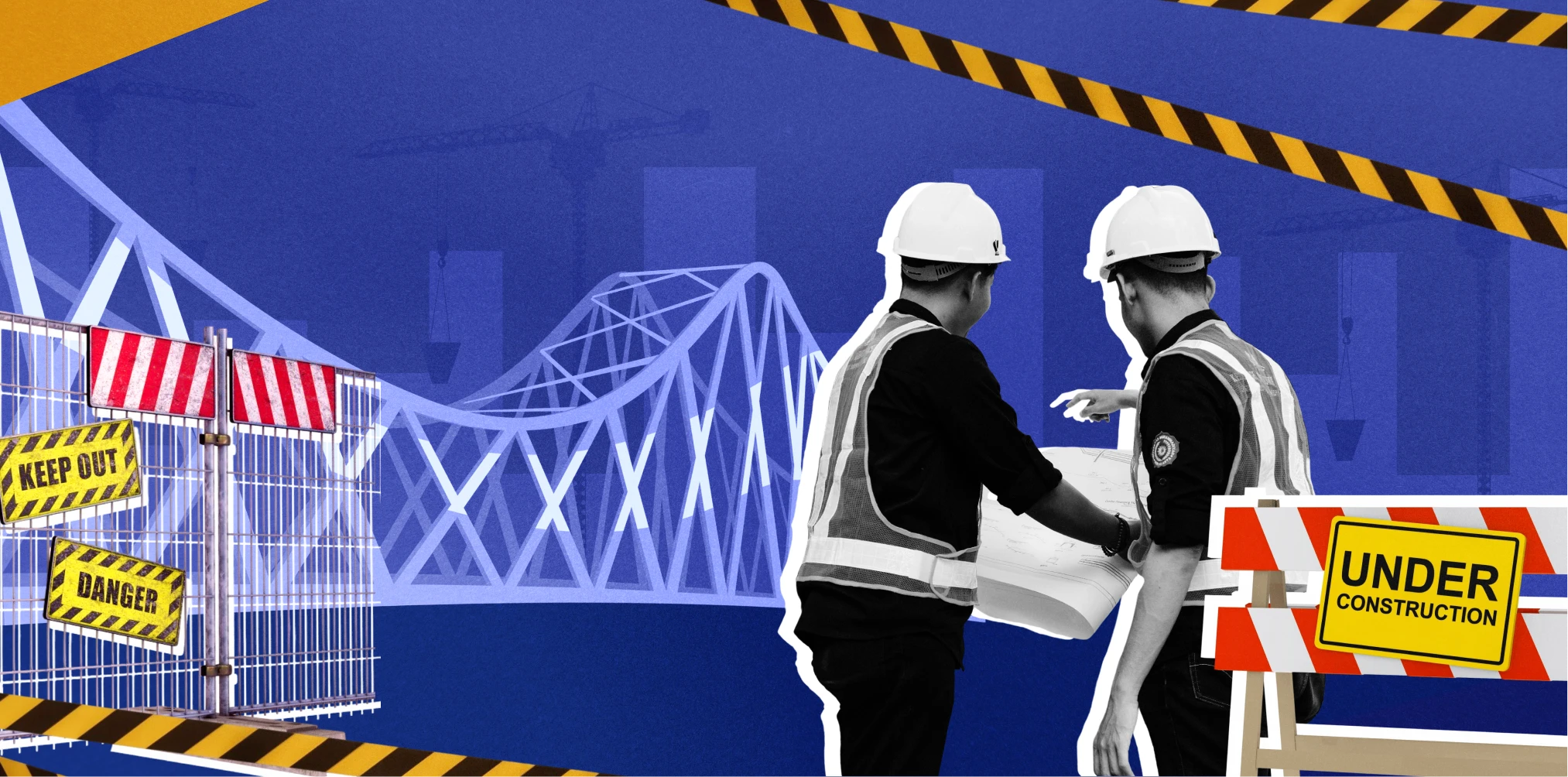
Workplace accidents often strike without warning. They occur due to worker negligence, ignored procedures, or heavy machinery operating out of control. In the construction sector, these risks are a daily reality.
Indonesia records hundreds of thousands of workplace accidents every year. Some tragically result in death. Ironically, many projects continue to operate without adequate risk control standards.
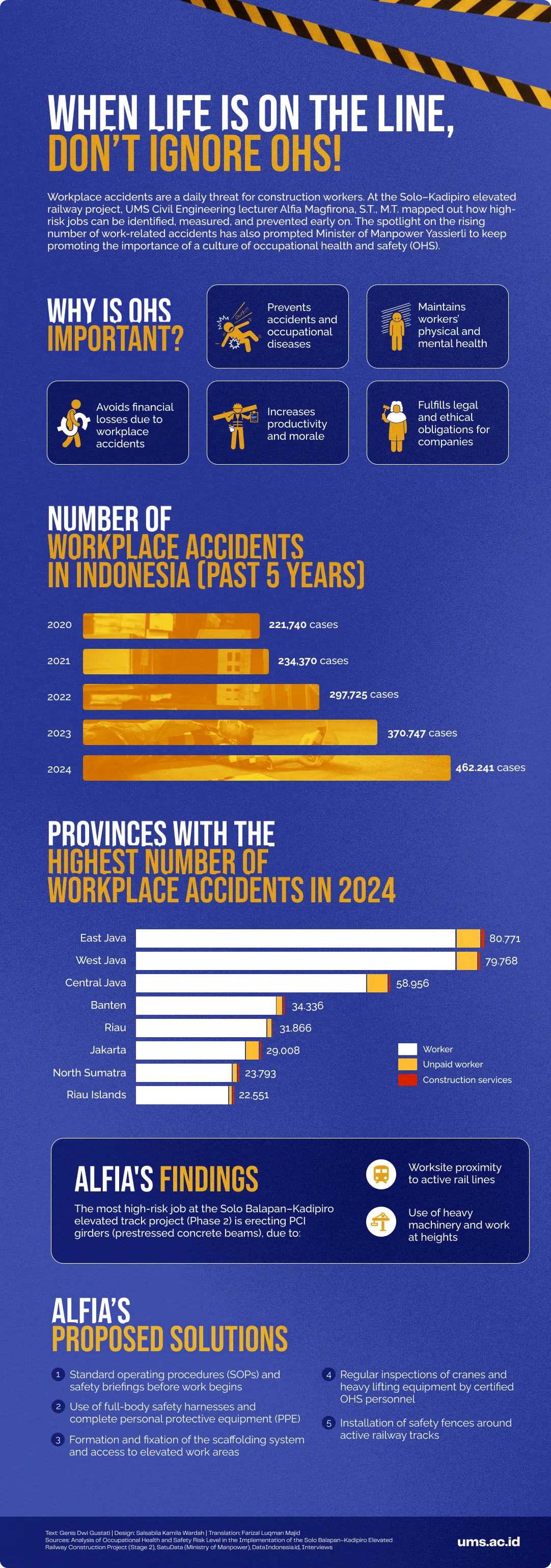
According to Kompas.id, Minister of Manpower Yassierli stated that the number of workplace accidents continues to rise. In 2022, nearly 298,000 cases were recorded; this increased to over 370,000 cases in 2023, and from January to October 2024 alone, 360,000 cases had already been reported. This upward trend highlights the urgent need to foster a strong culture of Occupational Health and Safety (OHS), as reducing the number of workplace accidents must become a national priority.
Occupational health and safety, or OHS, is a form of cooperation between employers and employees to create a work environment that is safe, healthy, and productive. Up to now, health and safety in the workplace have often been treated as mere administrative add-ons rather than a top priority on the ground.
At this point, the research of Universitas Muhammadiyah Surakarta (UMS) Civil Engineering lecturer Alfia Magfirona, S.T., M.T., titled “Analysis of Occupational Health and Safety Risk Level in the Implementation of the Solo Balapan–Kadipiro Elevated Railway Construction Project (Stage 2)”, becomes relevant. She investigated a critical issue: ensuring the safety of workers’ lives in the second phase of the Solo Balapan–Kadipiro elevated railway construction project.
“The construction sector holds significant hazard potential, especially in large-scale projects like this one,” explained Alfia, as she is commonly called, in the Civil Engineering Department office at UMS Campus 2, Friday (25/7/2025).
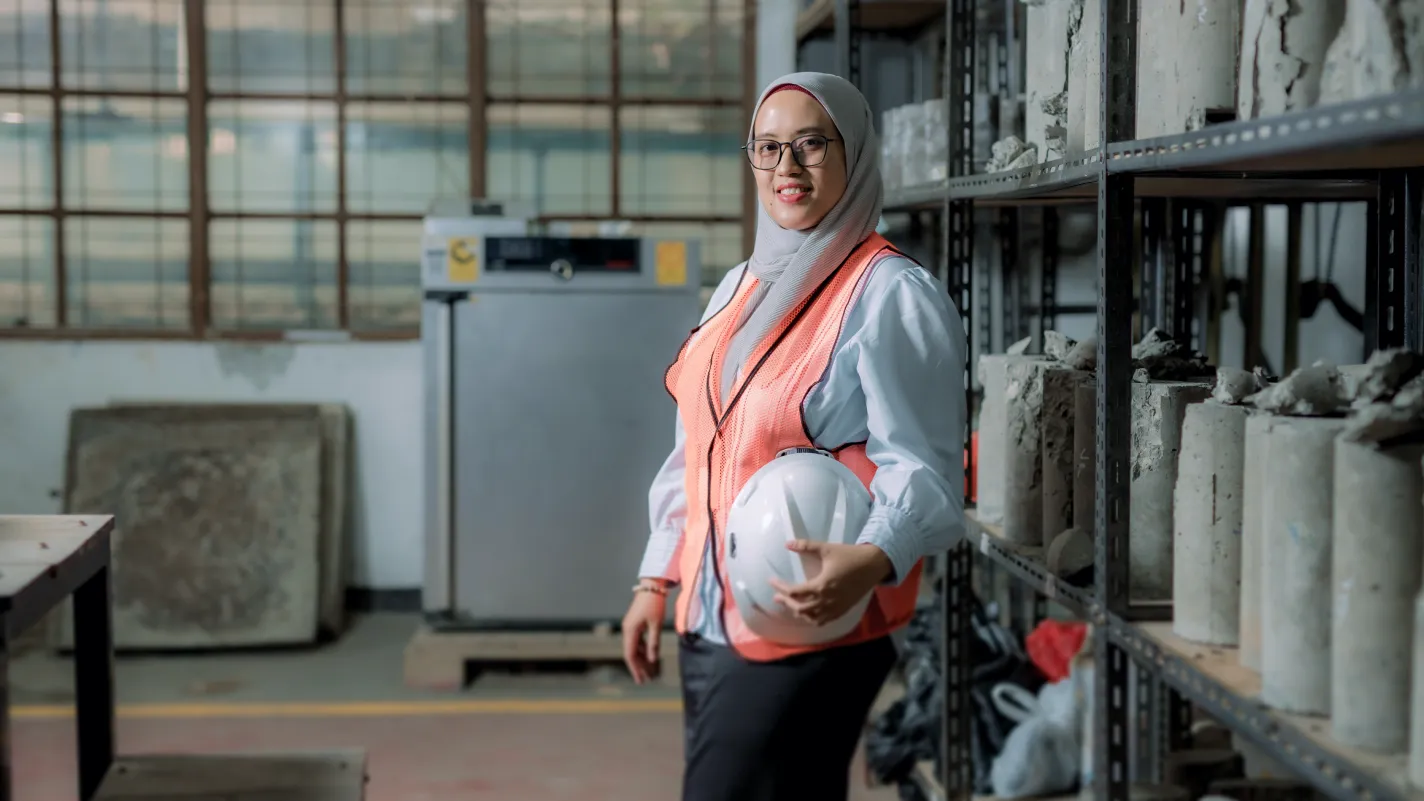
UMS researcher Alfia Magfirona, S.T., M.T. at the Building Materials Laboratory, Faculty of Engineering UMS, July 25, 2025. UMS Public Relations/Imam Safii
The project she studied stretches from kilometer 104+900 to 106+900, crossing dense areas like the frequently congested Joglo intersection. This location is not only high-risk in terms of traffic density but also functions as an active worksite filled with ongoing activities and heavy equipment mobilization.
Along with her student, Ghina Zamila Rachmawati, Alfia applied the Job Safety Analysis (JSA) approach. The goal was to assess the severity level of occupational accident risks and formulate the most effective prevention measures.
Based on observations and interviews with 34 workers and project staffs from PT Adhi Karya, Alfia mapped out four main job types conducted at the site: erection of cross concrete plates (erection V-slab), casting of concrete slabs over pile foundations (slab on pile), lifting and installation of pre-stressed concrete I girders (erection PCI girder), and installation of expansion joints between structures. Of the four, erection of PCI girders was identified as the most dangerous.
“The risk category is extreme. The two main concerns are being struck by falling materials and being hit by heavy machinery,” said the transportation research center researcher at UMS.
This activity is carried out in areas extremely close to active railway lines. Although public access is restricted, trains continue to operate. The combination of heavy equipment, elevated work, and live rail traffic creates high accident potential.
Meanwhile, the combined calculation of the likelihood of an incident and its severity index revealed that this risk falls into the “extreme” category. Alfia explained that the probability of being struck by material reached 43.06%, with an impact severity of 98.61%. When plugged into the risk classification formula, this results in a score of 15, classified as “extreme.”
The risk of being hit by heavy machinery, or even by an operating train passing near the site, also scored similar levels of severity. In other words, if not properly managed, these risks could result in serious accidents or fatalities.
The identified hazards were not left unaddressed. Alfia and her team prepared a series of safety recommendations based on proven construction practices supported by academic research.
Read more: Safety Neglect in Morowali Nickel Smelters Costs Lives
The first solution she mentioned was ensuring a clear understanding of SOPs (standard operating procedures) and conducting safety briefings before work begins. Second, workers must wear full-body harnesses and complete personal protective equipment (PPE).
Another safety measure involves arranging and improving scaffolding systems used for elevated work, including access points at height. “Scaffolding setup must be strictly supervised. It’s crucial to prevent fatal accidents,” she emphasized.
Next is regular inspection of heavy equipment. Cranes and other lifting machinery, Alfia said, must be checked by safety officers before and during use. This is essential because any misalignment in heavy equipment operation could cause serious injuries.
To mitigate risks from the nearby active rail line, Alfia recommended installing safety fences along the work zone. Additionally, intensive training for workers is needed to help them anticipate the potential dangers of train movement.
For academics like Alfia, research is not just about scientific publications. There is a moral responsibility attached to every data point collected. “We’re like doctors, but the lives we save come through design and analysis,” said Alfia.
She acknowledged that many projects don’t involve academics in risk analysis. Yet campus involvement could help identify overlooked hazards, especially in small-scale or privately run projects, where occupational safety is often marginalized.
On the other hand, Alfia also acknowledged the challenge of communication. Research findings are often stored in academic language that is difficult for field workers to understand. “That’s why we need cross-sector collaboration. There must be someone to help translate these technical findings into a form that’s easy for construction workers to grasp, especially those who may not be at the middle to high or professional level,” explained the lecturer of the Geometric Road Design course.
She envisioned research outcomes not merely as material for academic publications, but as resources that can be repackaged into visual formats or on-site training sessions. In her view, workers will understand more easily if given concrete examples, for instance, showing exactly what could happen if they don’t wear a helmet while standing beneath a steel-lifting zone.
Alfia hoped her study could serve as a reference for contractors, supervisory consultants, and even the government. Standard operating procedures must be enforced. Risk assessments should be mandatory before any work begins.
At the end of the discussion, Alfia reiterated what she considers the heartbeat of her research: saving lives. “Every project should consider safety the way they consider profits and losses. A single lost life isn’t just a number! That’s a family, that’s the future of many people. No project is worth completing at the cost of a human life,” she concluded.
Writer: Genis Dwi Gustati
Translator: Farizal Luqman Majid
Editor: Al Habiib Josy Asheva
Designer: Salsabila Kamila Wardah
Bank Indonesia has held its benchmark rate at 5.75 percent, ending speculation of a hike to 6 percent that had circulated in recent weeks.
Nothing’s more special than reading curated news just for you.
Subscribe to the UMS Newsletter for free today.