Bank Indonesia Holds Interest Rate at 5.75%, What Is the Impact?
24 July 2026
Bank Indonesia has held its benchmark rate at 5.75 percent, ending speculation of a hike to 6 percent that had circulated in recent weeks.


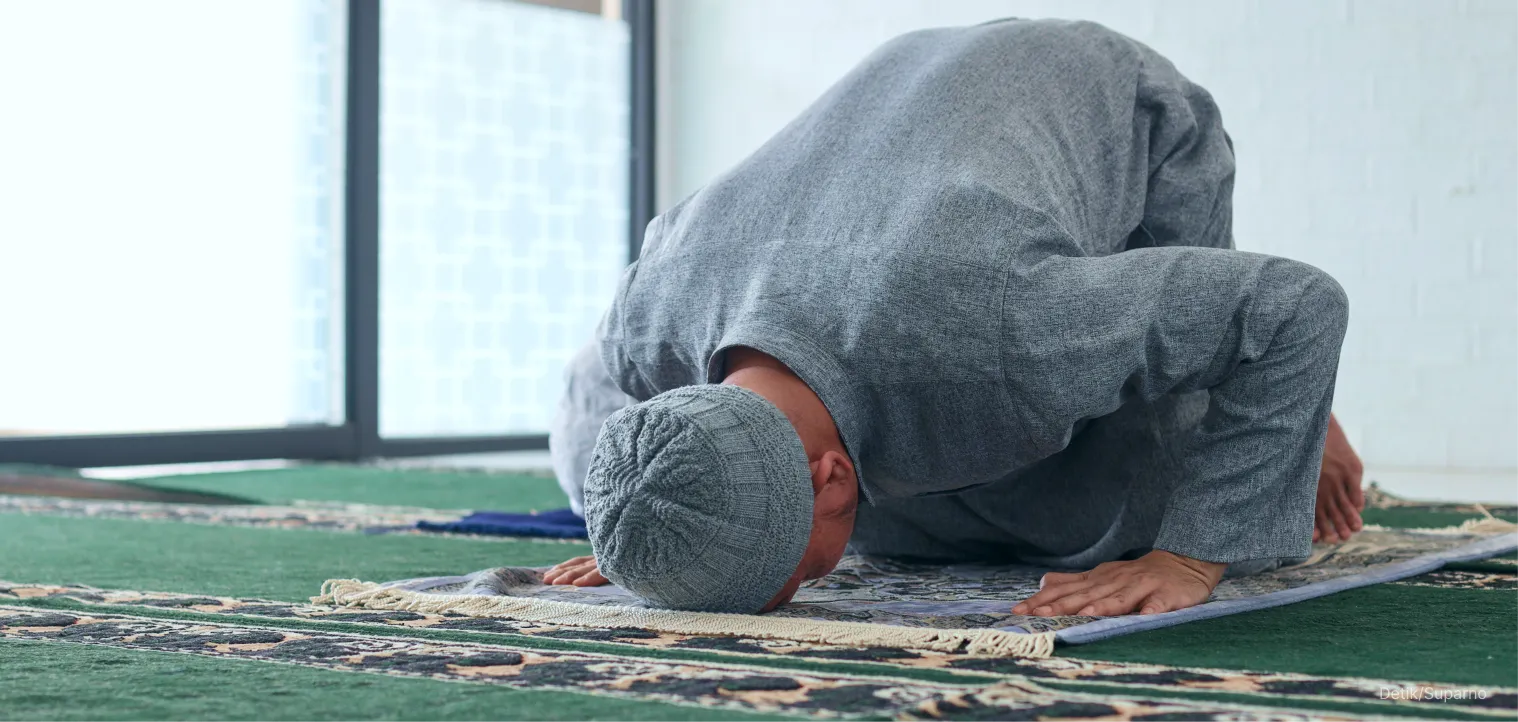
In the midst of the solemnity of salah, a quiet unease sometimes troubles us. "Was that only three rak'ahs, or have I completed four? Did I sit for the first tashahhud, or did I stand up right away?"
Such doubts have been experienced by almost every Muslim. For this reason, Islam provides a legal mechanism known as sujud sahwi.
Islam understands human nature well. We are not angels who are always precise. The mind can wander, the count of rak'ahs can slip away. Therefore, the Sharia does not immediately invalidate a salah merely because of one or two instances of forgetfulness.
What is sujud sahwi? Sujud sahwi is a Sharia mechanism intended to preserve the perfection of salah when a person forgets (sahw) an aspect of its completeness.
Dr. Ainur Rha'in, S.Th.I., M.Th.I., a lecturer at the Faculty of Islamic Studies, Universitas Muhammadiyah Surakarta (UMS), explained that sujud sahwi consists of two prostrations performed during or after the salah. It serves as a means of completing the salah due to an error that does not invalidate the salah itself.
"Interestingly, this practice is not merely a theoretical construct of scholars. The Prophet himself experienced it. In one narration, he was uncertain about the number of rak'ahs, then taught that one should take the count that is most certain and conclude with two prostrations before the salam," explained Rha'in, as he is commonly known, when interviewed in his office on Friday (6/2/2026).
The story of the Prophet is narrated in the following hadith:
صَلَّى بِنَا رَسُولُ اللَّهِ صَلَّى اللهُ عَلَيْهِ وَسَلَّمَ إِحْدَى صَلاَتَيِ العَشِيِّ رَكْعَتَيْنِ، ثُمَّ سَلَّمَ، فَقَامَ إِلَى خَشَبَةٍ مَعْرُوضَةٍ فِي المَسْجِدِ، فَاتَّكَأَ عَلَيْهَا كَأَنَّهُ غَضْبَانُ، وَوَضَعَ يَدَهُ اليُمْنَى عَلَى اليُسْرَى، وَشَبَّكَ بَيْنَ أَصَابِعِهِ، وَوَضَعَ خَدَّهُ الأَيْمَنَ عَلَى ظَهْرِ كَفِّهِ اليُسْرَى، وَخَرَجَتِ السَّرَعَانُ مِنْ أَبْوَابِ المَسْجِدِ، فَقَالُوا: قَصُرَتِ الصَّلاَةُ؟ وَفِي القَوْمِ أَبُو بَكْرٍ وَعُمَرُ، فَهَابَا أَنْ يُكَلِّمَاهُ، وَفِي القَوْمِ رَجُلٌ فِي يَدَيْهِ طُولٌ، يُقَالُ لَهُ: ذُو اليَدَيْنِ، قَالَ: يَا رَسُولَ اللَّهِ، أَنَسِيتَ أَمْ قَصُرَتِ الصَّلاَةُ؟ قَالَ: «لَمْ أَنْسَ وَلَمْ تُقْصَرْ» فَقَالَ: «أَكَمَا يَقُولُ ذُو اليَدَيْنِ» فَقَالُوا: نَعَمْ، فَتَقَدَّمَ فَصَلَّى مَا تَرَكَ، ثُمَّ سَلَّمَ، ثُمَّ كَبَّرَ وَسَجَدَ مِثْلَ سُجُودِهِ أَوْ أَطْوَلَ، ثُمَّ رَفَعَ رَأْسَهُ وَكَبَّرَ، ثُمَّ كَبَّرَ وَسَجَدَ مِثْلَ سُجُودِهِ أَوْ أَطْوَلَ، ثُمَّ رَفَعَ رَأْسَهُ وَكَبَّرَ، ثُمَّ سَلَّمَ
Meaning: “The Messenger of Allah (peace be upon him) led us in prayer and prayed two rak‘ahs in one of the daytime prayers, then he ended the prayer with salam. He then stood up and walked toward a piece of wood in the mosque and leaned against it as if he were angry. He placed his right hand over his left hand and interlaced his fingers, resting the back of his left hand against his right cheek. People who hurried to leave the mosque said, ‘Has the prayer been shortened?’ Among them were Abu Bakr and Umar, but they hesitated to speak to him. There was also a man with long arms known as Dzul Yadain, who said, ‘O Messenger of Allah, did you forget, or was the prayer shortened?’ He replied, ‘I did not forget, nor was it shortened.’ Then he asked, ‘Is what Dzul Yadain said true?’ They replied, ‘Yes.’ He then stepped forward and completed what had been left of the prayer, then gave salam. He then said takbir and prostrated as he normally prostrated, or longer; then he raised his head and said takbir. He then said takbir and prostrated as he normally prostrated, or longer; then he raised his head, said takbir, and then gave salam.” (Hadith narrated by Al-Bukhari and Muslim)
In the Manhaj Tarjih of Muhammadiyah, as explained by Rha'in, sujud sahwi is understood as an act of worship that is ta'abbudi in nature a total submission of human beings to Allah SWT. Therefore, its provisions, causes, and procedures are entirely determined based on evidence from the Qur'an and the authentic Sunnah of the Prophet Muhammad SAW.
This approach also demonstrates Muhammadiyah's consistency in developing an understanding of the fiqh of worship. It prioritizes what is rational, systematic, and easy for the ummah to practice, without neglecting the principle of ittiba', striving to follow the Qur'an and the Sunnah of the Prophet, as reflected in the following hadith:
إِذَا شَكَّ أَحَدُكُمْ فِي صَلَاتِهِ فَلَمْ يَدْرِ كَمْ صَلَّى، ثَلَاثًا أَمْ أَرْبَعًا، فَلْيَطْرَحِ الشَّكَّ وَلْيَبْنِ عَلَى مَا اسْتَيْقَنَ، ثُمَّ يَسْجُدْ سَجْدَتَيْنِ قَبْلَ أَنْ يُسَلِّمَ
Meaning: "When one of you is in doubt during his salah and does not know whether he has performed three or four rak'ahs, he should set aside the doubt and build his salah upon what he is certain of, then perform two prostrations before the salam." (Hadith narrated by Muslim)
The way to perform sujud sahwi is nearly identical to a regular prostration. It consists of two prostrations, with the same recitations, performed either before or after the salam, as exemplified in the hadith.
There is no lengthy ritual and no special supplication. In fact, in the Himpunan Putusan Tarjih, it is stated that the recitation for sujud sahwi is the same as that of prostration in salah, including supplications seeking forgiveness from Allah SWT.
Sujud sahwi is performed under the following conditions:
Writer: Genis Dwi Gustati
Translator: Farizal Luqman Majid
Editor: Al Habiib Josy Asheva
Bank Indonesia has held its benchmark rate at 5.75 percent, ending speculation of a hike to 6 percent that had circulated in recent weeks.
Nothing’s more special than reading curated news just for you.
Subscribe to the UMS Newsletter for free today.