
Bank Indonesia Holds Interest Rate at 5.75%, What Is the Impact?
24 July 2026
Bank Indonesia has held its benchmark rate at 5.75 percent, ending speculation of a hike to 6 percent that had circulated in recent weeks.


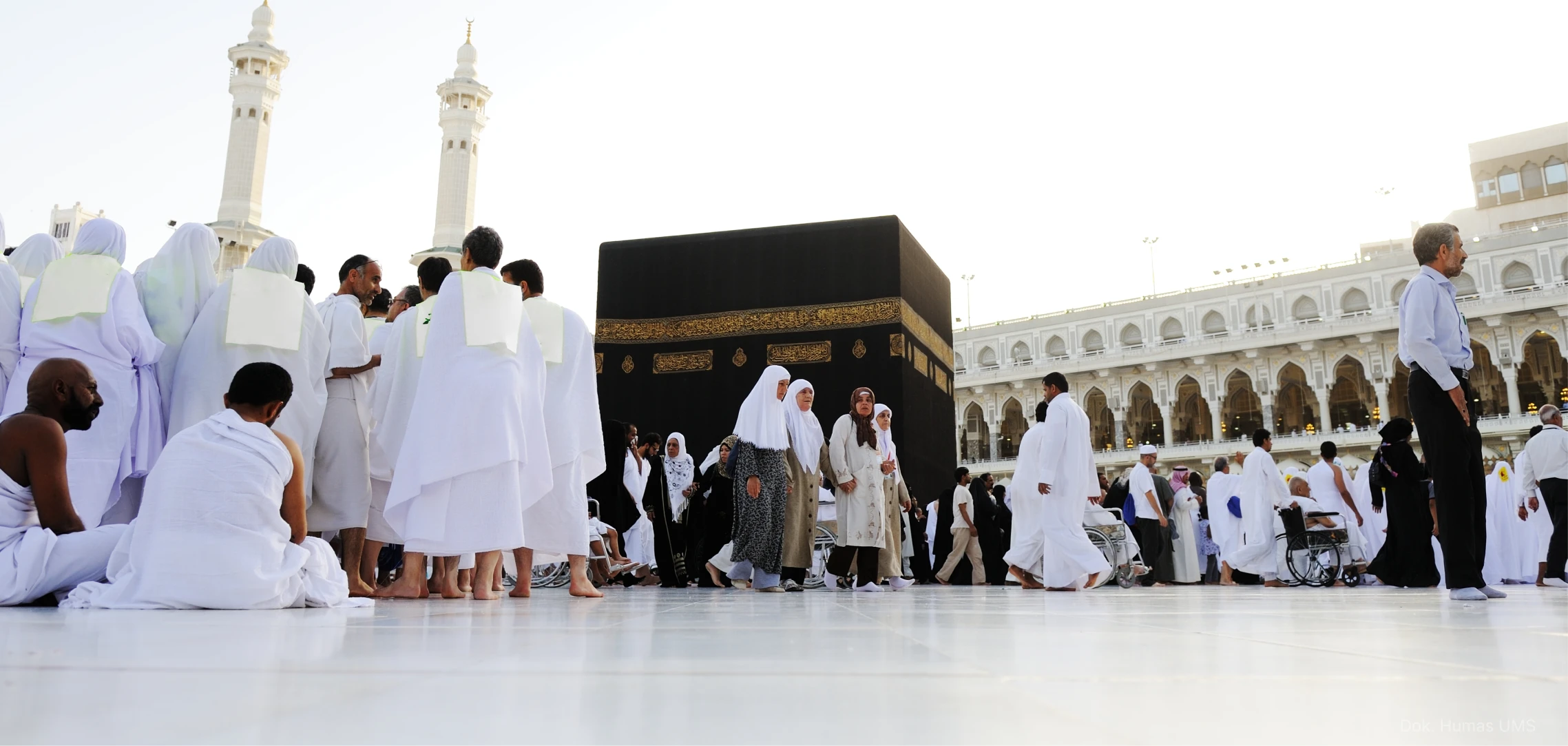
In 2025, Eid al-Adha will fall on June 6. At this time, many Muslims around the world are preparing for this sacred journey. Hajj is often described as the ultimate spiritual aspiration for Muslims across the globe.
As the fifth pillar (rukun) of Islam, Hajj is obligatory for every Muslim who is physically and financially able to perform it. It is a once-in-a-lifetime duty that holds deep spiritual significance.
The command to perform Hajj is found in Surah Ali Imran, verse 97:
فِيهِ ءَايَٰتٌۢ بَيِّنَٰتٌ مَّقَامُ إِبْرَٰهِيمَ ۖ وَمَن دَخَلَهُۥ كَانَ ءَامِنًا ۗ وَلِلَّهِ عَلَى ٱلنَّاسِ حِجُّ ٱلْبَيْتِ مَنِ ٱسْتَطَاعَ إِلَيْهِ سَبِيلًا ۚ وَمَن كَفَرَ فَإِنَّ ٱللَّهَ غَنِىٌّ عَنِ ٱلْعَٰلَمِينَ
In it are clear signs [such as] the standing place of Abraham. And whoever enters it shall be safe. And [due] to Allah from the people is a pilgrimage to the House – for whoever is able to find thereto a way. But whoever disbelieves – then indeed, Allah is free from need of the worlds.
The Head of the Division for AIK Experience and Cadre Development at the Office for Boarding House Development, Al-Islam, and Muhammadiyah (LPPIK) of Universitas Muhammadiyah Surakarta (UMS), Yayuli, S.Ag., M.P.I., explained that the term “ability” in the verse about Hajj refers to financial, physical, and travel security readiness.
“Able to make the journey, able to afford the expenses, and physically capable. It also includes the ability to provide for the family left behind,” Yayuli said on Thursday (8/5/2025).
He emphasized that two key elements are inseparable from the Hajj pilgrimage: pillars of Hajj and obligatory acts of Hajj. Both elements influence the validity of the pilgrimage.
The Pillars of Hajj are the fundamental components of the Hajj. If a pilgrim omits one of these, the Hajj becomes invalid. These cannot be replaced with a fine. The obligatory acts of Hajj, on the other hand, do not invalidate the Hajj if missed, but must be compensated for with a fine.
Yayuli, S.Ag., M.P.I., explained that the Hajj consists of six core pillars. These pillars form the foundation of a valid pilgrimage, and omitting any of them invalidates the Hajj. Below is a breakdown of each pillar and its deeper meaning:
1. Ihram
The first pillar of Hajj is ihram, which means purification. It is marked by the wearing of white cloth and the recitation of the intention (niyyah) to perform Hajj before passing the miqat (the designated boundary for entering the holy area).
Ihram must be entered at the boundary of the Haram (the sacred territory around Masjid al-Haram in Makkah). Once the intention is made, the Hajj rituals begin, and all prohibitions of ihram come into effect.
Yayuli explained that ihram symbolizes purity. It reflects the state of a human being at birth, pure and simple, signified by the plain, unstitched garments, much like a newborn wrapped only in cloth.
2. Wukuf
Wukuf is performed by standing (or remaining) at the plain of Arafah. This takes place on the 9th of Dhu al-Hijjah.
The Prophet Muhammad (peace be upon him) emphasized that wukuf is the essence of Hajj, as stated in the hadith:
عَنْ عَبْدِ الرَّحْمَنِ بْنِ يَعْمَرَ قَالَ شَهِدْتُ رَسُولَ اللَّهِ صَلَّى اللَّهُ عَلَيْهِ وَسَلَّمَ فَأَتَاهُ نَاسٌ فَسَأَلُوهُ عَنْ الْحَجِّ فَقَالَ رَسُولُ اللَّهِ صَلَّى اللَّهُ عَلَيْهِ وَسَلَّمَ الْحَجُّ عَرَفَةُ فَمَنْ أَدْرَكَ لَيْلَةَ عَرَفَةَ قَبْلَ طُلُوعِ الْفَجْرِ مِنْ لَيْلَةِ جَمْعٍ فَقَدْ تَمَّ حَجُّهُ رواهأحمد وأبو داود والترمذى والنسائى وابن ماجه والحاكم والبيهقى والديلمى
“From Abdurrahman bin Ya’mar (may Allah be pleased with him), I witnessed the Messenger of Allah (peace be upon him) being approached by several companions who asked him about Hajj. The Prophet said, ‘Hajj is Arafah. Whoever arrives at Arafah before dawn on the night of Muzdalifah (the night of Eid al-Adha), his Hajj is complete.’” (Narrated by Ahmad, Abu Dawud, At-Tirmidzi, An-Nasai, Ibnu Majah, Al-Hakim, Al-Baihaqi, dan Ad-Dailami).
This act of worship begins when the sun passes its zenith at midday. Wukuf starts with listening to the Arafah sermon. After the sermon, pilgrims perform the combined and shortened Zuhr and Asr prayers (Jama’ Taqdim)
Wukuf can be performed either in congregation or individually. The Prophet Muhammad SAW recommended increasing istighfar (seeking forgiveness), dhikr (remembrance of Allah), recitation of the Qur’an, and supplication during wukuf.
The pillar of wukuf serves as a moment of deep reflection for a human being before their Lord. Yayuli believed wukuf is also the right time for muhasabah (self-evaluation).
“There is a dialogical communication between a person and Allah SWT through the prayers and dhikr recited during wukuf,” he said.
3. Tawaf
Tawaf is a pillar of Hajj that involves circumambulating the Kaaba seven times in a counterclockwise direction, meaning from left to right.
The command to perform tawaf is found in Surah Al-Hajj, verse 29, where Allah SWT says:
ثُمَّ لْيَقْضُوْا تَفَثَهُمْ وَلْيُوْفُوْا نُذُوْرَهُمْ وَلْيَطَّوَّفُوْا بِالْبَيْتِ الْعَتِيْقِ ٢٩
"Then let them remove their dirt, fulfill their vows, and circle around the Ancient House (al-Bayt al-‘Atiq/Baitullah)."
There are three types of tawaf performed by Hajj pilgrims: Tawaf Qudum, done upon first arriving in Mecca. Tawaf Ifadhah, performed after the stoning of the jamrah. Tawaf Wada, done as a farewell before leaving Mecca.
Tawaf is a highly recommended act of worship. According to Yayuli, tawaf symbolizes the rotation of life, starting and ending at the same point.
“Tawaf starts from the corner of the Hajr Aswad and ends there as well. Just like life, originating from Allah and returning to Allah,” she said.
4. Sai
The fourth pillar of Hajj is Sa’i. It involves walking or jogging between the hills of Safa and Marwah. The term sa’i comes from the Arabic word that means “to run” or “to walk briskly.”
Sa’i is obligatory for all Hajj pilgrims. It was narrated from Aisyah RA that the Prophet Muhammad SAW said:
ما أتمَّ اللهُ حَجَّ امرئٍ ولا عُمْرَتَه، لم يَطُفْ بين الصَّفا والمروةِ
"Allah will not accept the Hajj or Umrah of a person who does not perform sa’i between Safa and Marwah.” (Narrated by Bukhari)
The ritual of sa’i commemorates the struggle of Hajar, the mother of Prophet Ismail. After giving birth, Hajar ran between the hills of Safa and Marwah in search of water. Eventually, Allah performed a miracle through baby Ismail’s heel strike, causing the spring of Zamzam to gush forth.
Yayuli explained that sa’i symbolizes effort. In life, one must always strive. “Especially because Hajj itself is full of struggle,” he said.
5. Tahallul and In Order
Tahallul refers to the act of shaving or trimming the hair after completing the Hajj rituals. According to Yayuli, this marks the end of the state of ihram. “It signifies that the Hajj is completed,” he explained.
Tahallul means humility and liberation from sin. Shaving the head reflects a form of sacrifice and freedom from arrogance. It represents a person’s willingness to let go of worldly pride in exchange for spiritual purity.
Most importantly, all must be performed in order. Each pillar must be completed sequentially without skipping any step. Yayuli emphasized the importance of this principle: “If the sequence is not followed properly, the Hajj is not valid,” he firmly stated.
Penulis: Gede Arga Adrian
Translator: Farizal Luqman Majid
Editor: Al Habiib Josy Asheva
Bank Indonesia has held its benchmark rate at 5.75 percent, ending speculation of a hike to 6 percent that had circulated in recent weeks.
Nothing’s more special than reading curated news just for you.
Subscribe to the UMS Newsletter for free today.