The Scholar Behind UMS's Master's Program in IQT
27 July 2026
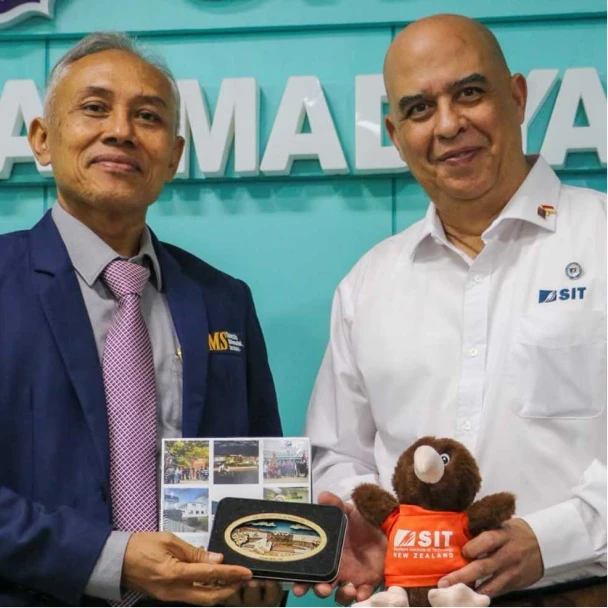
Prof. Andri Nirwana, S.TH., M.Ag., Ph.D., pioneered the Master of Al-Quran and Tafsir Studies as a first step in strengthening Quranic studies within Muhammadiyah.



Indonesian rice fields are plagued by a persistent rat infestation, a major cause of crop failure. These rodents attack rice plants at every stage of their growth, from the tender seedlings to the harvested grains in storage.
The severity of the rat infestation escalates during the planting season, leading to stunted rice growth and yield loss. Unfortunately, innovation in agriculture, particularly the utilization of technology, has been slow to reach Indonesian farmers, leaving them to rely on outdated and ineffective methods that fail to curb the rat population.
Amidst these challenges, two Chemical Engineering, Faculty of Engineering students from Universitas Muhammadiyah Surakarta (UMS), Muhammad Rizki Abid Pratama and Amirul Chanifah, emerged as beacons of hope. Driven by an understanding of the farmers’ plight, they took on a journey to develop an innovative solution: an environmentally friendly rat exterminator.
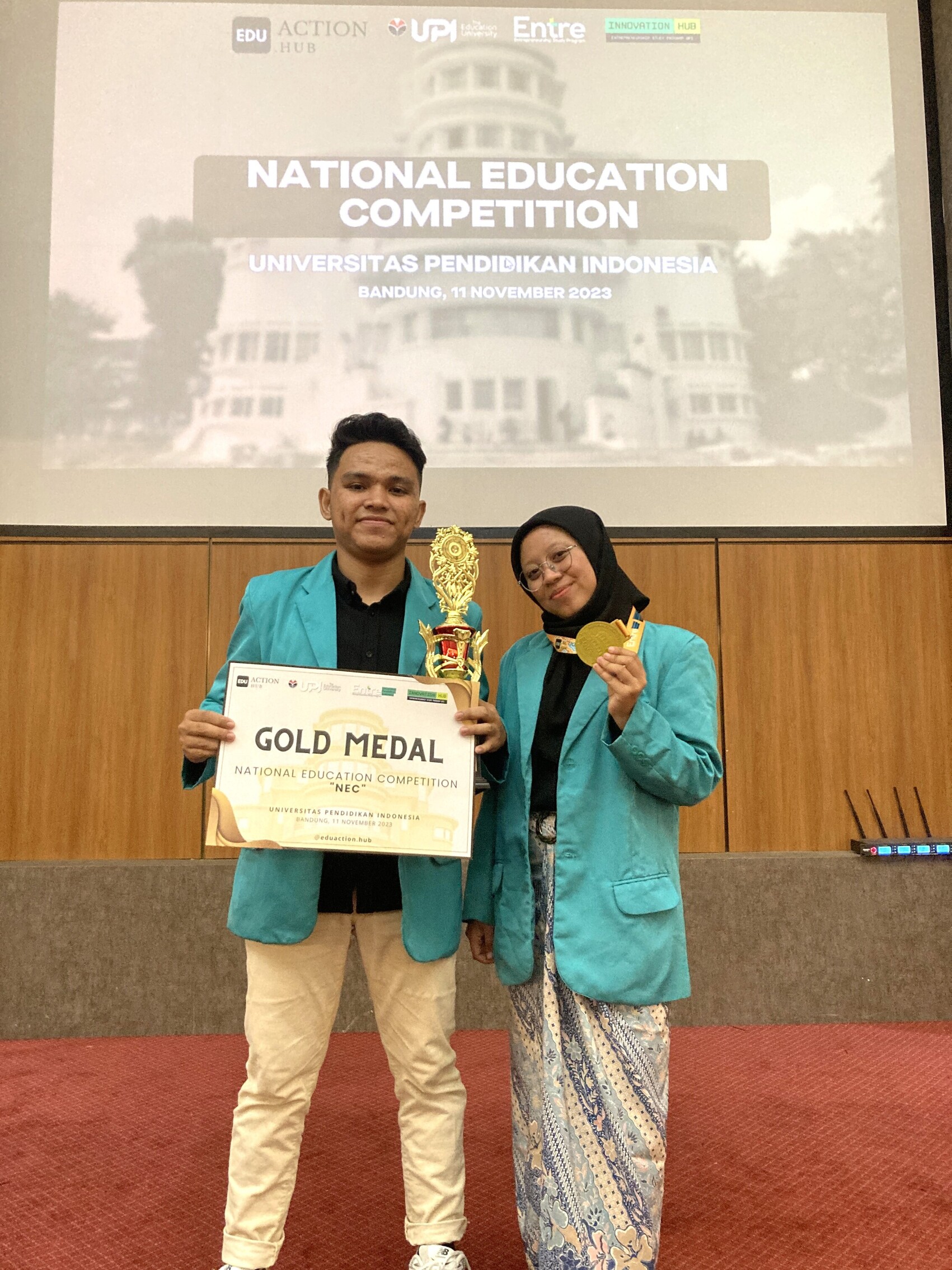
Amirul and Rizki’s dedication to innovation earned them gold medals and a special award at the National Education Competition (NEC) 2023 on Saturday (11/11). Guided by the expertise of young lecturer Hardika Dwi Hermawan, S.Pd., M.Sc., from the Informatics Engineering Education Study Program, their collaborative efforts thrived due to his extensive background in technology and innovation.
The National Education Competition, organized by Universitas Pendidikan Indonesia (UPI) in Bandung, serves as a platform for students to showcase their innovative ideas and solutions. This competition encourages students to apply scientific thinking and current information to address real-world problems.
Both Chemical Engineering students share interest in environmental issues, particularly those impacting the agricultural sector. Recognizing Indonesia’s heavy reliance on agriculture as a primary source of livelihood, they are driven to find solutions that enhance agricultural productivity and safeguard environmental sustainability.
“Indonesia’s strategic location, coupled with its agricultural-dependent population, presents a unique opportunity to strengthen the agricultural industry. However, protecting crops from rat infestation has become an increasingly pressing challenge. We believe that technology offers the most effective solution to this problem. Our device harnesses the power of solar panel technology, modified into an eco-friendly rat exterminator that utilizes ultrasonic waves,” explained team leader known affectionately as Amirul on Tuesday (21/11).
The ultrasonic waves emitted by the device effectively repel rats without causing harm or stress to other animals in the vicinity of the rice fields. This innovation also incorporates a soil pH meter, enabling farmers to accurately regulate fertilizer application on their agricultural land. Looking ahead, Amirul and Rizki are committed to partnering with Desamind Indonesia Foundation to extend their support to a wider community of farmers.
“We have designed our innovation to be cost-effective, allowing it to reach a broader range of farmers across Indonesia,” Amirul emphasized. “We are aware of the financial constraints faced by farmers, particularly those with small-scale operations.”
The use of harmful rat repellent has become an ingrained practice despite the documented environmental and health risks associated with these products. Ironically, despite knowing the detrimental effects of these product, their usage continues unabated.
“An immediate transition to eco-friendly alternatives is imperative, our innovative device embodies the spirit of several Sustainable Development Goals (SDGs): Zero Hunger, Good Health and Well-being, Affordable and Clean Energy, and Industry, Innovation, and Infrastructure.” asserted Amirul.
Committed to advancing sustainable agriculture, their innovation supports the Sustainable Development Goal of Zero Hunger by enhancing domestic production of important food crops, such as rice. Their dedication to sustainable practices highlights the impact of their invention.
Through their environmentally friendly rat repellent innovation, the Chemical Engineering students aim to reduce the use of harmful chemicals in the ecosystem and safeguard the health of farmers, in line with the 3rd SDG point of Good Health and Well-being. Utilizing their knowledge from lectures, they've created a formula that effectively controls rat populations without leaving harmful residues.
“The incorporation of solar panels, which harness sunlight as a renewable energy source, exemplifies our commitment to Affordable and Clean Energy. This innovation reduces the need for fossil fuels, promoting environmental sustainability. Additionally, our device shows the application of Industry, Innovation, and Infrastructure through its innovative approach to agricultural technology.” Amirul explained.
Amirul and Rizki hold unwavering optimism for the future of Indonesian agriculture. The country’s persistent reliance on rice imports from abroad is a stark reminder of the diminishing food security in Indonesia.
“We are committed to refining this innovative tool and plan to implement a pilot project in the near future. We hope that our invention will gain recognition at future national and international exhibitions,” expressed Rizki with a hopeful tone.
“Our ultimate goal is to see the jubilant smiles of farmers who have successfully improve the quality of their rice harvests,” Amirul concluded.
Writer: Genis Dwi Gustati
Translator: Farizal Luqman Majid
Prof. Andri Nirwana, S.TH., M.Ag., Ph.D., pioneered the Master of Al-Quran and Tafsir Studies as a first step in strengthening Quranic studies within Muhammadiyah.
Nothing’s more special than reading curated news just for you.
Subscribe to the UMS Newsletter for free today.