
How Sheep Manure Turns into Nutrient Rich Fertilizer
16 July 2026
Sheep dunged nutrient-rich organic fertilizer for plants, made with the help of maggots. Built on community empowerment and a zero-waste principle.



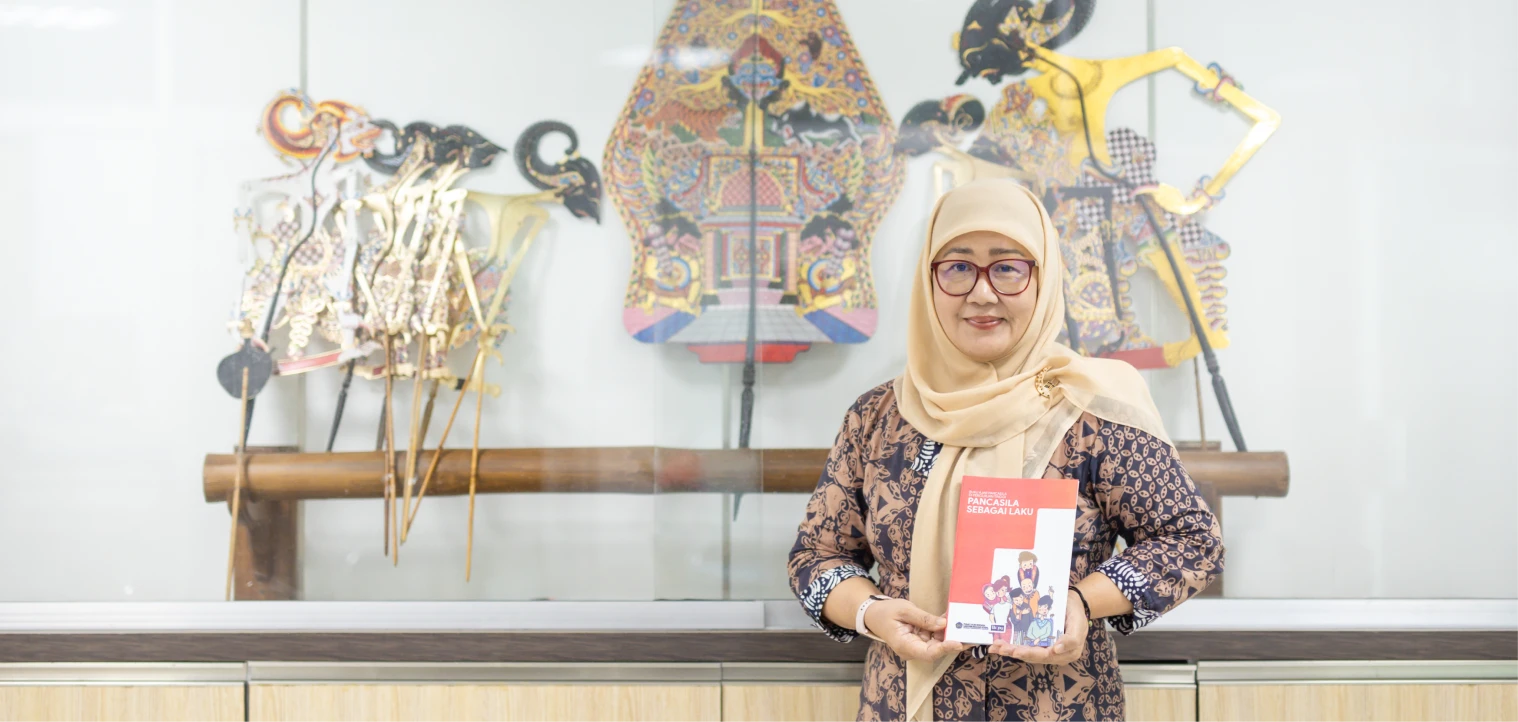
In the late morning of mid-September, we had an appointment with Yayah Khisbiyah. She appeared graceful and elegant, wearing a neatly tailored batik blouse paired with a pastel colored hijab and a long skirt, which allowed her to move easily during her busy schedule.
We were invited into her office at the Center for the Study of Culture and Social Change (PSBPS), where Yayah carries out various activities after teaching. We were surrounded by impressive decorations, including wayang kulit and Pancasila-themed paintings, offering a glimpse into Yayah’s persona as she warmly greeted us.
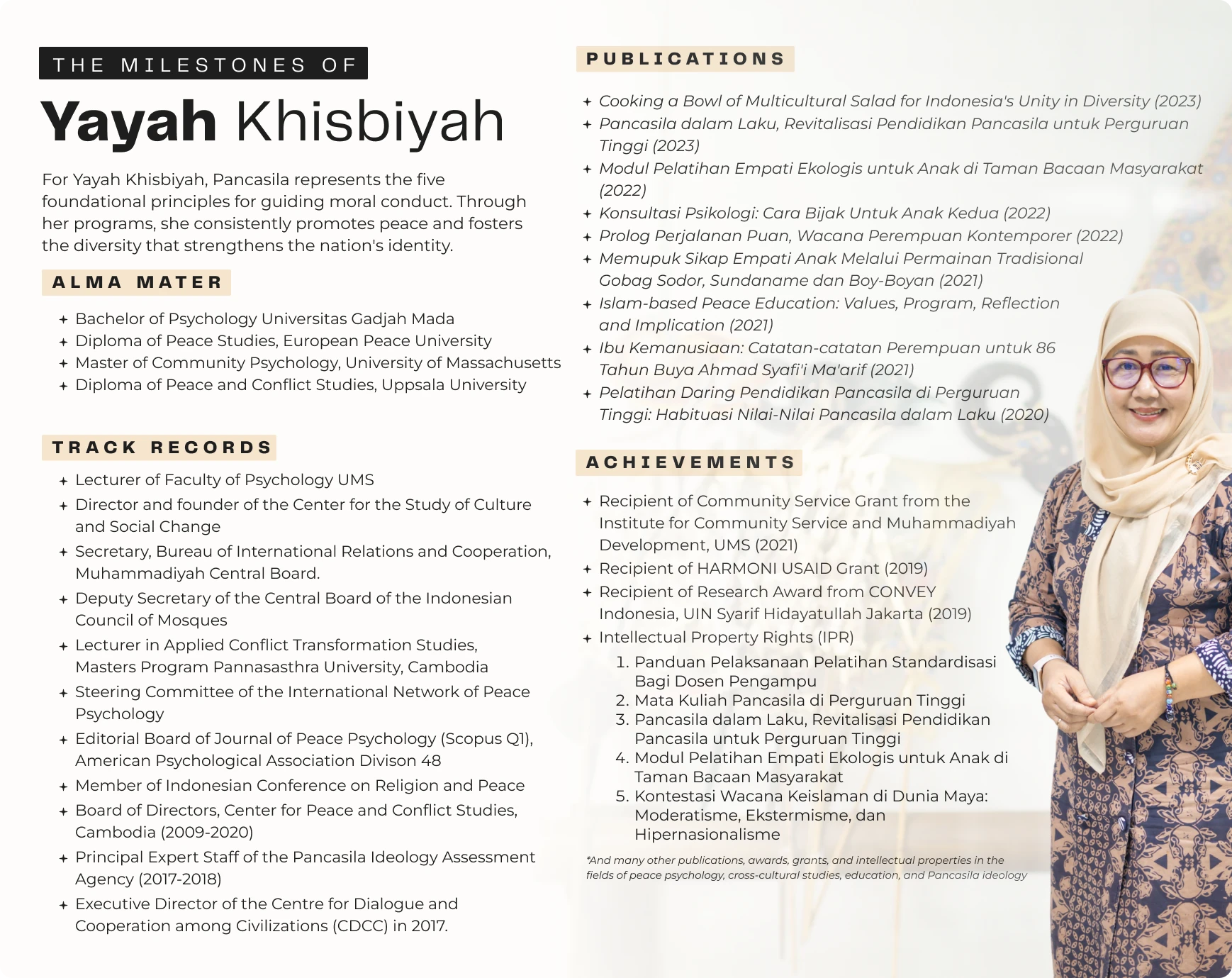
As a UMS Psychology lecturer and Director of the PSBPS, Yayah Khisbiyah has dedicated her work to promoting inclusivity, tolerance, and diversity. Beyond her work in research and teaching, she actively develops Pancasila education as a practical tool in response to the decline of democracy, and various violations of Pancasila’s principles.
Yayah Khisbiyah spearheaded the “Pancasila sebagai Laku” program, which has toured 14 provinces since 2019, from Sumatra to Papua, involving a total of 75 universities across Indonesia.
“This program was created to raise awareness of the importance of Pancasila as the foundation of behavior and ethics in citizen life. We organize seminars, discussions, and intensive training for students and lecturers, with the hope that Pancasila becomes more than just a formal course, but truly leaves an impression and shapes character,” explained the Cirebon-born woman.
The research result shows that Pancasila, which is included in the general basic course, has never left a lasting impression on students. They often see it as just a subject to memorize, quickly forgetting it once the course is over.
“We still see many instances of non-exemplary behavior today, especially on campus. Students committing plagiarism, corruption and nepotism in government, and rampant harassment in schools X or pesantren Y. This shows that our society does not truly embody Pancasila,” Yayah added, with a hint of bitterness in her voice.
Yayah’s dedication to grounding Pancasila and promoting peace didn't come out of nowhere. Since childhood, she had been accustomed to consuming hundreds of books that broadened her worldview about life and the world.
His father is an agricultural businessman with a deep love for reading. During his childhood, Yayah's father subscribed to several prominent media outlets, including Tempo, Intisari, Panji Masyarakat, Republika, Kompas, and many others.
“My father didn’t receive a formal education, but he is open minded. He never differentiated between educational opportunities for girls and boys. Whoever wanted to succeed, he supported and encouraged us to pursue any degree we want. He also provided magazines, books, and novels suitable for our age, such as Bobo, Kawanku, and Lima Sekawan,” he reminisced.
Those moments left a deep impression on Yayah’s heart. She grew up with an understanding that the world is multicultural, full of diversity, and can be a peaceful place if we can create harmony in diversity.
She reminisced about one particular book that greatly influenced her thinking: Dan Damai di Bumi (And Peace on Earth). Yayah remembered reading that novel while in junior high school
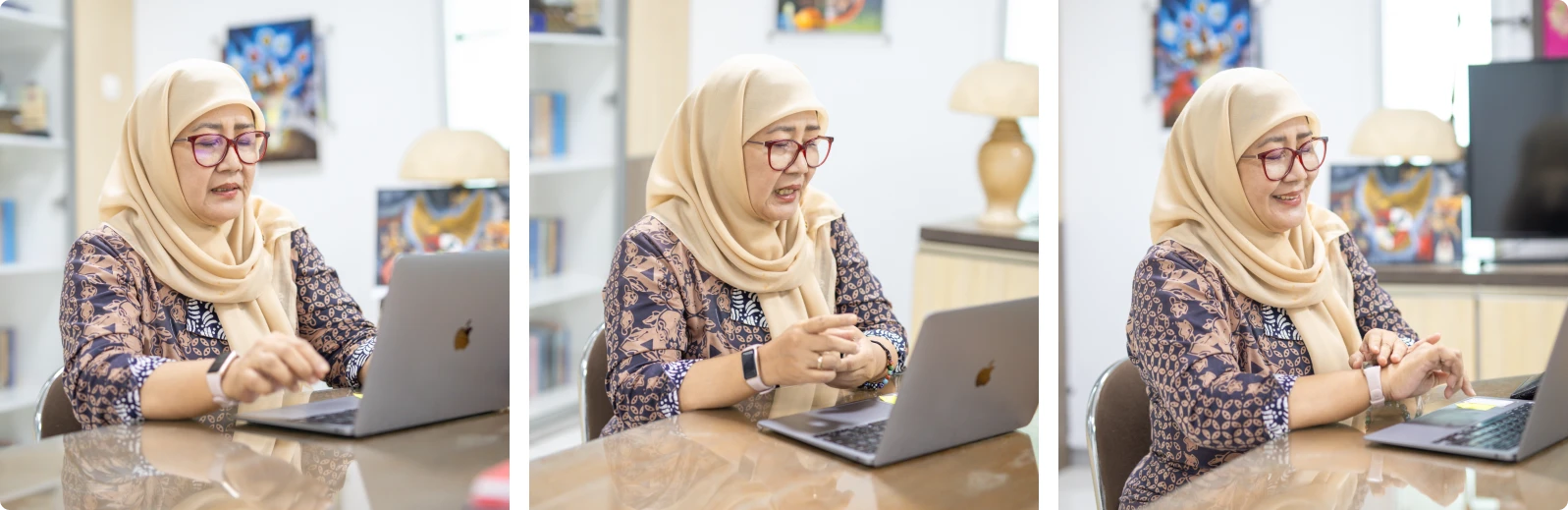
Dra. Yayah Khisbiyah, M.A. Imam Safi'i/UMS Public Relation
The novel by Karl May tells the story of the friendship between Native American figures, European settlers, and Arab-Africans who are fighting for justice and creating peace in the new land of America. For Yayah, the novel sparked a compelling imagination about the synergy among civilizations that can lead to justice and peace when executed in the right way.
Reading that kind of book empowered her to pursue an academic path that could help her understand human and group relations in society.
“What makes people different? What causes division? And what leads to unity?” Yayah pondered at that time.
While working at PPSK, Yayah felt she had the best opportunity to dive into strategic studies and policies related to national development and international relations. During the same period, she also became a research assistant at UGM's Center for Population Research (PPK), assisting prominent professors like Prof. Masri Singarimbun, Prof. Sofian Effendi, and Prof. Sjafri Sairin.
Yayah later won her first international research grant from The Ford Foundation through PPK UGM. Her interest in research, teaching, and academic publishing as a lecturer grew thanks to her experiences at PPSK and PPK UGM. Encouraged by her senior colleagues, she applied for further study scholarships abroad.
“I eventually took an English course and achieved one of the highest TOEFL scores at the time. Alhamdulillah, I was awarded two scholarships: Fulbright for a Master’s in Psychology, and a one-semester program at the European Peace University in Vienna, Austria, focusing on Conflict Resolution and Peace Studies,” Yayah added.
Yayah had long felt that psychology was insufficient to address the complexities of human relationships in the context of conflict and peace. She began broadening her discourse to peace studies and sustainable development.
After graduating from the European Peace University, Yayah continued her studies at the University of Massachusetts, USA, specializing in Community Psychology; Peace and Conflict Studies at Uppsala University, Sweden; and a two-year training program in Sustainable Development and Environmental Conservation (LEAD) in Brazil, China, and Russia, funded by the Rockefeller Foundation.
By coincidence, during a Fulbright reception, Yayah was introduced to Dr. Din Syamsuddin, a senior Fulbright alumni from UCLA. Upon returning from her LEAD graduation in Russia, Yayah established the PSBPS at UMS, applying the ideas inspired by the figures she met. Since then, she has often been asked to assist Muhammadiyah Central Board in various activities aligned with her interests and expertise.
In 2014, Din Syamsuddin (Chairman of Muhammadiyah's Central Board, 2005-2015) appointed Yayah as the Program Director at the Centre for Dialogue and Cooperation among Civilizations (CDCC), where she later became Executive Director until 2017.
After CDCC, Dr. Yudi Latif invited her to join the Presidential Unit for the Ideology of Pancasila (UKP-PIP) as a Senior Expert, which has since evolved into the Agency for the Implementation of Pancasila Ideology (BPIP).
One morning before the Covid-19 pandemic hit Indonesia, Yayah received a call from the U.S. Embassy. They were planning a visit to Solo, to her office at the PSBPS UMS
The embassy had reached out again because they found PSBPS activities to be highly interesting. They then asked Yayah if she had any ideas or interesting events that could be realized.
“They offered support funds from USAID. Usually, if an institution wants to create a massive program, the university sends proposals to donors. Thankfully, I was offered directly. They did a headhunt and found us. After discussions, we proposed the program Pancasila sebagai Laku, which I had designed while at BPIP but hadn't yet realized,” explained Yayah, the director of PSBPS UMS.
The Pancasila sebagai Laku program initially took place at several Muhammadiyah and Aisyiyah universities (PTMA), with PSBPS UMS as the leading unit. However, USAID suggested expanding the program to more universities.
“After reaching out to other universities, we found there was significant interest in the program. In the first phase, we implemented it at 11 universities: 7 PTMA and 4 private universities in the Solo Raya area. In the second phase, it grew to 24 universities, including state universities that saw the program as novel and innovative. Now, after the third phase, we’ve partnered with 74 universities, including 18 PTMA, 37 non-Muhammadiyah private universities, and 19 state universities,” Yayah added.
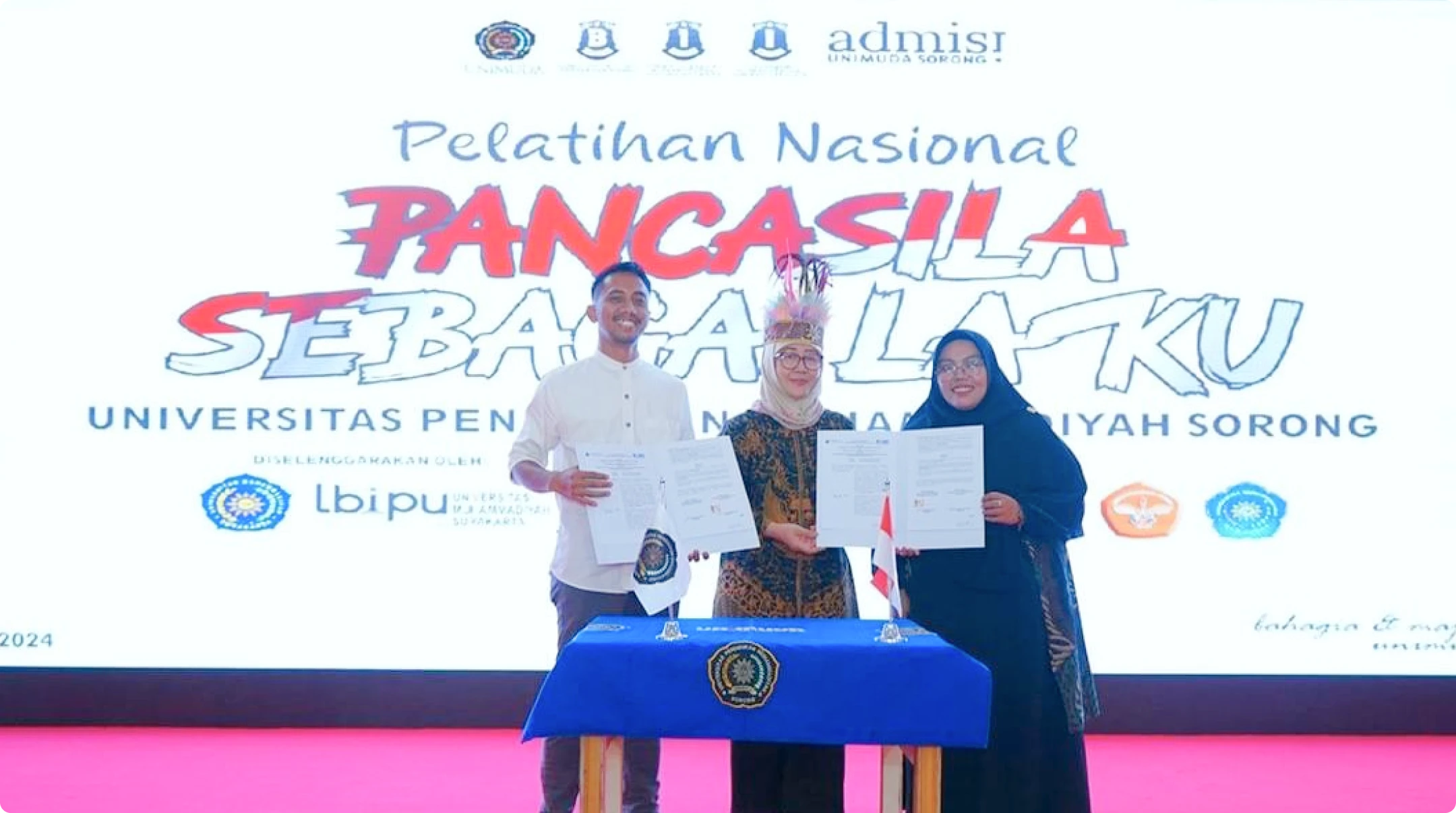
Yayah (Middle) on the Pancasila sebagai Laku roadshow at Universitas Pendidikan Muhammadiyah Sorong, West Papua (27/6/2024).
For Yayah, Pancasila must become a guiding value embodied in every action in societal and national life. She views the program as a response to the current decline in democracy.
The Pancasila sebagai Laku program has had a broad impact across the country, with roadshows held in seven strategic regions: Sumatra, Greater Jakarta, East Kalimantan, East Java, Central Java, South Sulawesi, and Southwest Papua.
Faculty teaching Pancasila at the 74 partner universities have been equipped with teaching modules, a Learning Management System (LMS), and Moodle platforms designed to help them implement revitalized materials and teaching methods developed by PSBPS UMS.
Yayah emphasized that the Pancasila sebagai Laku program continues to this day. Alumni of the program still utilize these platforms as teaching aids and receive institutional support through an alumni association.
“The ultimate goal of this program is clear. We want to foster positive social change that improves governance and strengthens Pancasila democracy through the role of the younger generation, particularly students. Moreover, it aims to promote a peaceful, inclusive, just, and civil society,” she hoped.
Yayah also touched on future plans for collaboration with the Directorate General of Learning and Student Affairs (Belmawa) of the Ministry of Education, Culture, Research, and Technology, as well as the Pancasila Ideology Development Agency (BPIP) regarding the Pancasila Sebagai Laku program. These discussions are currently being communicated by Yayah and PSBPS through policy briefs and other communication channels.
Recently, on the ongoing conflict in Palestine, Yayah, entrusted as the Secretary of the International Relations and Cooperation Institute (LHKI) of Muhammadiyah's Central Board, launched the Palestine Peacebuilding Lab program. This initiative is designed to empower young people, including women and war victims with disabilities in Palestine, through workshops, multicultural dialogues, and conflict resolution simulations using non-violent methods.
“Of course, we always aim to raise awareness through the media to combat hate speech, misinformation, and discrimination, which often trigger the escalation of conflict,” explained the UMS social psychology expert.
War trauma recovery is one of the program's key pillars, utilizing a psychoeducational approach to strengthen the psychosocial resilience of survivors of war and conflict. Beyond field advocacy, the Palestine Peacebuilding Lab also facilitates global campaigns and reciprocal visits between the Central Board of Muhammadiyah and Palestinian partners to strengthen collaboration.
“The program will run from June to October 2024, after which we will evaluate it,” Yayah explained.
“The struggle to build peace based on social justice is not the final goal, but rather a continuous process that must be nurtured through multidisciplinary and cross-sectoral cooperation, both within our own country and in other parts of the world still engulfed in human suffering due to violent conflicts, poverty, and injustice. Our ultimate goal is the achievement of wellbeing or holistic prosperity for all of Allah SWT's creations,” she concluded.
Writer: Genis Dwi Gustati
Editor: Al Habiib Josy Asheva
Translator: Farizal Luqman Majid
Designer: Salsabila Kamila Wardah
Sheep dunged nutrient-rich organic fertilizer for plants, made with the help of maggots. Built on community empowerment and a zero-waste principle.
Nothing’s more special than reading curated news just for you.
Subscribe to the UMS Newsletter for free today.