
How Sheep Manure Turns into Nutrient Rich Fertilizer
16 July 2026
Sheep dunged nutrient-rich organic fertilizer for plants, made with the help of maggots. Built on community empowerment and a zero-waste principle.



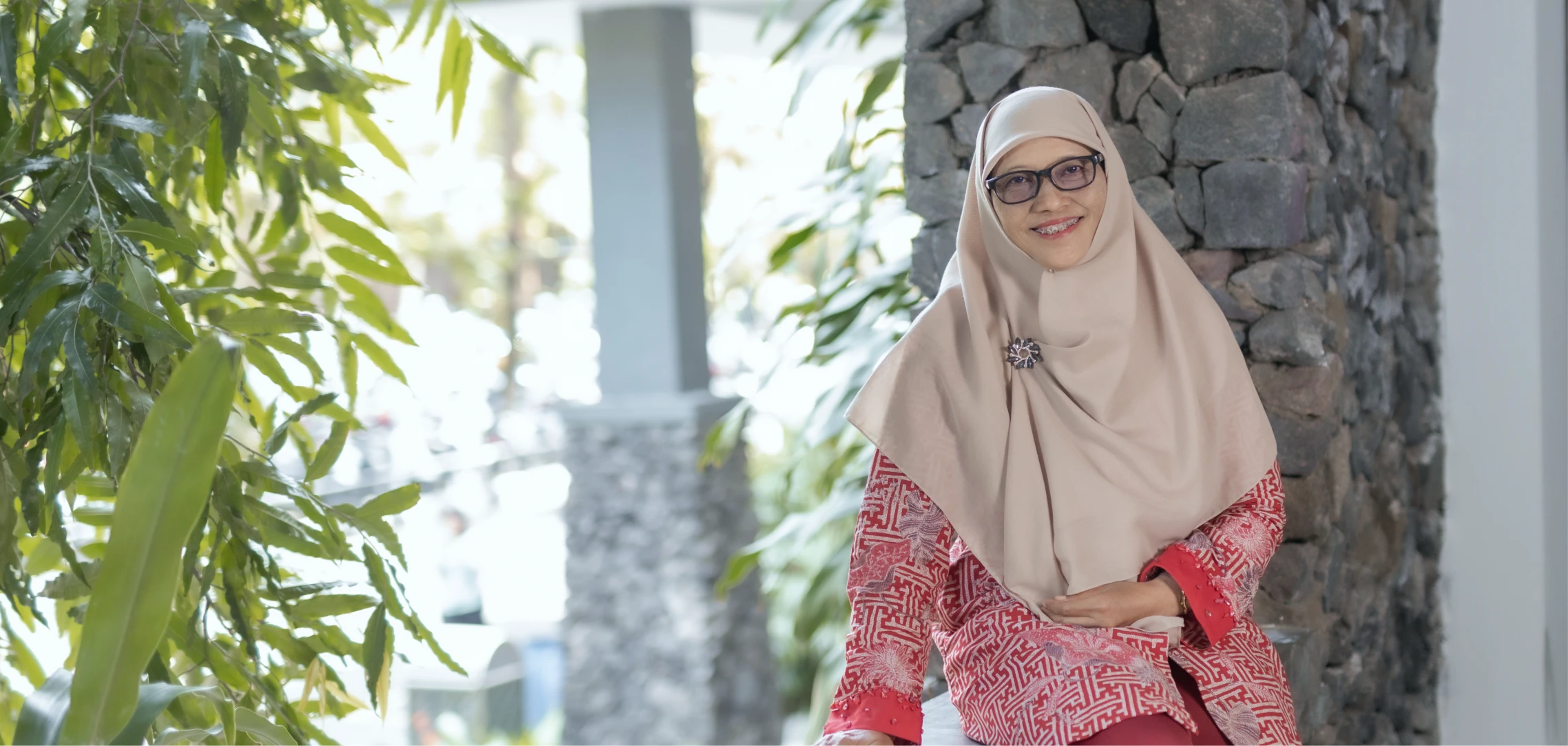
In a humble home in Sukoharjo, a young girl sat on a study chair, her book open before her. A kerosene lamp softly illuminated the pages of her schoolwork.
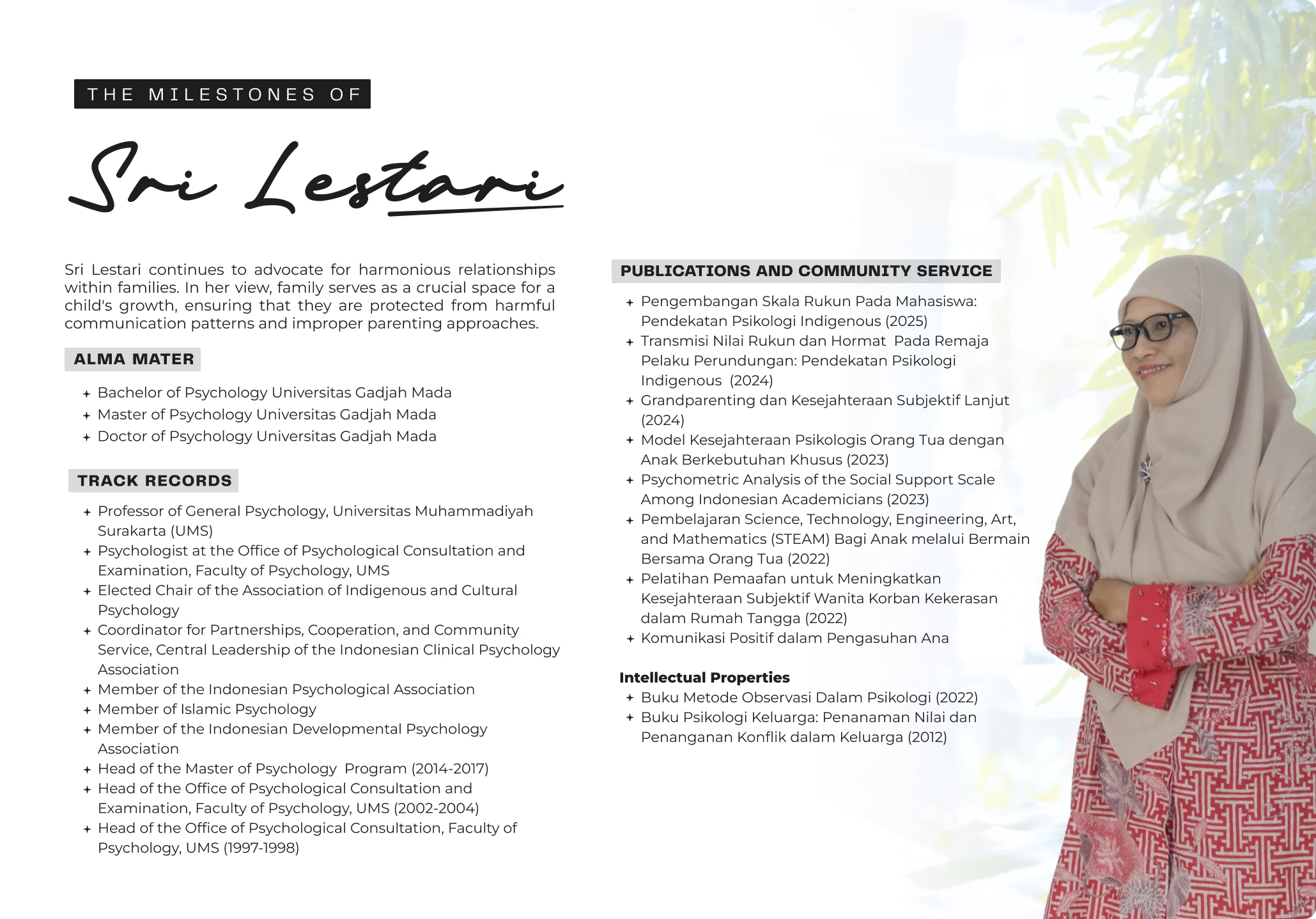
From an early age, Sri Lestari had been accustomed to the quiet of dawn, reading books and completing school assignments before the morning sun warmed the earth. “I was used to waking up at 4 a.m., studying with my grandfather before getting ready for school,” Prof. Dr. Sri Lestari reminisced about her childhood during an interview at the Doctor of Psychology Faculty office, Universitas Muhammadiyah Surakarta (UMS), on Thursday (20/2/2025)
As she adjusted her sitting position, Sri Lestari, or Tari, as she is fondly called, continued her story. Tari's father was a private-sector employee who often had to work on projects outside of Java, meaning he wasn’t always home. Meanwhile, her mother was a homemaker.
During her father’s absence, her grandfather played a crucial role in shaping her discipline. “Since he was a retired soldier, my grandfather was extremely strict,” she recalled. “When I was little, I once asked to use the restroom after waking up, but in reality, I just wanted to watch TV. After I returned, my grandfather told me to go back to sleep. Realizing there was no chance to argue, I had no choice but to sleep again,” she said with a chuckle.
Despite her father’s frequent travels, Tari never found waiting for him boring. She often expressed her longing through letters, which she sent from the local post office near their home.
“It was nothing special, just little requests to ease my longing. I’d ask for books and toys,” she shared.
Her father never refused her requests for books or magazines. Majalah Bobo, Si Kuncung, Ananda, and even children’s encyclopedias became her daily companions.
However, her life changed drastically when she entered the second year of middle school. Her family moved to Jakarta due to her father's job. The bustling capital was a stark contrast to the comfort and tranquility of her home in Sukoharjo.
Tari didn’t exhibit the traits of a future psychologist during her teenage years. She wasn’t particularly fond of observing people. Instead, she was deeply immersed in the world of exact sciences.
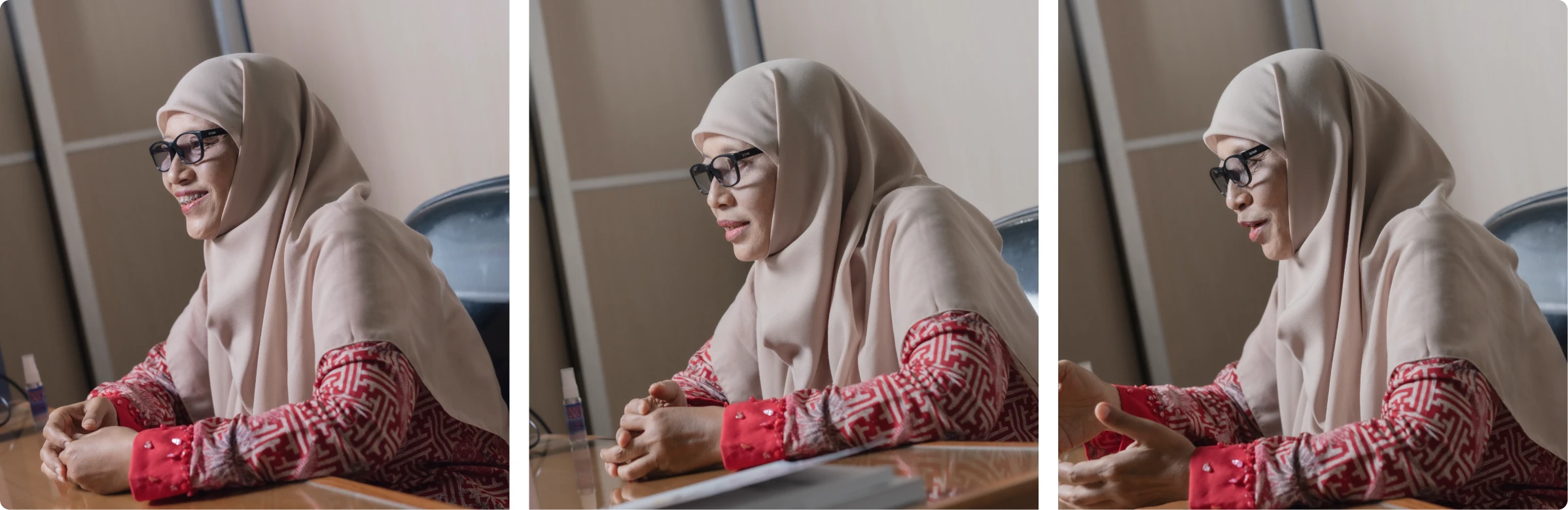
Prof. Dr. Sri Lestari, S.Psi., M.Si. Imam Safi'i/UMS PR
“I never actually thought about becoming a psychologist. I loved studying, but I wasn’t the type to analyze people or explore family relationships. In high school, I was more drawn to science,” she admitted without hesitation.
After graduating from high school, Tari took a test for university entrance through a track which allowed her to choose both science and social science majors.
Her passion for exact sciences was so strong that she initially aspired to enter the Pharmacy program at Institut Teknologi Bandung However, when selecting a social science major, she listed Psychology at Universitas Gadjah Mada (UGM) as her second choice.
“My thought process was simple, I just didn’t want to study economics or law. At the time, I felt psychology was the most reasonable option,” she added. Initially, she had no major expectations. But as she started her studies at the Faculty of Psychology at UGM, her perspective gradually changed.
Initially uncertain in her first semester, Tari gradually developed an interest in psychology, particularly in courses that explored parent-child relationships. She began to see how many aspects of family life could be better understood through psychology.
“I didn’t realize before how much parenting styles impact children,” she said seriously.
For her undergraduate thesis, she researched parental acceptance and self-esteem in visually impaired teenagers. This study opened her eyes to how parenting styles can shape a child's psychological well-being.
Her fascination deepened further when she pursued her master’s and doctoral degrees at UGM. Her thesis focused on early childhood sexuality education, which later evolved into her dissertation on value transmission within families.
“It all just flowed naturally. But somehow, every research project I did always led me back to family themes,” she reflected
Tari joined UMS as a lecturer in 1995. Over the years, she became known for her firm approach to disciplining her students.
“A lecturer’s job is not just to teach but to educate,” she emphasized. Beyond academic excellence, Tari wanted her students to develop strong character and integrity. She never hesitated to remind them about the importance of honesty in their studies.
“Don’t expect to pass my class if you’re not honest!” Tari once told us, showcasing how she disciplined her students.
Beyond teaching, Tari is also involved in curriculum development, particularly in family psychology. At the undergraduate level in UMS Psychology Department, she taught the mandatory Family Psychology course. At the master’s level, she proposed the Marriage and Family Psychology course to help students better understand family dynamics.
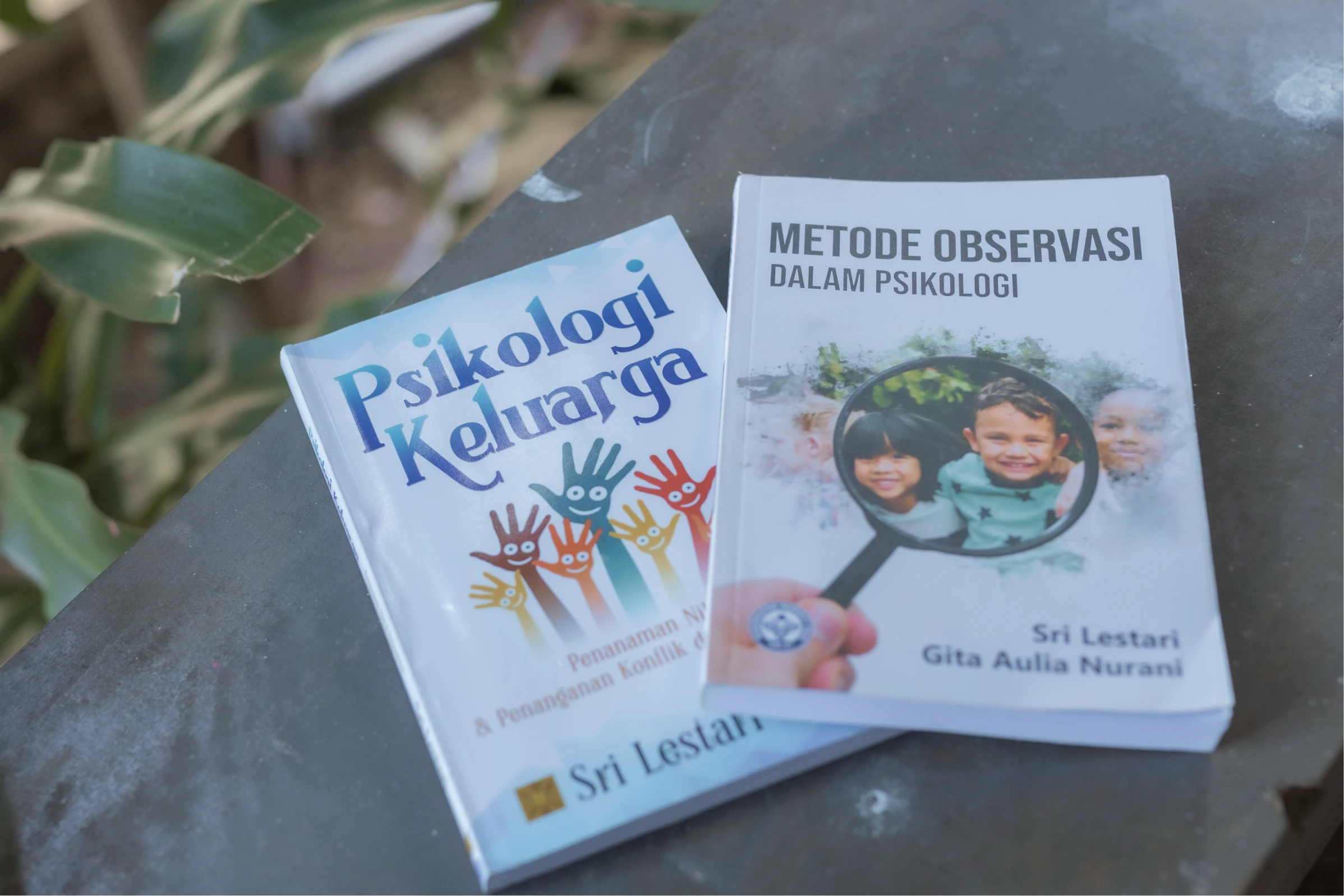
Two books that Tari used as teaching materials at the Faculty of Psychology UMS. Imam Safi'i/UMS PR
For Tari, who has spent years in the field of family psychology, marriage isn’t just about love, it’s about understanding differences and finding balance.
She knew this firsthand, as she also works as a professional psychologist at the Bureau of Psychological Consultation and Assessment (BKPP) at UMS’ Faculty of Psychology. Through her experiences handling various cases, she has observed that most conflicts in marriage don’t stem from fading love. Instead, relationships fall apart when partners fail to understand each other.
“They used to share stories for hours. Now, they mostly stay silent. Small gestures that once felt meaningful are now taken for granted. A relationship left unattended will eventually feel empty,” said the Professor of General Psychology at UMS with concern.
Tari admitted to having handled numerous cases during her time at BKPP UMS, some that ended in healing, others that inevitably crumbled.
One day, a married couple walked into her office, their faces tense. The wife was filled with disappointment and anger, yet deep down, a sliver of hope remained, hope to save their nearly broken marriage. Hesitantly, they agreed to undergo counseling together.
The first session was for the wife. The second, for the husband. The third was their joint session with Tari. “In those three sessions, I helped them untangle their problems, guiding them to see things from different perspectives. I had to remain neutral,” she explained.
Tari asked them to travel back in time, to remember the moment they first fell in love. What made them choose each other in the beginning?
Slowly, faint smiles appeared as memories resurfaced in their minds. The once-tense atmosphere started to soften. Tari then gave them a simple task: to rekindle a small habit they once cherished but had now forgotten and to take a private outing with no distractions.
A few weeks later, the couple returned with noticeably different expressions. The wife shared that her husband had started making her a warm cup of tea every morning. She, in turn, had begun forgiving him for a past mistake and speaking to him in a gentler tone.
“Sometimes, love is simply buried under routine and daily obligations. A grand change isn’t always necessary, reviving small, meaningful gestures can make all the difference,” she said.
Another case that left a deep impression on Tari involved a high school student who threatened to set his school on fire, just two months before the National Exams.
They felt they had given their child everything, top-tier education, complete facilities, a comfortable life. So why was their child still angry? After long counseling sessions, the truth finally surfaced.
The child felt their entire life had been controlled without ever being asked for their opinion. School choices, academic tracks, even extracurricular activities, everything had been decided by the parents.
The counseling was conducted in stages: first with the child, then with the parents, and finally a joint session. Tari asked the parents to do something simple yet powerful, apologize. At first, they resisted.
However, after deeper discussions, they realized that good intentions don't always translate into a good experience for the child. Their approach had, at times, made the child feel pressured and unheard.
“I told them, ‘You won’t lose your dignity by apologizing to your child. In fact, it teaches them a valuable lesson, that when someone makes a mistake, they should apologize, even if they are the parents,’” Tari explained.
Having handled over 30 family cases, Tari firmly believed that in every household, there are things that must be protected, nurtured, and fought for: communication and parenting.
People often mistakenly believe that a family will function well on its own. In reality, just like a plant, if it is not watered, it will wither. If it is not cared for, it will die.
Family is the first home. If love, understanding, and good character grow within it, then from there, a generation with strong morals will be born.
Writer: Genis Dwi Gustati
Translator: Farizal Luqman Majid
Editor: Al Habiib Josy Asheva
Sheep dunged nutrient-rich organic fertilizer for plants, made with the help of maggots. Built on community empowerment and a zero-waste principle.
Nothing’s more special than reading curated news just for you.
Subscribe to the UMS Newsletter for free today.