
How Sheep Manure Turns into Nutrient Rich Fertilizer
16 July 2026
Sheep dunged nutrient-rich organic fertilizer for plants, made with the help of maggots. Built on community empowerment and a zero-waste principle.



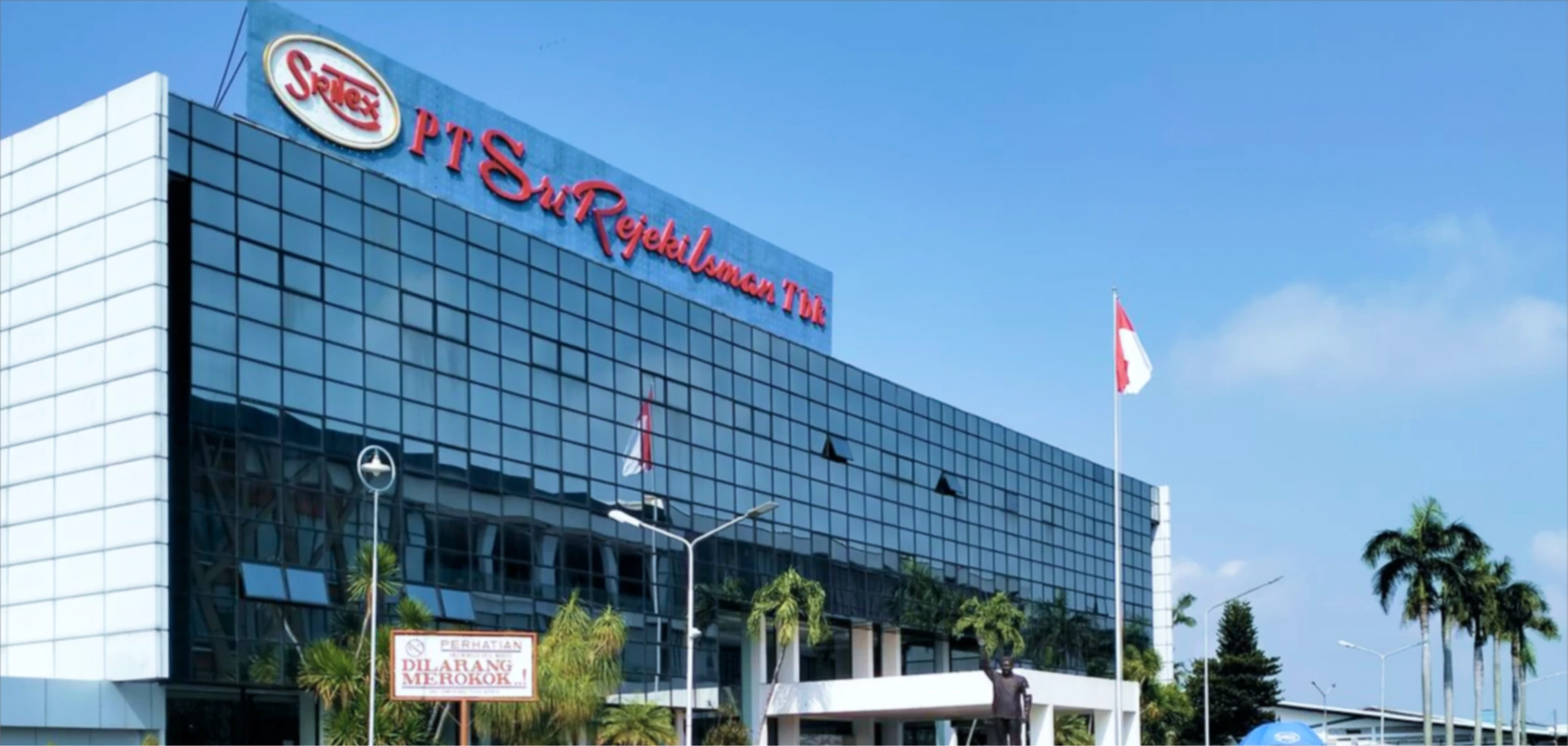
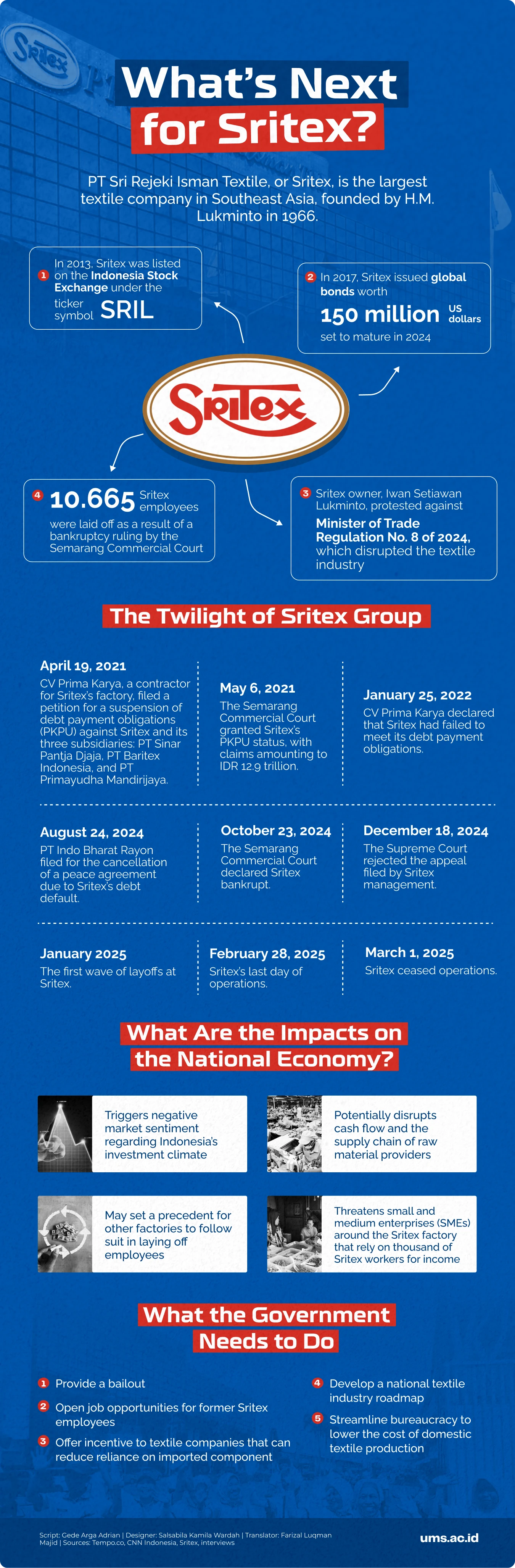
After attempting various measures to stay afloat, PT Sri Rejeki Isman Textile Tbk (Sritex) officially ceased operations on March 1, 2025. The closure resulted in the layoff of 10,665 employees, with waves of layoffs occurring from January to February 2025.
In a press conference on Friday (28/2/2025), the Ministry of Manpower reported that 1,065 employees were laid off in January, followed by approximately 9,600 more in February. These layoffs occurred across four companies within the Sritex Group: PT Sritex Sukoharjo, PT Bitratex Semarang, PT Sinar Pantja Djaja Semarang, and PT Primayudha Boyolali.
A day before Sritex ceased operations, thousands of employees gathered in the factory yard located at Jalan Samanhudi, Number 88, Jetis, Sukoharjo, Central Java. According to Tempo, they shook hands and embraced with the Sritex board of directors. Tears of emotion were visible on the faces of the employees.
The sorrow of Sritex employees also spread across social media timelines. Sri Lestari, also known as Lilis Ceplis, shared her sadness on her Facebook. The employee, who has been working since 2001, said that Sritex had changed her life.
“Thank you, Sritex. 24 years that have completely changed my life. Thank you also to the leadership, and all my colleagues. Without you, I would not have come this far,” wrote Sri Lestari on her account, as quoted on Tuesday (4/3/2025).
Sritex is the largest textile company in Southeast Asia, founded by H.M. Lukminto in 1966. In 1992, Sritex expanded its wings by establishing a giant factory with four production lines: spinning, weaving, finishing, and apparel. Sritex's development continued to bear fruit until it was able to employ more than 50,000 workers.
Sritex's daily production capacity reached 1,405 bales of spun yarn, 229,766 meters of fabric, 306,358 yards for fabric finishing, and up to 38,295 pieces of finished garments.
Sritex's products have been distributed to more than 100 countries, including Malaysia, Singapore, Australia, Tunisia, and the United States. The company has also produced military uniforms for NATO soldiers.
Economic expert from Universitas Muhammadiyah Surakarta (UMS), Prof. Dr. Anton Agus Setyawan, S.E., M.Si., stated that the collapse of Indonesia’s textile giant highlights the weakness of the domestic apparel industry. Signs of this decline have been evident since 2004, marked by the rise of Chinese manufacturing and the decreasing contribution of Indonesia’s textile industry to the national Gross Domestic Product (GDP).
According to a report by the Statistics Indonesia (BPS), the textile industry's contribution to GDP was 1.41% in 2010 but steadily declined to 1.11% in 2017. Although it briefly rose to 1.26% in 2019, the figure plummeted during the Covid-19 pandemic and continued to drop, declining to 0.99% in 2024.
Anton expressed concern over this decline, emphasizing that the manufacturing industry, particularly textiles, is vital in employment absorption. “The manufacturing industry (including textiles) is the most strategic sector because it requires advanced technology and has the highest labor absorption,” Anton stated on Tuesday (4/3/2025).
The government's delay in protecting the textile industry is seen as one of the main reasons for the decline of the domestic apparel sector. The rapid growth of the textile industry during the New Order era was not accompanied by improvements in raw materials and equipment.
“The government did not build industrial competitiveness besides cheap labor. Many of the raw materials are imported, including machinery, yarn, cotton, and dyes,” Anton added.
The impact became evident during the 1997/1998 financial crisis, which forced many textile factories to shut down. However, Sritex managed to weather the storm and continued operating into the Reformation era.
“No one expected Sritex to go bankrupt,” said Anton. In fact, in 2017, Sritex issued global bonds worth $150 million USD (approximately Rp2.47 trillion). Many now speculate that this decision contributed to Sritex’s downfall. “From a managerial perspective, Sritex was too bold,” Anton added.
The rise of the Chinese, Indian, and Bangladeshi textile industries over the past decade further weakened Indonesia’s textile sector. These countries significantly reduced textile production costs, making their products cheaper. Anton pointed out that Indonesia’s production costs remain high, with bureaucratic expenses being one of the key factors.
The situation worsened when the government passed Minister of Trade Regulation No. 8 of 2024, which removed the requirement for technical considerations from the Ministry of Industry in textile imports. This policy led to an influx of cheaper imported textiles, making it even harder for local products to compete. “Indonesia's textile production costs are already high, and now we're flooded with imports too,” Anton explained.
Sritex's President Commissioner, Iwan Setiawan, had protested against Permendag No. 8 as early as October last year. Speaking to the media in Jakarta, Iwan stated that the regulation had a severe impact on textile businesses.
“This is a classic problem that everyone is already aware of. Just look at the textile industry, many businesses have been hit hard and severely disrupted. The impact is very significant,” Iwan said, as quoted by Tempo on Tuesday (4/3/2025).
The curator’s decision to shut down Sritex operations carries the risk of triggering negative market sentiment. The collapse of such a major company and the layoff of 10,000 employees may shake investor confidence.
According to Anton, the layoffs could set a precedent for other factories, both large and small, to follow suit. “The impact is that investors may start seeing Indonesia’s business and investment climate as unfavorable,” he explained.
The future of 10,000 former employees is now uncertain. While some may use their severance pay to start new businesses, Anton warned that their job quality may not match what they had at Sritex.
The Dean of the Faculty of Economics and Business at UMS cautioned that not all businesses started by ex-Sritex employees will generate sustainable or sufficient income. He stressed that the government must step in to ensure decent employment opportunities for those affected.
The raw material supply chain that has long supported Sritex's operations is also at risk. Moreover, raw material suppliers are fundamental in the textile industry’s value chain.
They also employ large numbers of workers. Sritex’s bankruptcy could wipe out the primary source of income for these suppliers.
“One of the ripple effects is that if suppliers are affected and remain unpaid, this could negatively impact the entire textile support industry,” he added.
Small businesses and shops around the Sritex factory are also at risk. Many of them depend on thousands of employees as customers. If their income drops, these businesses may face bankruptcy.
Government support is crucial for the textile industry, especially in improving production efficiency. One way to achieve this is by providing incentives to businesses that can reduce reliance on imported materials.
Unfortunately, this has not been reflected in Indonesia’s government policies. Instead of offering incentives, the government has opened the floodgates to textile imports. This inconsistent stance has further eroded public trust in both the government and the business sector.
The government initially planned to rescue Sritex at the end of 2024. However, the plan never materialized, and Sritex ultimately ceased operations on March 1, 2025. “They promised a bailout, but in the end, it didn’t happen. A company that big should have been bailed out,” he said.
Anton stated that a bailout was necessary to save Sritex. If the government failed to intervene in the Sritex case, he feared it would trigger further negative sentiment.
“Investors considering entering Indonesia might hesitate, thinking the government won’t provide any support. If a company like Sritex wasn’t helped, what about others?” he emphasized.
Writer: Gede Arga Adrian
Translator: Farizal Luqman Majid
Editor: Al Habiib Josy Asheva
Sheep dunged nutrient-rich organic fertilizer for plants, made with the help of maggots. Built on community empowerment and a zero-waste principle.
Nothing’s more special than reading curated news just for you.
Subscribe to the UMS Newsletter for free today.