The Scholar Behind UMS's Master's Program in IQT
27 July 2026
Prof. Andri Nirwana, S.TH., M.Ag., Ph.D., pioneered the Master of Al-Quran and Tafsir Studies as a first step in strengthening Quranic studies within Muhammadiyah.



The blistering heat that enveloped the equatorial zone, including Indonesia, paints a vivid picture of the impact of climate change. The situation on the ground is grim, with millions of residents feeling the heatwaves of El Niño. According to data from BMKG, Indonesia's average temperature usually hovers around 26.6 degrees Celsius. However, recent records show a concerning increase, with the reading averaging 27 degrees Celsius while the maximum reached 38.7 degrees Celsius recorded at the Kertajati Meteorological Station in West Java on October 9, 2023
In the face of this issue, many individuals liken the rising temperature to a depiction of hell itself leaking into our reality. The question is, what is the truth behind the phenomenon?
In this article, we attempt to delve into the causes of the rampant heatwave and its impact on public health, in collaboration with Drs. Yuli Priyana, M.Si. (Lecturer at Faculty of Geography, UMS) and dr. Budi Hernawan, M.Sc. (Lecturer at Faculty of Medicine, UMS).
A serious question about the prolonged dry season opens our dialogue with Mr. Yuli. As a lecturer of Meteorology and Climatology, he explains that Indonesia's hot and dry weather typically occurs during the dry season when rainfall significantly decreases. However, this time, El Niño has also extended the hot and dry weather in Indonesia.
El Niño is a phenomenon of increased sea surface temperatures in the central Pacific Ocean, which undoubtedly affects the weather patterns in Indonesia,' he explained on Friday (20/10).
The rise in sea surface temperatures causes high air pressure in the waters surrounding Indonesia, prompting winds to move outward. This outward movement of air disrupts the usual patterns of moist air, which is essential for cloud formation.
Mr. Yuli shed light on the impacts of the prolonged dry season, particularly in Indonesia, where agriculture plays a pivotal role in the economy.
"The scorching heat that gives rise to the drought poses a serious threat to water crucial for human consumption, agriculture, and industry. This situation could potentially lead to fierce competition for this vital resource," expressed the lecturer, affectionately known as Mr. Yuli.
Diminishing water availability will likely result in decreased harvest yields, affecting staple and commercial crops. This, in turn, disrupts food production and the income of farmers, who are the backbone of the agricultural industry.
"Some regions may experience irregular rainfall, which can harm agriculture and lead to seasonal drought. This occurs because the extreme heat can influence rainfall patterns," added Mr. Yuli.
He and the head of BMKG also emphasized the increased risk of forest and land fires triggered by the prolonged dry season.
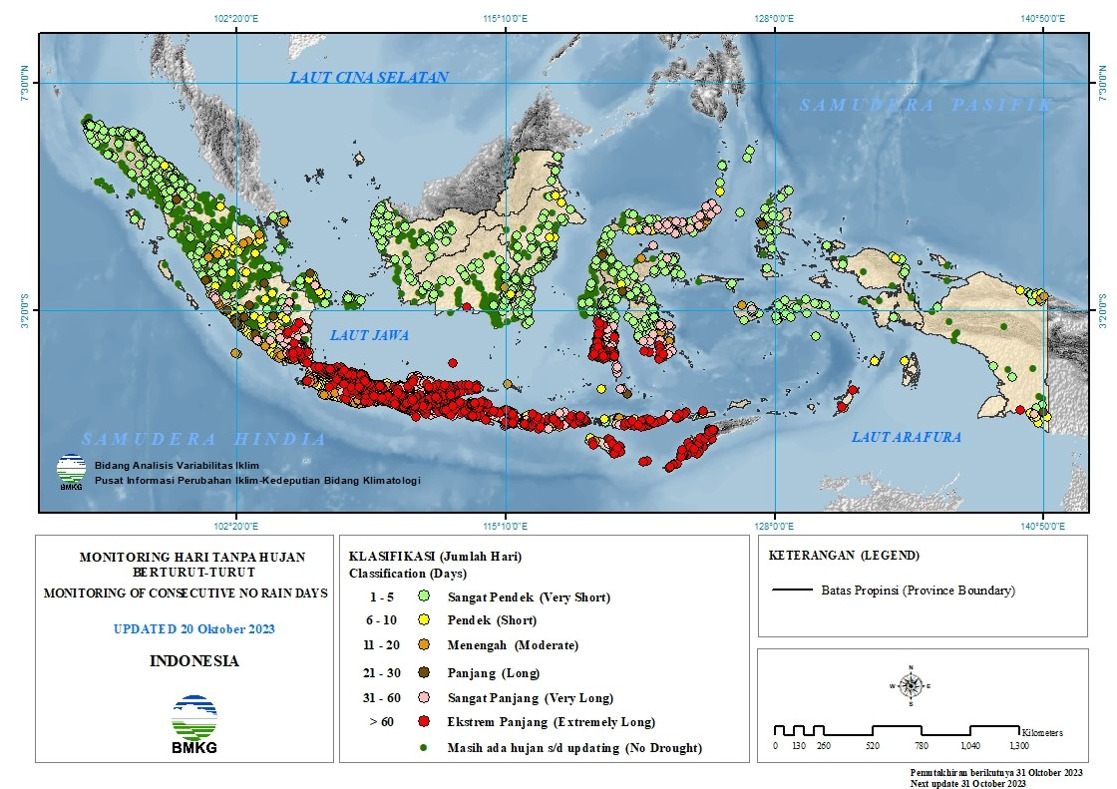
Source: BMKG
"The public is urged that during this October, as the conditions are still dry, even things not intentionally set on fire can catch fire. So, do not intentionally or unintentionally attempt to cause a flame because extinguishing it will be difficult," said Dwikorita in Jakarta on Tuesday (3/10).
Forest fires can disrupt natural ecosystems and threaten biodiversity. Organisms used to live in stable environments may face challenges adapting to rapidly changing conditions.
Climate change has been one of the main focuses of President Joko Widodo and the Indonesian government. Through the Ministry of Public Works and Public Housing, they are intensifying efforts to mitigate the impacts of El Niño. This includes initiatives like constructing dams, reservoirs, and bore wells.
"Countries and international organizations are even committed to reducing greenhouse gas emissions, such as carbon dioxide (CO2), methane (CH4), and nitrous oxide (N2O), which are the main causes of global warming. These efforts include reducing fossil fuels, improving energy efficiency, and increasing the use of renewable energy sources," explained the Meteorology and Climatology lecturer.
However, addressing this complex issue requires collaboration and heightened public awareness across various sectors.
"For example, in the field of education. Education and public awareness about climate change, renewable energy, and sustainable practices can change behaviors and lead to more environmentally friendly lifestyles," he said confidently.
The recent surge in complaints about the unusual heatwave prompted our meeting with Dr. Budi.
"Indeed, the current prolonged period of hot weather is unusual. Therefore, we need to recognize its impact on health, especially for vulnerable groups," explained Dr. Budi.
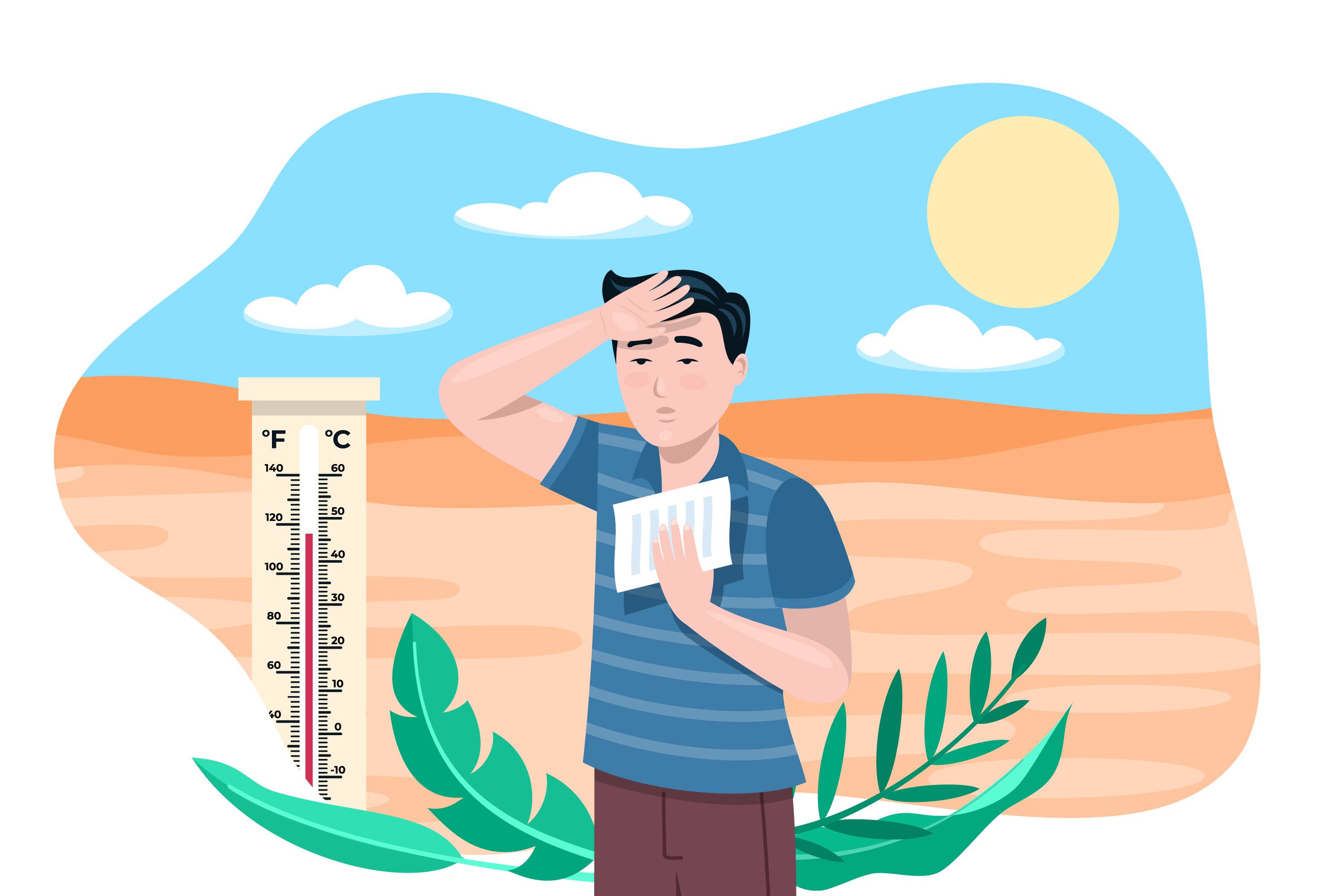
Our bodies will react to a rise in temperature by increasing blood flow to the skin, which carries heat from inside the body to the skin's surface. This process is what causes the body to sweat.
"It's important to remember that sweating can lead to losing body fluids and salt. This situation, combined with a drop in blood pressure, can increase the risk of a heart attack if blood pressure drops too much," he explained carefully.
Dr. Budi pointed out that without access to mitigating measures against the adverse effects of extreme heat, severe symptoms like heat stroke and heat exhaustion are likely to persist as significant threats.
"Heat stroke is a critical condition when the body temperature rises significantly, and the body loses the ability to regulate its temperature. It requires immediate medical attention! Otherwise, it can have life-threatening consequences," Dr. Budi emphasized.
Meanwhile, people engaged in strenuous outdoor activities often underestimate the adverse effects of extreme heat. Many of them consciously neglect to meet their daily water intake, even becoming oblivious when they notice their skin becoming dry.
"Never underestimate the need for regular hydration to avoid dehydration. It is also important to use high-SPF sunscreen to shield the skin from direct sun exposure," he added.
Dr. Budi's cautionary words prompted us to take a closer look at the groups most susceptible to the detrimental health effects of climate change.
"Children, infants, the elderly, individuals with chronic illnesses or obesity, and outdoor workers are the most vulnerable groups. It is advised to take precautionary measures such as wearing appropriate clothing, increasing water intake, and refraining from excessive outdoor physical activity during this time." said the Premedial Science and Homeostatic Block lecturer.
According to him, if the temperature reaches 40 degrees Celsius, nearly everyone's health would be at risk, as witnessed in several countries. As a result, he urged the Indonesian public to remember to apply the principle of stay cool, stay hydrated, and stay informed.
Writer: Genis Dwi Gustati
Editor: Al Habiib Josy Asheva
Translator: Farizal Luqman Majid
Prof. Andri Nirwana, S.TH., M.Ag., Ph.D., pioneered the Master of Al-Quran and Tafsir Studies as a first step in strengthening Quranic studies within Muhammadiyah.
Nothing’s more special than reading curated news just for you.
Subscribe to the UMS Newsletter for free today.