
How Sheep Manure Turns into Nutrient Rich Fertilizer
16 July 2026
Sheep dunged nutrient-rich organic fertilizer for plants, made with the help of maggots. Built on community empowerment and a zero-waste principle.



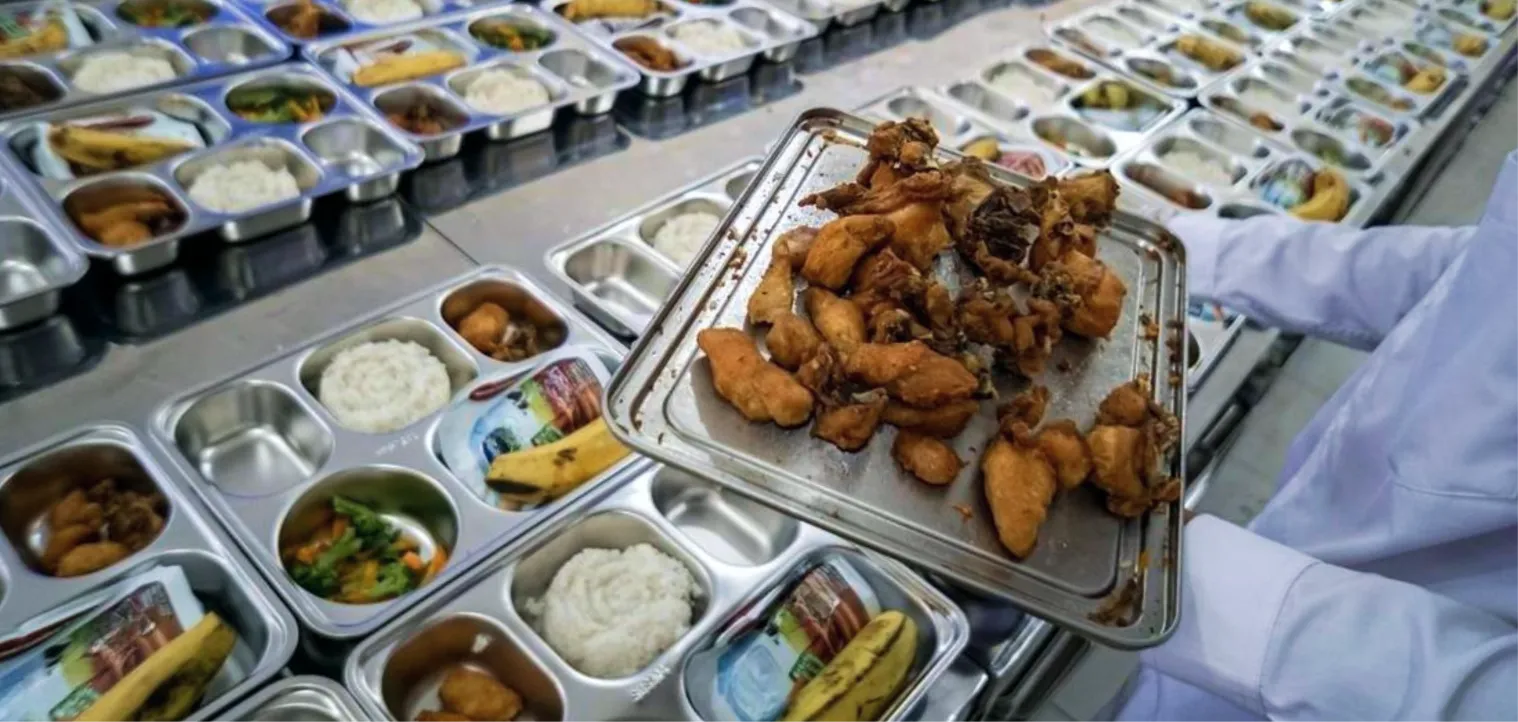
It has been eight months since the Free Nutritious Meals (MBG) program, President Prabowo Subianto’s flagship initiative, was launched. During this period, cases of food poisoning linked to the program have emerged in various regions of Indonesia.
Findings from the Institute for Development of Economics and Finance (Indef) revealed that more than 4,000 students have fallen victim to MBG poisoning in the past eight months. The cases involve students from kindergarten to senior high school levels.
One MBG poisoning case occurred in Kupang, East Nusa Tenggara, where 140 students of SMP Negeri 8 Kupang suffered food poisoning on July 22, 2025. They were rushed to three nearby hospitals after experiencing diarrhea, nausea, and vomiting.
Another case was reported in Bogor, West Java, where 210 students from kindergarten to junior high school were poisoned after consuming MBG meals. Twenty-two of them required intensive hospital care.
The local government, together with the National Nutrition Agency, quickly analyzed the MBG menu served that day in a laboratory. The results confirmed contamination with Escherichia coli (E. coli) and Salmonella.
These findings highlight the urgent need for government and public attention. The MBG program was designed to improve the quality of Indonesian students in the long run, supported by a significant allocation, 44.2 percent of the 2026 education budget.
Pramudya Kurnia, S.T.P., M.Agr., a nutrition science lecturer at Universitas Muhammadiyah Surakarta (UMS), expressed concern over the widespread MBG poisoning cases. He urged the government to immediately evaluate the program’s implementation.
The evaluation must involve health offices across Indonesia, Pramudya stressed. He noted that the government should also strengthen education for all stakeholders in the MBG supply chain.
“If possible, local health offices should be present at Nutrition Service Units (SPPG) to carry out evaluations and provide recommendations,” Pramudya said on Thursday (18/9/2025).
He believed that weak supervision of mass food management systems is one of the root causes of MBG poisoning cases. Pramudya urged the government to take swift measures by auditing raw materials and vendors, providing training and certification for kitchen staff, and implementing standardized production and distribution processes.
“Training on food hygiene and safety must be mandatory. There also needs to be a proper checklist for food ingredients, including strict attention to expiration dates,” he explained.
According to him, even a single case of MBG poisoning must be taken seriously if the program is to achieve its ultimate goal: producing lasting added value in Indonesia’s human resources. Strong commitment from the central government, he added, will be the key to ensuring that MBG evaluations hit the mark.
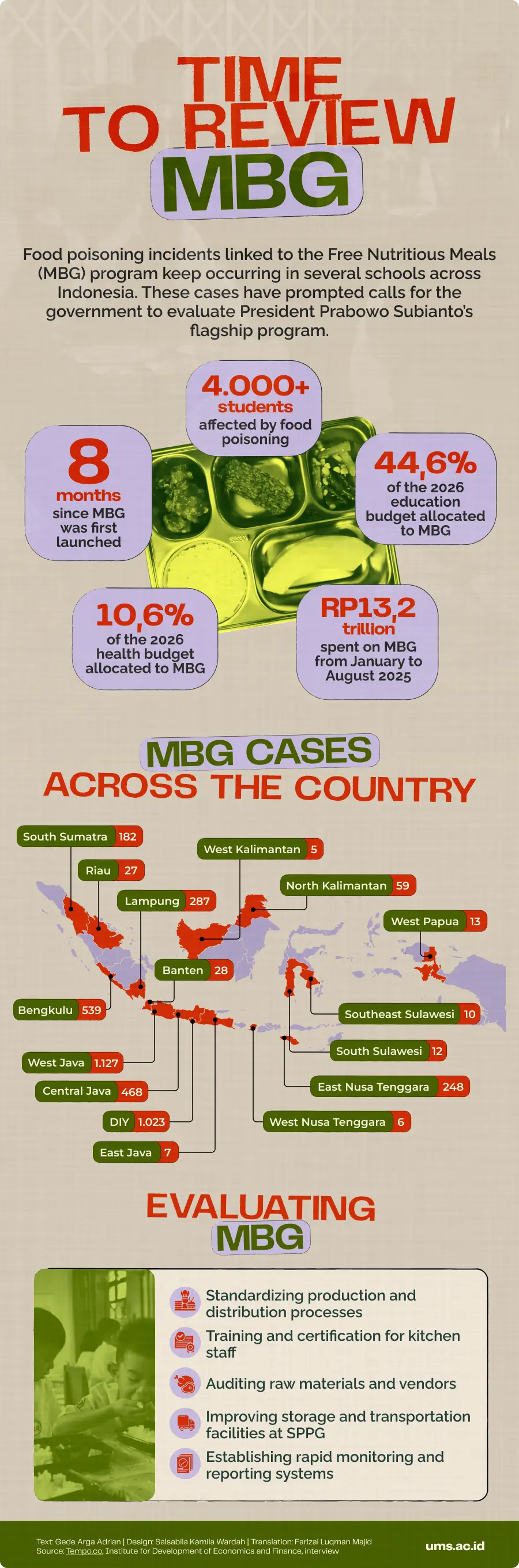
The poisoning cases affecting more than 4,000 students across Indonesia have raised questions. Why have these incidents persisted over the past eight months?
Food poisoning linked to the MBG program is believed to stem from several factors: microbiological contamination, chemical contamination, improper food processing and storage, and excessive delays between cooking and serving.
Pramudya explained that microbiological contamination can occur at various stages of the MBG supply chain, from harvesting ingredients, to distribution to MBG kitchens, to final serving to students.
“Contamination can occur in all food products. But animal-based products are usually the most vulnerable,” he said.
Animal-based foods such as chicken, beef, and fish are especially sensitive because they contain high levels of water and protein, creating an ideal environment for microorganisms to thrive.
Chemical contamination is another risk factor. According to Pramudya, this can result from pesticide residues in vegetables and fruits.
It can also come from the misuse of food additives, such as artificial seasonings used in excessive amounts.
Improper food handling further compromises quality. This includes the use of unsterilized cooking utensils, dirty tableware, contaminated water, and careless storage of raw ingredients.
Pramudya also noted that long gaps between cooking and serving contribute to declining food quality. To feed thousands of MBG participants, SPPG often begins cooking at dawn, even though the meals are not consumed until midday.
“As far as I recall, the National Nutrition Agency has set a rule of no more than four hours between cooking and consumption,” Pramudya said.
MBG poisoning cases must be treated with utmost seriousness. Pramudya urged SPPG and the National Nutrition Agency to ensure that sourcing of raw materials follows proper procedures.
It is important to adhere to the need for strict separation in storage areas as soon as ingredients arrive at MBG kitchens. “Fresh items such as meat must be stored separately from other ingredients,” he added.
Cooking, too, must be handled carefully. Cooks should assess the condition of ingredients before processing and ensure that MBG meals are thoroughly cooked to eliminate harmful microbes.
Food packaging should not be rushed. Pramudya advised allowing meals to cool before sealing. Closing containers while food is still hot traps steam, which accelerates spoilage before it reaches the students.
“The distribution process from SPPG to schools must also be ensured not to exceed 30 minutes,” he stressed.
Writer: Gede Arga Adrian
Translator: Farizal Luqman Majid
Editor: Al Habiib Josy Asheva
Sheep dunged nutrient-rich organic fertilizer for plants, made with the help of maggots. Built on community empowerment and a zero-waste principle.
Nothing’s more special than reading curated news just for you.
Subscribe to the UMS Newsletter for free today.