
The Scholar Behind UMS's Master's Program in IQT
27 July 2026
Prof. Andri Nirwana, S.TH., M.Ag., Ph.D., pioneered the Master of Al-Quran and Tafsir Studies as a first step in strengthening Quranic studies within Muhammadiyah.



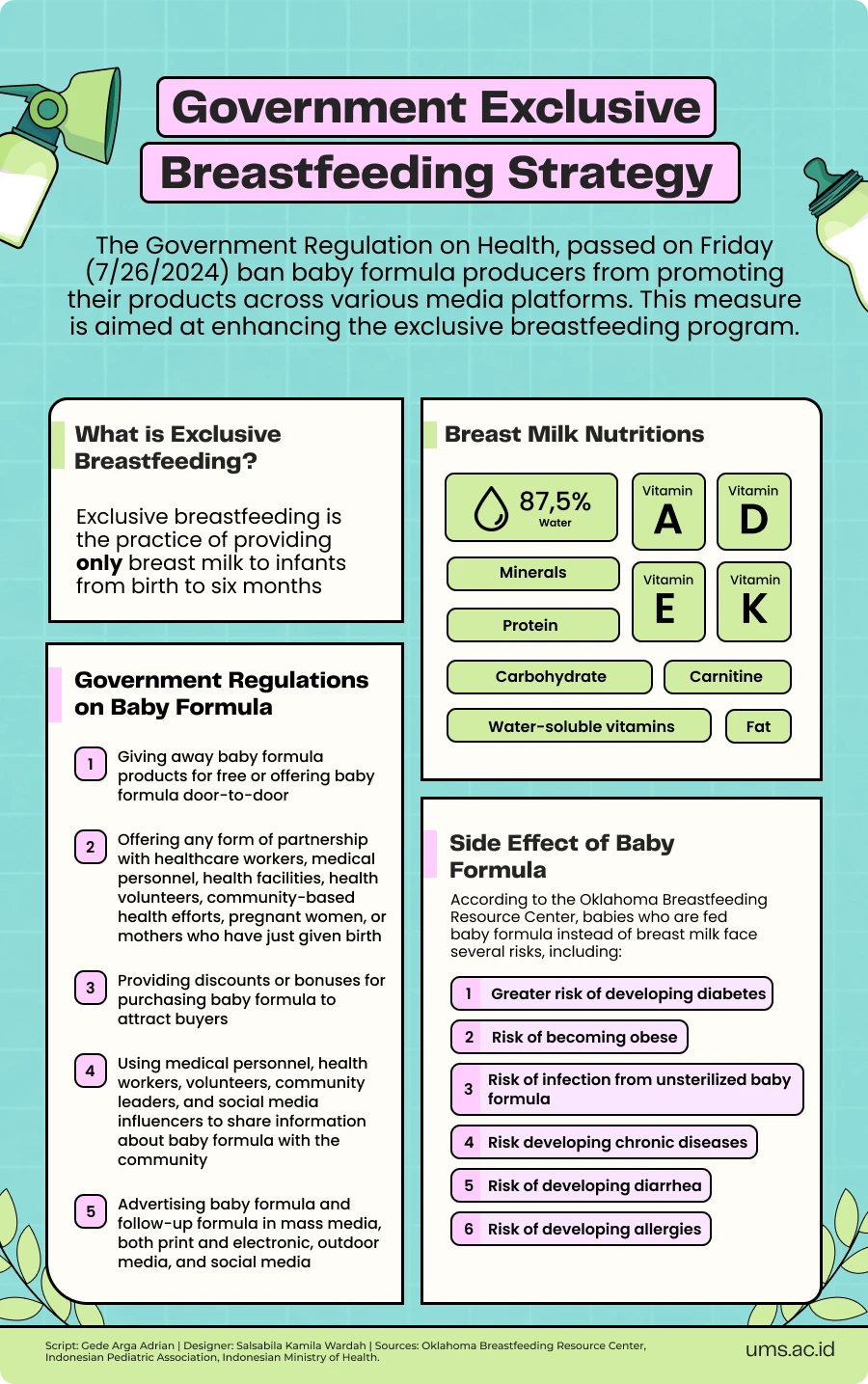
The government has prohibited baby formula manufacturers from advertising their products across various media platforms. This regulation is outlined in Government Regulation No. 28/2024, implementing Law No. 17/2023 on Health, signed by President Joko Widodo (Jokowi) on Friday (7/26/2024).
The regulation ensures that babies are provided with exclusive breast milk during the first six months of life. The Health Regulation also prohibits healthcare professionals from giving baby formula to newborns, as this can interfere with exclusive breastfeeding.
The prohibition is outlined in Article 31, Paragraph 1, which states, “Every Health Service Facility, Community-based Health Efforts, Medical Personnel, Health Workers, and Health cadres are prohibited from providing infant formula and/or other breast milk substitute products that can hinder exclusive breastfeeding.”
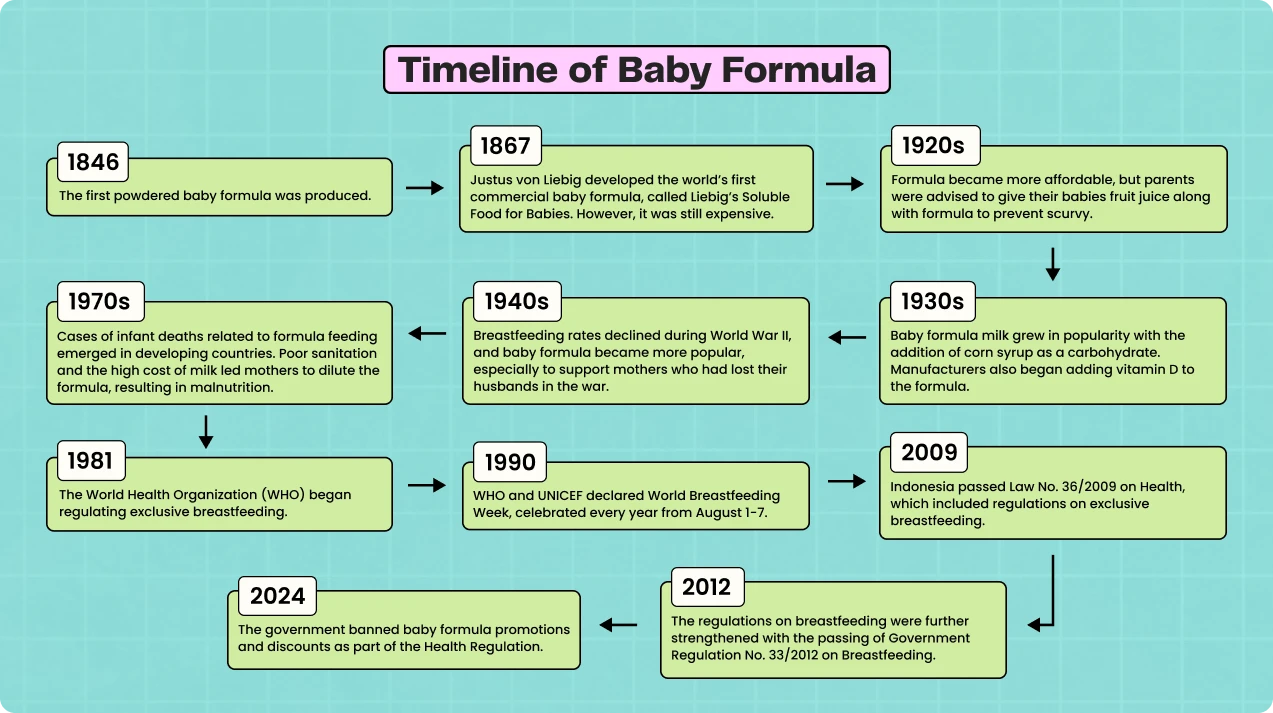
Responding to the ratification of the Health Regulation, Siti Nurokhmah, S.Gz., M.Sc., a maternal and child nutrition expert from Universitas Muhammadiyah Surakarta (UMS), stated that the Health Regulation is an update of previous regulations, such as Law Number 36 of 2009 concerning Health and Government Regulation Number 33 of 2012 concerning Breastfeeding.
Siti welcomed the ratification of the regulation. “It’s like the regulation has been strengthened. The regulation not only supports exclusive breastfeeding but also emphasizes providing quality breast milk substitute for children aged 0 to 2 years,” said the lecturer, who graduated from the London School of Hygiene & Tropical Medicine, University of London.
Exclusive breastfeeding is the practice of providing only breast milk to infants from birth to six months. Indonesia began promoting exclusive breastfeeding in 2009 and intensified these efforts in 2012 by enacting Government Regulation No. 33/2012 on Breastfeeding.
Exclusive breastfeeding is highly beneficial for a baby’s growth. According to the Indonesian Pediatric Association (IDAI), breast milk comprises 87.5 percent water. It contains essential nutrients such as carbohydrates, protein, fat, carnitine, and vitamins like K, D, E, and A. It also includes water-soluble vitamins and minerals, providing comprehensive nourishment for infants.
The World Health Organization (WHO) reported that Indonesia’s exclusive breastfeeding coverage in 2022 was only 67.96 percent, a decline from the 69.7 percent recorded in 2021.
The WHO states that only 20 percent of countries worldwide, including Indonesia, require employers to provide paid maternity leave and breastfeeding and milk pumping facilities. This should ideally help improve exclusive breastfeeding rates.
Siti emphasized that maternity leave provides mothers the necessary time to recover after childbirth. “We all know that the success of breastfeeding is greatly influenced by the physical and mental condition of the mother,” she said.
The availability of lactation rooms in workplaces and public areas is crucial for allowing mothers to breastfeed comfortably and safely during their daily activities. This hospitality helps maintain a consistent breast milk supply, ensuring that babies continue to receive exclusive breastfeeding even after the mother has resumed her activities. Additionally, providing a lactation room in the workplace can significantly reduce stress levels for mothers, and further promote successful breastfeeding.
One of WHO’s strategies to boost exclusive breastfeeding rates is the annual World Breastfeeding Week campaign, held during the first week of August. This year, the message is “Together, support mothers to successfully breastfeed and work,”
To Siti, the prohibition of formula feeding in the Health Regulation becomes the step to promote exclusive breastfeeding. However, she believed that the ratification of this regulation must be supported by improvements in healthcare quality and increased community education.
Health services are crucial in ensuring the smooth recovery of mothers and babies after childbirth. Medical personnel must recognize the importance of early initiation breastfeeding (IMD) by keeping mothers and their newborns together in the early days following birth.
Read also: A Lifelong Gift in a Breast Milk
A takeaway is that healthcare workers must be more competent in handling cases of delayed breast milk production. Siti explained that in some instances, breast milk may not flow immediately within the first one or two days after delivery. This condition, she noted, is normal, as the mother requires stimulation from the baby to start producing milk.
“Sometimes, many people are unaware of this. That’s where the strategic role of health workers comes in and provides education and motivates the mother,” said the UMS Nutrition Science lecturer.
Education for the family must also be emphasized, as family members often do not fully understand the condition of the mother and baby after childbirth. For instance, in some cases, when a baby cries, uninformed family members might assume the baby is hungry and needs breast milk immediately.
The lack of awareness within some families about the mother and baby’s condition after childbirth often leads to the quick decision to give baby formula. “People may choose this instant route, even though a crying baby isn’t necessarily hungry,” Siti added.
In certain situations, babies may need to receive breast milk substitutes if the mother is unable to breastfeed due to specific conditions, such as medical complications, passing away, or separation from the baby.
Siti provided an example of a mother who is unable to produce breast milk. The initial step to address this issue is relactation, which involves bringing the baby closer to the mother’s breast to stimulate milk production.
The mother should also consult a lactation counselor to discuss her condition and receive guidance. If milk production still doesn’t occur, the next emergency step is to seek a breast milk donor.
Donor breastfeeding is governed by Article 27 of the Health Government Regulation. The requirements for donor breast milk include:
If breast milk donors are unavailable, the last resort is to provide baby formula. However, this should only be done under a doctor’s supervision and with proper guidance. Instead of using a traditional bottle with a nipple, baby formula should be given to the baby through a tube attached to the mother’s breast. This method allows the baby to stimulate the mother’s breast, which can help promote natural milk production.
“Mother should continue attempting to produce breast milk even if they use baby formula,” Siti advised. If breast milk begins to flow, formula or donor milk should be discontinued, transitioning fully to exclusive breastfeeding. “Typically, the milk will start coming out within a few days,” she added.
Writer: Gede Arga Adrian
Editor: Al Habiib Josy Asheva
Translator: Farizal Luqman Majid
Prof. Andri Nirwana, S.TH., M.Ag., Ph.D., pioneered the Master of Al-Quran and Tafsir Studies as a first step in strengthening Quranic studies within Muhammadiyah.
Nothing’s more special than reading curated news just for you.
Subscribe to the UMS Newsletter for free today.