
How Sheep Manure Turns into Nutrient Rich Fertilizer
16 July 2026
Sheep dunged nutrient-rich organic fertilizer for plants, made with the help of maggots. Built on community empowerment and a zero-waste principle.



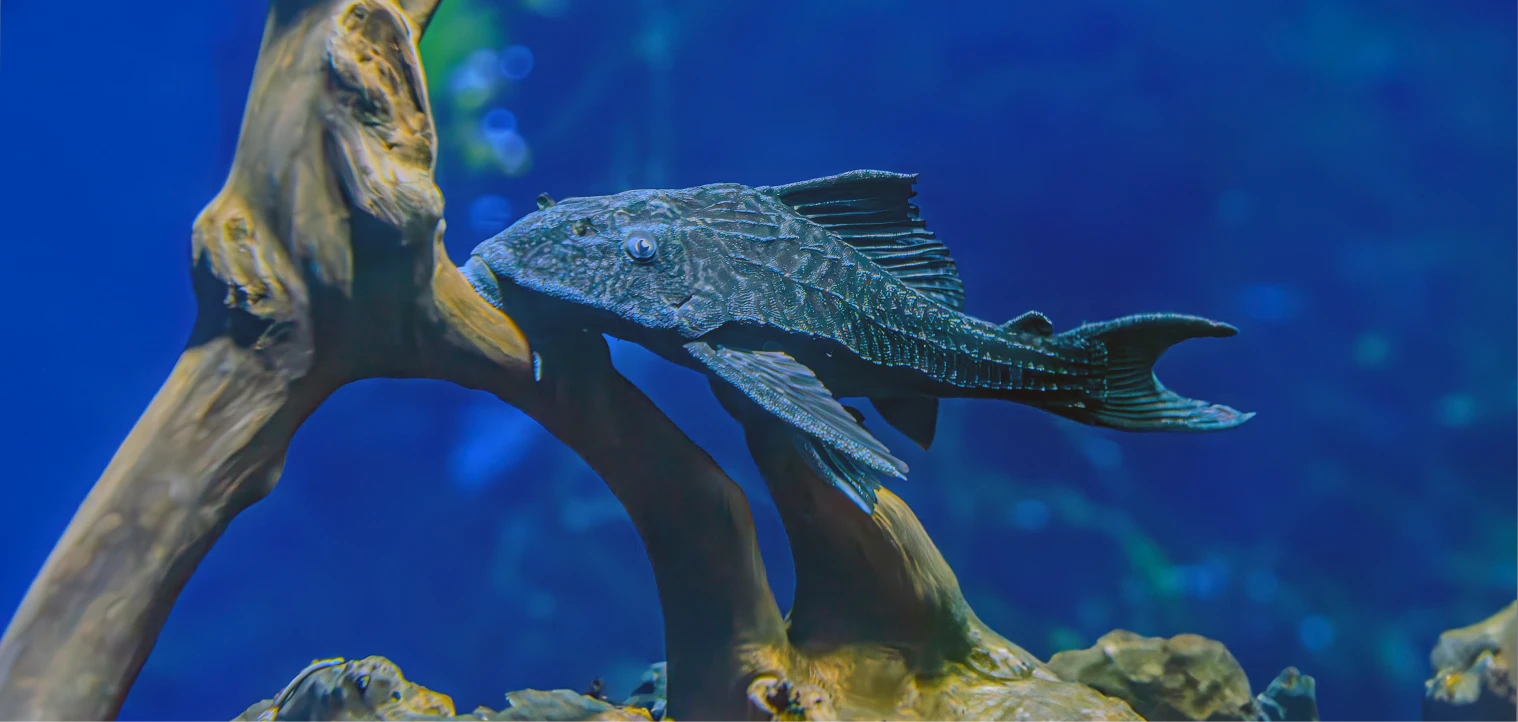
Pleco are an invasive species now commonly found in rivers across Indonesia. In recent times, growing numbers of people have begun hunting them in an effort to restore river ecosystems
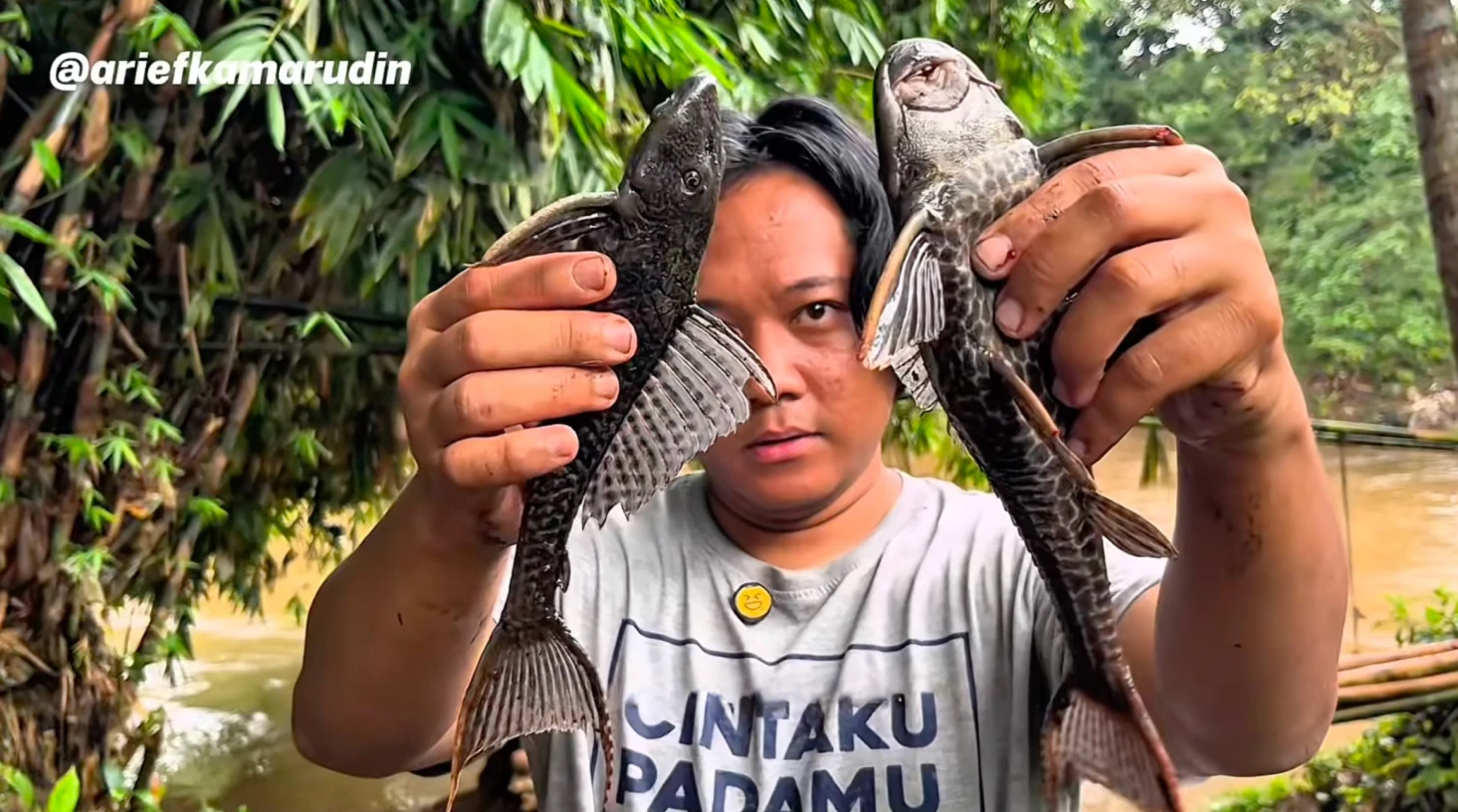
The hunting of pleco is nothing new, but the activity drew widespread attention after content creator Arief Kamarudin shared footage of his hunting trips on social media.
Arief Kamarudin, 34, is an environmental activist from Lenteng Agung, Jagakarsa, South Jakarta. He regularly dives into the Ciliwung River and several other Jakarta waterways to eradicate common pleco.
"I grew up playing by the Ciliwung River. Every time I tried to catch fish to eat, I kept pulling out common pleco. There were just so many of them," Arief said on the Close The Door podcast, as quoted on Thursday (30/4/2026).
The fish Arief catches are mostly disposed of by burying or burning. That method of disposal caught the attention of many online viewers.
Most praised Arief's efforts to protect the Ciliwung River ecosystem. Others, however, were critical, arguing the approach was cruel to animals.
The content struck enough of a chord to move the Jakarta Provincial Government to act. A campaign to combat suckermouth catfish in the Ciliwung River was launched on Friday (17/4/2026), involving local residents, the city's orange-uniformed sanitation workers, the Ministry of Marine Affairs and Fisheries, and the Indonesian Armed Forces.
According to a report from the Jakarta Food Security, Marine, and Agriculture Agency, common pleco now dominate 60 percent of Jakarta's waterways, a dominance driven largely by the species' reproductive capacity.
The common pleco is a species native to the Amazon River in South America, where it typically inhabits fast-flowing waterways. It is no surprise that the fish is equipped with a mouth capable of suctioning along the riverbed to hold its ground against strong currents.
Dra. Hariyatmi, M.Si., a Zoology lecturer from the Biology Education program at Universitas Muhammadiyah Surakarta (UMS), explained that the common pleco entered Indonesia through the ornamental fish trade, where it was sold as an aquarium cleaner.
The common pleco's diet consists of algae, moss, and detritus. In the wild, it also feeds on animal carcasses.
"This fish has a tremendous appetite, using the disc-like structure in its mouth to feed. It is this cleaning behavior that gave the fish its Indonesian name, ikan sapu-sapu, meaning sweeper fish," Hariyatmi explained on Thursday (30/4/2026).
The fish can grow up to 50 to 60 centimeters, making it far too large for most aquarium tanks. The common pleco invasion in Jakarta's waterways is believed to have started with aquarium owners releasing the fish into rivers once it outgrew their tanks.
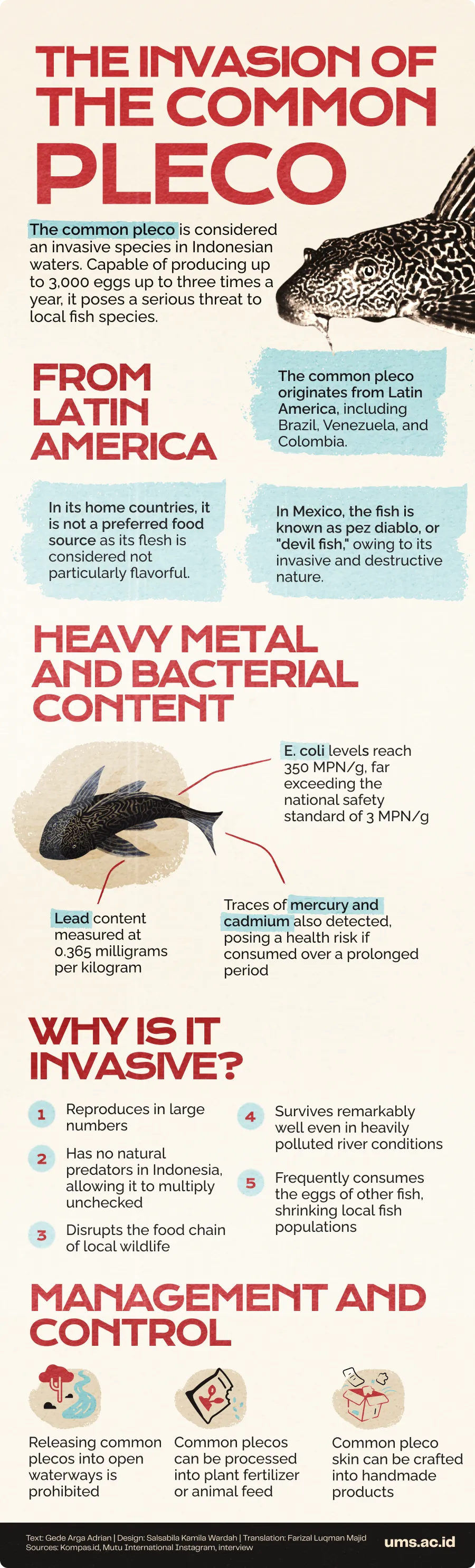
So can common plecos be eaten? The answer is yes, though cooking them has never caught on widely. Even in their countries of origin, such as Brazil and Venezuela, common plecos are not a popular food source, as their flesh is considered less flavorful than other fish.
Why is the common pleco considered a pest?
It is a question many netizens have raised in response to the Jakarta Provincial Government's efforts to tackle the species.
The common pleco became an invasive pest in Indonesia because it has no natural predators here. In its native Amazon River habitat, the common pleco is kept in check by natural predators including the common snook (Centropomus undecimalis), tarpon (Megalops atlanticus), spectacled caiman (Caiman crocodilus), and neotropic cormorant (Phalacrocorax brasilianus).
The common pleco also reproduces at a massive scale. A single fish is estimated to produce up to 3,000 eggs per reproductive cycle, and some researchers believe the species can reproduce up to three times a year.
Hariyatmi noted that male common plecos are capable of digging burrows into riverbanks to protect the female's eggs. "The fish dig using their bodies, which are covered in hard, bone-based scales," she explained.
Most fish in the Ciliwung River lay their eggs in hollows along the riverbed. Unfortunately, common plecos frequently consume the eggs of local fish species, contributing to a decline in native fish populations in the river.
The common pleco is also remarkably resilient in extreme environments. The Ciliwung River is one example of a Jakarta waterway heavily polluted by waste, a consequence of development that has long disregarded environmental concerns.
Jakarta's Food Security, Marine, and Agriculture Agency (KPKP) tested the water quality of the Ciliwung River. As reported by Harian Kompas, the river's water contains lead levels ranging from 0.069 to 0.102 milligrams per liter (mg/L), exceeding the quality standard of 0.03 mg/L. Mercury levels were recorded at 0.006 to 0.101 mg/L, surpassing the standard of 0.002 mg/L. Cadmium levels of 0.031 to 0.05 mg/L were also detected, exceeding the threshold of 0.01 mg/L.
Despite these conditions, the common pleco continues to thrive. Hariyatmi explained that the fish is able to modify its stomach to aid breathing in oxygen-depleted water. "This fish is extremely tough when it comes to survival," she said.
The methods used by Arief Kamarudin and the Jakarta Provincial Government to eradicate common plecos drew criticism from several parties. Among them was the Indonesian Ulema Council (MUI), which argued that burying the fish alive was not in accordance with Islamic law, as it prolongs the animal's death. That said, the MUI still acknowledged the good intentions behind the Jakarta Provincial Government's efforts to protect the aquatic ecosystem.
Hariyatmi, meanwhile, believed there is a better path forward: finding ways to process common plecos into useful materials by identifying the economic value they can offer.
The flesh of the common pleco can be processed into animal feed. Its thick skin has potential as a material for bags and wallets. Other parts of the fish can be turned into liquid fertilizer.
"However, the flesh needs to be tested first to determine whether it contains harmful substances, given that this fish is capable of consuming virtually anything found in the river," she stressed.
Recent research conducted by Arief Kamarudin in collaboration with the Mutu International laboratory found E. coli levels in the fish reaching 350 MPN/g, far exceeding the national safety standard of 3 MPN/g. Lead content was measured at 0.365 milligrams per kilogram. Traces of other heavy metals, including mercury and cadmium, were also detected in small amounts, though these still pose a health risk if consumed over a prolonged period.
Hariyatmi also urged both local and central governments to take firm action against the release of common plecos into open waterways. At the same time, she called on Indonesian academics to research strategies that could inhibit the common pleco's reproduction without resorting to killing the fish outright.
"Research could also be conducted on ways to inhibit common pleco reproduction without killing them. This could involve preventing egg fertilization or stopping eggs from hatching," she said.
Writer: Gede Arga Adrian
Translator: Farizal Luqman Majid
Editor: Al Habiib Josy Asheva
Sheep dunged nutrient-rich organic fertilizer for plants, made with the help of maggots. Built on community empowerment and a zero-waste principle.
Nothing’s more special than reading curated news just for you.
Subscribe to the UMS Newsletter for free today.