
How Sheep Manure Turns into Nutrient Rich Fertilizer
16 July 2026
Sheep dunged nutrient-rich organic fertilizer for plants, made with the help of maggots. Built on community empowerment and a zero-waste principle.



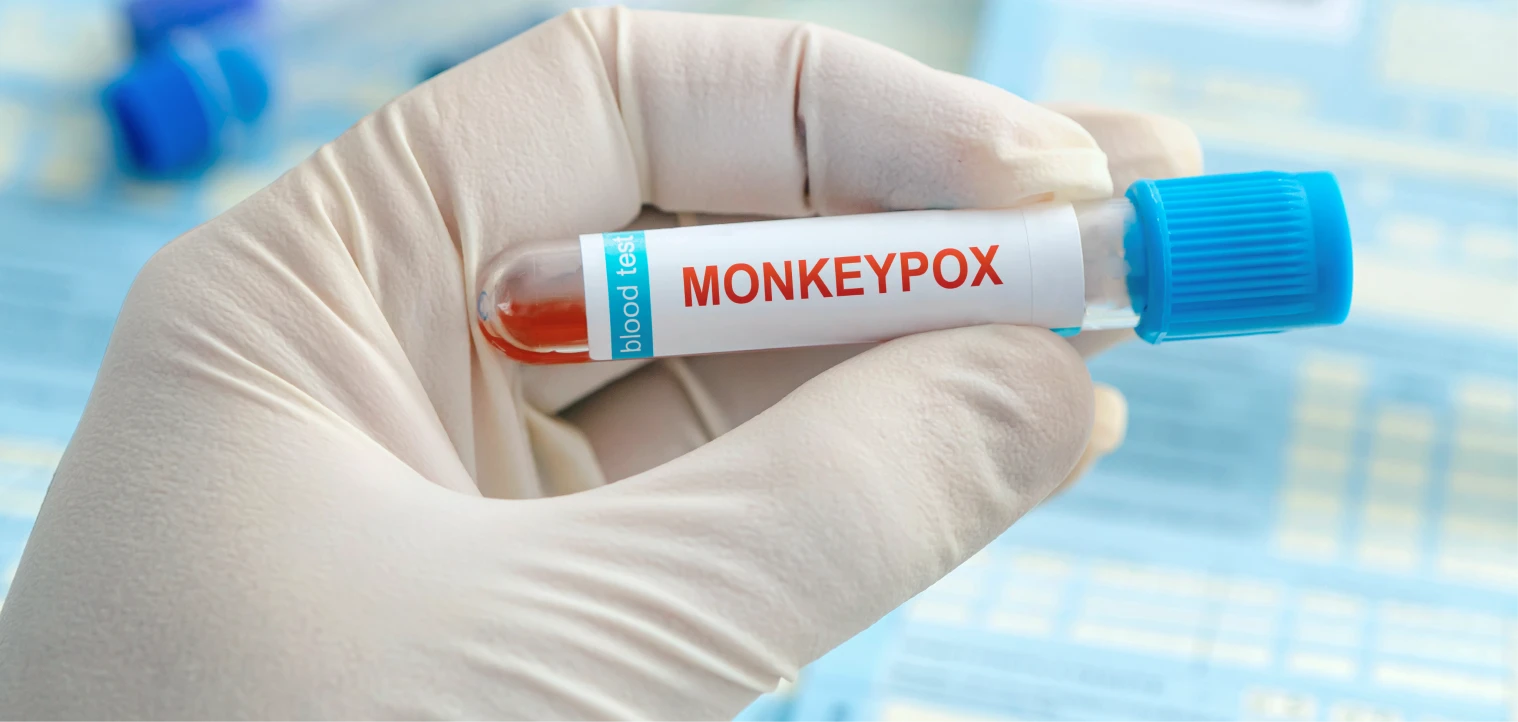
Recently, netizens have been alarmed by the spread of monkeypox (Mpox) news across the internet. The Indonesian Ministry of Health (Kemenkes) reported 88 cases of Mpox in the country. So, what exactly is Mpox?
Monkeypox is a disease caused by the monkeypox virus (MPXV), a zoonotic virus, meaning it originates in animals and can be transmitted to humans. Dr. Yuli Kusumawati, S.K.M., M.Kes., a social and behavioral epidemiologist from Universitas Muhammadiyah Surakarta (UMS), explained that the MPXV virus is an enveloped double-stranded DNA virus belonging to the genus Orthopoxvirus in the Poxviridae family.
The monkeypox virus belongs to the same family as the variola virus, cowpox, and vaccinia virus. “There are two genetic clades (taxonomic groups) of the Mpox virus: clades I and II,” Dr. Yuli Kusumawati explained when contacted via WhatsApp on Thursday (8/22/2024).
Yuli explained that Mpox can be transmitted in several ways, including physical contact with an infected person, exposure to saliva droplets from someone with Mpox, contact with materials contaminated with the virus, or contact with infected animals.
"Person-to-person transmission of monkeypox can occur through direct contact with the patient’s skin or lesions, such as in the mouth or genitals,” Yuli added. Some ways the monkeypox virus can be transmitted via:
Yuli, who also serves as the Head of the UMS Public Health Program, emphasized that the spread of monkeypox is indiscriminate. “Anyone can be at risk of contracting monkeypox. Children, pregnant women, and people with weakened immune systems are particularly vulnerable to developing Mpox complications,” she explained.
The epidemiologist explained that monkeypox symptoms typically begin within a week of exposure but can appear anywhere between 1 and 21 days afterward. These symptoms usually last for two to four.
Symptoms of monkeypox include:
“Symptoms of monkeypox can last longer in someone with a weak immune system,” she said.
So, does monkeypox cause death? According to Yuli, it can be fatal. Referring to data from the World Health Organization (WHO), the mortality rate (Case Fatality Rate) for the subclade Ib virus, which is primarily transmitted through sexual contact, is 11 percent. Meanwhile, clade II, originating in West Africa with subclades IIa and IIb, has a CFR of 3.6 percent.
However, the public does not need to worry. Yuli explained that monkeypox can be cured, and symptoms often disappear on their own, though some people may experience complications. Treatment focuses on managing the rash, alleviating pain, and preventing complications. Early and supportive care are also important to help manage symptoms and avoid further issues.
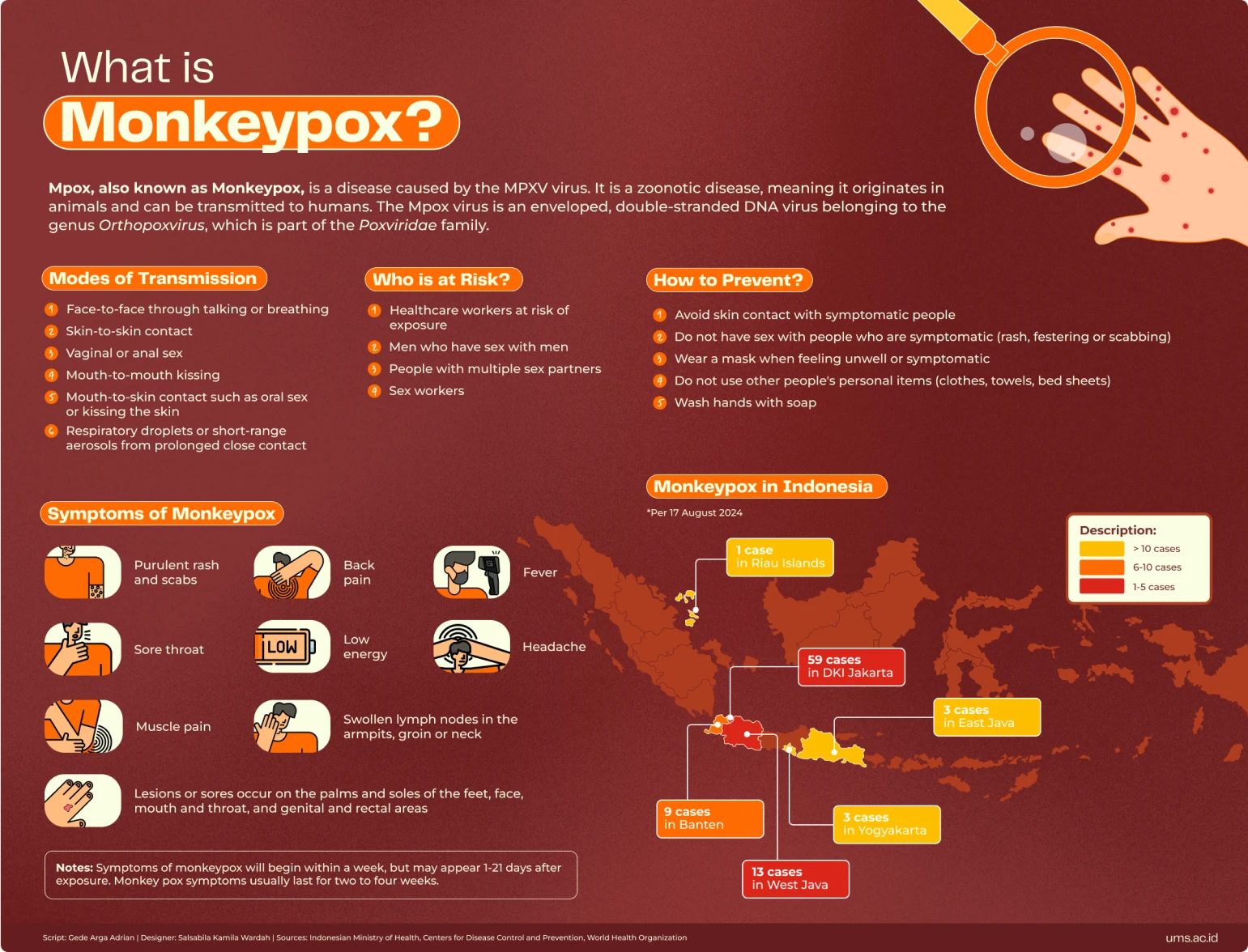
According to the Ministry of Health, there were 88 cases of monkeypox in Indonesia as of Saturday, August 17, 2024. Quoting the Ministry of Health's website, 59 cases occurred in DKI Jakarta, 13 in West Java, 9 in Banten, 3 in East Java, 3 in DI Yogyakarta, and 1 in the Riau Islands.
Of these, 87 cases have been declared cured. Looking at the weekly trend of confirmed Mpox cases in Indonesia from 2022 to 2024, the period with the most cases occurred in October 2023.
Plh. Director General of Disease Prevention and Control (P2P) Ministry of Health dr. Yudhi Pramono, M.A.R.S., said that of the 88 confirmed cases, 54 cases met the criteria for whole genome sequencing (WGS) to determine the virus variant.
"All 54 of these cases are Clade IIB variants," said Dr. Yudhi at a press conference on the Development of Mpox Cases in Indonesia on Sunday, August 18, 2024. "Clade II has been the majority of Mpox outbreaks from 2022 to date. It has a lower fatality rate and is primarily transmitted through sexual contact."
In light of these cases, Yuli emphasized the importance of public compliance with regulations to break the chain of Mpox transmission. “When the government issues alert information, the community should respond by strictly following government regulations and policies to stop the spread,” she said.
As of now, the WHO has issued an alert. On Wednesday, August 14, 2024, the WHO Director-General declared monkeypox a Public Health Emergency of International Concern (PHEIC) under the International Health Regulations (2005), due to the rising number of cases in the Democratic Republic of Congo (DRC) and several other African countries.
The PHEIC declaration was influenced by the emergence and rapid spread of a new Clade Ib virus strain in the DRC. It is likely that the virus has spread across Africa and possibly beyond.
“If the WHO has declared monkeypox an international public health emergency, then all countries should be prepared and implement policies to prevent the virus from spreading and causing more infections in Indonesia,” she continued.
Monkeypox can be prevented by avoiding physical contact with individuals who have the virus. Additionally, vaccination is available to protect those at risk from infection.
Yuli mentioned that the vaccine should be administered within four days of contact with someone who has Mpox, or within up to 14 days if no symptoms have appeared. Vaccination is especially recommended for people at high risk of infection, particularly during an outbreak. According to WHO, some of the individuals at higher risk of contracting Mpox include:
To prevent the transmission of monkeypox, the following precautions can be taken:
"If you experience symptoms, seek medical attention at a health center or hospital immediately. Be sure to cover any wounds or scabs with gauze to prevent spreading the infection to others," Yuli concluded the interview.
Writer: Gede Arga Adrian
Editor: Al Habiib Josy Asheva
Translator: Farizal Luqman Majid
Sheep dunged nutrient-rich organic fertilizer for plants, made with the help of maggots. Built on community empowerment and a zero-waste principle.
Nothing’s more special than reading curated news just for you.
Subscribe to the UMS Newsletter for free today.