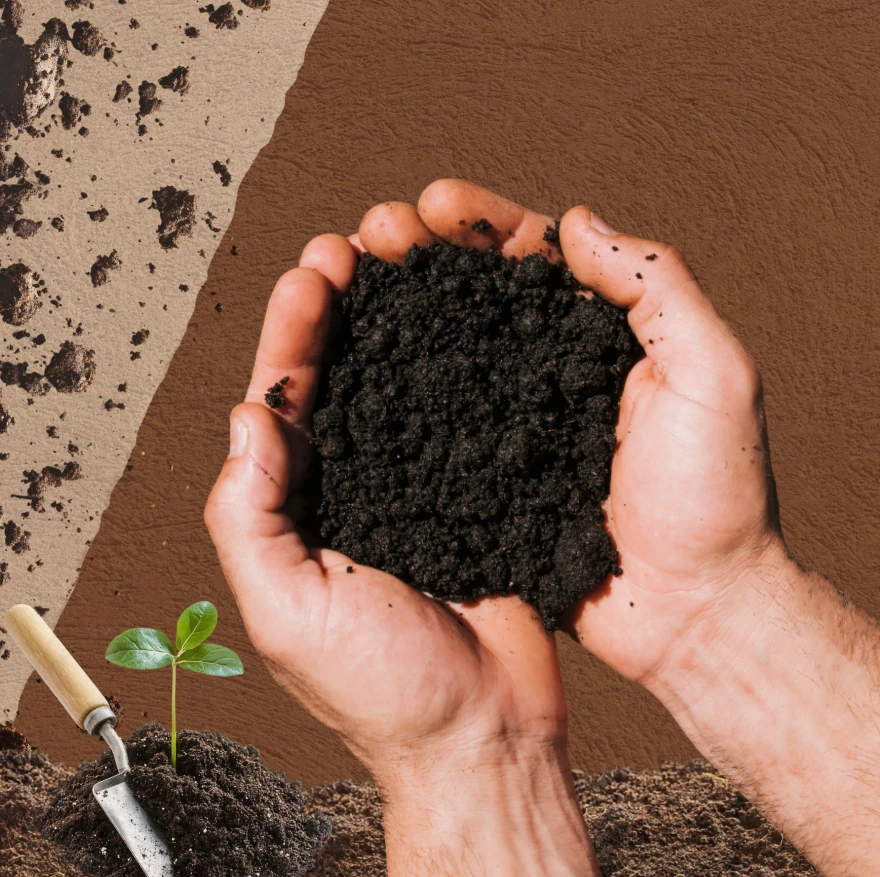
How Sheep Manure Turns into Nutrient Rich Fertilizer
16 July 2026
Sheep dunged nutrient-rich organic fertilizer for plants, made with the help of maggots. Built on community empowerment and a zero-waste principle.



At the end of 2024, President Prabowo Subianto made a statement that sparked controversy. “There’s no need to be afraid of what they call dangerous deforestation. Palm oil trees are still trees, right?” Prabowo said while attending the National Development Forum.
The remark raised concerns among environmental activists regarding the risks of deforestation and prolonged agrarian conflicts. His statement seemed to signal that land clearing for palm oil plantations would continue.
The Indonesian Forum for the Environment (Walhi), in an interview with BBC Indonesia, suspected the president’s statement was linked to the government’s push for biodiesel production, a program heavily promoted during the 2024 presidential campaign.
“But the claim that palm oil has no direct connection to deforestation coming from the mouth of a president, that’s shocking,” said Walhi forest and plantation campaigner, Uli Arta Siagian, to BBC Indonesia, quoted on Friday (12/12/2025).
Nearly a year later, the fears of environmental activists have become reality. Cyclone Senyar, which swept across Sumatra, devastated three provinces at the island’s northern tip: Aceh, North Sumatra, and West Sumatra.
Climate expert from the National Research and Innovation Agency (BRIN), Erma Yulihastin, explained that Cyclone Senyar should not have reached catastrophic levels, given its relatively low energy. “Extreme weather only contributes about 20 percent,” Erma wrote on her official X account, quoted on Thursday (11/12/2025).
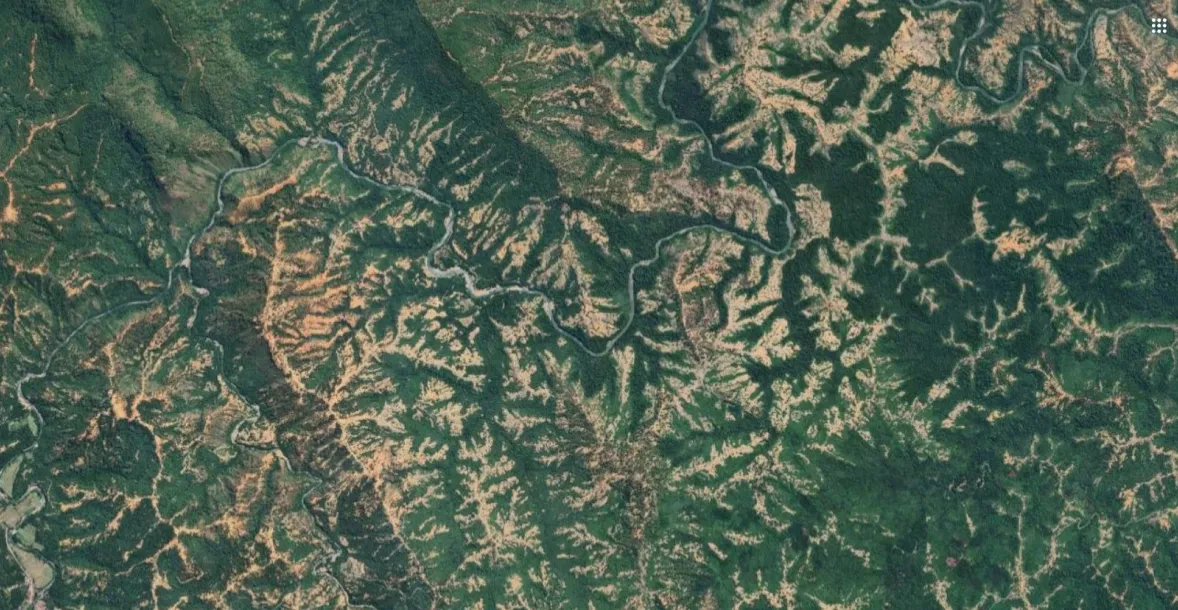
Deforestation is believed to be the main factor that worsened the impact of Cyclone Senyar. A report from MapBiomas Indonesia to IDN Times revealed that the rate of deforestation across the three affected provinces tripled throughout 2024–2025.
Forest cover in Aceh decreased from 3,413,709 hectares to 3,395,970 hectares, while palm oil plantations expanded significantly, from 455,250 hectares to 628,697 hectares.
West Sumatra experienced forest loss from 2,424,687 hectares to 2,400,294 hectares, while palm oil plantation areas rose from 515,253 hectares to 569,183 hectares. A similar pattern occurred in North Sumatra, where palm oil plantations increased from 1,972,640 hectares to 2,115,976 hectares.
“Deforestation indeed surged. This is the last warning that we must stop destroying natural forests, and it also signals the urgency of restoring areas that have already been damaged,” said MapBiomas Indonesia Team Leader, Timer Manurung, quoted by IDN Times on Thursday.
So, can oil palm trees replace the role of forests, as Prabowo suggested? Ecologist from Universitas Muhammadiyah Surakarta (UMS), Dr. Santhyami, S.Si., M.Si., explained that oil palm cannot replace the ecological functions of natural forests.
Oil palm is a plant with fibrous roots. These roots can only penetrate about 50 centimeters into the soil, much shallower than taproot trees, whose roots can reach depths of up to 5 meters.
Such fibrous roots are not strong enough to loosen the soil. As a result, the soil lacks sufficient pores for air and water to enter. The impact becomes clear during heavy rain: the water cannot immediately seep into the ground.
“It (oil palm) cannot store or retain water as well as hardwood species like meranti, pulai, or other forest trees,” explained Santhy, XXXX.
In addition to its poor water-retention capacity, the oil palm is often considered an “arrogant” plant because it can only be cultivated in monoculture systems. When planted together with hardwood species in the same area, oil palm loses the competition. “Oil palm roots cannot absorb nutrients in large quantities like woody plants can,” she added.
This monoculture system results in oil palm plantations having very low biodiversity. Unlike natural forests. home to many different plant species, this diversity allows the creation of ecological niches, the specific living spaces occupied by animal species within a forest community.
“There are bird species that live only in the top canopy layer, others in the middle layer, and the same goes for mammals and other types of fauna,” she explained.
Oil palm cultivation is also extremely land-intensive, unlike forests, which have very high tree density. One hectare of oil palm plantation can only hold 140–150 trees, depending on spacing. Meanwhile, a natural forest can accommodate 1,500 to 2,500 trees within the same area.
This condition makes oil palm expansion inseparable from deforestation. Oil palm plantations require vast areas of land to generate maximum profit. At the same time, granting forest concessions to oil palm companies further threatens the ecological functions of forests, as the lungs of the planet and as habitats for flora and fauna.
Oil palm plantations can only absorb 40–60 megagrams of carbon per hectare. In contrast, natural forests can absorb 160–220 megagrams per hectare. “So the difference compared to natural forests is extremely stark,” she added.

Santhyami emphasized that oil palm expansion must not be carried out in conservation forests. Conservation forests serve to protect biodiversity, preserve water resources, and store carbon, the lungs of the Earth.
Oil palm development can instead be directed toward degraded land, flat land, or abandoned areas. Another option is agroforestry schemes that combine forest trees with other agricultural plants. “This method also involves local farmers,” said the UMS Biology Education lecturer.
Agroforestry has a much better carbon-absorption capacity than monoculture oil palm plantations. “Around 70 to 110 megagrams of carbon per hectare,” she noted.
Agroforestry systems may integrate other crops such as cacao trees or avocado trees. This helps farmers avoid relying on a single commodity.
Monoculture plantations are vulnerable when facing pest attacks. The risk, Santhy said, is that pests can spread rapidly and damage all plants of the same species within a monoculture plot. Agroforestry, on the other hand, allows farmers to still earn income from other commodities.
By doing so, oil palm plantations can become more inclusive by involving the role of local farmers. At the same time, the palm oil industry can improve its carbon absorption without neglecting the ecological functions of forests.
Writer: Gede Arga Adrian
Translator: Farizal Luqman Majid
Editor: Al Habiib Josy Asheva
Sheep dunged nutrient-rich organic fertilizer for plants, made with the help of maggots. Built on community empowerment and a zero-waste principle.
Nothing’s more special than reading curated news just for you.
Subscribe to the UMS Newsletter for free today.