
How Sheep Manure Turns into Nutrient Rich Fertilizer
16 July 2026
Sheep dunged nutrient-rich organic fertilizer for plants, made with the help of maggots. Built on community empowerment and a zero-waste principle.



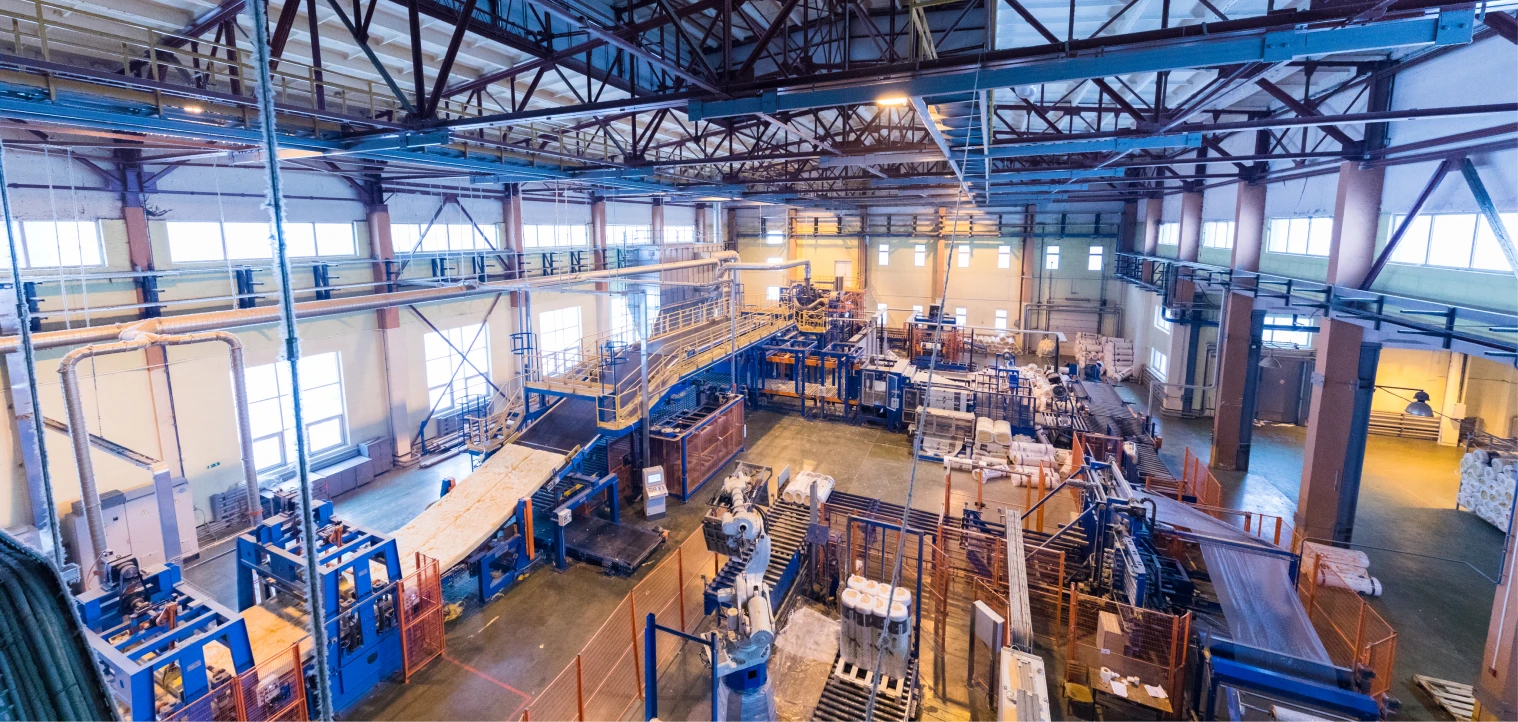
The government plans to ease regulations governing the Domestic Component Level (TKDN). The policy will be made more flexible following negotiations between the Indonesian government and the United States, regarding Indonesia’s reciprocal tariff of 32 percent imposed by President Donald Trump.
This was conveyed by President Prabowo Subianto during a dialogue with business associations regarding the implementation of the new U.S. trade tariffs, in Jakarta, Monday (7/4/2025). According to Prabowo, relaxing TKDN regulations is necessary to boost the competitiveness of national industries.
“I am very nationalistic, but we also have to be realistic. If TKDN is enforced rigidly, our industries may end up losing,” said the President.
The business people present at the dialogue proposed a more flexible TKDN and the provision of incentives to encourage the use of local raw materials. The proposal was considered more realistic and less burdensome for entrepreneurs.
“If TKDN is forced, we’ll end up losing our competitiveness. I completely agree. Let TKDN be more flexible, perhaps replaced with incentives,” Prabowo added.
TKDN refers to the proportion of domestic materials, labor, and production processes used in a product or service. The goal is to strengthen domestic industry capabilities so they become more resilient and competitive. The higher the TKDN value, the more local content is present in the product.
International economics expert from Universitas Muhammadiyah Surakarta (UMS), Akbar Pratama Kartika, S.E., M.SE., welcomed the government’s plan to ease TKDN regulations. According to him, at that time the government seemed to believe that some local producers were ready to compete with foreign manufacturers.
“It may be that during the implementation of TKDN, some producers have grown strong and hold significant positions in the production chain,” said Akbar on Thursday (17/4/2025).
Akbar stated that the relaxation of TKDN reflects the government’s commitment to consumers, as more flexible TKDN regulations could potentially lower product prices in the market.
The TKDN policy has been seen to drive up the selling prices of certain products, forcing consumers to spend more out of pocket.
Strict TKDN requirements have made production costs in Indonesia higher. The demand to absorb local labor by building expensive factories has further escalated production costs in the country. As a result, manufacturers burdened the costs on consumers.
Akbar also acknowledged that the quality of local products has yet to match that of goods from Vietnam or China. One of the main challenges is the lack of high-end technology in Indonesia.
A more flexible TKDN policy would allow the entry of advanced technology, even without any domestic components. Such technology could support domestic productivity. “We still can’t produce high-tech equipment on our own,” revealed the UMS Development Economics lecturer.
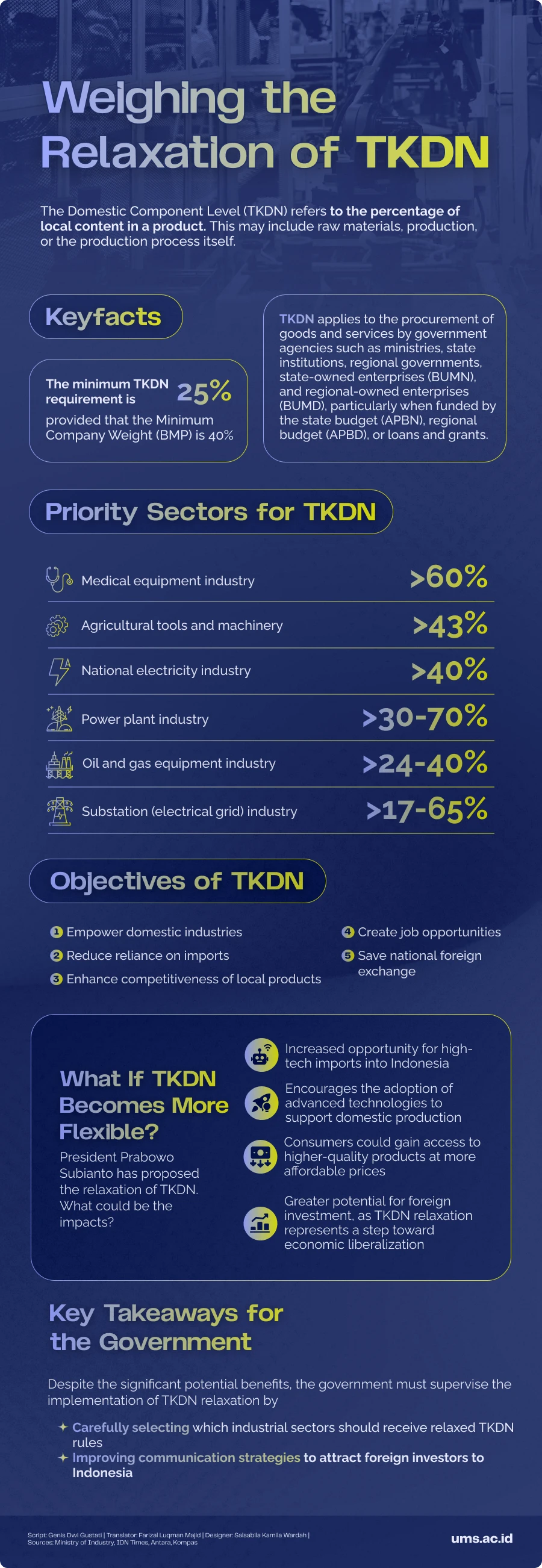
While consumers may benefit from the relaxation of TKDN, Akbar urged the government to be more selective about which goods are exempt from TKDN requirements. The goal is to ensure local producers can still compete when facing an influx of imported goods.
“We need to first select the sectors. Don’t open everything up. Not all of our industries are competitive,” he stressed.
Some sectors that could have relaxed TKDN requirements include agriculture, plantations, livestock, fisheries, labor-intensive textile industries, and processed food and beverages.
Meanwhile, industrial sectors that still require TKDN include the electronics manufacturing, automotive, and information technology industries. The aim, Akbar explained, is to help local industries enhance their capabilities in producing technological components.
Akbar also acknowledged that easing TKDN could potentially lead some investors to choose selling their products directly, rather than involving local producers. According to him, TKDN policies have, in a way, forced investors to enter the Indonesian market.
However, he remains optimistic that Indonesia still has opportunities to attract more investors. The TKDN relaxation is a form of economic liberalization. One country that has implemented such liberalization is Vietnam, which has successfully attracted many global companies to set up factories there.
“For example, Apple entered Vietnam because the local government provided more freedom, from sourcing raw materials to distribution," he added.
The key to successfully relaxing TKDN lies in the government’s ability to communicate with foreign companies to encourage investment in Indonesia. He urged the government to better explain the urgency of TKDN relaxation to the public.
If the TKDN easing policy is not well socialized to foreign companies, they may still be reluctant to invest in Indonesia, thinking the strict TKDN rules are still in effect.
“What I’ve noticed is that the government lacks communication and hasn’t been effectively promoting Indonesia’s capabilities,” he concluded.
Writer: Gede Arga Adrian
Translator: Farizal Luqman Majid
Editor: Al Habiib Josy Asheva
Sheep dunged nutrient-rich organic fertilizer for plants, made with the help of maggots. Built on community empowerment and a zero-waste principle.
Nothing’s more special than reading curated news just for you.
Subscribe to the UMS Newsletter for free today.