
How Sheep Manure Turns into Nutrient Rich Fertilizer
16 July 2026
Sheep dunged nutrient-rich organic fertilizer for plants, made with the help of maggots. Built on community empowerment and a zero-waste principle.



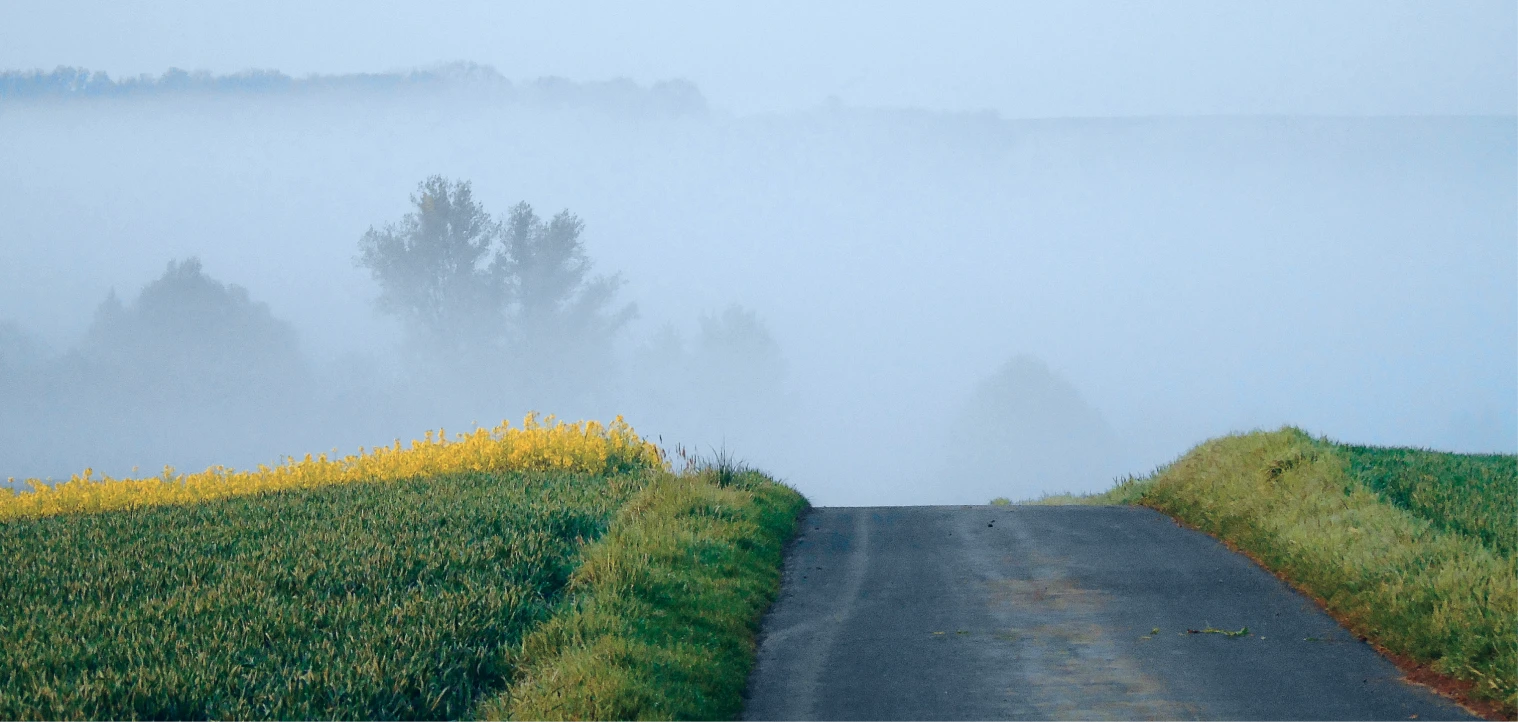
Recently, parts of Indonesia have experienced cold temperatures from night to morning. According to the Meteorology, Climatology, and Geophysics Agency (BMKG), these colder conditions primarily affect regions south of the equator, including Java, Bali, and Nusa Tenggara.
These cold temperatures during the peak of the 2024 dry season have captured public attention, with many associating the phenomenon with aphelion. However, are these two events truly connected? What are the primary factors contributing to this unexpected chill?
Some Javanese refer to the current cold spell as “bediding.” “Bediding,” meaning “feeling cold,” describes the stark drop in air temperature that feels surprisingly chilly, even during a dry season.
A researcher from the Center for Environmental Studies at Universitas Muhammadiyah Surakarta (UMS), Dra. Alif Noor Anna, M.Si., revealed that during the dry season, the absence of cloud cover enables sunlight to reach the earth’s surface unfiltered, resulting in an increase in temperature, making the sun feel hotter during the day.
“However, without cloud cover at night, heat radiation from the earth’s surface is released into the atmosphere unobstructed. As a result, there’s a significant decrease in temperature,” she explained.
She added that calm winds at night prevent warm and cold air from mixing, leading to a pooling of cold air near the earth’s surface.
As Kompas.com reported, Ida Pramuwardhani, Head of the BMKG’s Weather Prediction and Early Warning Team, refuted claims linking the recent cold temperatures in Indonesia to the aphelion phenomenon.
Ida clarifies that aphelion is an annual astronomical event that typically occurs around July when the earth reaches its farthest point from the sun in its orbit.
“Although the sun is at its farthest distance from the earth, this does not significantly affect the weather or atmospheric conditions on the earth’s surface,” she told Kompas.com on Tuesday (7/16/2024).
As reported by Detik.com, the BMKG explained that the current cold temperatures are a typical phenomenon during the peak of the dry season in July and August. This period is characterized by winds blowing from the east-southeast, originating from the Australian continent, which is currently experiencing its winter season.
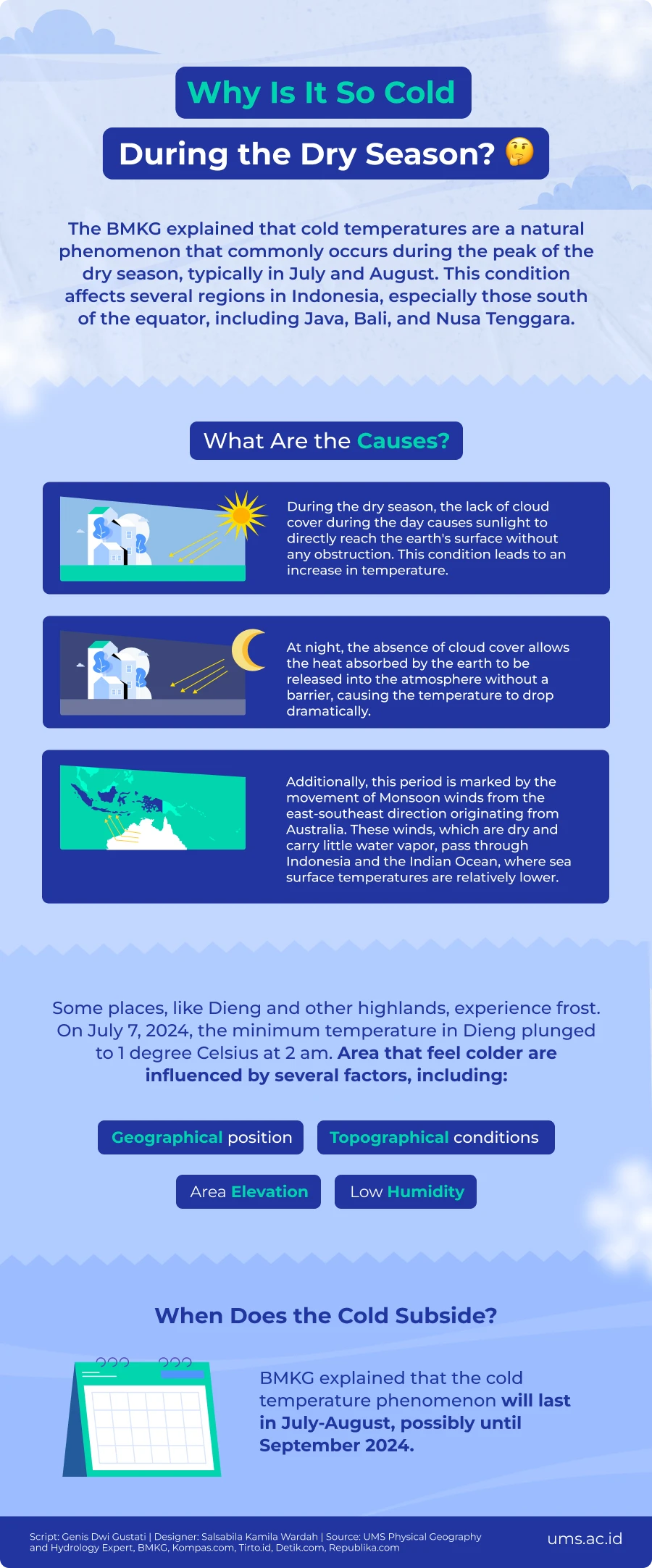
“The wind phenomenon is known as the monsoon wind. During the Australian winter, high air pressure over the continent pushes air masses towards Indonesia across the Indian Ocean, where the sea surface temperature is relatively low. This condition triggers a decrease in temperature, especially south of the equator,” explained the UMS Geography lecturer.
“The monsoon wind is dry and carries little water vapor, which can cause cold temperatures from night to early morning without rainfall.”
“According to BMKG data, on July 2, 2024, the temperature in Dieng reached 1 degree Celsius. This isn’t surprising, as the region’s colder climate is influenced by several factors, such as its geographical position, topographical conditions, altitude, and air humidity,” explained the UMS physical geography and hydrology expert.
Anna further explained that Dieng’s highland location significantly contributes to its susceptibility to cold temperatures. The hilly topography causes cold air to accumulate in the valleys, resulting in a more pronounced temperature drop than in the surrounding areas.
Altitude also plays a significant role in lowering temperatures. As altitude increases, air pressure decreases. Moreover, low air humidity at night accelerates the cooling of the earth’s surface.
Republika.co.id reported freezing temperatures at Mount Gede Pangrango in West Java during the peak of the dry season in July 2024. The Mount Gede Pangrango National Park Center recorded temperatures of 0 degrees Celsius, causing the Suryakancana square to freeze, particularly in the mornings. Climbers were advised to exercise caution and wear appropriate gear to prevent hypothermia.
“In terms of geography, dry air conditions in the highlands cause heat to escape more quickly, leading to a drastic drop in temperature,” Anna emphasized.
BMKG Deputy for Meteorology Guswanto, as reported by Tirto.id, noted that this cold temperature phenomenon typically occurs during the peak of the dry season in July and August, sometimes lasting until September. This is part of a yearly cycle, and the cold temperatures usually subside as the dry season ends in Indonesia.
Despite being a natural phenomenon, the duration of these cold temperatures can fluctuate based on weather conditions and broader seasonal shifts. Therefore, Anna advised us to take this phenomenon seriously and to wear warm clothing when the cold air strikes.
“Apart from wearing warm clothes, it is also important to maintain health by eating nutritious food, drinking enough water, exercising regularly, and finally getting enough rest,” she concluded.
Writer: Genis Dwi Gustati
Editor: Al Habiib Josy Asheva
Translator: Farizal Luqman Majid
Sheep dunged nutrient-rich organic fertilizer for plants, made with the help of maggots. Built on community empowerment and a zero-waste principle.
Nothing’s more special than reading curated news just for you.
Subscribe to the UMS Newsletter for free today.