


How Sheep Manure Turns into Nutrient Rich Fertilizer
16 July 2026
Sheep dunged nutrient-rich organic fertilizer for plants, made with the help of maggots. Built on community empowerment and a zero-waste principle.



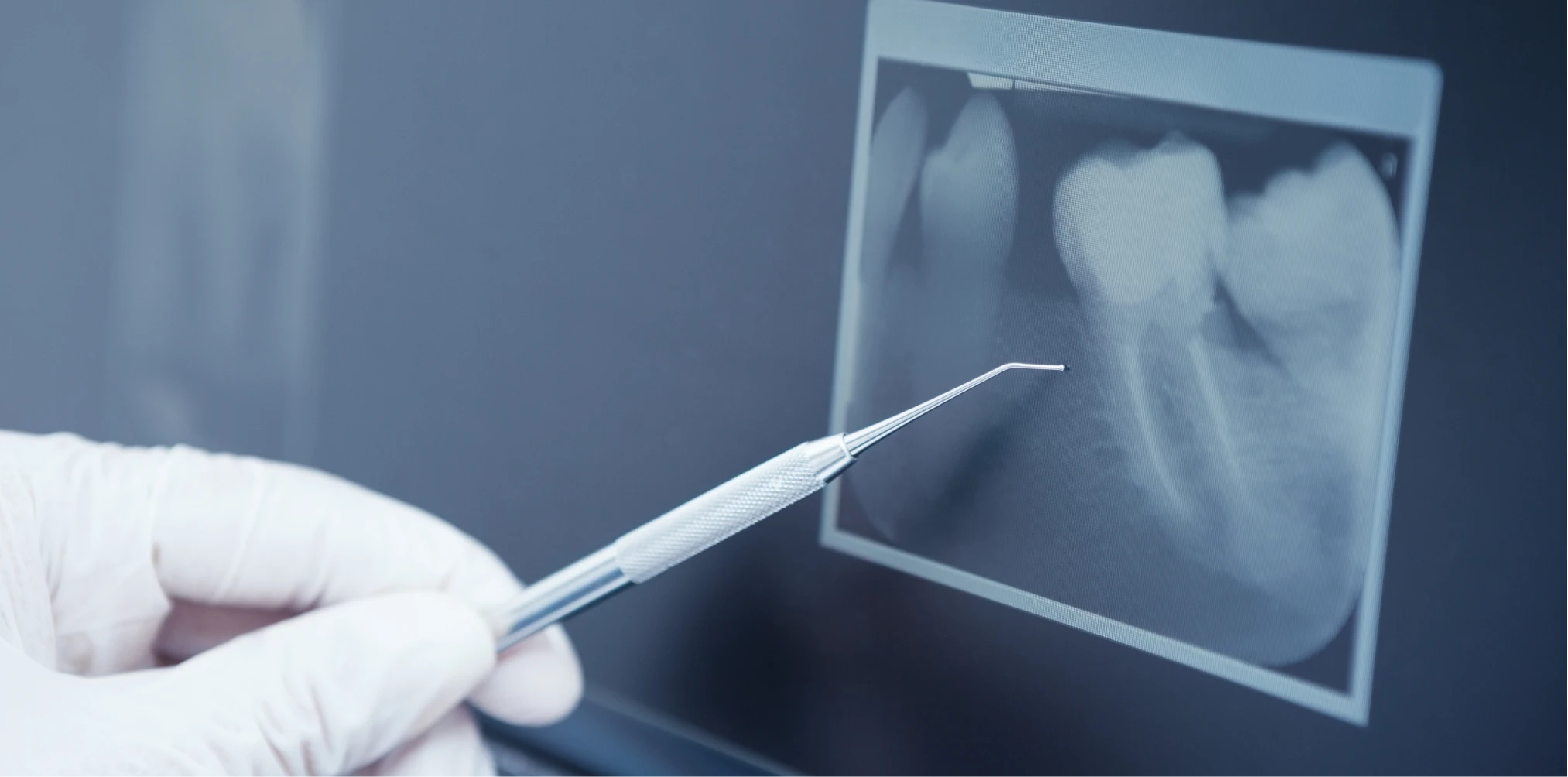
Most people know wisdom teeth as the last teeth to emerge when a person reaches adulthood. Stories about wisdom teeth almost always involve pain: days of aching, difficulty chewing, swollen gums, and fever are among the most common complaints that accompany wisdom tooth growth.
Oral and maxillofacial surgery specialist at the Faculty of Dentistry, Universitas Muhammadiyah Surakarta (UMS), drg. Amelia Elizabeth Pranoto, Sp.BMM., explained that in theory, wisdom molars begin to emerge from the gums between the ages of 18 and 25, though in practice some grow earlier or later than that range.
"Wisdom teeth growing in is a normal part of human tooth development. However, not all wisdom teeth can grow well and normally in some cases," Amelia explained on Monday (22/6/2026).
Amelia noted that the ideal condition occurs when the wisdom molar has sufficient space at the very back of both the upper and lower jaw. In that situation, the tooth can grow upright and function like any other molar.
A normally growing wisdom tooth will not cause any dental or oral health problems. Issues begin to arise when there is not enough space in the jaw to accommodate the full set of teeth.
According to Amelia, the size of the human jaw is often narrower than the total size of the teeth it needs to hold. As a result, wisdom molars do not have adequate room to grow in fully.
When space is insufficient, wisdom molars can grow at an angle, emerge only partially from the gum, or fail to break through the surface at all. This failure to grow properly is known as impaction.
Wisdom tooth impaction can occur in various positions. "There are cases where the wisdom tooth grows tilted toward the tooth in front of it, leans backward, grows sideways, or is fully embedded within the jawbone and not visible from the gum surface at all," Amelia said.
Although it does not always cause immediate pain, impaction has the potential to trigger various oral and dental health problems. Amelia gave examples from cases she has handled at Soelastri Dental and Oral Hospital in Surakarta, such as impacted wisdom teeth causing food debris to become easily trapped between teeth, triggering infection and gum inflammation.
In certain cases, pressure from the crown of an angled wisdom tooth can also damage the root of the tooth in front of it. "Even conditions left untreated for too long carry the risk of cyst formation," she explained.
For these reasons, impacted wisdom molars are generally recommended for removal through a surgical procedure commonly known as odontectomy, an intervention aimed at eliminating the source of the problem while preventing more serious complications down the line.
Many people still choose to address wisdom tooth complaints by purchasing pain relievers on their own. Once the pain subsides, they assume the problem is resolved and no longer seek a dental check-up.
According to Amelia, this situation cannot immediately be called negligence. The patient has made an effort to seek relief by taking medication.
What needs to be understood is that the goal of treatment is not simply to eliminate pain, but to address the root cause of the problem. "Handle the complaint and resolve the problem as early as possible. Because the sooner the problem is resolved, the lower the cost of treatment and the less time it takes," Amelia cautioned.
An angled wisdom tooth is indeed one of the most common conditions that triggers recurring complaints. One of the most serious cases Amelia has handled began with a growing angled wisdom molar which developed a cavity.
The patient had experienced repeated swelling on multiple occasions, but kept ignoring the complaints. An infection eventually developed into decay and pus formation. The infection then spread to the neck area, the chest cavity, and the lungs.
"The patient's condition continued to deteriorate until the bacteria had damaged almost all of their organs and caused death," she explained.
Amelia considered that case a lesson for all of us that a problem that appears simple in a single tooth can develop into a serious threat if not treated properly.
So does a wisdom tooth always need to be extracted? This is a question patients frequently ask Amelia during examinations. Perhaps the same question is now crossing your mind as you begin to feel pain, swelling, or other complaints from a wisdom tooth.
"Not always. A wisdom tooth that grows normally and causes no complaints generally does not require any specific intervention. Dentists usually only recommend routine monitoring to ensure the condition remains good," Amelia said.
Extracting a wisdom tooth often becomes an option when it has caused various complaints or risks damaging the surrounding tissue. In more complex cases, a dentist may recommend wisdom tooth surgery to remove an impacted tooth.
For that reason, do not wait until the gums swell, eating becomes difficult, or an infection worsens. If a wisdom tooth begins to cause complaints, see a dentist as soon as possible. The sooner it is treated, the greater the chance the problem can be resolved before it develops into a more serious health condition.
Writer: Genis Dwi Gustati
Translator: Farizal Luqman Majid
Editor: Al Habiib Josy Asheva
Sheep dunged nutrient-rich organic fertilizer for plants, made with the help of maggots. Built on community empowerment and a zero-waste principle.
Nothing’s more special than reading curated news just for you.
Subscribe to the UMS Newsletter for free today.