The Scholar Behind UMS's Master's Program in IQT
27 July 2026
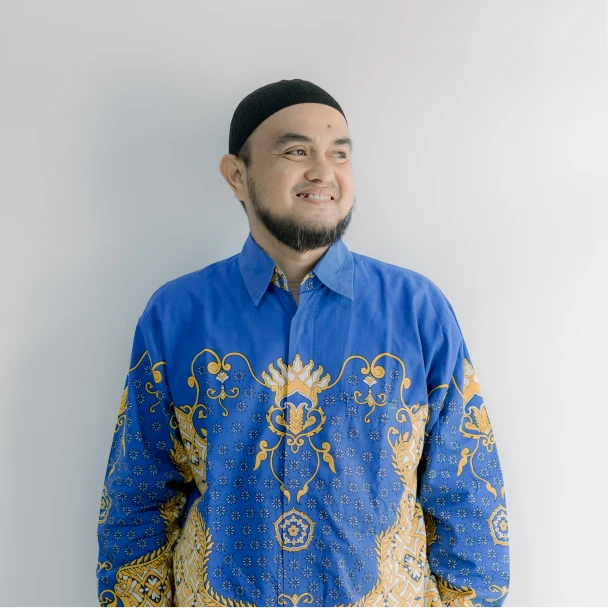
Prof. Andri Nirwana, S.TH., M.Ag., Ph.D., pioneered the Master of Al-Quran and Tafsir Studies as a first step in strengthening Quranic studies within Muhammadiyah.




Young people are often at the forefront of change, their minds brimming with untamed creativity that challenges the status quo. They are unafraid to question established norms. This youthful idealism is a powerful force, pushing back against outdated thinking and paving the way for a brighter future.
In the upcoming 2024 elections, the influence of the youth, comprising over half of the voters, is substantial. Their voices and choices will directly determine the nation’s newest leader. This mix of energy and perspective brings a distinctive flavor to Indonesia’s journey, marking this election as a pivotal moment for the country’s next chapter.
Among the 204.8 million voters identified by the General Election Commission (KPU), Databoks by Katadata has reported that 22.9% of voters, equivalent to 46.8 million individuals, belong to Generation Z. Additionally, the Millennial Generation comprises 33.6% of voters, totaling 66.8 million.
When you add up the voters from Generation Z and Millennials, those born between 1981 and the early 2000s, the total exceeds 113 million voters. This group constitutes a significant 56.5% of the overall voter population.
With the 2024 presidential election on the horizon, the campaign is in full swing. Presidential candidates are touring different regions to promote their visions and missions.
The upcoming presidential election features three pairs of candidates: Anies Baswedan - Muhaimin Iskandar, Prabowo Subianto - Gibran Rakabuming, and Ganjar Pranowo - Mahfud MD. These candidates are vying for the highest mandate of the country.
Regardless of the election outcome, people share a common hope for a better Indonesia. This hope resonates across various generations, including Generation Z.
We approached students at Universitas Muhammadiyah Surakarta to gather their dreams and aspirations for the future leaders of Indonesia and the nation’s trajectory in the years to come.
Aldin Nasrun Minalloh, a UMS International Class Informatics student, yearns for a leader willing to hear his people’s aspirations. For him, openness to feedback and criticism is an aspect of the ideal leader for Indonesia.
“The qualities that future Indonesian leaders must possess honesty, courage to combat injustice, selflessness, enthusiasm to fulfill their vision and mission, openness to criticism and feedback, and adherence to religious values,” said Aldin. “He believes that Indonesian leaders should demonstrate high integrity and creativity.”
Echoing Aldin’s sentiments, Bintang Kharisma Putra, a UMS Management student, highlights the importance of leaders adopting a dialogical approach and listening to the people’s aspirations. He emphasizes that every policy directly impacts the lives of the people.
Bintang added, “Leaders, in their decision-making, should take into account the suggestions from grassroots levels because they experience the direct impact of government policies.”
Anas, a UMS Islamic Economic Law student, argues, “Indonesian leaders should embody the qualities of a statesman, who can develop policies and strategies to enhance our nation’s economy and strengthen our geopolitical standing.”
Anas further emphasized that leaders must serve as uswatun hasanah for the community, articulating historical values in the present context to ensure that Indonesia’s journey is deeply rooted in the nation’s culture and history.
“Certainly, Indonesian leaders must have a moral compass in governing. Leaders should critically interpret the meanings of religiosity, micro and macroeconomics, Indonesia as a whole, and Indonesia in the geopolitical context. Thus, ideal Indonesian leaders should dedicate themselves fully to a just and prosperous nation,” emphasized Anas.
Aldin, Bintang, and Anas stress the urgent need for Indonesia’s future leaders to address numerous issues.
“There are many issues that demand solutions and resolution from the future leaders of our nation,” expressed Aldin.
Anas outlined three problems that must be addressed by Indonesia’s future leaders, namely:
Bintang adds the significance of addressing the issue of law enforcement. He believes a just legal system is crucial for ensuring equality and maintaining order in community.
“Law plays a crucial role in providing the best education for the community. I believe that fair law enforcement can have a deterrent effect and bring justice to the community,” he said.
The aspirations of young people resonate with the vision of a civilized Indonesia, characterized by gemah ripah loh jinawi, and the ability to stand on its own feet. Aldin, Anas, and Bintang all share these dreams for future leaders of Indonesia.
Aldin envisions a strong and just Indonesia led by leaders with high integrity and innovation capabilities. According to him, it is important to focus on the education sector to ensure equal access and improved facilities. Additionally, he suggests prioritizing the economic sector, particularly by empowering small and medium enterprises.
“I envision Indonesia as a country that prioritizes people’s welfare, where social and economic inequalities are significantly reduced. Education is the main focus, as well as economic policies that support the development of small and medium enterprises and numerous job opportunities,” Aldin expressed.
Just like Aldin, Bintang shares a similar dream for Indonesia: a stronger economy with fair wealth distribution, leading to a more prosperous and equal society for everyone. He also envisions a more organized and respectful society where people follow the rules and social norms.
Anas dreams of an Indonesia with excellent and competent human resources. He believes that achieving this vision requires a clear understanding that embraces and celebrates inclusivity within the diverse Indonesian society.
“We have to understand that religion and culture are inseparable, and they are important to build a future where Indonesia has strong character and values,” he said.
If Indonesia manages its wealth with purpose and respect for its culture and beliefs, it can create a strong and unique economy. However, achieving this potential requires responsible financial management, as Anas rightly pointed out.
“Indonesia has many riches, but they need to be managed well by people who understand culture and religion. This way, the country’s economy can grow while still following religious and cultural values.” he said.
At the end of the discussion session, Aldin advised hesitant voters, especially swing voters, to choose leaders with credibility and leadership ability. He encouraged voters to evaluate candidates based on their track record, vision and mission, and the team supporting them.
“Your vote will impact the future. While it may not directly affect your life immediately after voting, it will determine the country’s trajectory in the future,” says Aldin.
Anas emphasized that voters should base their choice of leaders on conscience and common sense, encouraging people to think critically and intelligently.
“The public must analyze all candidates so that the choice is not based on FOMO (Fear of Missing Out), but they should choose intelligently and critically. Our choices will determine Indonesia’s future,” Anas concluded.
Penulis: Gede Arga Adrian
Editor: Al Habiib Josy Asheva
Translator: Farizal Luqman Majid
Prof. Andri Nirwana, S.TH., M.Ag., Ph.D., pioneered the Master of Al-Quran and Tafsir Studies as a first step in strengthening Quranic studies within Muhammadiyah.
Nothing’s more special than reading curated news just for you.
Subscribe to the UMS Newsletter for free today.