
How Sheep Manure Turns into Nutrient Rich Fertilizer
16 July 2026
Sheep dunged nutrient-rich organic fertilizer for plants, made with the help of maggots. Built on community empowerment and a zero-waste principle.



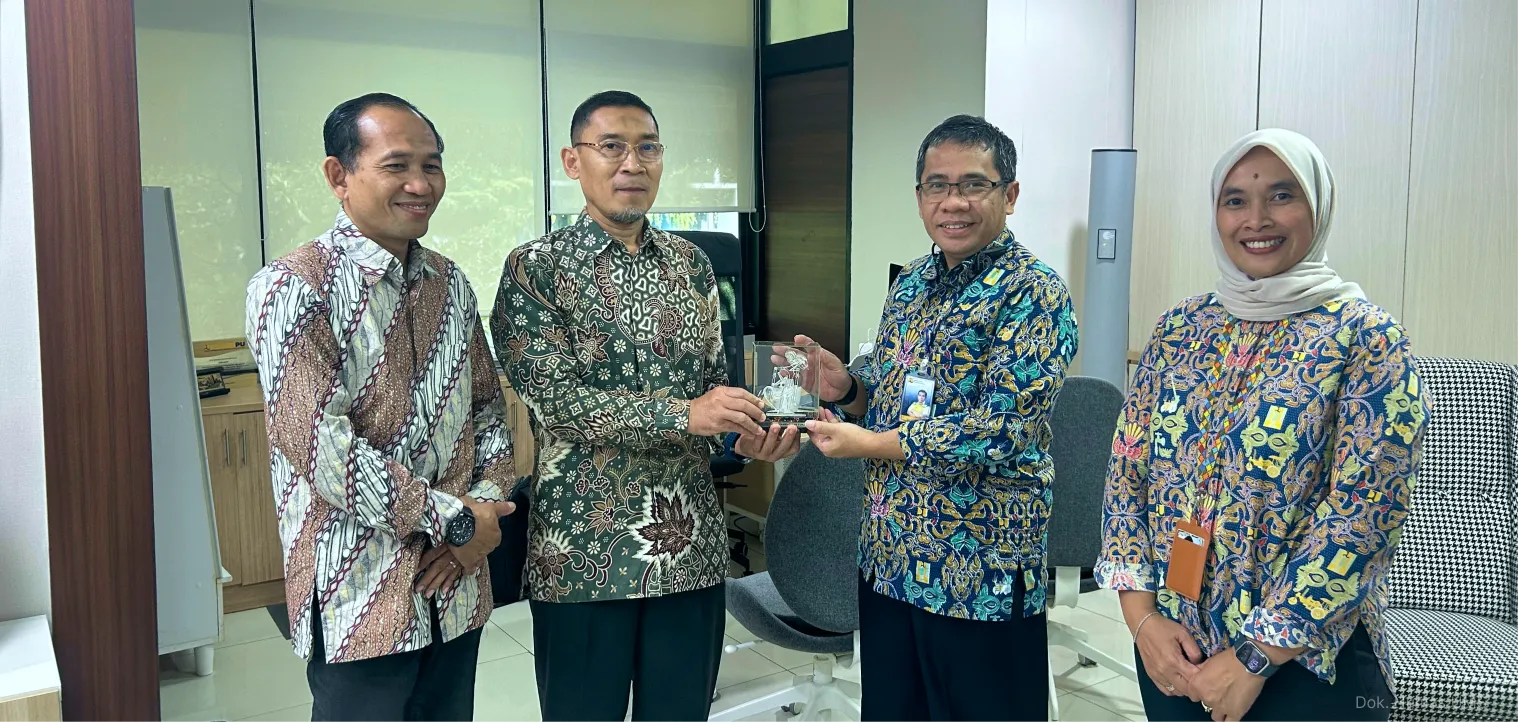
Universitas Muhammadiyah Surakarta (UMS) and the Ministry of Public Works (PU) signed a cooperation agreement for the development of a landscape vegetation simulation application on Wednesday (4/2/2026), at the office of the Directorate General of Human Settlements, Ministry of Public Works, Jakarta.
Vice Rector V for Research, Innovation, Reputation, Impact, Partnerships, and International Affairs of UMS, Prof. Supriyono, S.T., M.T., Ph.D., said that the collaboration aims to produce a landscape vegetation simulation application.
“UMS will assist the Ministry of Public Works, in this case the Directorate General of Human Settlements, in developing the vegetation simulation application. In this first stage, the process will focus on identifying suitable plant species,” Supriyono said when met in his office, Friday (6/2/2026).
According to the plan, the application will be used as a vegetation database that can support the arrangement and greening of urban landscapes in Indonesia. Supriyono explained that the application will later be accessible to the entire Indonesian public.
“The database can be utilized by the community to carry out environmental greening more appropriately, in accordance with the geographical conditions of each region,” he added.
Head of the Subdirectorate for Industrial Partnership Development, Directorate of Reputation, Partnerships, and International Affairs, Sidiq Permono Nugroho, S.E., M.M., stated that the collaboration will involve several studies programs at UMS, namely Informatics Engineering, Industrial Engineering, and Architecture.
The involvement of these study programs at UMS will be represented by research centers relevant to landscape vegetation studies. Sidiq explained that three study centers will be involved: the Center for Social Informatics Studies, the Center for Islamic Architecture Studies, and the Center for Logistics and Industrial Optimization Studies.
“The involvement of research centers from various disciplines is expected to enrich the outcomes of this research,” Sidiq said.
Sidiq explained that the vegetation research will document specifications of plant species that have strong potential for landscape planning. There are three key aspects that must be considered in determining landscape vegetation specifications: function, characteristics, and location.
The functions of landscape vegetation include providing shade, absorbing air pollution, reducing noise, acting as windbreaks, and serving as visual barriers. Meanwhile, the characteristics of landscape vegetation must align with factors such as sunlight exposure requirements, water needs, the ability to attract wildlife, toxicity, as well as the fragrance or odor produced.
As for planting locations, vegetation must be suited to the local climate zone and ecoregion. “We don’t want people to plant vegetation carelessly, which could later cause problems and eventually die. That would be a loss. This application will provide data on plant species that are suitable for local climate conditions, thereby reducing the risk of failure in tree planting,” he explained.
Following the signing of the cooperation agreement, the three UMS study centers involved will hold a coordination meeting in mid-February. The meeting aims to finalize the research timeline and define the targets to be achieved.
“Our hope is that the research can begin promptly, with clear divisions of work areas and responsibilities,” Sidiq concluded.
Writer: Gede Arga Adrian
Editor: Fika Annisa' Sholihah
Translator: Farizal Luqman Majid
Sheep dunged nutrient-rich organic fertilizer for plants, made with the help of maggots. Built on community empowerment and a zero-waste principle.
Nothing’s more special than reading curated news just for you.
Subscribe to the UMS Newsletter for free today.