
Bank Indonesia Holds Interest Rate at 5.75%, What Is the Impact?
24 July 2026
Bank Indonesia has held its benchmark rate at 5.75 percent, ending speculation of a hike to 6 percent that had circulated in recent weeks.



That afternoon, soft sunlight filtered through the large window behind Dr. Isman, S.H.I., S.H., M.H., gently illuminating the edge of a wooden table piled with books and documents. Next to the table, the lecturer of the Master of Islamic Economic Laws program at Universitas Muhammadiyah Surakarta (UMS) greeted us warmly.
In the midst of his busy academic life, he kindly made time for a chat about an idea he's currently working on: transcendental law. For him, the law isn’t just a set of rules but a tool to create harmony between human values and rapidly advancing technology.
“Our legal system often gets stuck in formality,” Isman remarked as we began the discussion.
“In this digital age, law needs to be more than just rigid regulations. It must be alive, capable of evolving alongside technological advancements and societal changes. The key challenge for law in this era is its low adaptability and inconsistency,” he added.
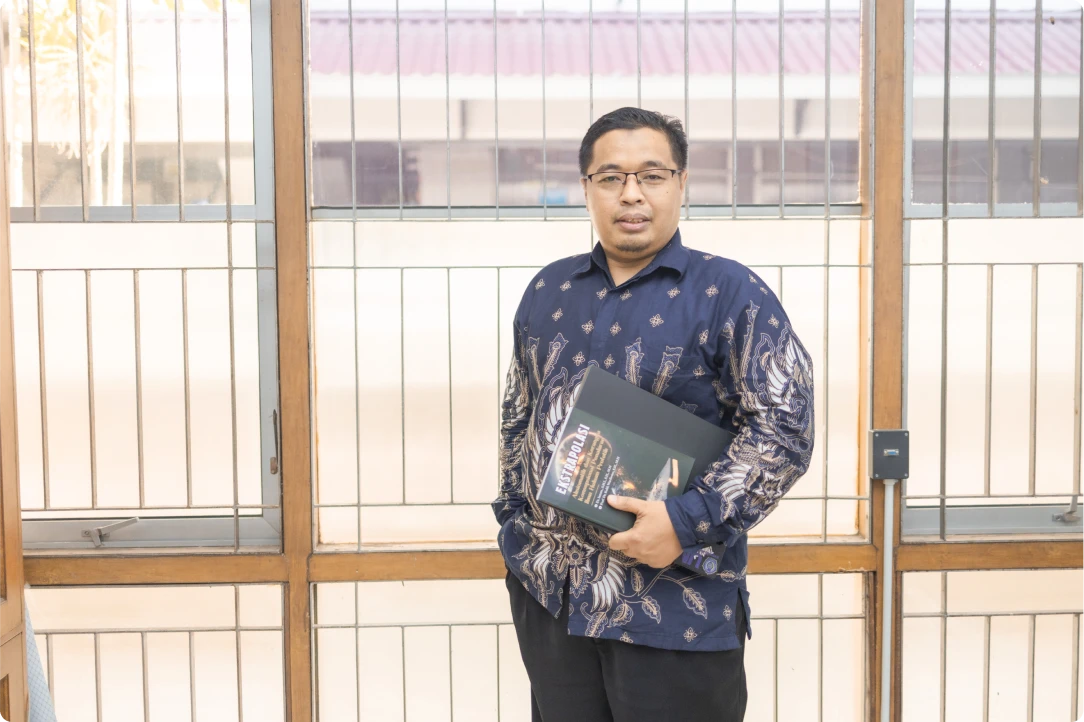
Dr. Isman, S.H.I., S.H., M.H. Imam Safi'i. UMS Public Relation
The digital era has brought convenience and speed to many aspects of life. But it also casts a shadow on new issues, such as cybercrime. As digital transactions and electronic contracts become more common, the legal framework has struggled to keep pace, leaving gaps in oversight for these activities.
“Our legal system is still lagging far behind in responding to the developments of digital technology. For instance, cases of data breaches on various digital platforms reveal the weakness of our personal data protection regulations,” he explained.
Read more: The Double-Edged Sword of Digital Bank
He also pointed to the issue of electronic contracts, which often become loopholes for cybercrime.
“Cybercriminals frequently exploit weaknesses in electronic contract laws, which are not robust enough to protect all parties involved,” he added.
A clear example of regulatory shortcomings can be seen in the 2020 Tokopedia data breach case. Indonesia’s largest e-commerce company faced a serious challenge regarding the security of its users’ data.
According to CNN Indonesia, the Tokopedia data breach affected an estimated 91 million user accounts and 7 million merchant accounts, with all this data being sold for US$5,000 or about Rp74 million at the time. Even more alarming, over 14.9 million Tokopedia accounts were reportedly available for download.
This case should have been a turning point for data protection policy reform in Indonesia. “But until now, the Personal Data Protection Bill (RUU PDP) is still under discussion,” Isman said. The Islamic law expert from UMS emphasized the urgency of comprehensive legal reform.
To address the various challenges of the digital era, Isman believed that a transcendental legal approach offers a broader perspective.
He argued that this approach is particularly relevant in addressing cybercrime that takes advantage of regulatory gaps, especially in electronic contracts.
“We need a legal framework that can address electronic contracts holistically,” Isman continued.
In the context of digital law, the Coty vs. Amazon case highlights gaps in e-commerce companies' legal responsibility, where existing regulations (electronic contracts) have yet to adequately protect intellectual property rights.
“Luxury cosmetics brand Coty sued Amazon over the sale of counterfeit products at that time. The court then faced the challenge of determining the extent of Amazon's responsibility as a platform selling illegal goods. Legal positivism is simply not equipped to handle cases like this,” he explained.
According to Isman, under legal positivism, platforms like Amazon are merely service providers and not responsible for the illegal products sold on them. Legal positivism tends to focus too narrowly on direct contractual relationships, neglecting the systemic impact of platform technology.
“Amazon's stance was basically, ‘If you want to sue, sue the factory that made the counterfeit cosmetics, not Amazon,’” Isman said as he reviewed the data on his laptop screen.
In Indonesia, the deepfake case involving President Jokowi, which surfaced in late October 2023, added to the growing list of regulatory issues related to technology. Isman noted, “Current laws don’t yet cover crucial aspects like liability for distributing deepfake content, leaving room for technological abuse.”
Read more: Deepfake: A Weapon of Mass Deception in the 2024 Election?
With a more flexible legal system based on transcendent justice values, the government could formulate regulations that protect all parties, including users and digital service providers, while ensuring the sustainability of technology usage.
Isman then criticized Indonesia’s reliance on legal positivism, describing it as a narrow interpretation of law.
“Legal positivism is too rigid. It sees rules merely as tools for social order, rather than balancing protection and sustainability. In today’s era, we need a more flexible and responsive approach,” he stated.
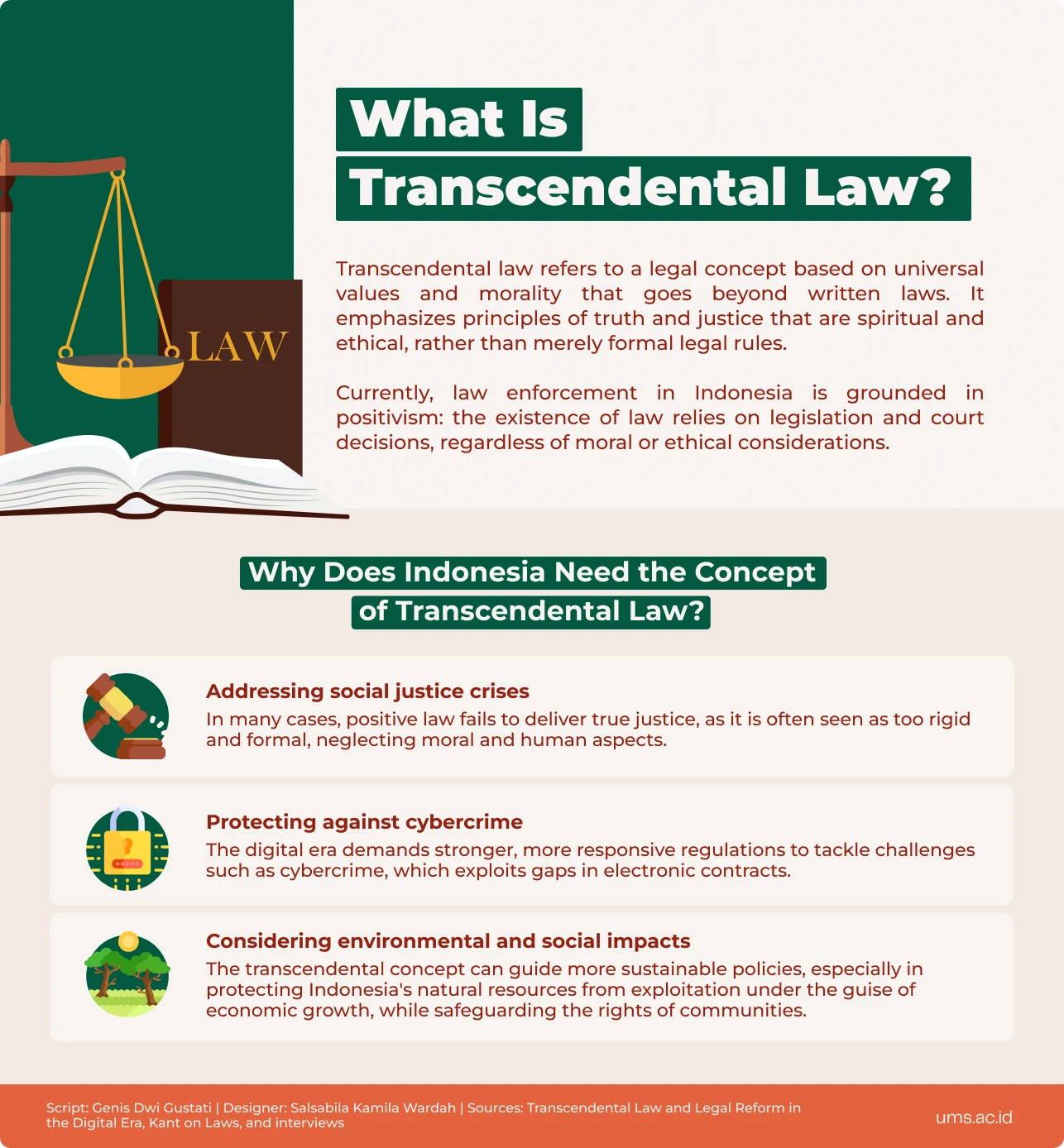
A clear example of the failure of legal positivism in Indonesia can be seen in the Constitutional Court's annulment of the Job Creation Law (UU Cipta Kerja) in 2021. The Court deemed the legislative process for the law conditionally unconstitutional, adding to the controversy over its content.
As reported by Kompas.com, despite facing widespread opposition, the government went ahead with the issuance of a Government Regulation in Lieu of Law (Perpu) to replace the Job Creation Law.
For example, in Article 59, paragraph (4) of the Labor Law, a Fixed-term Employment Agreement (PKWT) could only last for a maximum of two years, with a one-time extension of up to one year. After three years, companies were required to grant permanent employee status if they wished to retain the worker.
However, the Job Creation Law and its replacement Perpu removed the time limit, allowing companies to keep workers as contract employees indefinitely, a policy many considered ethically questionable.
“People are demanding a more just and substantial legal framework, not just one that ticks procedural boxes. This is where transcendent law could fill the gap,” he concluded.
Isman's thoughts on the transcendental approach are outlined in his research titled "Transcendental Law and Legal Reform in the Digital Era", published in the Journal of AI in Business: Opportunities and Limitations.
In addition to the challenges posed by the digital era, Indonesia’s need to adopt a transcendental legal concept stems from issues surrounding social justice and cultural rights, particularly concerning land dispossession. For example, the Dayak indigenous people in Kalimantan have seen their ancestral lands seized for mining operations.
“There’s also the agrarian conflict faced by the Kendeng community in Central Java, where people are fighting to protect their land from being turned into a cement factory. This is a matter of sustainability. If nature is destroyed, everything else follows,” Isman explained.
He believed that if Indonesia refrains from exploiting indigenous lands, the incredible potential of natural resource management by indigenous communities could be more fully realized.
According to research by the Indigenous Peoples Alliance of the Nusantara (AMAN) in 2018, Indonesia’s customary forests span between 12.4 and 18 million hectares, with approximately 8.7 million hectares being forested areas. These forests serve as vital ecosystems for biodiversity and as economic support for indigenous communities.
The management of natural resources by these communities generates an estimated economic value of Rp 159.21 billion annually, while the environmental services provided by these forests contribute around Rp 170.77 billion per year.
Unfortunately, indigenous people often face significant challenges in defending their land rights, especially when confronted with large corporations seizing their land for capital-intensive industries.
“This is why transcendental law is not just about regulations, it's about how we integrate human values and justice into our legal system. It is the key to creating a more just and sustainable legal framework for the future of our nation,” Isman emphasized.
Writer: Genis Dwi Gustati
Editor: Al Habiib Josy Asheva
Translator: Farizal Luqman Majid
Designer: Salsabila Kamila Wardah
Bank Indonesia has held its benchmark rate at 5.75 percent, ending speculation of a hike to 6 percent that had circulated in recent weeks.
Nothing’s more special than reading curated news just for you.
Subscribe to the UMS Newsletter for free today.