
How Sheep Manure Turns into Nutrient Rich Fertilizer
16 July 2026
Sheep dunged nutrient-rich organic fertilizer for plants, made with the help of maggots. Built on community empowerment and a zero-waste principle.



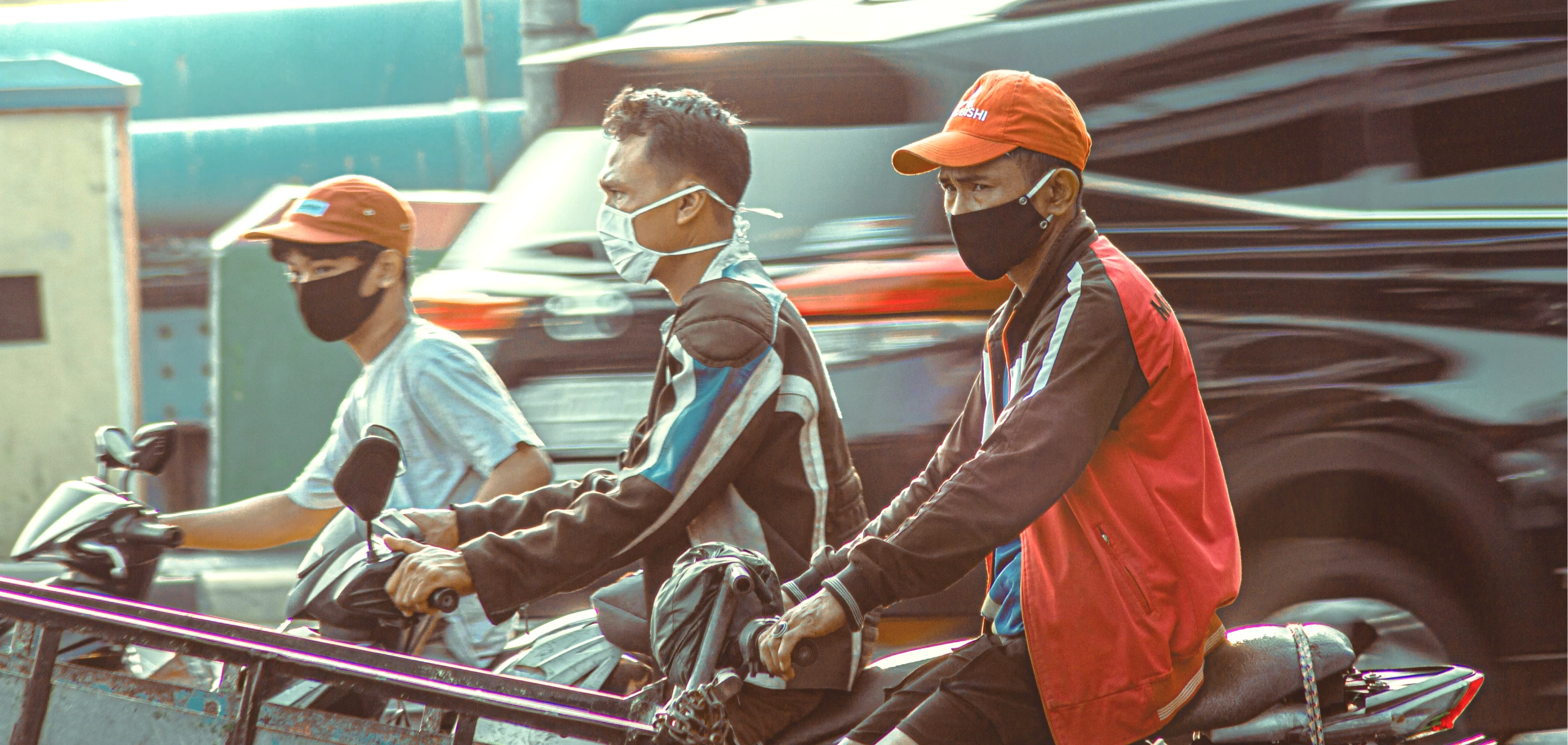
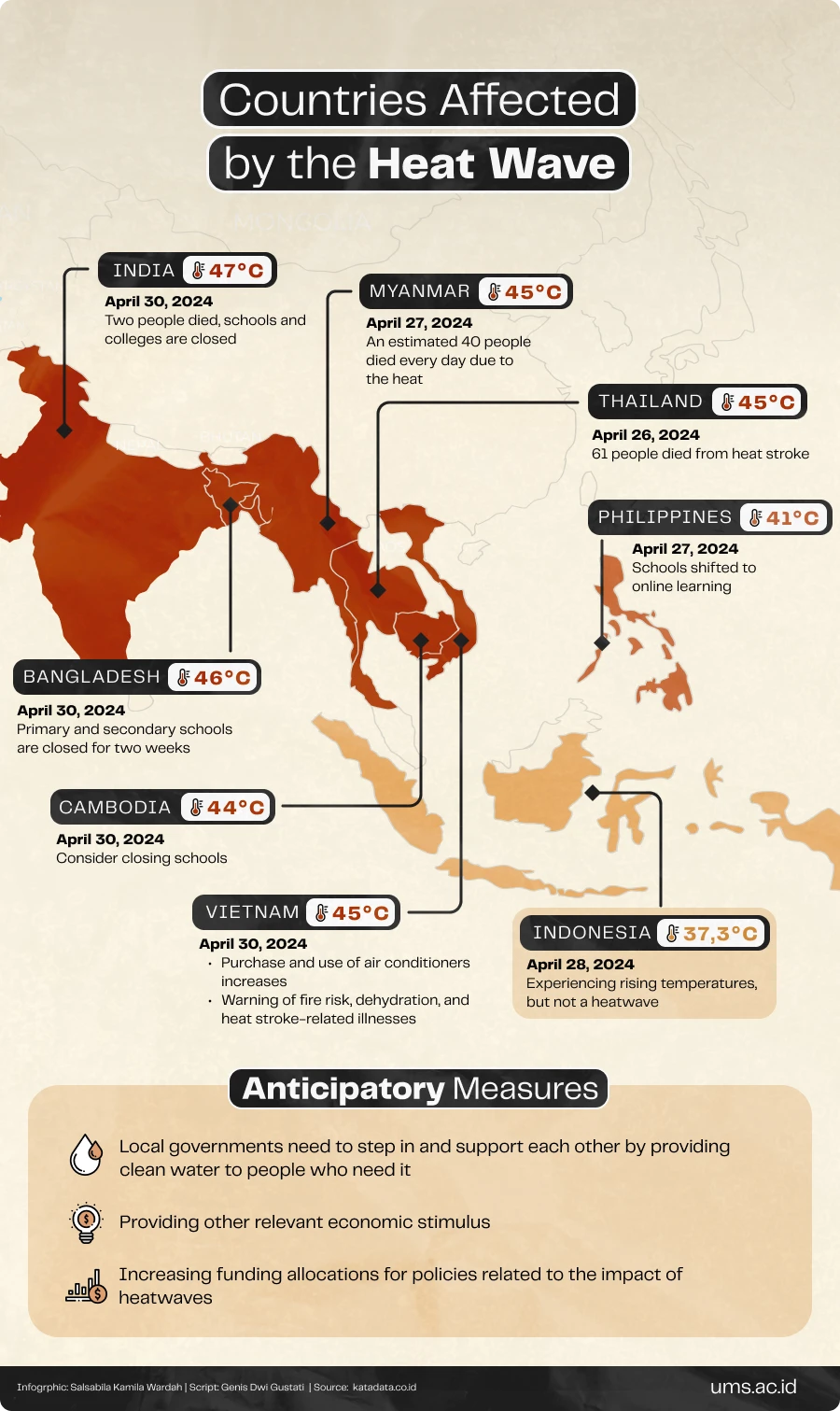
Recently, several South and Southeast Asian countries, including India, Bangladesh, the Philippines, Thailand, Cambodia, Myanmar, and Vietnam, have been experiencing extreme weather conditions. These severe conditions, known as heat waves, are caused by several factors.
In climatology, a heat wave is a prolonged period during which air temperatures are significantly higher than normal for a specific region. While the exact conditions for heat waves can vary depending on the geographical location, several common factors contribute to their occurrence, including:
Heat waves are one natural phenomenon triggered by El Nino. During the El Nino periods, wind patterns in the Pacific Ocean undergo significant changes, leading to increased temperatures in various regions worldwide. This rise in temperature can create sweltering conditions in some areas, resulting in heat waves.
Read more: El Nino, Climate Change and the Effect on Indonesia
According to Detik.com, the Meteorology, Climatology, and Geophysics Agency (BMKG) of the Republic of Indonesia reported that the heat wave affecting several parts of Asia has had significant impacts, including the tragic deaths of several Thai citizens. This news quickly spread across social media, leading many Indonesians to express concern and question, “What about the conditions in Indonesia?”
To answer some people’s questions regarding heat waves, we reached out to Drs. Yuli Priyana, M.Si. (Geography lecturer at UMS), and Winny Perwithosuci, S.E., M.E. (Development Economics lecturer at UMS), to consult about the rumor of heat waves affecting Indonesia and their impact on its economic stability.
“The rumor circulating in several online media claiming that a heat wave is occurring in Indonesia is untrue and unfounded. Although the current temperature feels scalding hot, BMKG states that this is unrelated to the heat wave affecting several Asian countries,” Yuli explained.
Specifically, Yuli explained that while Indonesia may experience heat waves, the likelihood is relatively small compared to countries in middle or high latitudes with drier or continental climates. Dry winds and lack of rain can exacerbate extreme heat conditions. However, to properly label this phenomenon as a heatwave, it needs to consider other factors, such as humidity and abnormal temperature patterns over an extended period.
“Extreme weather, persisting with scorching heat, has occurred in Indonesia for the past few weeks. This condition results from the sun’s apparent motion cycle, which can occur yearly. The sun’s apparent position impacts the amount of solar radiation the Earth receives. For example, in March, the sun is over the equator, then it moves north until mid June, returns to the equator in September, and shifts to the southern hemisphere until mid-December,” explained the expert in climatology and meteorology.
Referring to BMKG official website, BMKG Deputy for Meteorology Guswanto stated that this phenomenon is a natural condition typically occurring in April and May. They also released information regarding the prediction of the beginning of the dry season in Indonesia, which is expected from May to August 2024.
Some studies suggest extreme heat can harm economic growth, especially in the agricultural sector. While it may not qualify as a heat wave, Indonesia is beginning to enter a dry season, expected to last for an extended period.
“Extreme hot weather can cause the water content in plants to evaporate quickly, disrupt the cropping cycle, and dry out the soil. In highland agricultural areas, temperature changes might not be as impactful. However, in lowland agriculture, extreme temperatures increase evaporation and stress plants. Drought also reduces the quality of organic material decomposition, which can interfere with soil fertility,” explained Winny.
Winny further explained that these conditions would lead to a decline in agricultural production due to crop failure. Food prices will rise significantly when harvest cannot meet market demand.
In the tourism industry, there may be a decline in tourists visiting, such as in Semarang. Extreme heat is intolerable for most people and may pose threats to health condition, presumably illness like fever and headaches.
A report from Kompas.com mentioned that the number of tourist visits in Semarang dropped dramatically during May 2023 due to extreme weather. This condition was confirmed by the Head of the Semarang City Culture and Tourism Office, Wing Wiyarso, explaining that hot weather makes tourists reluctant to visit during the day as many of Semarang’s leading tourist destinations, such as the Kota Lama, Lawang Sewu, Semarang Zoo, and Marina Beach, are primarily outdoor attractions.
According to Republika.co.id, forest fires broke out on the Aik Berik and Tete Batu trails leading to the Mount Rinjani National Park area on the island of Lombok. The local police reported that the fires were sparked by extreme weather and by strong winds. As a result, the Aik Berik and Tete Batu hiking trails were temporarily closed after a forest fire on August 4, 2023.
“Some tourist destinations rely on forests, which are particularly vulnerable to severe droughts and forest fires during heat waves. This has been evident in several cases in recent years. Consequently, revenue in the tourism industry may decline. Additionally, some workers tend to be less productive in hot temperatures,” Winny added.
Sheep dunged nutrient-rich organic fertilizer for plants, made with the help of maggots. Built on community empowerment and a zero-waste principle.
Nothing’s more special than reading curated news just for you.
Subscribe to the UMS Newsletter for free today.